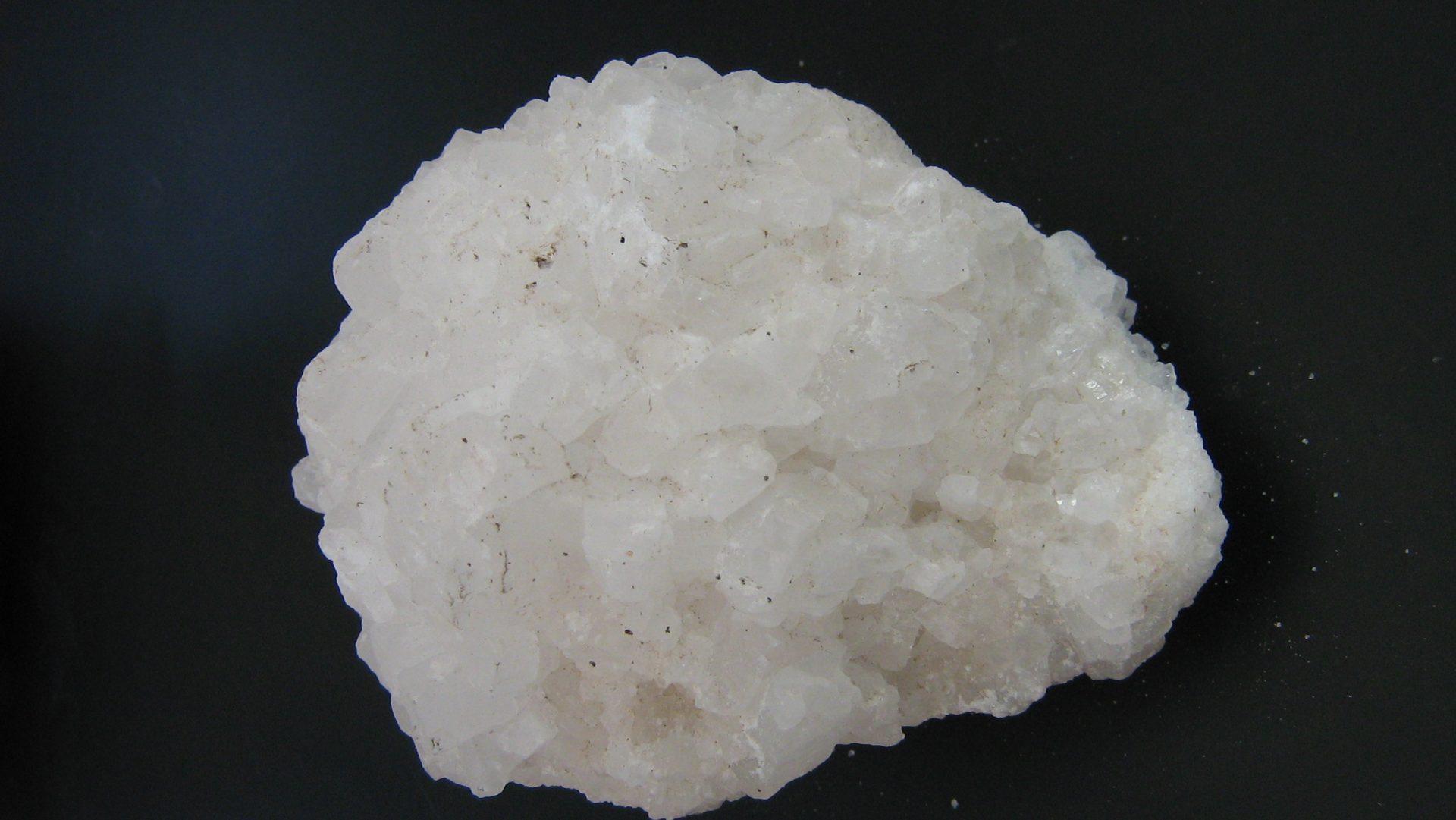
Bischofite from Antofagasta, Chile — Photo: Mampato · CC BY-SA 3.0
Bischofite
A hydrous magnesium chloride evaporite mineral — a concentrated sea-salt residue.
Intro adapted from Wikipedia (CC BY-SA).
Bischofite is an IMA-recognized mineral species in the halide class, with the chemical formula MgCl₂·6H₂O.
It crystallizes in the monoclinic crystal system (space group C2/m).
Key properties: Mohs hardness 1–2; specific gravity 1.59–1.6; Vitreous to dull luster; refractive index 1.51; optically biaxial.
IMA symbol Bsf, grandfathered status — known before the IMA’s founding, named in 1877.
Found in saline deposits; probably in part secondary, formed from carnallite.
It is found associated with Carnallite, halite, kieserite.
The name refers to Karl Gustav Bischof (1792–1870), German geologist and mineral chemist, University of Bonn, Bonn, Germany.