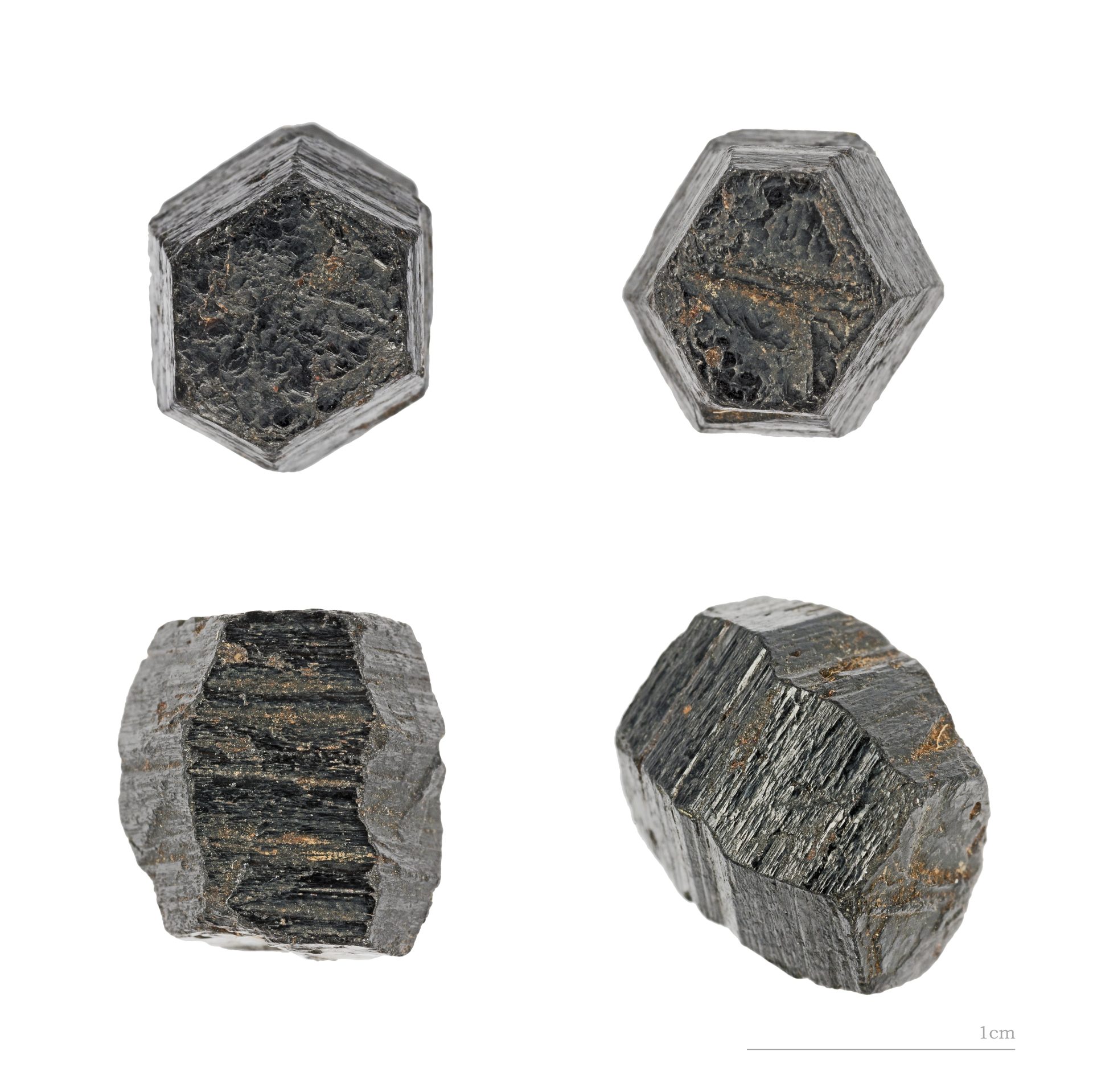
Hibonite Size : 1.6 cm Locality: Esiva eluvials, Maromby Commune, Amboasary District, Anosy (Fort Dauphin) Region, Tuléar (Toliara) Province, Madagascar — Photo: Didier Descouens · CC BY-SA 4.0
Hibonite
A rare calcium-cerium aluminium oxide of hexagonal habit and gem hardness — found in high-grade metamorphic rocks and meteorites.
Intro adapted from Wikipedia (CC BY-SA).
Hibonite is an IMA-recognized mineral species in the oxides & hydroxide class, with the chemical formula CaAl₁₂O₁₉.
It crystallizes in the hexagonal crystal system (space group P6_3/mmc). It is a member of the Magnetoplumbite structural group.
Key properties: Mohs hardness 7.5–8; specific gravity 3.84; Brown streak; Vitreous luster; refractive index 1.693; optically uniaxial.
IMA symbol Hbn, IMA status: approved, named in 1956.
Found in metamorphosed limestone, pyroxenite, gneiss, and granulite of the amphibolite to granulite facies; also alluvial. A common accessory in Ca–Al-rich inclusions in some carbonaceous chondrites.
It is found associated with Calcic plagioclase, corundum, spinel, thorianite, titanite (Esiva, Madagascar); anorthite, grossular, titanite, zoisite, clinozoisite (Mahenge, Tanzania).
The name refers to Paul Hibon, who discovered the mineral.