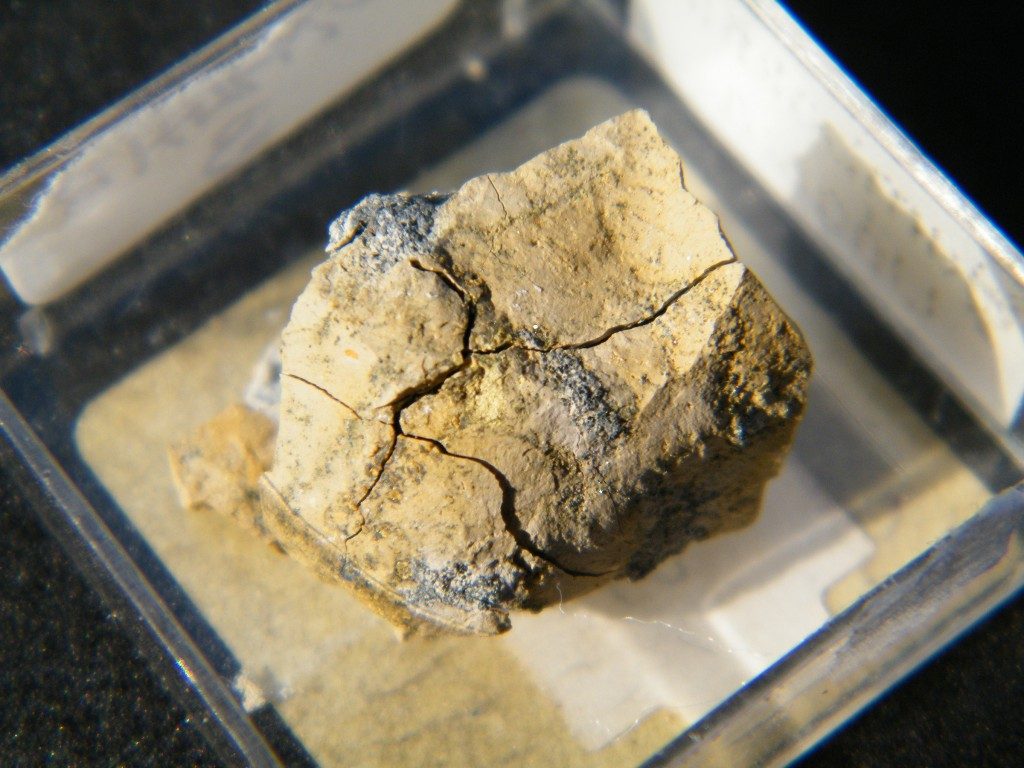
Humboldtine (Dimensions: 0.75" x 0.75") Locality: Csordakúti Mine, Bicske-Csordakút, Bicske-Zsámbéki Basin, Fejér County, Hungary — Photo: John Krygier · Public domain
Humboldtine
A rare organic mineral — hydrated iron(II) oxalate — found in coal seams and peat bogs.
Intro adapted from Wikipedia (CC BY-SA).
Humboldtine is an IMA-recognized mineral species in the organic mineral class, with the chemical formula Fe²⁺(C₂O₄)·2H₂O.
It crystallizes in the monoclinic crystal system (space group C2/c). It is a member of the Humboldtine, Oxalate structural group.
Key properties: Mohs hardness 1.5–2; specific gravity 2.28; Dull to resinous luster; optically biaxial.
IMA symbol Hbd, grandfathered status — known before the IMA’s founding, named in 1821.
Typically coating fractures in brown coal deposits; very rarely in granite pegmatites and hydrothermal mineral deposits.
It is found associated with Gypsum, tschermigite (coal seams); cassiterite, tourmaline, quartz (pegmatites and hydrothermal).
The mineral was named to honor Friedrich Heinrich Alexander von Humboldt (1769–1859), German naturalist and explorer.