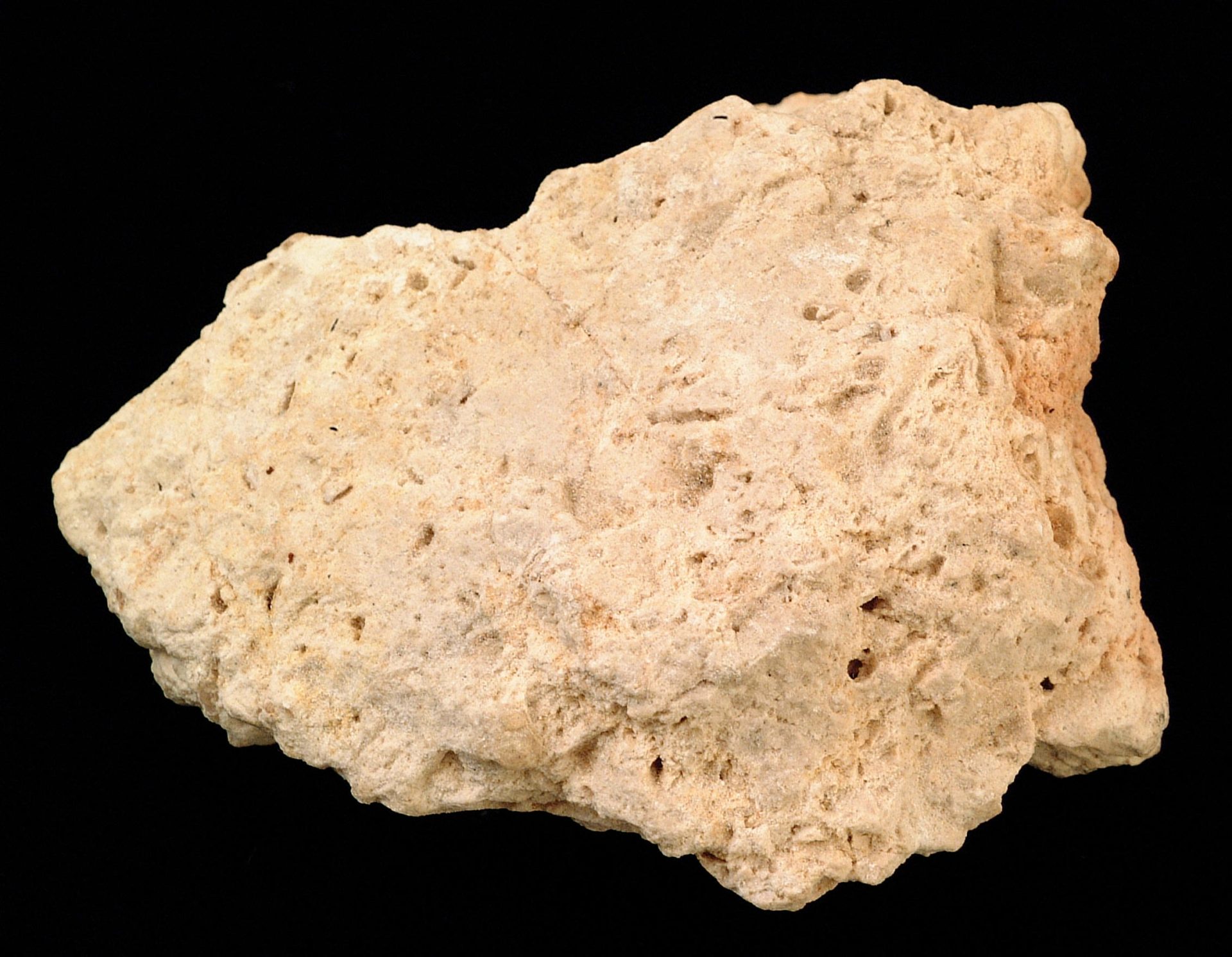
Hydrozincite, Zn5(CO3)2(OH)6 (zinc carbonate hydroxide), forms in the oxidation zones of zinc deposits as masses or crusts. Hydrozincite may be present on many specimens, but is usually unnoticed or assumed to be some other more common mineral, such as calcite or aragonite. Crystals are rare, but can be found. — Photo: Darla Sondrol · CC0
Hydrozincite
'Zinc bloom' — a white basic zinc carbonate forming crusts where zinc ores oxidize and inside old mines.
Intro adapted from Wikipedia (CC BY-SA).
Hydrozincite is an IMA-recognized mineral species in the carbonate class, with the chemical formula Zn₅(CO₃)₂(OH)₆.
It crystallizes in the monoclinic crystal system (space group C2/m).
Key properties: Mohs hardness 2–2.5; specific gravity 4; Pearly, silky to dull or earthy in aggregates luster; refractive index 1.674; optically biaxial.
IMA symbol Hznc, grandfathered status — known before the IMA’s founding, named in 1853.
Uncommonly formed in the oxidized portions of zinc-bearing deposits, at the expense of sphalerite or smithsonite, and as incrustations in mine workings and caves.
It is found associated with Smithsonite, hemimorphite, willemite, cerussite, aurichalcite, calcite, “limonite”.
The name refers to the non-carbonate essential chemical components, water and zinc.