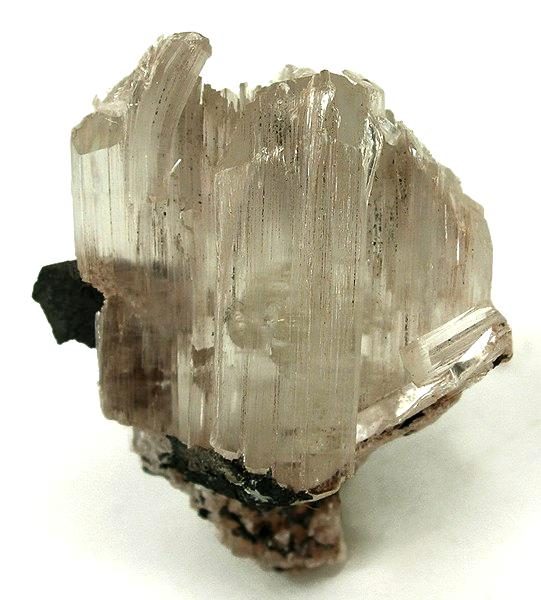
Leiteite Locality: Tsumeb Mine (Tsumcorp Mine), Tsumeb , Otjikoto (Oshikoto) Region, Namibia ( Locality at mindat.org ) Size: 3.0 x 2.4 x 1.2 cm. Leiteite is a very rare zinc arsenate mineral species named in 1977 from a single aberrant specimen found at Tsumeb, and then found sparsely in a few more pockets in the so-called germanium levels of the final and deepest part of the mine. In all the previous years at Tsumeb, none had been found until the miners went down to a third oxidation zone and encountered a bizarrely germanium-rich zone from which new species came in profusion. Ludlockite and leiteite among the most well known. Most of the examples of these species are fibrous. This specimen, however, shows robust crystal faces, and real crystal form. It is also extremely translucent and attractive, whereas most leiteite is opaque, fibrous, and looks more like white asbestos than a mineral specimen. This is a superb example of the species and an important specimen of good size for a leiteite crystal. Ex. Eric Asselborn Collection. — Photo: Robert M. Lavinsky · CC BY-SA 3.0
Leiteite
Leiteite is an IMA-recognized mineral species in the oxides & hydroxide class, with the chemical formula ZnAs³⁺₂O₄.
It crystallizes in the monoclinic crystal system (space group P2_1/c).
Key properties: Mohs hardness 1.5–2; specific gravity 4.3; Pearly on the cleavage luster; optically biaxial.
IMA symbol Lt, IMA status: approved, named in 1976.
With other zinc- and arsenic-bearing minerals, apparently formed at low temperatures in an oxidized zone in a dolostone-hosted hydrothermal polymetallic ore deposit.
It is found associated with Chalcocite, tennantite, reinerite, schneiderhöhnite, zincian stottite, zincroselite, tsumcorite, stranskiite, legrandite, smithsonite.
The name refers to Luis Antonio Bravo Teixeira-Leite (1942–1999), Portuguese-South African amateur mineralogist of Pretoria, South Africa, who noted the first specimen.