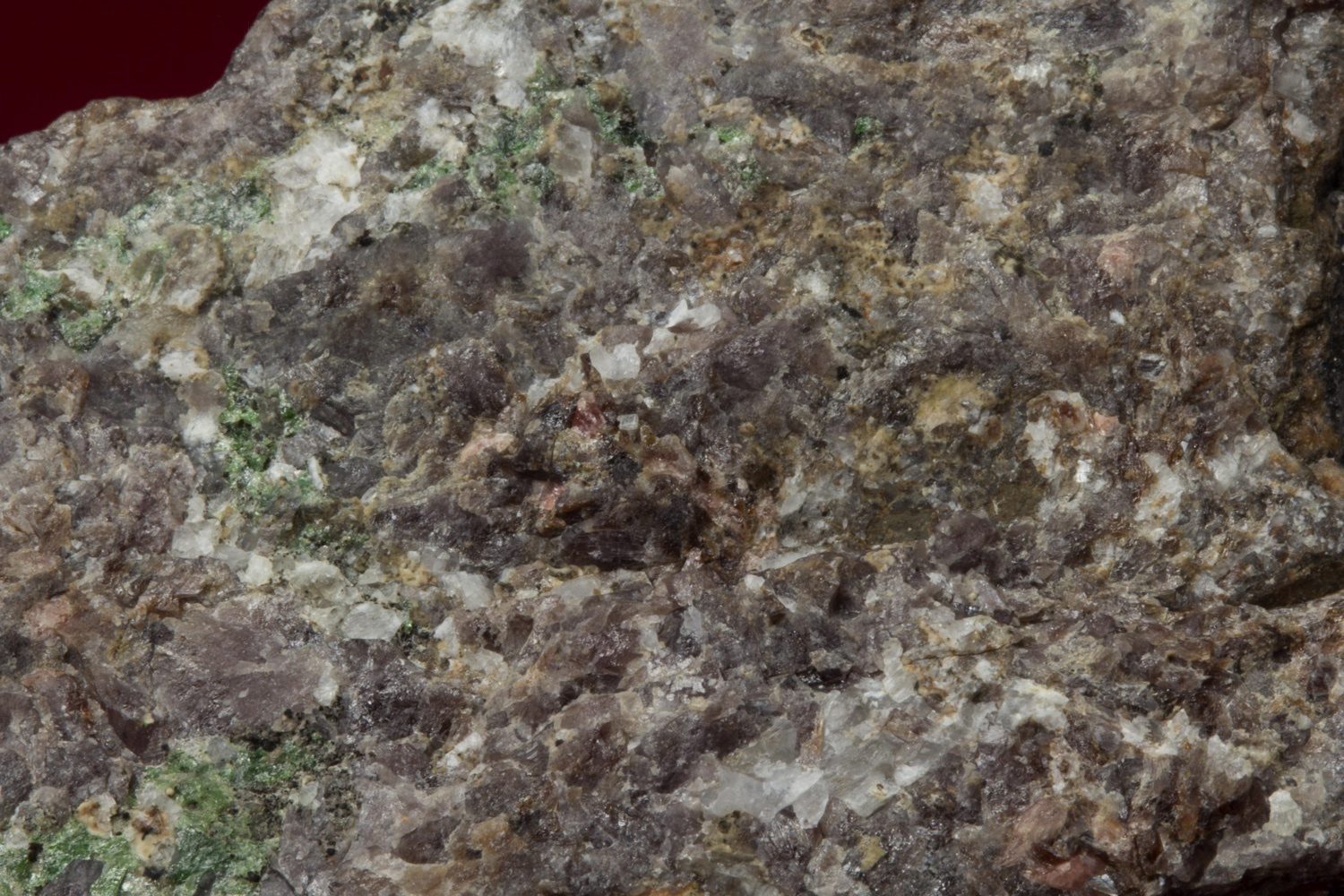
Magnussonite , Allactite , Hausmannite , Dolomite Locality: Långban , Filipstad , Värmland , Sweden ( Locality at mindat.org ) Dimensions: 7.0 cm x 6.5 cm x 2.0 cm A very good specimen of hausmannite-dolomite ore exhibiting a fracture surface coated with relatively coarse, inter-grown blades of dark pink allactite and scattered patches of emerald-green magnussonite. Allactite is an uncommon manganese arsenate hydroxide. From Langban, Filipstad, Varmland, Sweden, the type locality for magnussonite, a manganese arsenite. Ex. Paulo Matioli and Swedish Natural History Museum collections with labels. — Photo: Robert M. Lavinsky · CC BY-SA 3.0
Magnussonite
Magnussonite is an IMA-recognized mineral species in the halide class, with the chemical formula Mn²⁺₁₀As³⁺₆O₁₈(OH,Cl)₂.
It crystallizes in the cubic crystal system (space group Ia-3d). It is a member of the Magnussonite structural group.
Key properties: Mohs hardness 3.5–4; specific gravity 4.14–4.49; White streak; Vitreous to resinous luster.
IMA symbol Mnu, IMA status: approved, named in 1957.
Found in a metamorphosed Fe–Mn orebody (Långban, Sweden); very rare in a metamorphosed stratiform zinc orebody (Sterling Hill, New Jersey, USA).
It is found associated with Dolomite, hausmannite, hematite, calcite, trigonite, dixenite, manganiferous serpentine (Långban, Sweden); katoptrite, sonolite, hausmannite, manganosite.
The name refers to Nils Harald Magnusson (1890–1976), formerly Director, Geological Survey of Sweden, for his contributions to knowledge of the Långban mine.