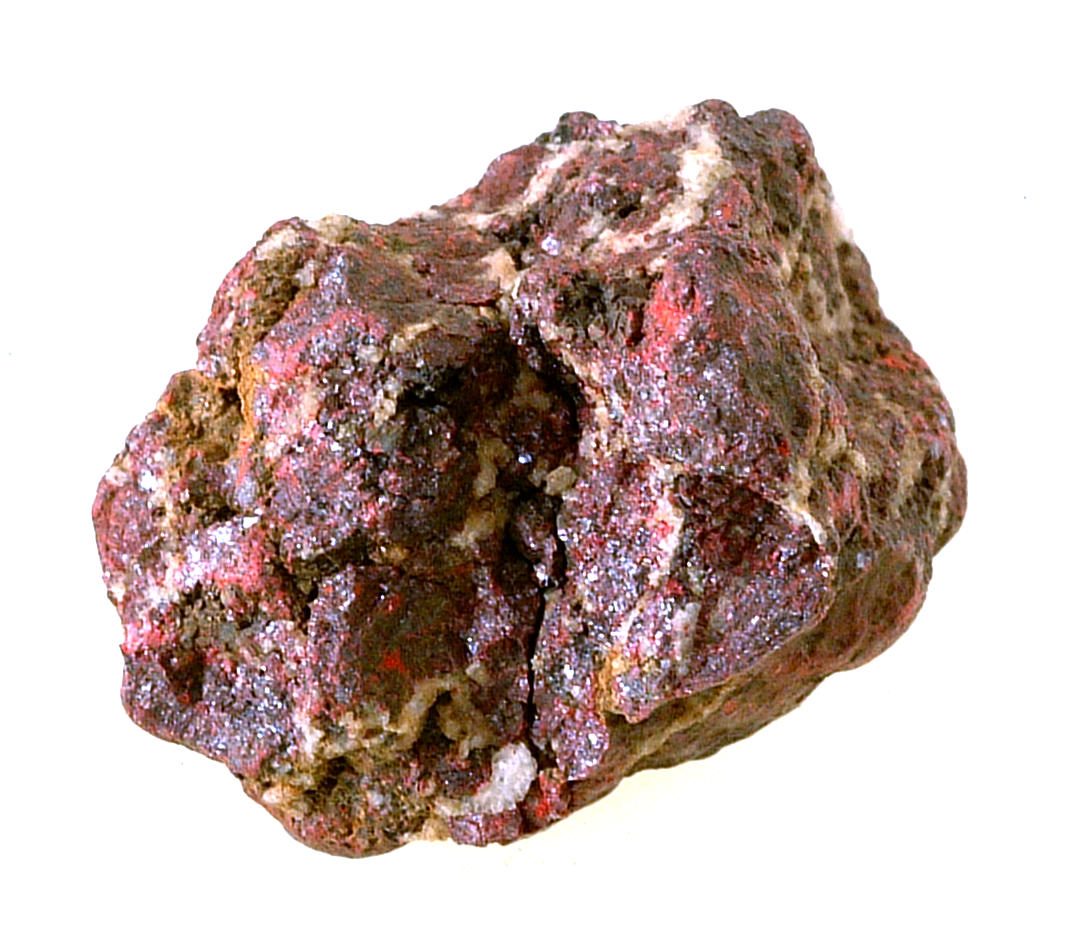
Minium (Pb3O4), forms when lead minerals are highly oxidized. It often forms as a light or reddish coating on other Pb minerals. However, some specimens are exceptional and boast a bright red color with a high adamantine luster. The most spectacular specimens come from Broken Hill, New South Wales, Australia. Unfortunately, these specimens formed during a mine fire and some mineralogists do not consider them natural. — Photo: Shannon Heinle · CC0
Minium
Natural red lead oxide (Pb₃O₄) — a bright scarlet secondary mineral, and the historic pigment 'red lead'.
Intro adapted from Wikipedia (CC BY-SA).
Minium is an IMA-recognized mineral species in the oxides & hydroxide class, with the chemical formula Pb²⁺₂Pb⁴⁺O₄.
It crystallizes in the tetragonal crystal system (space group P4_2/mbc).
Key properties: Mohs hardness 2.5; specific gravity 8.9–9.2; Yellow-orange streak; Dull to slightly greasy luster.
IMA symbol Mnm, grandfathered status — known before the IMA’s founding, named in 1806.
Found as a rare secondary mineral in some highly oxidized lead-bearing mineral deposits; can form during mine fires.
It is found associated with Galena, cerussite, massicot, litharge, lead, wulfenite, mimetite.
The name comes from the Latin, through Spanish, for cinnabar, which was once adulterated with red lead oxide, now applied exclusively to that compound.