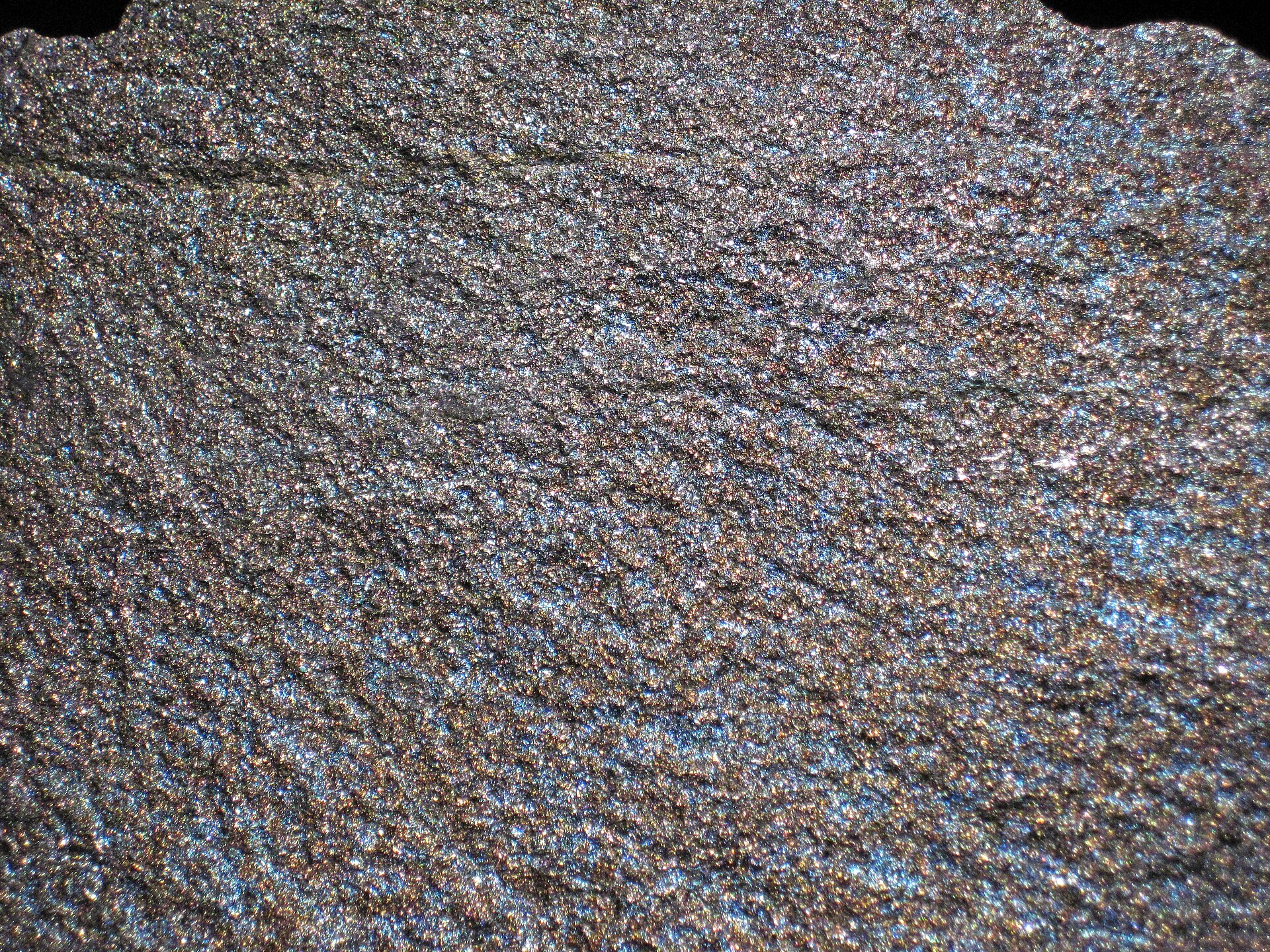
Pentlandite-pyrrhotite from the Sudbury Impact Structure in Ontario, Canada. (CMNH 12045, Cleveland Museum of Natural History, Cleveland, Ohio, USA) Pentlandite — Photo: James St. John · CC BY 2.0
Pentlandite
Also known as: Nickel iron sulfide.
Iron-nickel sulfide — the most important ore mineral of nickel, forming massive bronze-colored ore.
Intro adapted from Wikipedia (CC BY-SA).
Pentlandite is an IMA-recognized mineral species in the sulfide class, with the chemical formula (Ni,Fe)₉S₈.
It crystallizes in the cubic crystal system (space group Fm3m). It is a member of the Pentlandite structural group.
Key properties: Mohs hardness 3.5–4; specific gravity 4.6–5; typically yellow or brown; Pale bronze-brown streak; Metallic. R: (400) 32.8, (420) 35.1, (440) 37.1, (460) 39.2, (480) 41.1, (500) 42.9, (520) 44.5, (540) 46.1 luster.
IMA symbol Pn, grandfathered status — known before the IMA’s founding, named in 1856.
Commonly intimately in association with pyrrhotite; in ultramafic rocks and perhaps derived from them by magmatic segregation; also found in mantle xenoliths and undersea “black smoker” deposits; rarely in meteorites.
It is found associated with Pyrrhotite, troilite, chalcopyrite, cubanite, mackinawite, magnetite.
The mineral was named to honor Joseph Barclay Pentland (1797–1873), Irish natural scientist and historian, who first noted the mineral.
Collections: Metals & Native Elements.