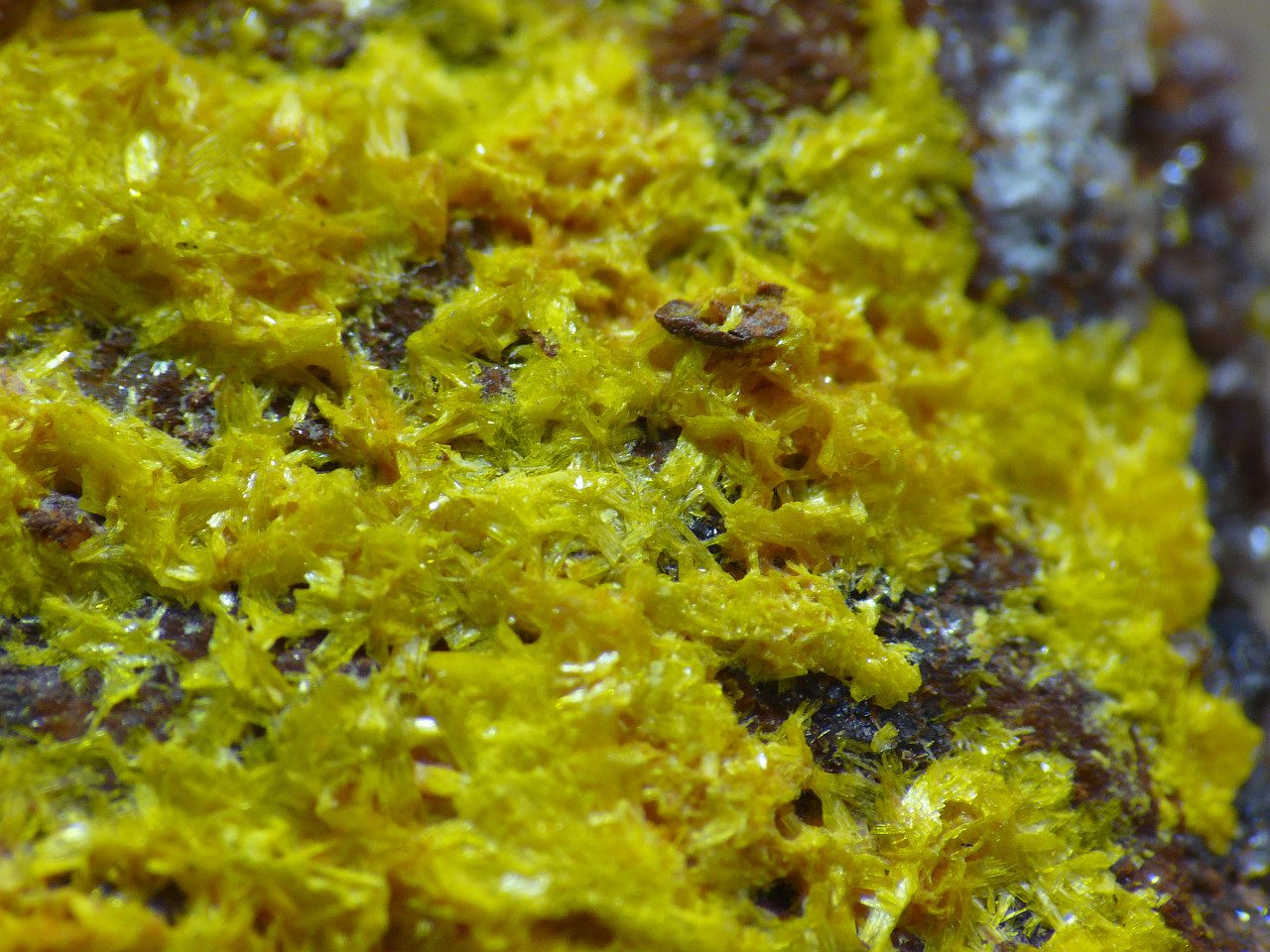
Phosphuranylit, South Alligator River, Australien, FOV: 6mm — Photo: Weirdmeister · CC BY-SA 4.0
Phosphuranylite
A potassium-calcium uranyl phosphate described in 1879 from North Carolina's Flat Rock pegmatite.
Intro adapted from Wikipedia (CC BY-SA).
Phosphuranylite is an IMA-recognized mineral species in the phosphate class, with the chemical formula KCa(H₃O)₃(UO₂)₇(PO₄)₄O₄·8H₂O.
It crystallizes in the orthorhombic crystal system (space group Bmmb). It is a member of the Phosphuranylite structural group.
Key properties: Mohs hardness 2–2.5; specific gravity 4.1; optically biaxial.
IMA symbol Puy, grandfathered status — known before the IMA’s founding, named in 1879.
A secondary mineral typically found in the weathering zone of granite pegmatites, coating cracks and fissures near altered uraninite; in paleochannels in sandstone Colorado Plateau-type U–V deposits.
It is found associated with Uraninite, autunite, meta-autunite, uranophane, uranophane-beta, becquerelite, curite, parsonsite, torbernite, metatorbernite, saléeite, sabugalite, haiweeite.
The name refers to phosphorus and uranyl uranium in the composition.