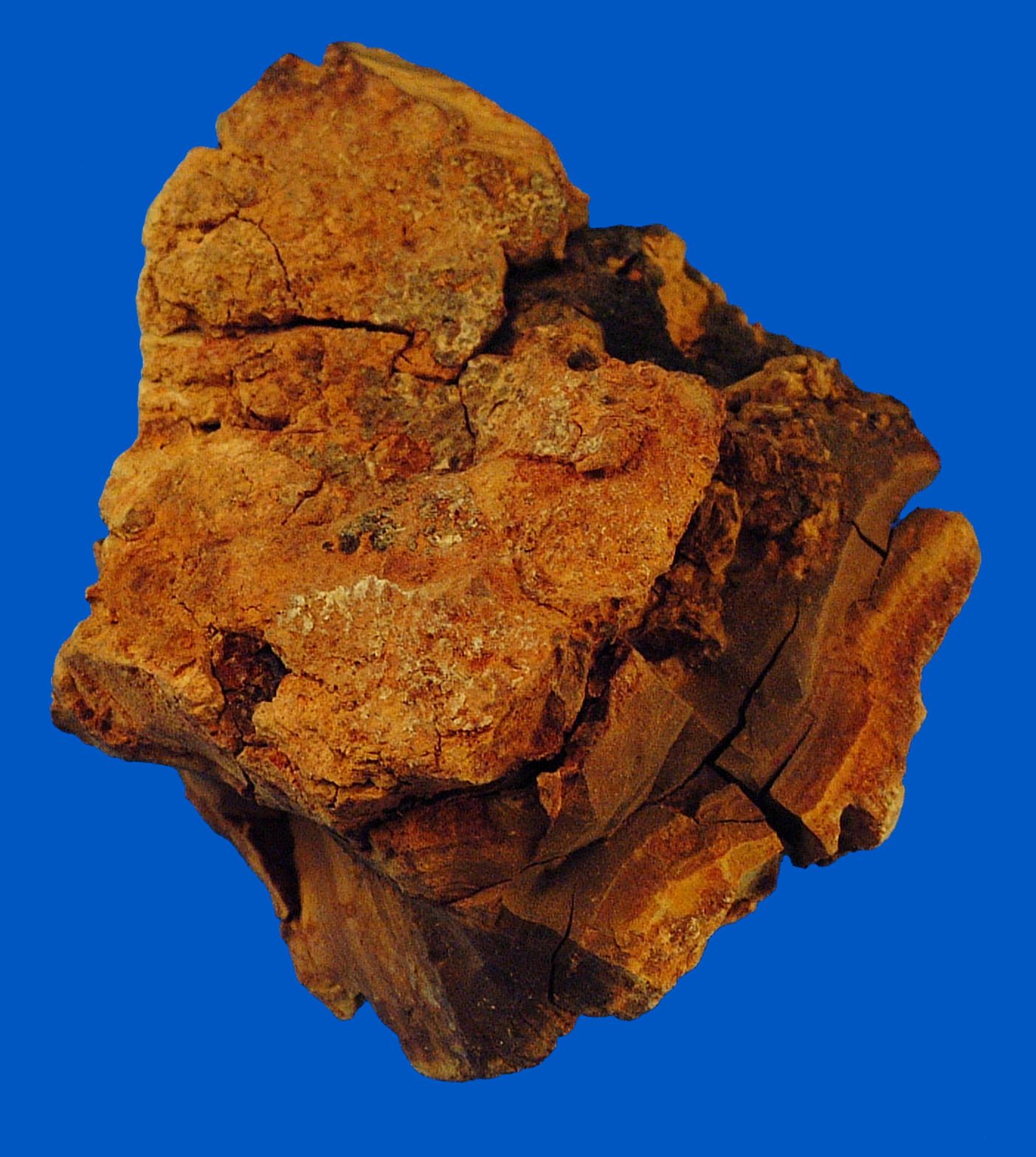
Pitticite is an amorphous hydrous ferric arsenate sulphate. It is a late secondary mineral formed by oxidation of earlier arsenic-bearing species and may be deposited by mine and spring waters. Its name comes from the Greek for “pitch”, for its typical resinous appearance. — Photo: Darla Sondrol · CC0
Pitticite
Pitticite is an IMA-recognized mineral species in the arsenate class, with the chemical formula [Fe,AsO₄,SO₄,H₂O].
It crystallizes in the amorphous crystal system.
Key properties: Mohs hardness 2–3; specific gravity 2.2–2.5; Yellow to white streak; Waxy, vitreous, greasy, may be dull, earthy luster.
IMA symbol Ptc, IMA status: questionable, named in 1813.
A late secondary mineral typically produced through oxidation of earlier arsenic-bearing species; may be deposited from mine and spring waters.
It is found associated with Haidingerite, pharmacolite, pharmacosiderite, diadochite, scorodite, erythrite, melanterite, gypsum, alunite, “limonite”.
Its name comes from the Greek for pitch, for its typical resinous appearance.