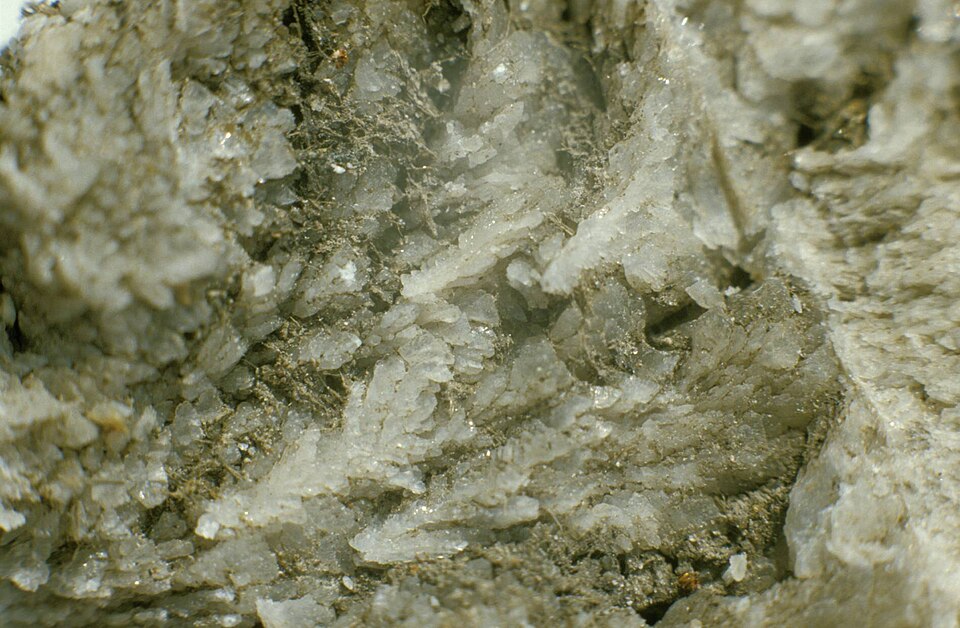
Photo: Koelle · CC BY-SA 3.0 Unported
Struvite
Magnesium ammonium phosphate — a mineral that crystallizes in kidneys, sewers and decomposing organic matter; 'coffin stone' to the Victorians.
Intro adapted from Wikipedia (CC BY-SA).
Struvite is an IMA-recognized mineral species in the phosphate class, with the chemical formula (NH₄)Mg(PO₄)·6H₂O.
It crystallizes in the orthorhombic crystal system (space group Pmn2_1). It is a member of the Struvite structural group.
Key properties: Mohs hardness 2; specific gravity 1.711; Vitreous luster; refractive index 1.498; optically biaxial.
IMA symbol Suv, grandfathered status — known before the IMA’s founding, named in 1846.
Found in peaty earth intermixed with cattle dung (Hamburg, Germany); typically formed in bird or bat guano in caves and surface deposits.
It is found associated with Newberyite, hannayite, brushite, stercorite.
The mineral was named to honor Heinrich Christoph Gottfried Struve (1772–1851), German mineral collector, serving as Russian Consul at Hamburg, Germany when the mineral was discovered.