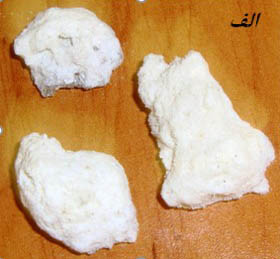
Tamarugite hand-specimen from Ghoroghchi area, Meimeh, Isfahan provinence, Iran — Photo: Hamdollah Rezazadeh · CC BY-SA 4.0
Tamarugite
A colorless hydrated sodium-aluminium sulfate — an evaporite found on all seven continents.
Intro adapted from Wikipedia (CC BY-SA).
Tamarugite is an IMA-recognized mineral species in the sulfate class, with the chemical formula NaAl(SO₄)₂·6H₂O.
It crystallizes in the monoclinic crystal system (space group P2_1/a). It is a member of the Tamarugite structural group.
Key properties: Mohs hardness 3; specific gravity 2.06; Vitreous luster; optically biaxial.
IMA symbol Tmr, grandfathered status — known before the IMA’s founding, named in 1889.
Found as a secondary mineral in oxidized sulfide-bearing alkali-rich aluminous rocks, with sodium supplied from hydrothermal solutions or sea-spray; as efflorescences in active geothermal systems.
It is found associated with Pickeringite, coquimbite, quenstedtite, sideronatrite, mendozite, kröhnkite, halite, alunogen, meta-alunogen, potassium alum, epsomite, halotrichite, halite.
The name refers to the originally-noted occurrence at Cerro Pintados, in the Tamarugal Pampa, Chile.