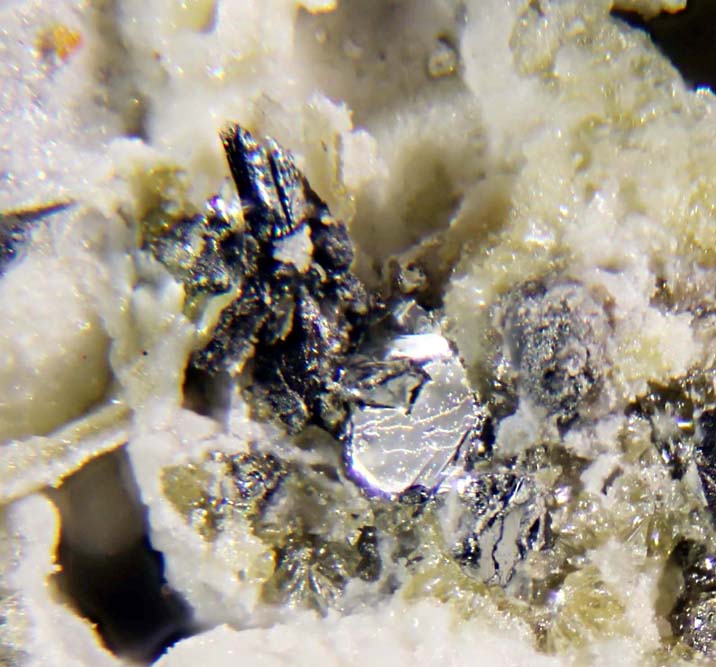
Outstanding metallic crystals of the very rare native element zinc. Associated minerals in the specimen are white hydrozincite and zincite. From: Sclaignaeux, N — Photo: David Hospital · CC BY-SA 4.0
Zinc
Bluish-white native zinc (symbol Zn, atomic number 30) — rarely found uncombined but essential to alloys and biology.
Intro adapted from Wikipedia (CC BY-SA).
Zinc is an IMA-recognized mineral species in the native element class, with the chemical formula Zn.
It crystallizes in the hexagonal crystal system (space group P6_3/mmc).
Key properties: Mohs hardness 2.5; specific gravity 6.9–7.2; typically gray or blue; White and slightly grayish streak; Metallic. Rc~: n.d luster.
IMA symbol Zn, grandfathered status — known before the IMA’s founding.
Found in the oxidized zone of Pb-Zn-Ag deposits, derived from sphalerite by oxidation (Elsa mine, Canada); coatings on fibrous volcanic glass, as a volcanic sublimate (Mount Elbrus, USSR); in platinum concentrates (Aurora deposit, USSR).
It is found associated with Silver, sulfur, oxidized sphalerite, "limonite", manganese oxides, cerussite, anglesite, freibergite, galena (Elsa mine, Canada); copper, Cu-Zn alloy.
The name comes from the German zink, of obscure origin.
Collections: Metals & Native Elements, Rare & Remarkable.