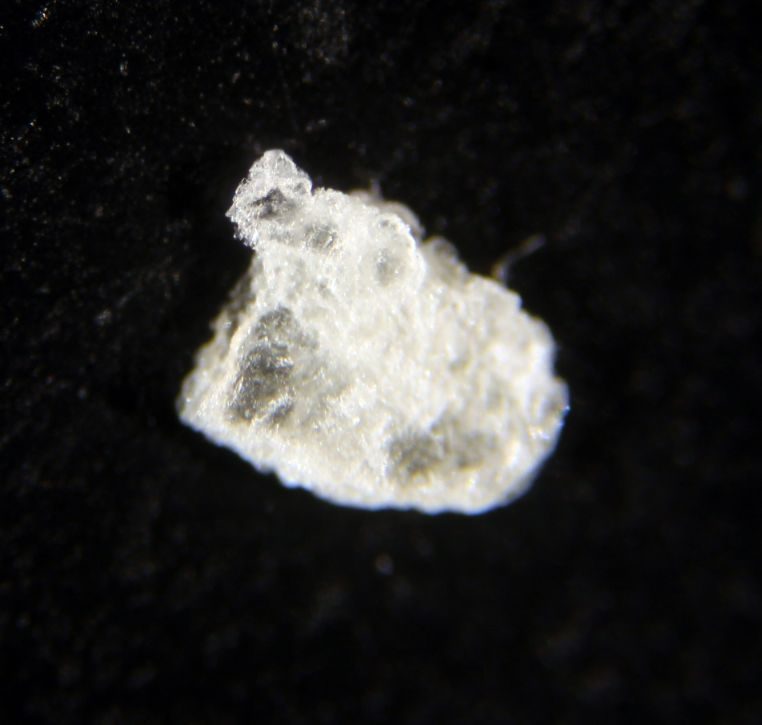
A single crystal of the extremely rare magnesium silicate mineral chesterite from the type locality in Chester (Carlton Quarry, Chester, Windsor County, Vermont, United States of America). — Photo: David Hospital · CC BY-SA 4.0
Chesterite
A rare silicate related to amphiboles and jimthompsonite, named for Chester, Vermont where it was described in 1977.
Intro adapted from Wikipedia (CC BY-SA).
Chesterite is an IMA-recognized mineral species in the silicate class, with the chemical formula Mg₁₇Si₂₀O₅₄(OH)₆.
It crystallizes in the orthorhombic crystal system (space group A2_1ma).
Key properties: Mohs hardness 2.25; specific gravity 3.08; refractive index 1.63; optically biaxial.
IMA symbol Chs, IMA status: approved, named in 1977.
Found in black wallrock between chlorite and actinolite zones of a metamorphosed ultramafic body.
It is found associated with Jimthompsonite, clinojimthompsonite, anthophyllite, cummingtonite, talc.
The name refers to the Chester, Vermont, USA, locality.