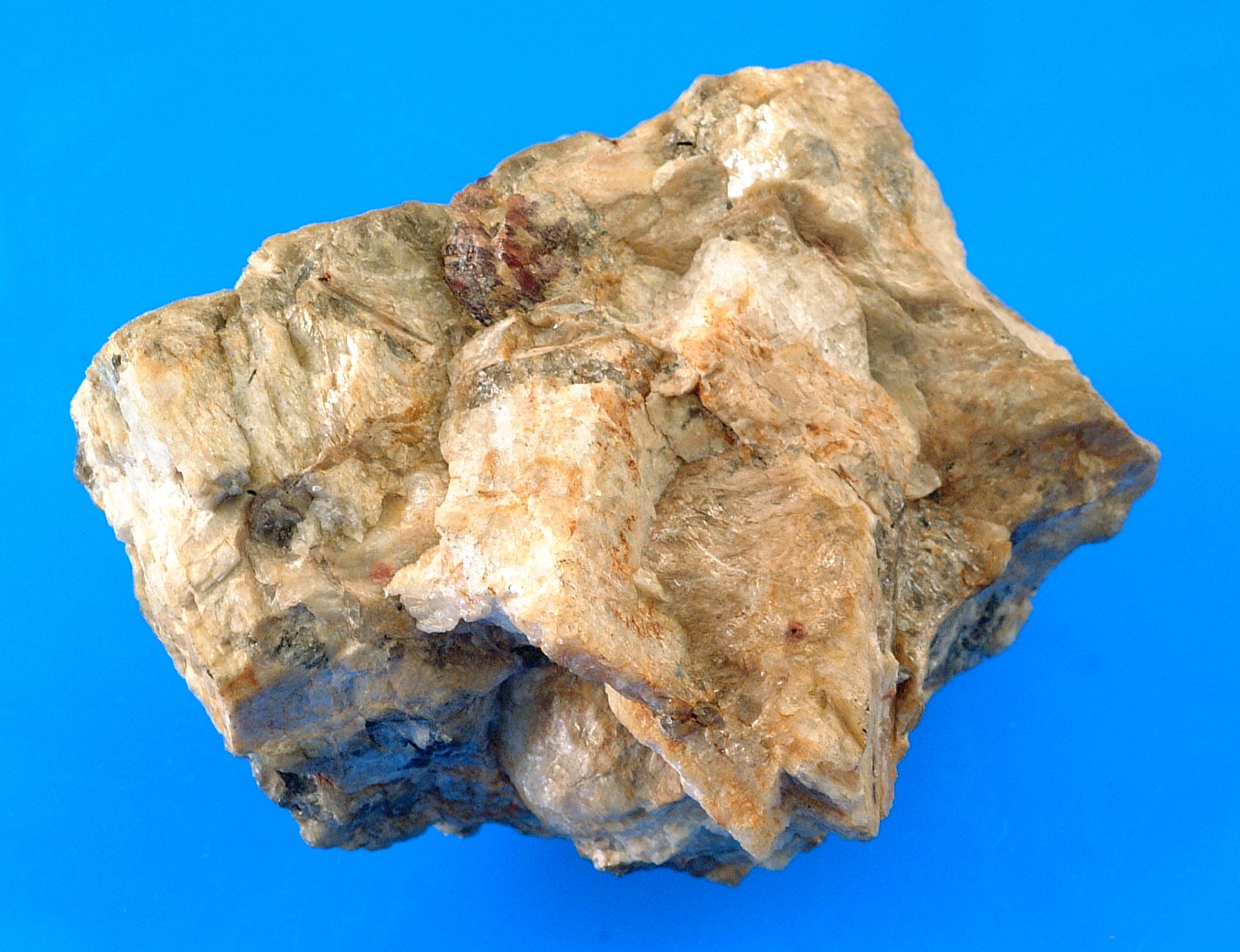
Chrysoberyl (BeAl2O4) is a rare mineral that occurs in granites, pegmatites, mica schists, and some placers. It has three main gem variaties. The first type is simply faceted transparent Chrysoberyl that is usually found in yellowish green to green, yellow and shades of brown. The second variety is the “cat's eye”, also known as cymophane. The third and perhaps most interesting variaty is alexandrite. This rare and valuable gemstone has the unique property of changing color depending on the type of light that hits it. In sunlight, it appears almost emerald green, while in artificial incandescent light it appears a violet-red. Chrysoberyl's name comes from the Greek chrysos meaning “golden” and the mineral beryl. — Photo: Shannon Heinle · CC0
Chrysoberyl
Beryllium aluminate — a hard gem species (Mohs 8.5) whose varieties include alexandrite and cat's eye; its name means 'golden beryl'.
Intro adapted from Wikipedia (CC BY-SA).
Chrysoberyl is an IMA-recognized mineral species in the oxides & hydroxide class, with the chemical formula BeAl₂O₄.
It crystallizes in the orthorhombic crystal system (space group Pbnm). It is a member of the Olivine structural group.
Key properties: Mohs hardness 8.5; specific gravity 3.75; White streak; Vitreous luster; refractive index 1.749; optically biaxial.
IMA symbol Cbrl, grandfathered status — known before the IMA’s founding, named in 1789.
Characteristic of some granite pegmatites in association with high-grade mica schists or reaction zones in ultramafic rocks; also detrital in placers.
It is found associated with Quartz, muscovite, albite, beryl, columbite, tourmaline, topaz, kyanite, staurolite (granite pegmatites); phenakite, apatite, tourmaline.
Its name comes from the Greek for golden, in allusion to the mineral’s color, and beryl.