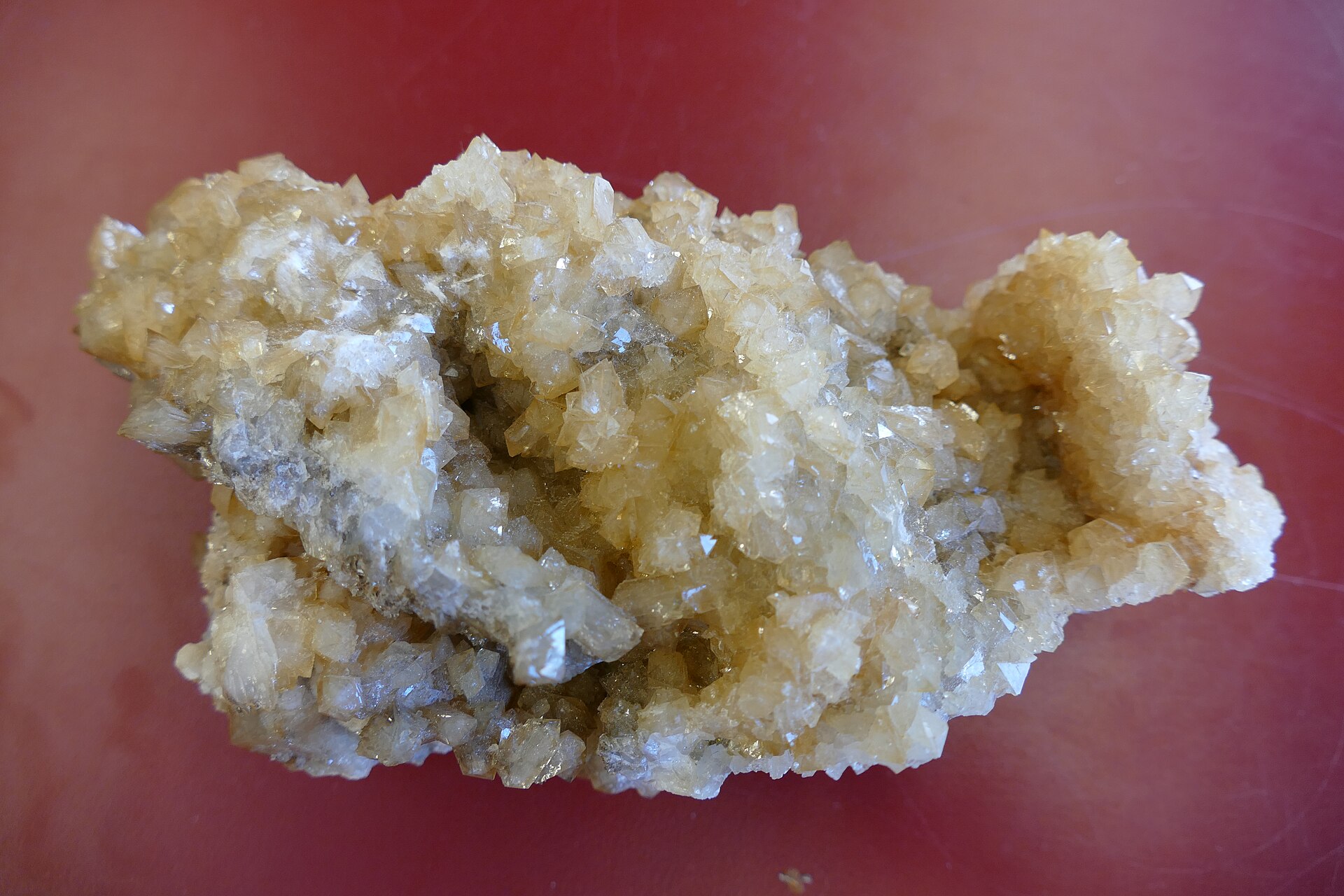
Colemanite - Place of discovery: Zanjan, Iran — Photo: Kritzolina · CC BY-SA 4.0
Colemanite
A hydrated calcium borate of alkaline evaporite lakes — an alteration product of borax and ulexite and a major boron ore.
Intro adapted from Wikipedia (CC BY-SA).
Colemanite is an IMA-recognized mineral species in the oxides & hydroxide class, with the chemical formula CaB₃O₄(OH)₃·H₂O.
It crystallizes in the monoclinic crystal system (space group P2_1/a).
Key properties: Mohs hardness 4–4.5; specific gravity 2.423; typically colorless or white or gray or yellow; white streak; Vitreous to adamantine luster; refractive index 1.597; optically biaxial.
IMA symbol Cole, grandfathered status — known before the IMA’s founding, named in 1883.
A common constituent in borate deposits formed in arid alkaline lacustrine environments, deficient in sodium and carbonate, typically under warm conditions.
It is found associated with Howlite, ulexite, searlesite, priceite, nobleite, ginorite, gowerite, lüneburgite, kernite, gypsum, calcite, celestine.
The mineral was named to honor William Tell Coleman (1824–1893), pioneer developer of the borax industry in California, USA.
Collections: Collector Favorites.