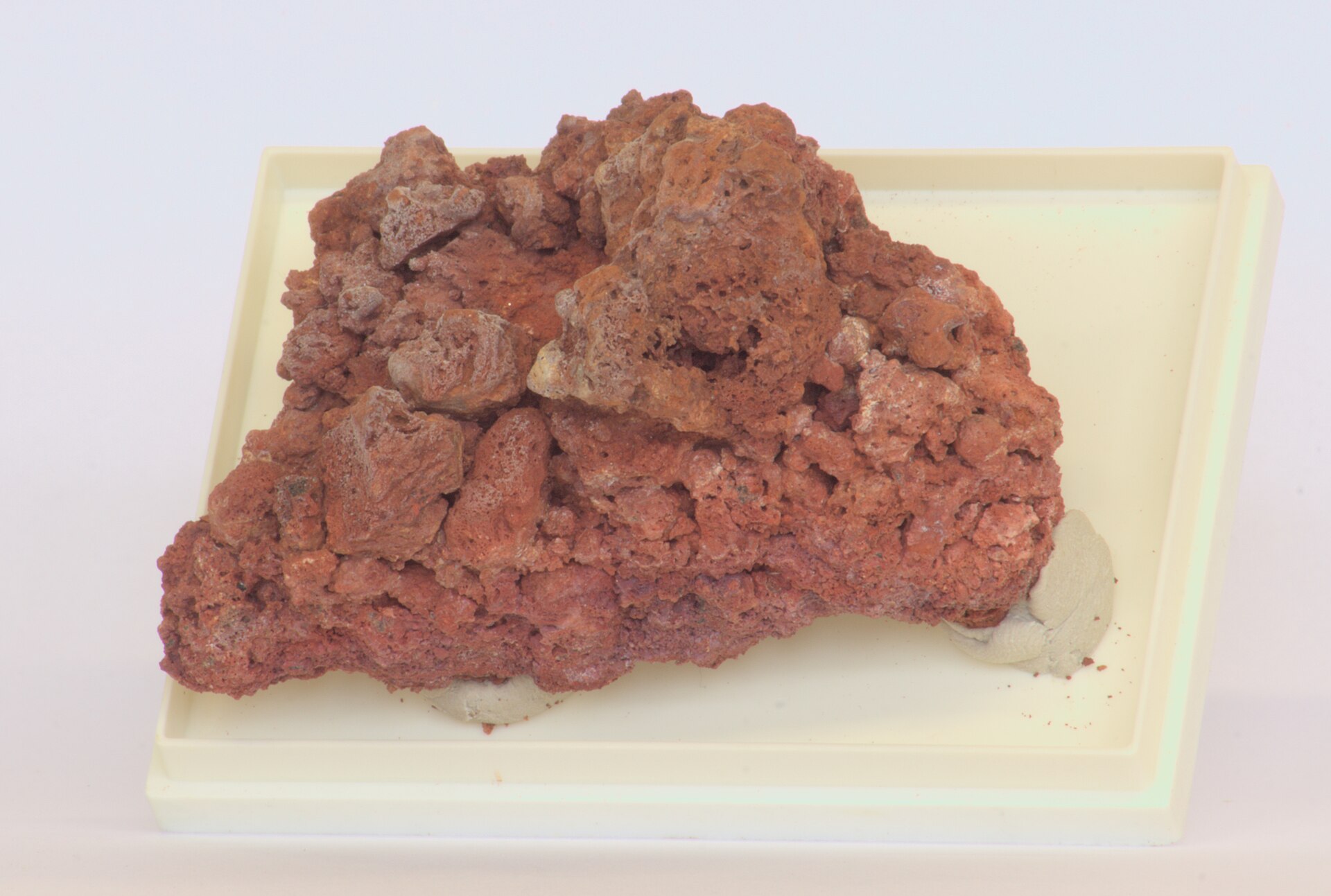
Cotunnite from the Tolbachik volcano, Kamchatka, Russia — Photo: Slashme · CC BY 4.0
Cotunnite
Natural lead chloride — soft, dense and white to yellow-green, best known from Vesuvian fumarole deposits.
Intro adapted from Wikipedia (CC BY-SA).
Cotunnite is an IMA-recognized mineral species in the halide class, with the chemical formula PbCl₂.
It crystallizes in the orthorhombic crystal system (space group Pbnm).
Key properties: Mohs hardness 2.5; specific gravity 5.8; typically white or colorless or yellow or green; white streak; Adamantine, silky to pearly luster; refractive index 2.225; optically biaxial.
IMA symbol Cot, grandfathered status — known before the IMA’s founding, named in 1825.
A volcanic sublimate or as an alteration of galena in saline environments. Also as an alteration product on leaden archeological objects or slag immersed in seawater.
It is found associated with Galena, cerussite, anglesite, matlockite (Caracoles, Chile); tenorite, ponomarevite, sofiite, burnsite, ilinskite, georgbokite, chloromenite, halite, sylvite.
The mineral was named to honor Domenico Cotugno (Cotunnius) (1736–1822), Italian physician and Professor of Anatomy, University of Naples, Naples, Italy.
Collections: Rare & Remarkable, Collector Favorites.