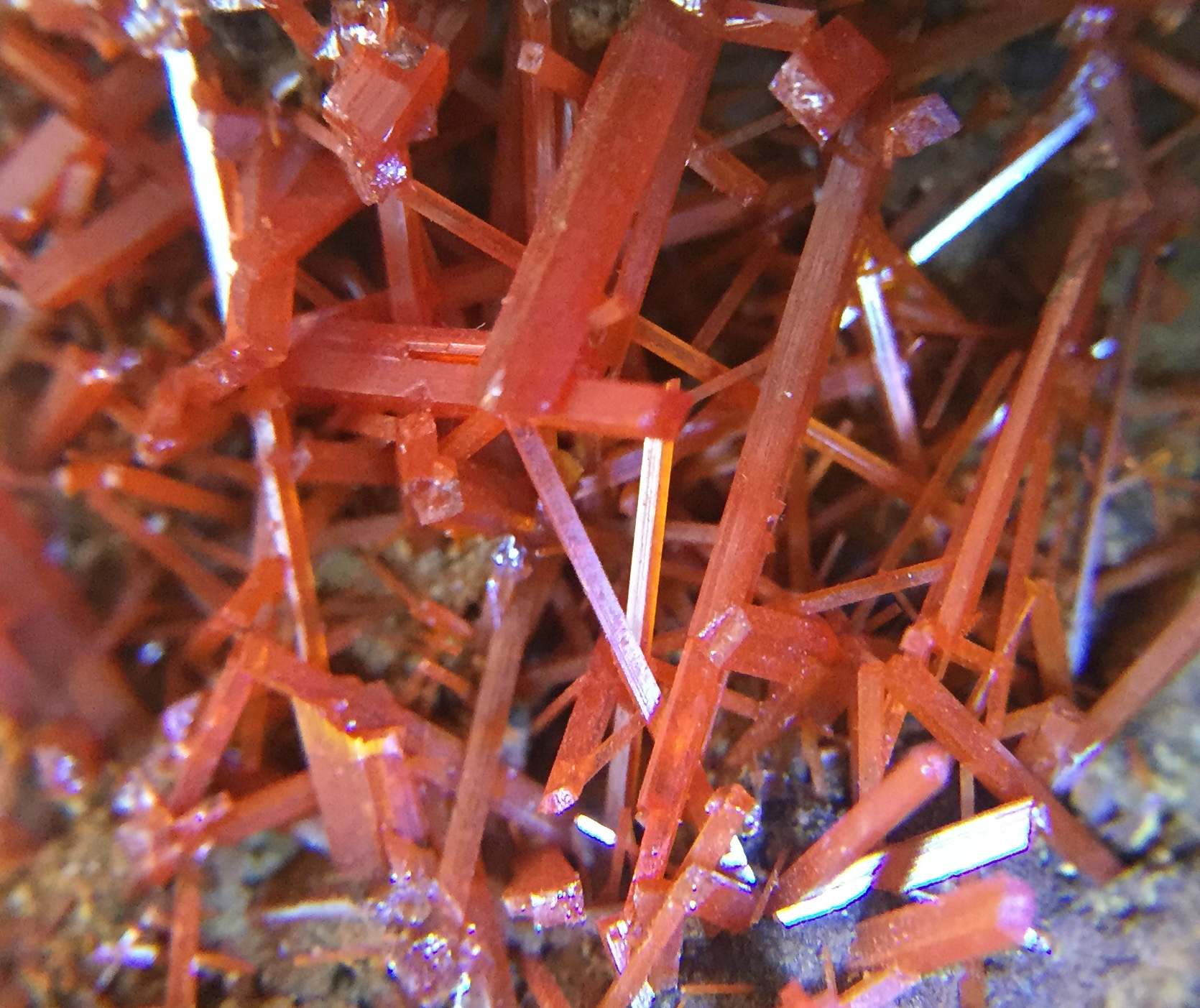
Crocoite Dimensions: 31 mm × 31 mm × 28 mm Locality: Adelaide Mine (Adelaide Pty Mine; Adelaide Proprietary Mine), Dundas mineral field, Zeehan District, West C — Photo: Charlie Smith · CC BY 3.0
Crocoite
Also known as: Red lead ore.
Lead chromate — brilliant orange-red monoclinic crystals identical in composition to the paint pigment chrome yellow; Tasmania's mineral emblem.
Intro adapted from Wikipedia (CC BY-SA).
Crocoite is an IMA-recognized mineral species in the chromate class, with the chemical formula Pb(CrO₄).
It crystallizes in the monoclinic crystal system (space group P2_1/n). It is a member of the Monazite, Baryte structural group.
Key properties: Mohs hardness 2.5–3; specific gravity 6–6.1; typically red or orange or yellow; Yellow-orange streak; Adamantine luster; refractive index 2.232; optically biaxial.
IMA symbol Crc, grandfathered status — known before the IMA’s founding, named in 1767.
Occurs as an uncommon secondary mineral in the oxidized portions of lead deposits in association with chromium-bearing rocks; may be of post-mine formation.
It is found associated with Phoenicochroite, vauquelinite, embreyite, pyromorphite, dundasite, vanadinite, descloizite, wulfenite, cerussite, anglesite, quartz, “limonite”.
Its name comes from the Greek for saffron, an allusion to the distinctive red-orange color.
Collections: Collector Favorites, Rare & Remarkable.