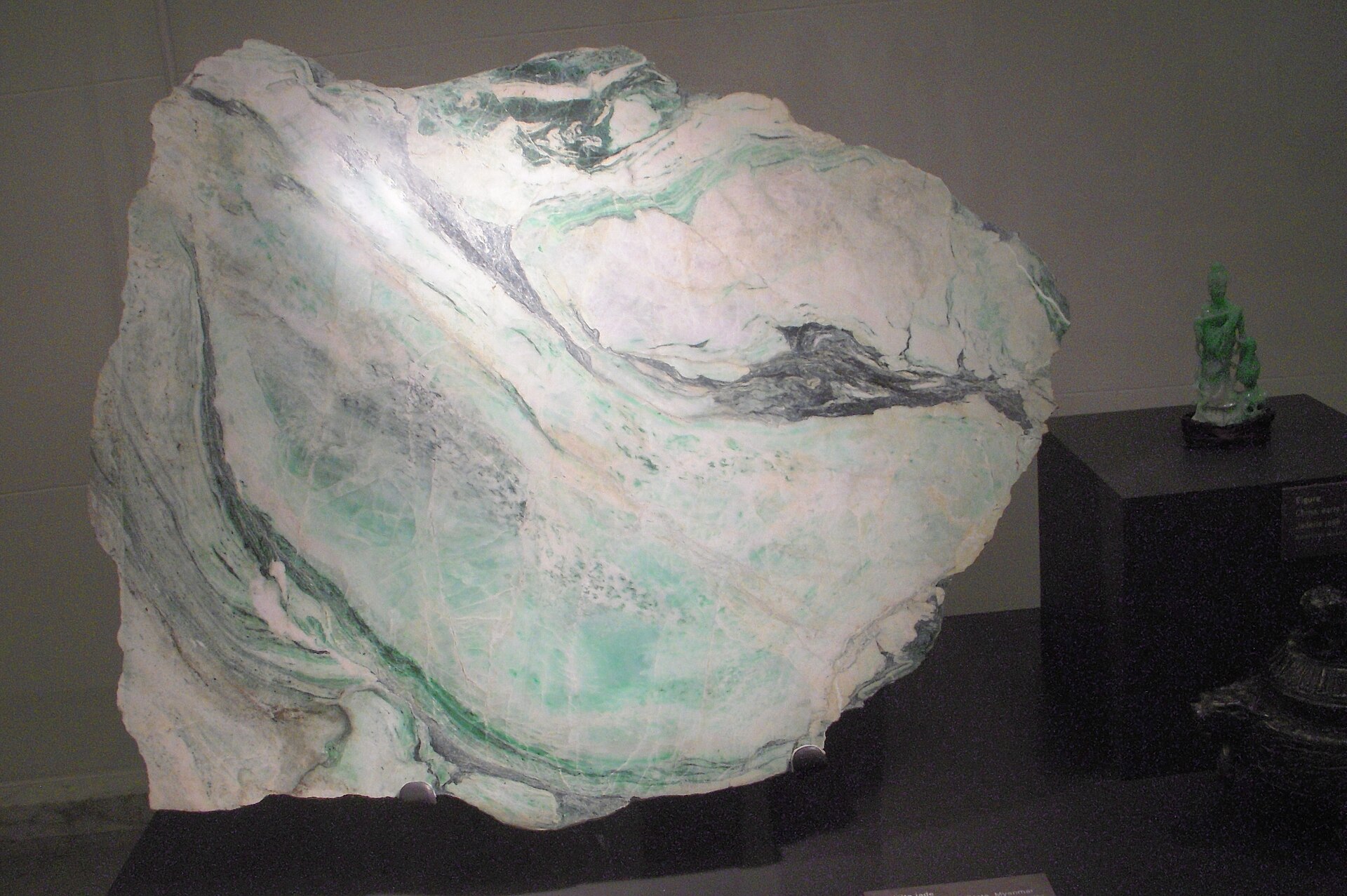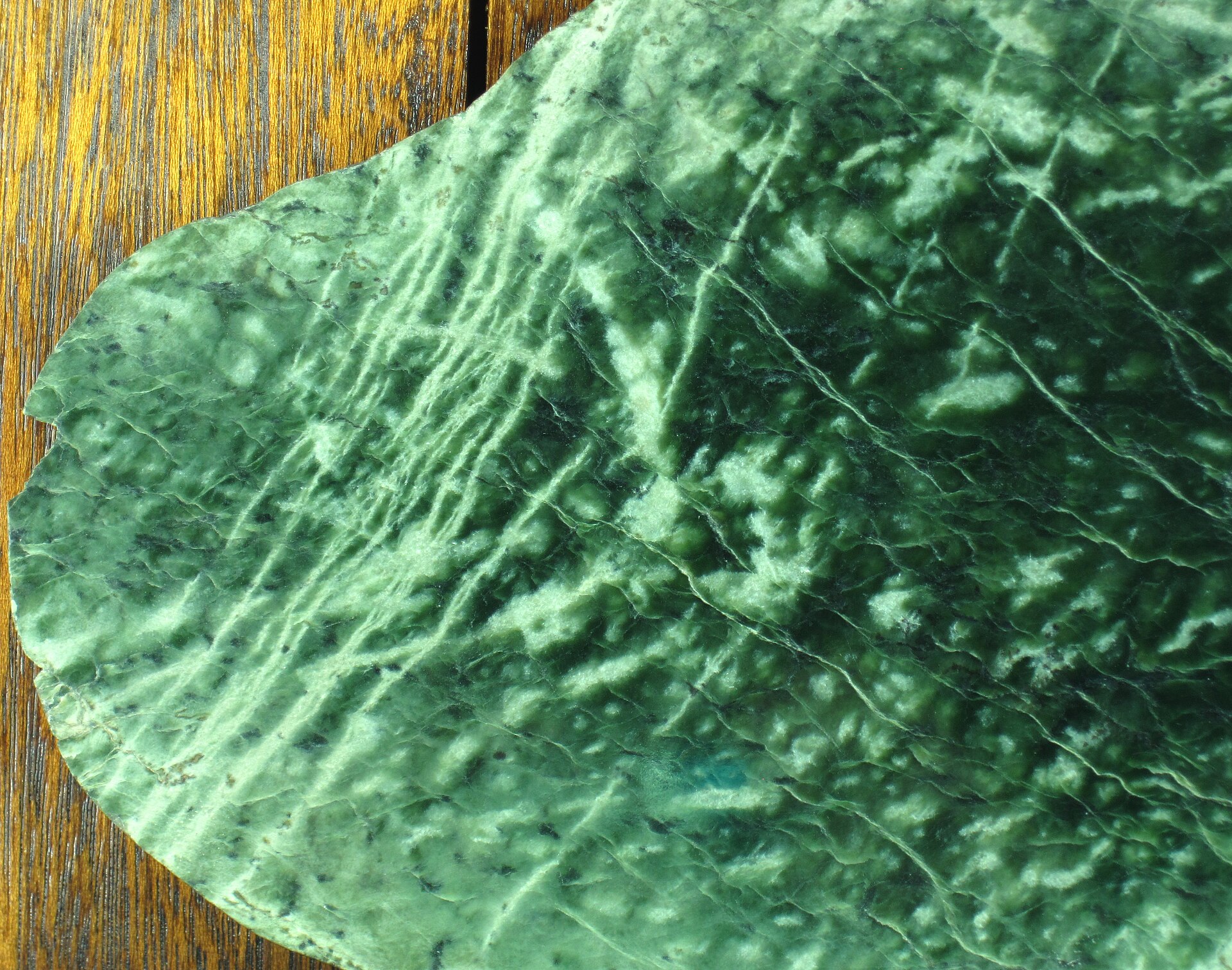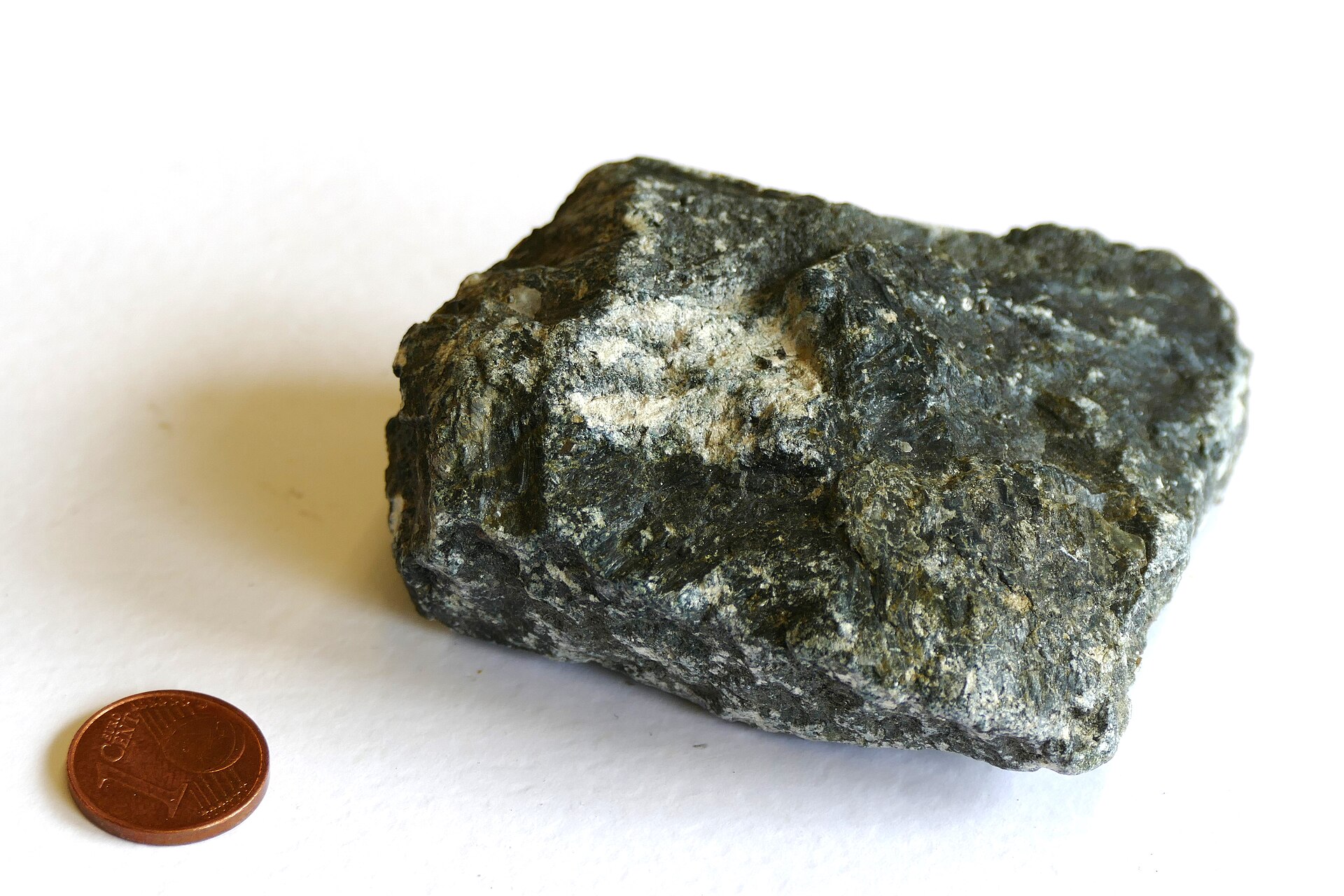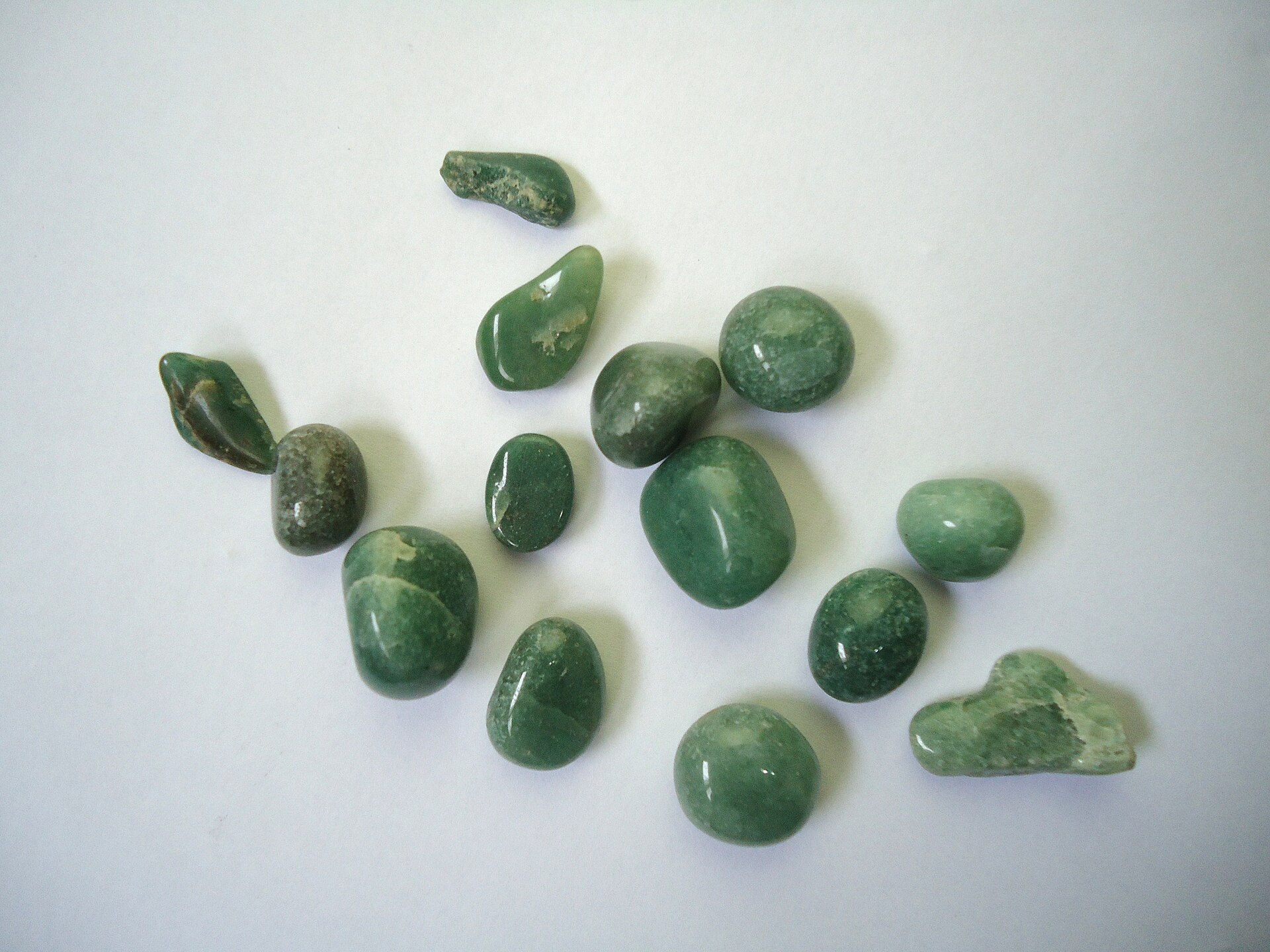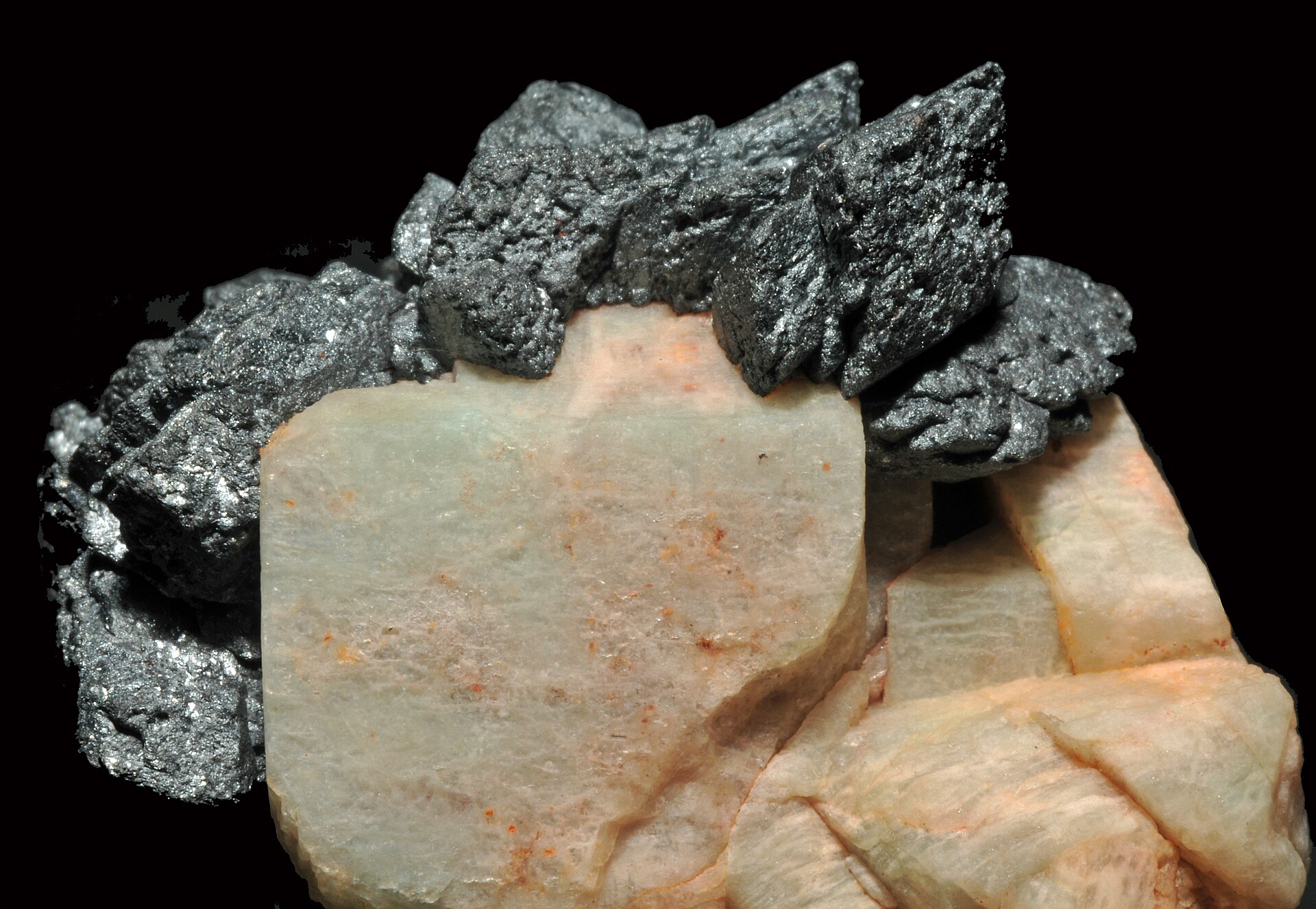
Jade — Photo: GTSPACE · CC BY-SA 4.0
What is Jade?
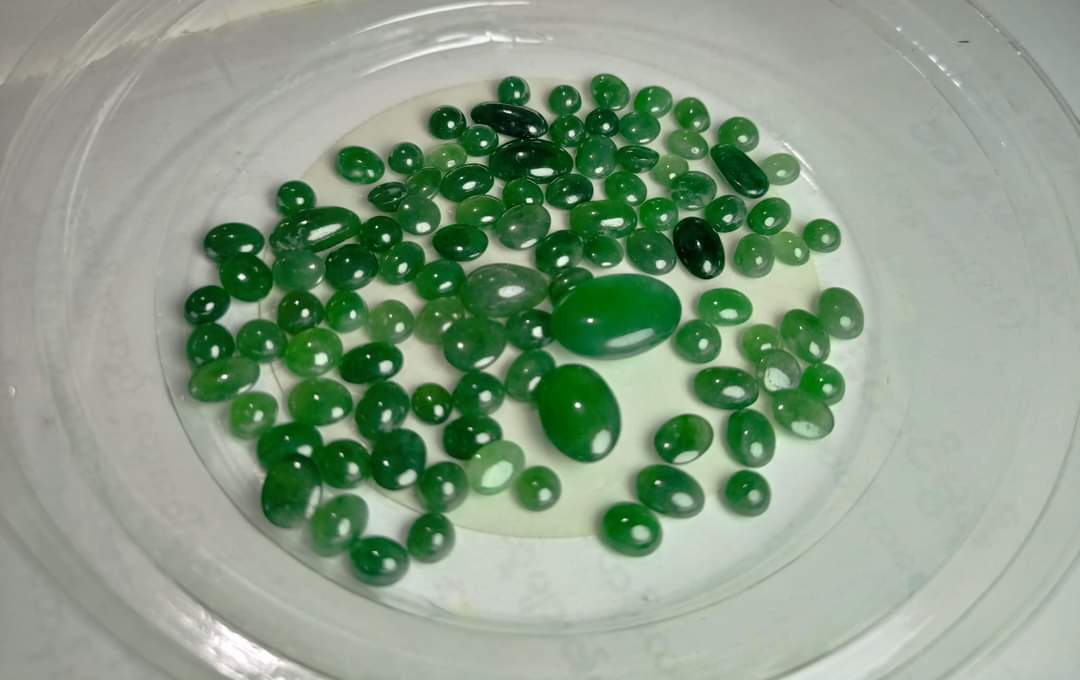
Jade is not one mineral but two: jadeite (a pyroxene, NaAlSi₂O₆) and nephrite (a felted amphibole). Both are so tough — not hard, tough — that prehistoric people made axes of it, and a jade boulder can ring like a bell when struck.
Nephrite's interlocked fibers make it the toughest natural material known; jadeite reaches the highest values — imperial emerald-green jadeite has sold for millions per carat.
Physical Properties
The full data table is in the panel alongside. Here’s what those numbers actually mean.
Toughness. Felted amphibole fibers (nephrite) resist breaking better than steel of the same thickness.
Jadeite vs nephrite. Jadeite is granular, heavier (SG 3.3), and reaches vivid imperial green; nephrite is fibrous and softer-looking.
Fakes. Serpentine, aventurine, and dyed quartz stand in — the sound test and SG separate them.
What It’s Used For
How to Identify It
| Looks like… | But differs because… | Quick test |
|---|---|---|
| Serpentine | Softer (2.5–5.5), waxy, lower density | Hardness |
| Aventurine | Sparkly quartzite — granular, harder, glassy | Texture |
Where It’s Found
Notable localities for fine specimens:
Gallery
Photographs from Wikimedia Commons contributors — click a credit on the main image for the source and license.
Related Minerals
Others in the same family and minerals it commonly grows alongside.