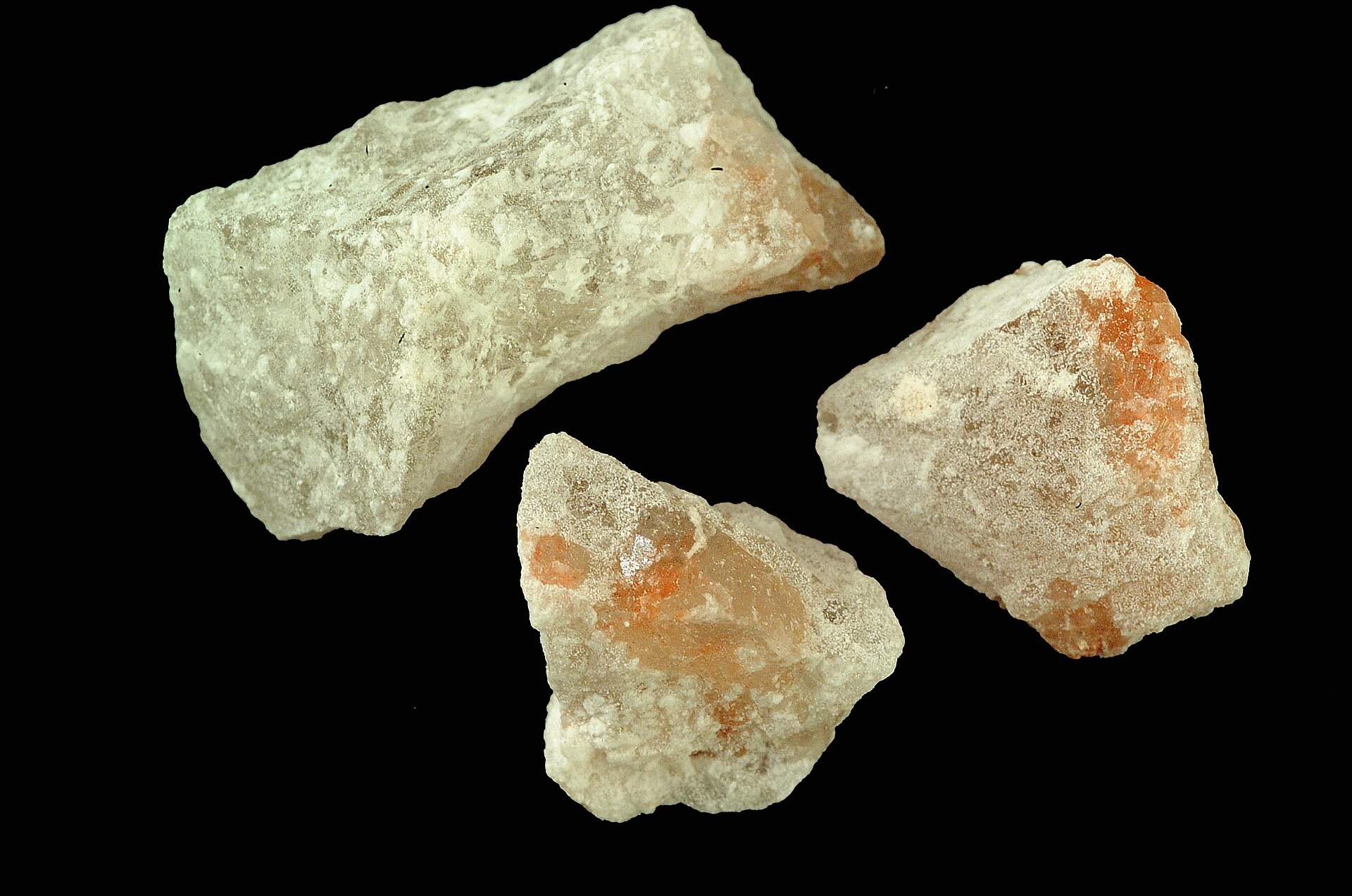
This photograph shows langbeinite samples from Eddy County, New Mexico. Langbeinite is an evaporite mineral and a source of potassium sulfate used in fertilizer — Photo: Darla Sondrol · CC0
Langbeinite
A colorless-to-violet cubic potassium-magnesium sulfate — an evaporite mineral mined for fertilizer.
Intro adapted from Wikipedia (CC BY-SA).
Langbeinite is an IMA-recognized mineral species in the sulfate class, with the chemical formula K₂Mg₂(SO₄)₃.
It crystallizes in the cubic crystal system (space group P2_13). It is a member of the Langbeinite structural group.
Key properties: Mohs hardness 3.5; specific gravity 2.83; typically colorless or white or pink or gray; white streak; Vitreous luster; refractive index 1.534; optically isotropic.
IMA symbol Lbn, grandfathered status — known before the IMA’s founding, named in 1891.
A principal ore of potash, mined from marine salt deposits.
It is found associated with Carnallite, halite, sylvite.
The mineral was named to honor A. Langbein, of Leopoldshall [Stassfurt], Germany.
Collections: Collector Favorites.