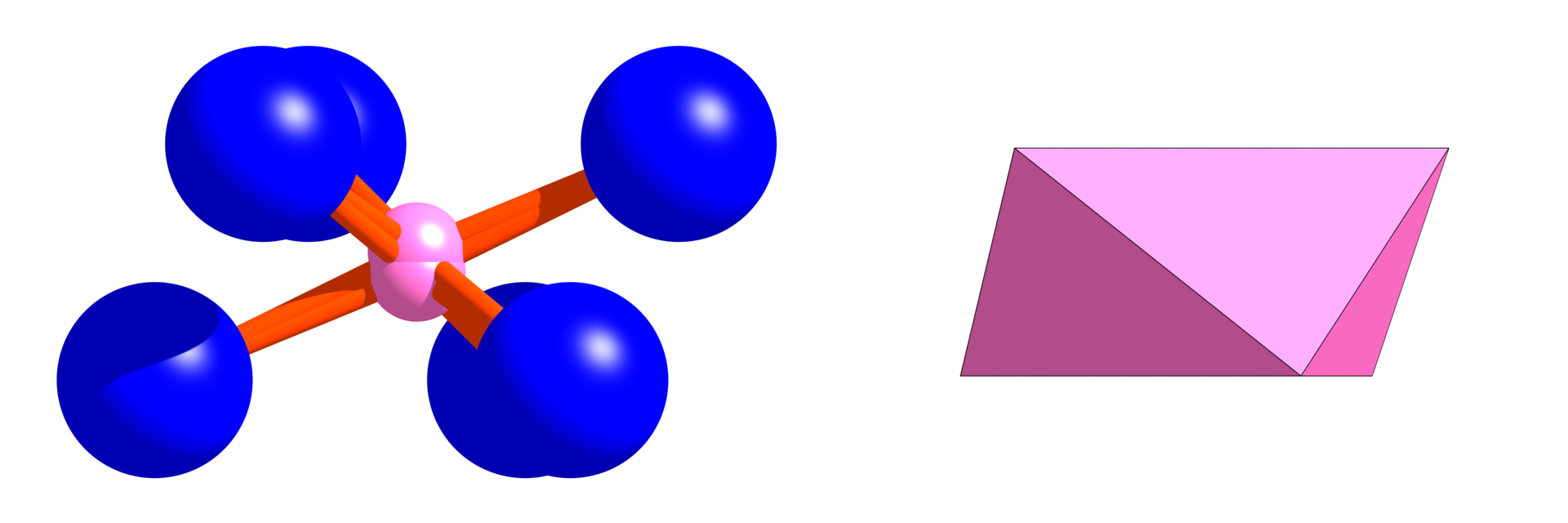
Milarite structure: A-position left: atoms (pink: cation, blue: oxygen) right: coordination polyhedron Data from: Hawthorne, F. C., Kimata M., Cerny P., Ball N. — Photo: Bubenik · CC BY-SA 4.0
Milarite
A rare potassium-calcium beryl-like ring silicate — green or yellow hexagonal crystals named for the Val Milar.
Intro adapted from Wikipedia (CC BY-SA).
Milarite is an IMA-recognized mineral species in the silicate class, with the chemical formula KCa₂(Be₂AlSi₁₂)O₃₀·H₂O.
It crystallizes in the hexagonal crystal system (space group P6/mcc). It is a member of the Milarite structural group.
Key properties: Mohs hardness 5.5–6; specific gravity 2.46–2.61; typically yellow or green or colorless; white streak; Vitreous luster; optically uniaxial.
IMA symbol Mil, grandfathered status — known before the IMA’s founding, named in 1870.
Found in alpine and low-temperature hydrothermal veins; in aplites, syenites, and granite pegmatites.
It is found associated with Orthoclase, albite, fluorite, beryl, phenakite, bertrandite, bavenite, minasgeraisite-(Y), quartz, calcite, muscovite, chlorite.
The name commemorates a spurious type locality, the Val Milµa (Milar), Switzerland [originally from the nearby Val Giuv, but later found in Val Milµa also].
Collections: Collector Favorites, Rare & Remarkable.