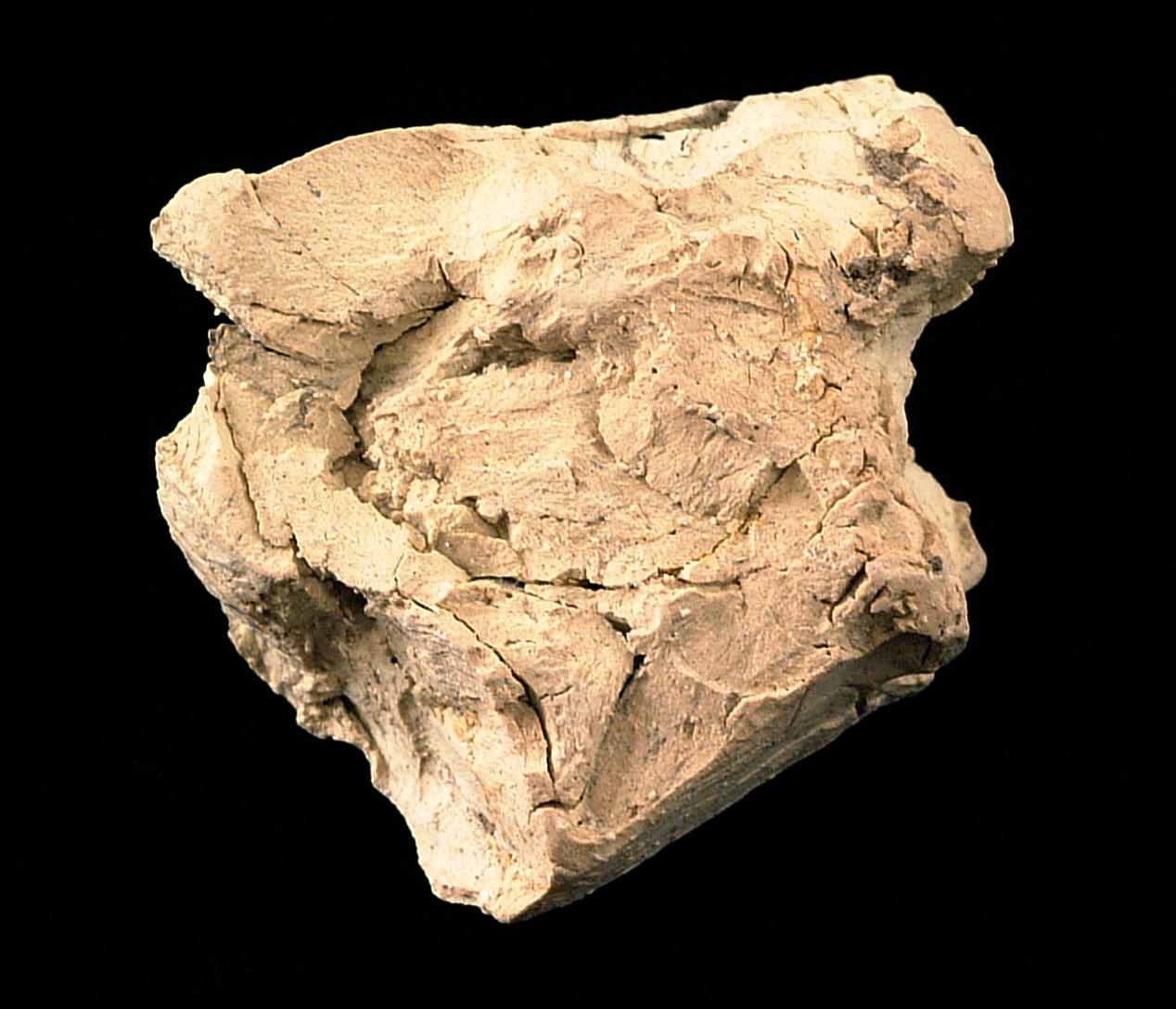
Montmorillonite is a silicate generally located in the clay group. It typically forms microscopic or at least very small platy micaceous crystals. When water is — Photo: Shannon Heinle · CC0
Montmorillonite
Also known as: Smectite, Bentonite (rock).
A soft smectite clay mineral named for Montmorillon, France — the swelling clay of bentonite.
Intro adapted from Wikipedia (CC BY-SA).
Montmorillonite is an IMA-recognized mineral species in the silicate class, with the chemical formula (Na,Ca)₀.₃(Al,Mg)₂Si₄O₁₀(OH)₂·nH₂O.
It crystallizes in the monoclinic crystal system (space group P1). It is a member of the Clay, Smectite-vermiculite structural group.
Key properties: Mohs hardness 1–2; specific gravity 2–3; typically white or pink or brown or green or gray; white streak; Dull, earthy luster; optically biaxial.
IMA symbol Mnt, grandfathered status — known before the IMA’s founding, named in 1847.
An alteration product of volcanic tuff and ash, forming bentonite beds, and of pegmatite dikes and wall rocks bordering hydrothermal mineral deposits. Forms under alkaline conditions of poor drainage, with Mg, Ca, Na.
It is found associated with Cristobalite, zeolites, biotite, quartz, orthoclase, dolomite, amphiboles, pyroxenes, olivine, calcite, gypsum, pyrite, \limonite".
The name commemorates the occurrence at Montmorillon, France.
Collections: Everyday Minerals.