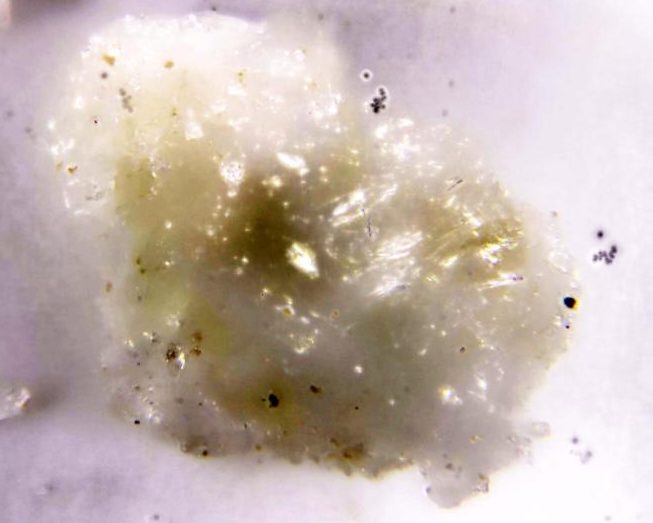
A crystal group of the very rare mineral of simple chemistry, natron, from a little known locality in Egypt: El-Fazda Lake, El Beheira Governorate, Egypt. Ex Vandenbroucke Museum collection from Waregem, Belgium. — Photo: David Hospital · CC BY 4.0
Natron
The ancient evaporite of Egyptian wadis — mostly sodium carbonate decahydrate — used since the pharaohs for mummification and soap.
Intro adapted from Wikipedia (CC BY-SA).
Natron is an IMA-recognized mineral species in the carbonate class, with the chemical formula Na₂(CO₃)·10H₂O.
It crystallizes in the monoclinic crystal system (space group Cc).
Key properties: Mohs hardness 1–1.5; specific gravity 1.478; Vitreous luster; optically biaxial.
IMA symbol Nt, IMA status: approved, named in 1741.
Formed on the margins around soda-rich lakes, or as a precipitate on lake bottoms during cold weather; as an efflorescence on lavas; rare in differentiated alkaline massifs.
It is found associated with Thermonatrite, trona, mirabilite, gaylussite, gypsum, calcite.
The name comes from nitrum, a name from antiquity.