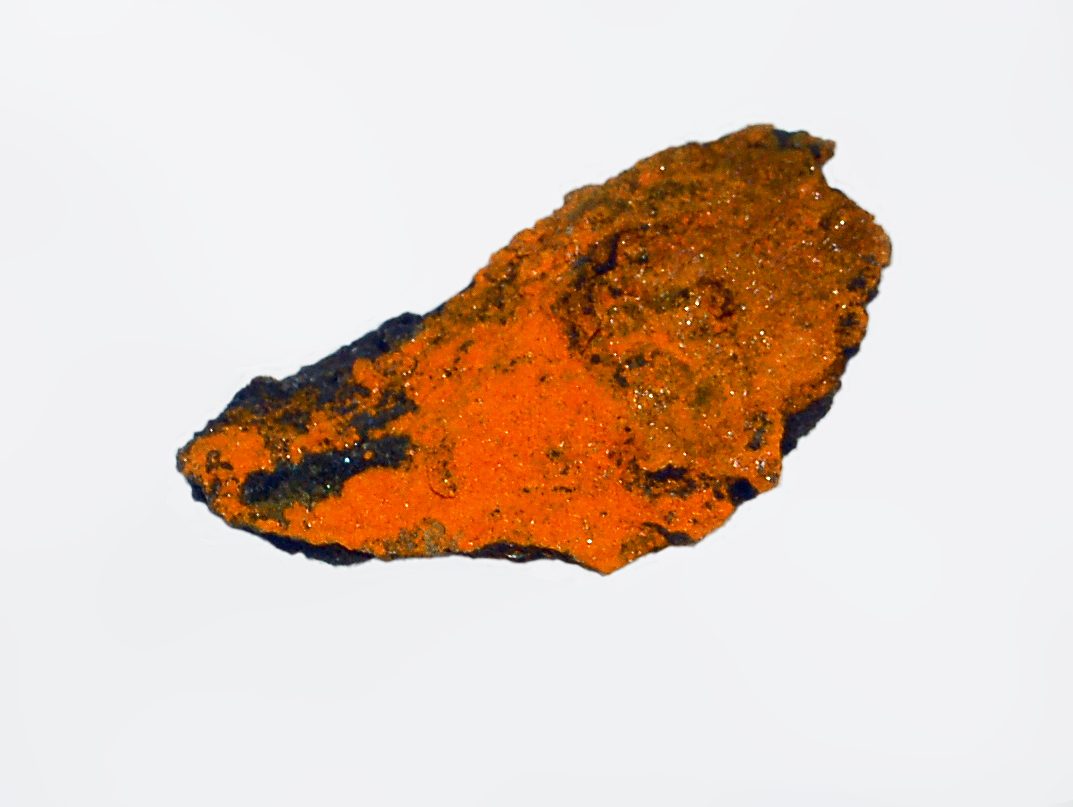
Pascoite from D-day N. 2 mine, Utah — Photo: Hectonichus · CC BY-SA 3.0
Pascoite
A red-orange hydrated calcium decavanadate discovered in Peru's Pasco Province in 1914.
Intro adapted from Wikipedia (CC BY-SA).
Pascoite is an IMA-recognized mineral species in the oxides & hydroxide class, with the chemical formula Ca₃V⁵⁺₁₀O₂₈·17H₂O.
It crystallizes in the monoclinic crystal system (space group C2/m). It is a member of the Pascoite structural group.
Key properties: Mohs hardness 2.5; specific gravity 2.455; Cadmium-yellow streak; Vitreous to subadamantine luster; refractive index 1.805; optically biaxial.
IMA symbol Pas, grandfathered status — known before the IMA’s founding, named in 1914.
Leached from near-surface V-oxides by ground water; as efflorescences in mines.
It is found associated with Carnotite.
The name refers to the original locality, near Cerro de Pasco, Peru.