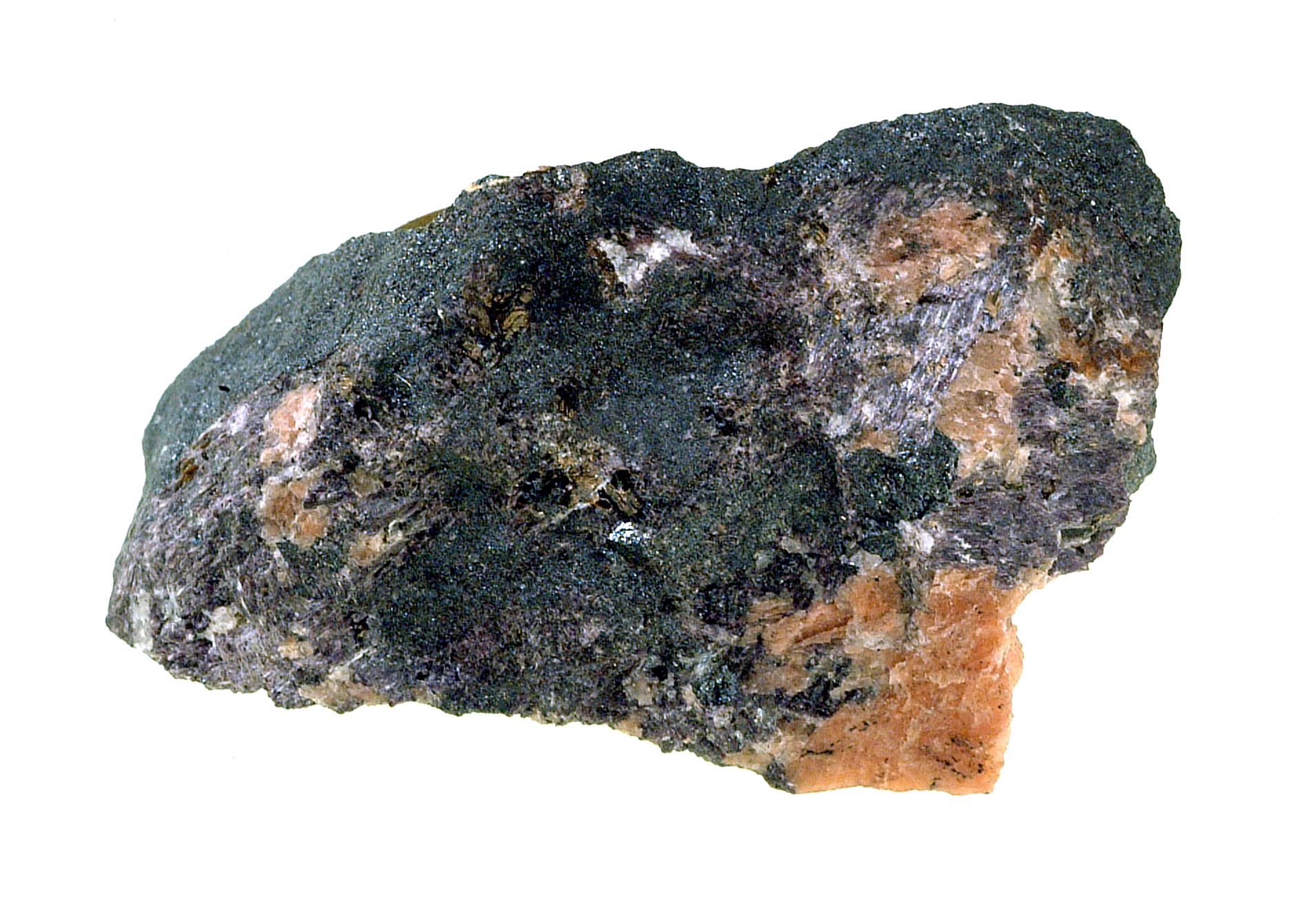
Richterite is a member of the amphibole group with the chemical formula of Na2Ca(Mg,Fe)5Si8O22(OH)2. It basically is the sodium rich version of tremolite. Some — Photo: Shannon Heinle · CC0
Richterite
A sodium-calcium-magnesium amphibole — with iron it becomes ferrorichterite, with fluorine fluororichterite.
Intro adapted from Wikipedia (CC BY-SA).
Richterite is an IMA-recognized mineral species in the silicate class, with the chemical formula Na(NaCa)Mg₅Si₈O₂₂(OH)₂.
It crystallizes in the monoclinic crystal system (space group C2/m). It is a member of the Amphibole structural group.
Key properties: Mohs hardness 5–6; specific gravity 2.97–3.45; typically brown or green or yellow; white streak; Vitreous luster; refractive index 1.627; optically biaxial.
IMA symbol Rct, IMA status: approved, named in 1865.
is commonly found in contact metamorphosed limestones; in alkalic igneous rocks and carbonatites. Also in meteorites.
It is found associated with Leucite, diopside, forsterite, calcite, apatite, natrolite, phlogopite, cristobalite, enstatite, plagioclase.
The name refers to Professor Theodor Richter (1824–1898), German mineralogist.
Collections: Collector Favorites.