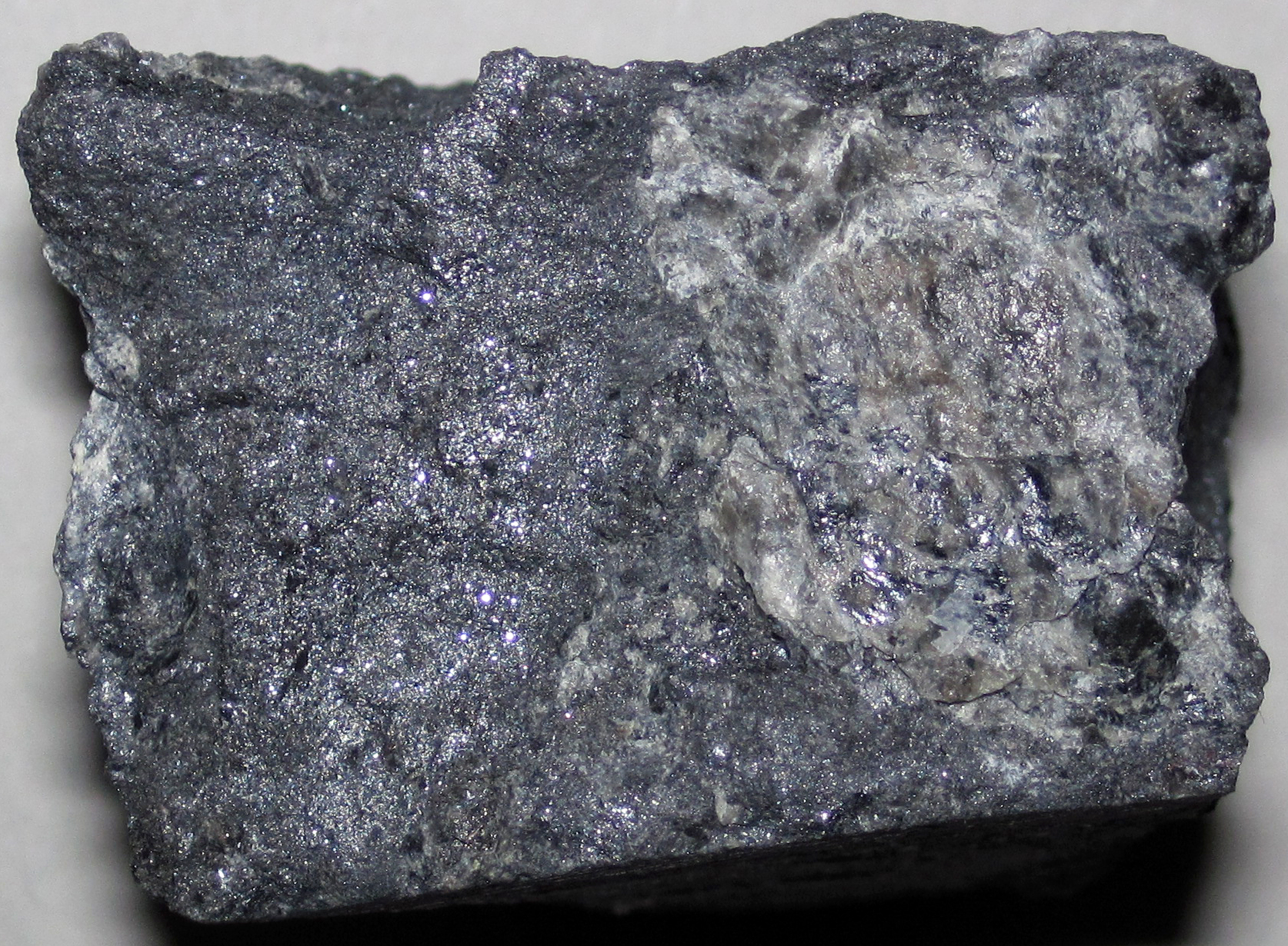
Stibnite mass from Slovakia. A mineral is a naturally-occurring, solid, inorganic, crystalline substance having a fairly definite chemical composition and havin — Photo: James St. John · CC BY 2.0
Stibnite
Also known as: Antimony glance, Antimonite.
Antimony trisulfide — soft, metallic-gray blades that are the chief ore of antimony and a dramatic cabinet specimen.
Intro adapted from Wikipedia (CC BY-SA).
Stibnite is an IMA-recognized mineral species in the sulfide class, with the chemical formula Sb₂S₃.
It crystallizes in the orthorhombic crystal system (space group Pbnm). It is a member of the Stibnite structural group.
Key properties: Mohs hardness 2; specific gravity 4.63; typically gray; Lead-gray streak; Metallic, splendent on cleavage surfaces. Anisotropism: Strong. R1 –R2: (400) 31.1–53, 3, (420) 30.8–53.2 luster.
IMA symbol Sbn, grandfathered status — known before the IMA’s founding, named in 1832.
Of hydrothermal origin, formed in veins through a wide range of temperatures.
It is found associated with Realgar, orpiment, cinnabar, galena, lead sulfantimonides, pyrite, marcasite, arsenopyrite, cervantite, stibiconite, calcite, ankerite, barite.
Its name comes from the Greek stibi, then Latin stibium, an old name for the mineral. All rights reserved. No part of this publication may be reproduced.
Collections: Metals & Native Elements, Collector Favorites.