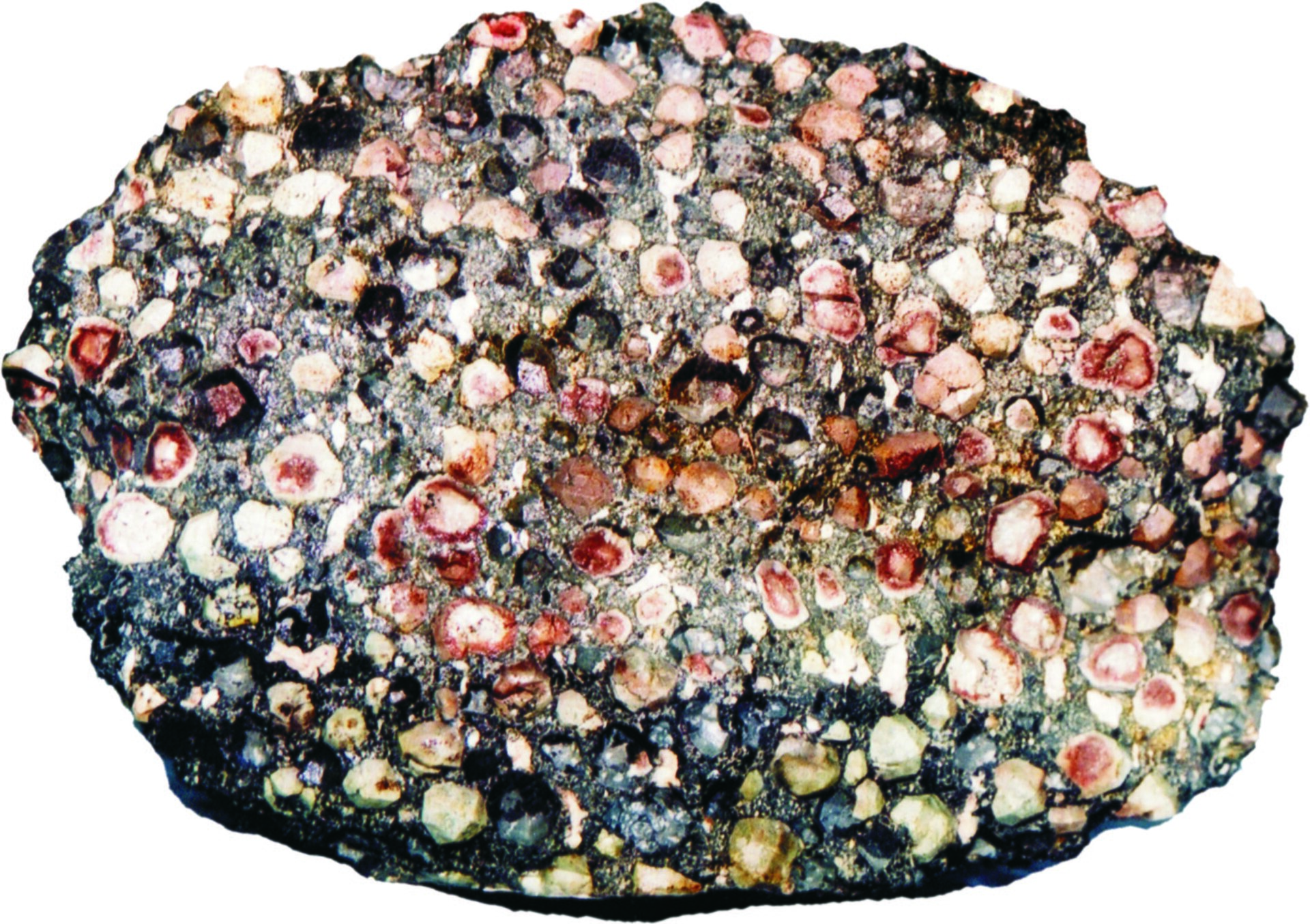
Wairakite, 250 mm, Mauntain Talysh, Azerbaijan — Photo: Toma1974 · CC BY-SA 4.0
Wairakite
The calcium analogue of analcime — a zeolite first described in 1955 from Wairakei, New Zealand.
Intro adapted from Wikipedia (CC BY-SA).
Wairakite is an IMA-recognized mineral species in the silicate class, with the chemical formula Ca(Si₄Al₂)O₁₂·2H₂O.
It crystallizes in the monoclinic crystal system (space group I2/a). It is a member of the Analcime structural group.
Key properties: Mohs hardness 4.5–5; specific gravity 2.26; typically colorless or white or gray; white streak; Vitreous to nearly dull luster; optically biaxial.
IMA symbol Wrk, IMA status: approved, named in 1955.
Found in pores and cavities in rocks in geothermal areas, deposited from hydrothermal fluids; may replace feldspar. In tuffaceous sandstones and breccias, vitric and welded tuffs, and in clay.
It is found associated with Andesine, epidote, clinozoisite, prehnite, calcite, aragonite, quartz.
The name refers to the first-noted locality at Wairakei, New Zealand.
Collections: Collector Favorites, Rare & Remarkable.