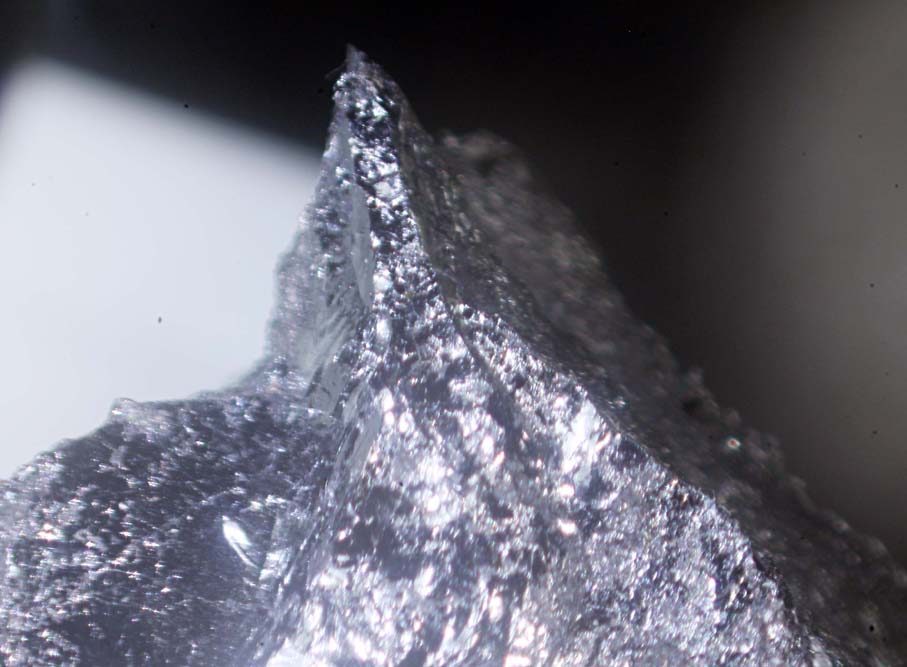
Black crystal aggregates of the rare zirconium mineral zirconolite. The specimens from this locality (Palabora Mine, Loolekop, Phalaborwa, Limpopo Province, South Africa) are rich in niobium. Ex.Hartel collection. — Photo: David Hospital · CC BY-SA 4.0
Zirconolite
Calcium zirconium titanate — a black oxide of alkaline rocks and a proposed host for nuclear waste.
Intro adapted from Wikipedia (CC BY-SA).
Zirconolite is an IMA-recognized mineral species in the oxides & hydroxide class, with the chemical formula (Ca,Y)Zr(Ti,Mg,Al)₂O₇.
It crystallizes in the monoclinic crystal system (space group C2/c). It is a member of the Zirconolite structural group.
Key properties: Mohs hardness 6.5; specific gravity 4.02–4.24; Brownish yellow to dark brown streak; Submetallic; adamantine to greasy luster.
IMA symbol Zrc, IMA status: approved, named in 1956.
Found in alkaline rocks, as carbonatites, kimberlites, syenites, sanidinites; more rarely in ultramafic rocks; in felsic pegmatite in gabbro; a detrital mineral.
It is found associated with Apatite, clinohumite, phlogopite, richterite, pyrochlore, baddeleyite, perovskite, titanite, pyrrhotite, calcite.
As a ZIRCONium-bearing mineral.