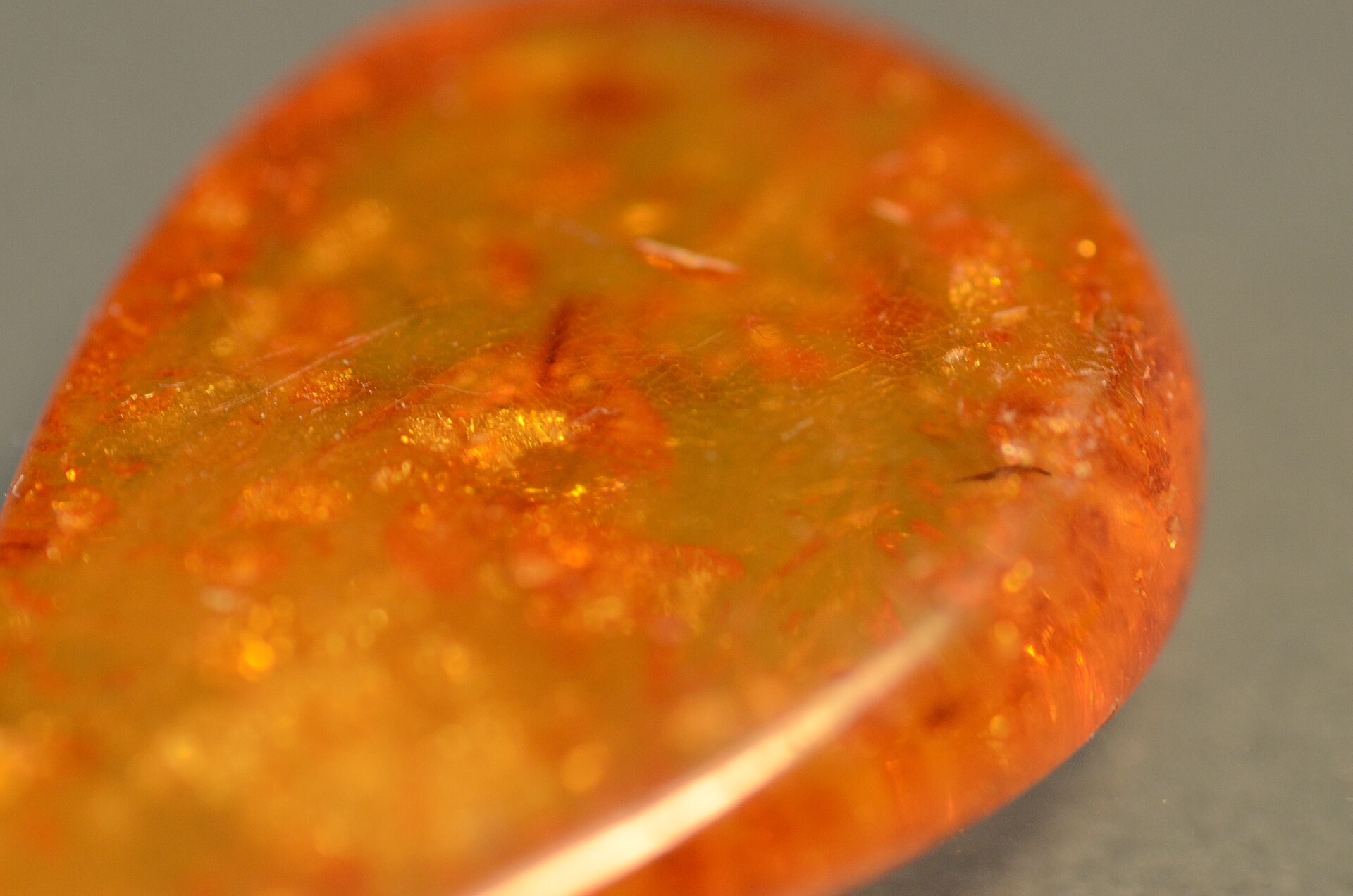
Amber — Photo: Steven Lek · CC BY-SA 4.0
What is Amber?
Amber is fossilized tree resin — polymerized and oxidized over tens of millions of years until sticky sap becomes a warm, golden solid. It is not a mineral (no crystal structure, organic origin) but it has been traded like one since the Stone Age.
Greek children rubbing amber on fur noticed it attracted straw — elektron gave us 'electricity'. And the resin that trapped a Jurassic Park mosquito is real: Cretaceous amber preserves complete insects, flower parts, and feathered dinosaur tails.
Physical Properties
The full data table is in the panel alongside. Here’s what those numbers actually mean.
Density. SG ~1.05 — floats in saturated brine; glass fakes sink.
Inclusions. Baltic amber (~44 Ma) holds thousands of insect species; Burmese amber (~99 Ma) preserves feathered dinosaurs.
Fluorescence. Long-wave UV brings a blue-green glow — a quick authenticity check.
What It’s Used For
How to Identify It
| Looks like… | But differs because… | Quick test |
|---|---|---|
| Copal | Younger subfossil resin — surface crazes with acetone drop | Acetone |
| Glass | Much heavier, cold to the touch, no charge | Weight & feel |
Where It’s Found
Notable localities for fine specimens:
Gallery
Photographs from Wikimedia Commons contributors — click a credit on the main image for the source and license.
Related Minerals
Others in the same family and minerals it commonly grows alongside.