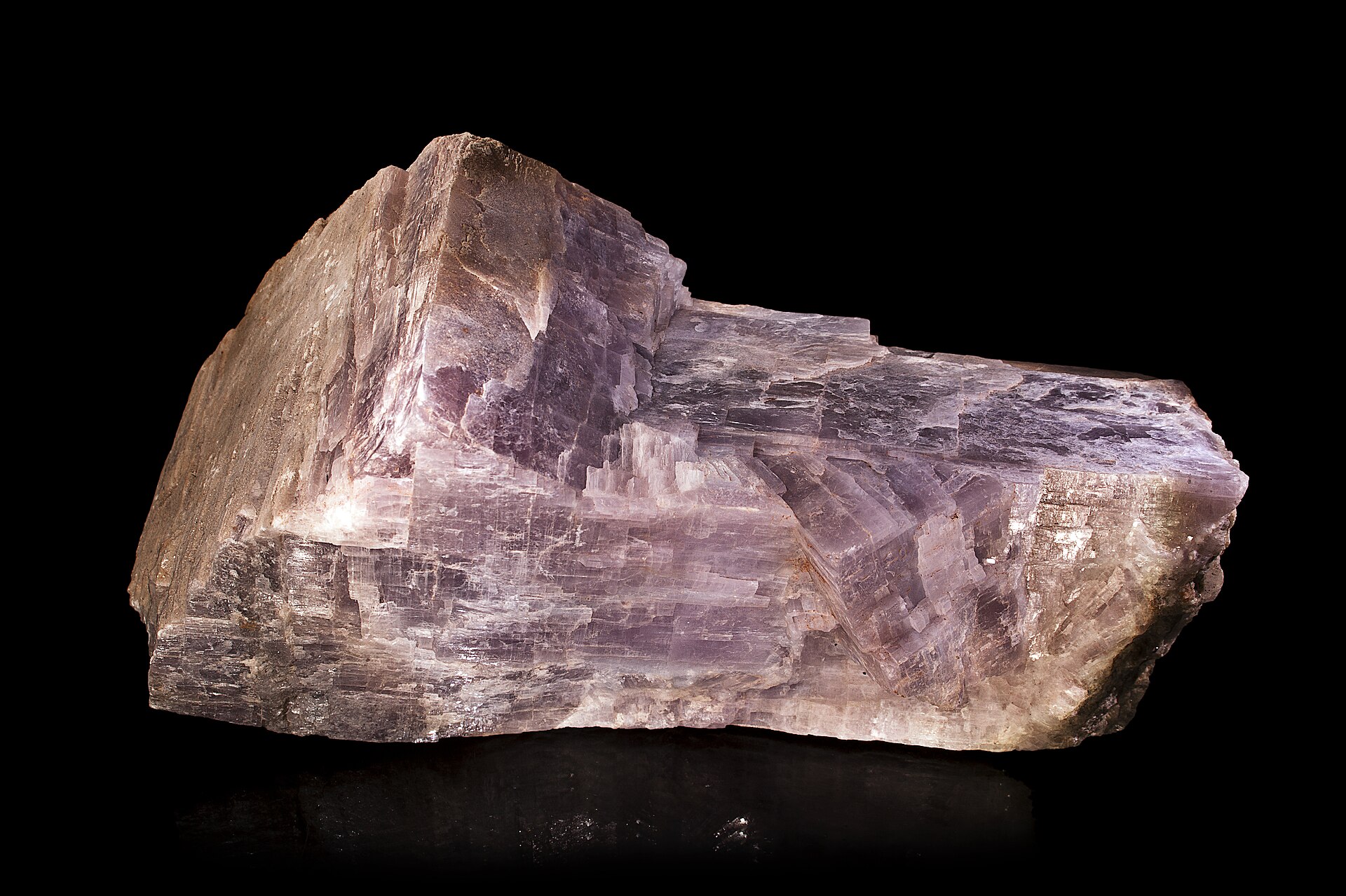
Anhydrite - Gypsum Quarry Arnave, Tarascon-sur-Ariège, Ariège, Midi-Pyrénées - Size 31x16x15 cm — Photo: Didier Descouens · CC BY-SA 3.0
Anhydrite
Also known as: Angelite.
Anhydrous calcium sulfate — gypsum without the water — with perfect cleavage in three perpendicular directions.
Intro adapted from Wikipedia (CC BY-SA).
Anhydrite is an IMA-recognized mineral species in the sulfate class, with the chemical formula Ca(SO₄).
It crystallizes in the orthorhombic crystal system (space group C222).
Key properties: Mohs hardness 3–3.5; specific gravity 2.98; typically white or gray or blue or colorless or pink; White to pale gray streak; Pearly on {010}, vitreous to greasy on {001}; vitreous on {100} luster; refractive index 1.587; optically biaxial.
IMA symbol Anh, grandfathered status — known before the IMA’s founding, named in 1794.
A major component in sedimentary evaporite deposits and in the cap rocks above salt domes, commonly formed by dehydration of gypsum; in igneous rocks, fumarolic deposits, and in seafloor hydrothermal chimneys.
It is found associated with Gypsum, halite, sylvite, polyhalite, dolomite, calcite, magnesite, celestine, sulfur.
Its name comes from the Greek for without water, in contast to hydrous calcium sulfate minerals.
Collections: Everyday Minerals, Collector Favorites.