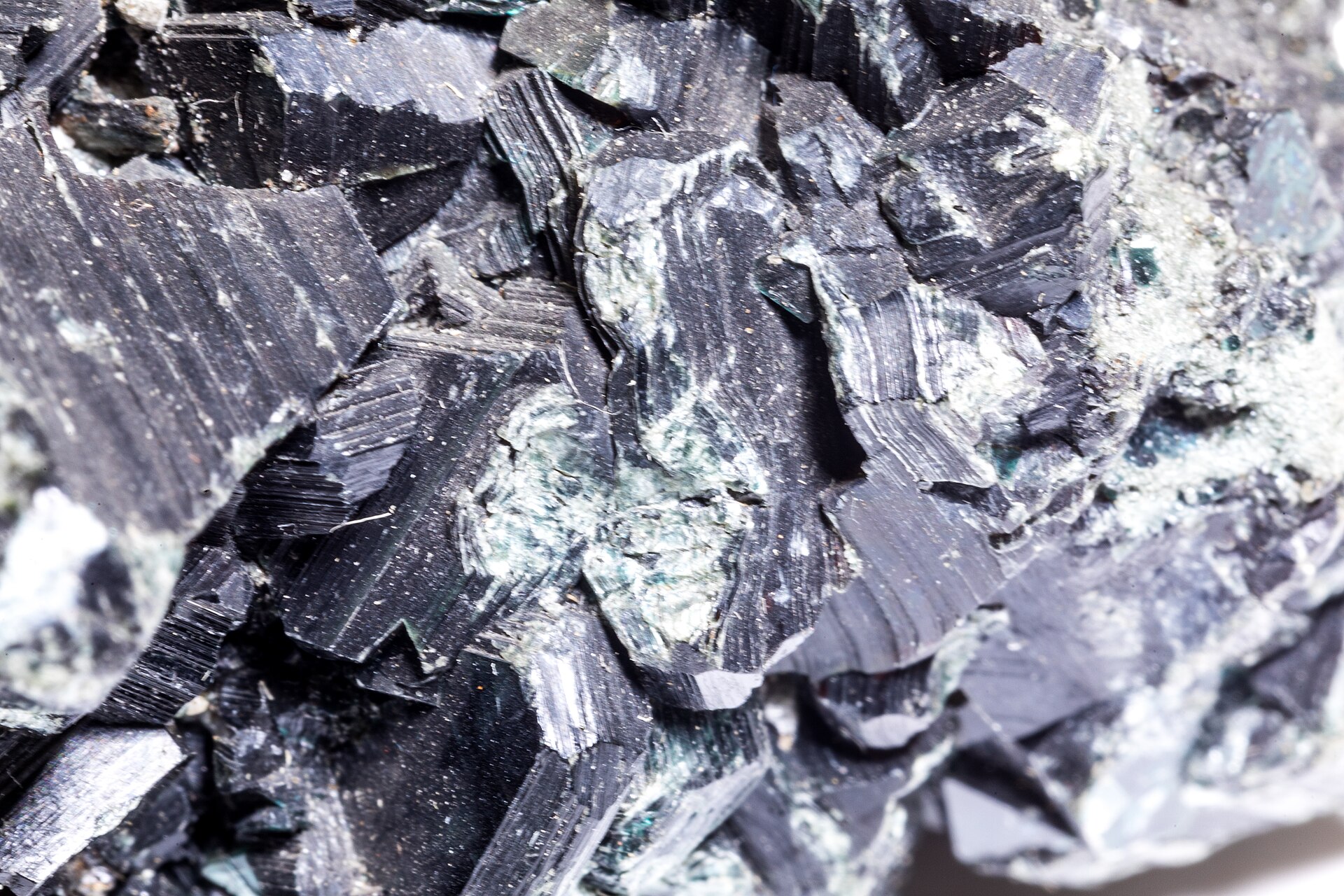
Clinochlore (Weight: 57 g) – Totenköpfe, Stubachtal, Hohe Tauern, Salzburg, Austria — Photo: Raimond Spekking · CC BY-SA 4.0
Clinochlore
Also known as: Chlorite.
The most common chlorite — a green magnesium-iron phyllosilicate of low-grade metamorphic rocks.
Intro adapted from Wikipedia (CC BY-SA).
Clinochlore is an IMA-recognized mineral species in the silicate class, with the chemical formula Mg₅Al(AlSi₃O₁₀)(OH)₈.
It crystallizes in the triclinic crystal system (space group C2/c). It is a member of the Chlorite, Clay structural group.
Key properties: Mohs hardness 2–2.5; specific gravity 2.6–3.02; typically green or white or yellow or colorless; Greenish white to white streak; Pearly, greasy, dull luster; optically biaxial.
IMA symbol Clc, grandfathered status — known before the IMA’s founding, named in 1851.
A hydrothermal alteration product of amphiboles, pyroxenes, biotite. In chlorite schists, serpentinites, marbles, calc-silicate rocks, amphibolites, less commonly in ultramafic rocks. In ore veins; a detrital component of sediments.
It is found associated with Serpentine, calcite, dolomite, actinolite, biotite, olivine, plagioclase, talc, chromite, uvarovite.
The name refers to its inclined optic axes and the Greek chloros, for green, its common color.
Collections: Collector Favorites.