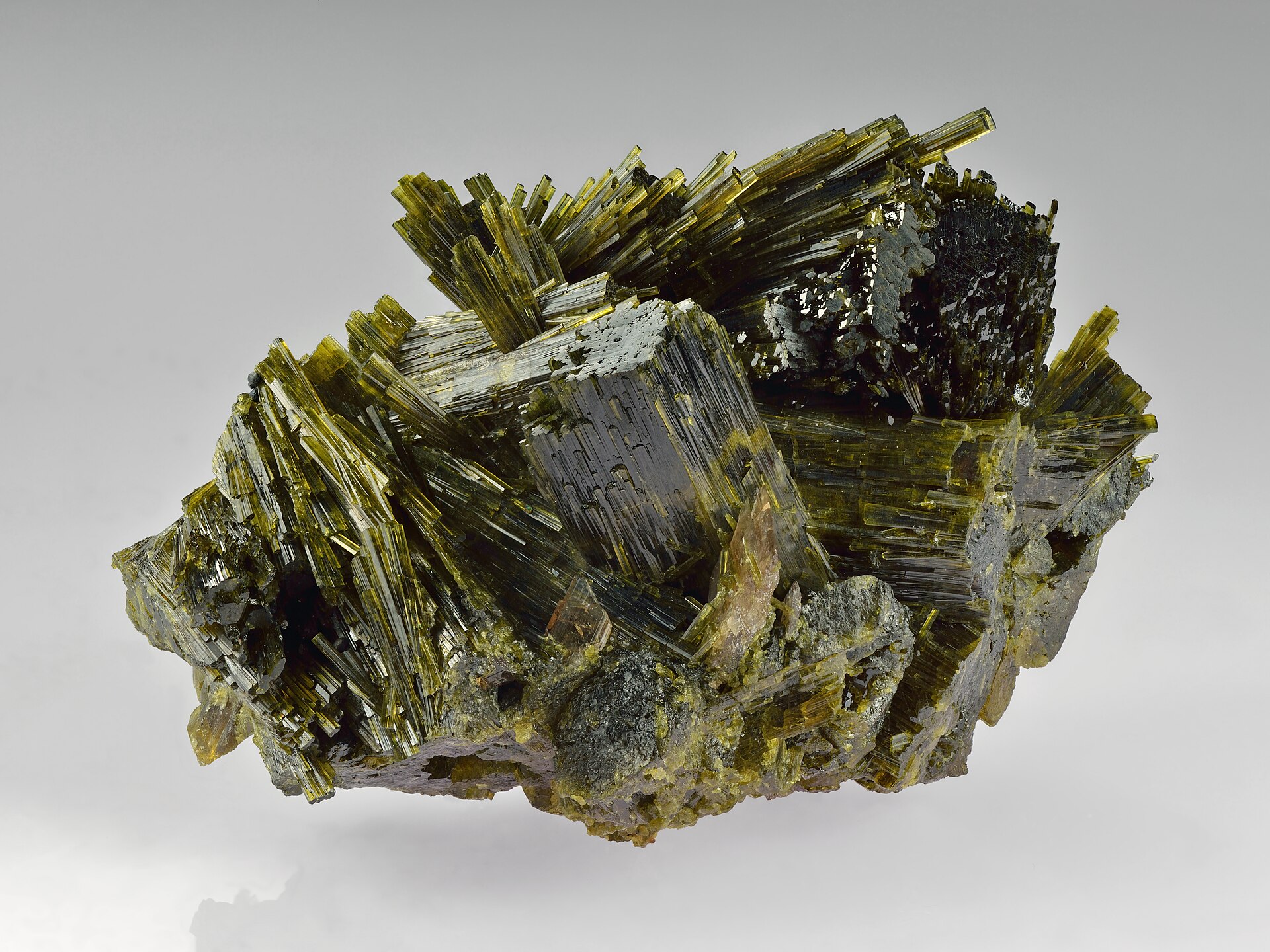
Green crystals of epidote up to 2.0 cm in length on matrix (6.0×3.5×3.0 cm) with minor manganaxinite. Found from Canta, Lima, Peru. — Photo: Ivar Leidus · CC BY-SA 4.0
Epidote
Also known as: Pistacite.
Epidote is an IMA-recognized mineral species in the silicate class, with the chemical formula Ca₂(Al₂Fe³⁺)[Si₂O₇][SiO₄]O(OH).
It crystallizes in the monoclinic crystal system (space group P2_1/m). It is a member of the Clinozoisite, Epidote structural group.
Key properties: Mohs hardness 6–7; specific gravity 3.38–3.49; typically green or yellow or brown or black; grayish-white streak; Vitreous, pearly, somewhat resinous luster; refractive index 1.751; optically biaxial.
IMA symbol Ep, grandfathered status — known before the IMA’s founding, named in 1801.
Characteristic of several facies of regionally metamorphosed rocks and some contaminated felsic igneous rocks; in contact zones between igneous and calcareous sedimentary rocks; from alteration of plagioclase (saussuritization).
It is found associated with Zeolites, amphiboles, plagioclase feldspars, quartz, actinolite, calcite (greenschist facies); amphiboles, vesuvianite, scapolite, talc, wollastonite.
Its name comes from the Greek for increase, the base of the prism with one longer side.
Collections: Collector Favorites, Everyday Minerals.