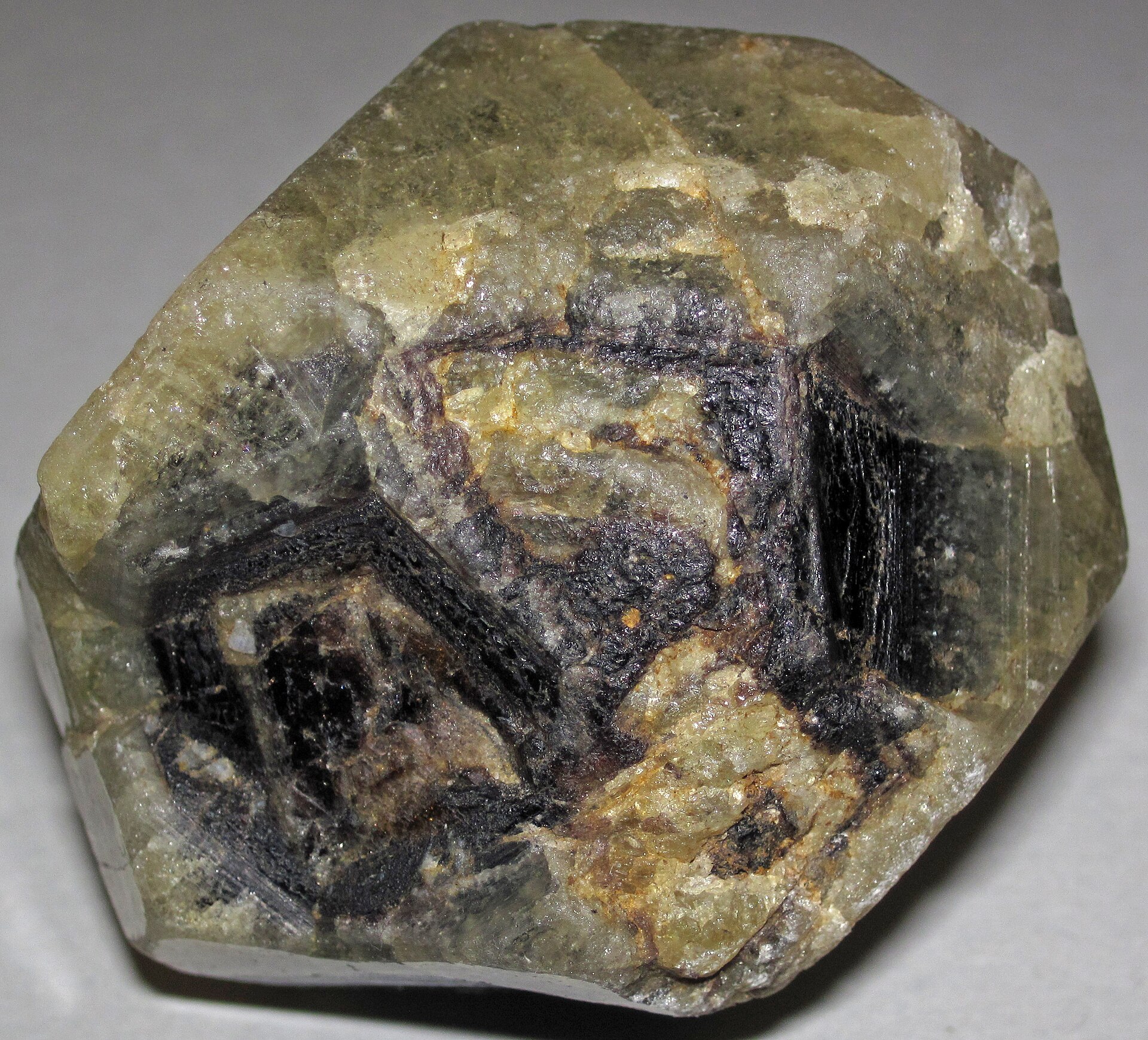
Grossular garnet from Mexico. A mineral is a naturally-occurring, solid, inorganic, crystalline substance having a fairly definite chemical composition and havi — Photo: James St. John · CC BY 2.0
Grossular
Also known as: Hessonite, Tsavorite (green), Gooseberry garnet.
The calcium-aluminium garnet — ranging from colorless through green (tsavorite) to orange-brown (hessonite and cinnamon stone).
Intro adapted from Wikipedia (CC BY-SA).
Grossular is an IMA-recognized mineral species in the silicate class, with the chemical formula Ca₃Al₂(SiO₄)₃.
It crystallizes in the cubic crystal system (space group Ia3d). It is a member of the Garnet structural group.
Key properties: Mohs hardness 6.5–7; specific gravity 3.594; typically green or yellow or brown or red or pink or colorless or orange; White streak; Vitreous to resinous luster.
IMA symbol Grs, IMA status: approved, named in 1811.
Found in contact and regionally metamorphosed calcareous rocks, or rocks which have undergone calcium metasomatism; in some schists and serpentinites.
It is found associated with Calcite, dolomite, epidote, clinozoisite, wollastonite, scapolite, vesuvianite, diopside, tremolite, quartz.
The name comes from Ribes Grossularium or gooseberry; the botanical name, in reference to a typical greenish color.
Collections: Gemstones, Collector Favorites.