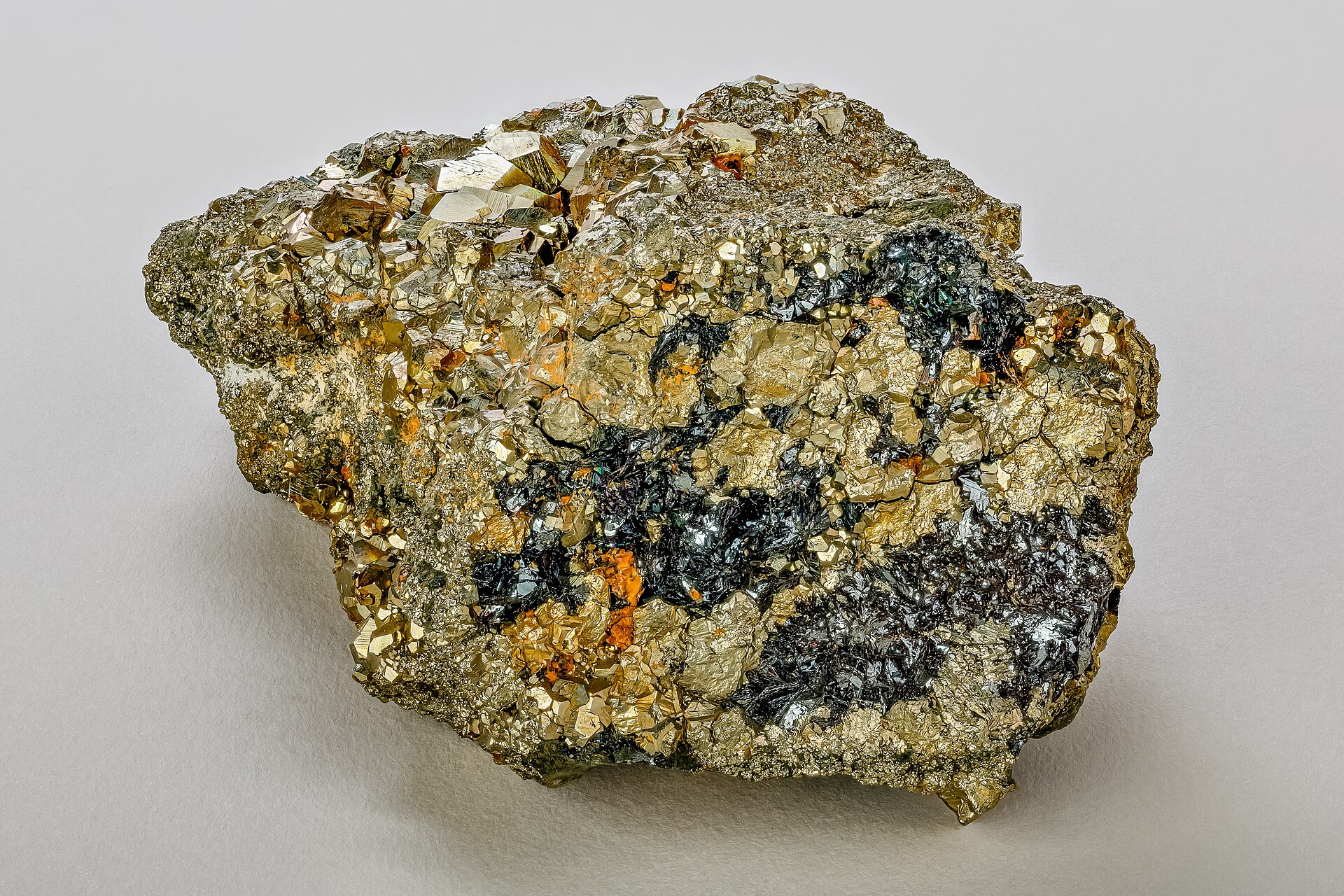
Specular hematite — steel-gray and metallic, yet it streaks cherry-red — Photo: CEphoto, Uwe Aranas · CC BY-SA 3.0
What is Hematite?
Hematite is iron oxide — Fe₂O₃, the same compound as rust — and it is one of the most common and most useful minerals on Earth. It is the main ore of iron, the oldest pigment known (red ochre colored cave paintings and burial rites over 100,000 years ago), and the reason Mars looks red.
It is also a mineral of disguises. Specular hematite grows as steel-gray to black metallic flakes and mirror-bright crystals — you’d swear it was a metal. Kidney ore forms rounded, bumpy red-brown masses. Ochre is the soft earthy form that stains your fingers. Whatever the disguise, one property betrays it: the streak is always cherry-red to reddish brown, which is exactly what ‘blood-stone’ means.
Hematite is what iron-bearing minerals want to become. Any iron mineral left in air and water eventually oxidizes toward hematite or its hydrated cousins — which is why it caps so many ore bodies as the rusty surface zone miners call a gossan.
Physical Properties
The full data table is in the panel alongside. Here’s what those numbers actually mean.
The streak. This is the famous one. Hematite’s color ranges from mirror-black to earthy red, but powdered it is always the color of dried blood — never black like magnetite or yellow-brown like goethite.
Weight and hardness. At SG ~5.3 it is heavy in the hand — it’s mostly iron — and at 5–6 on the Mohs scale it just scratches glass. Earthy red varieties are softer but still give the same red streak.
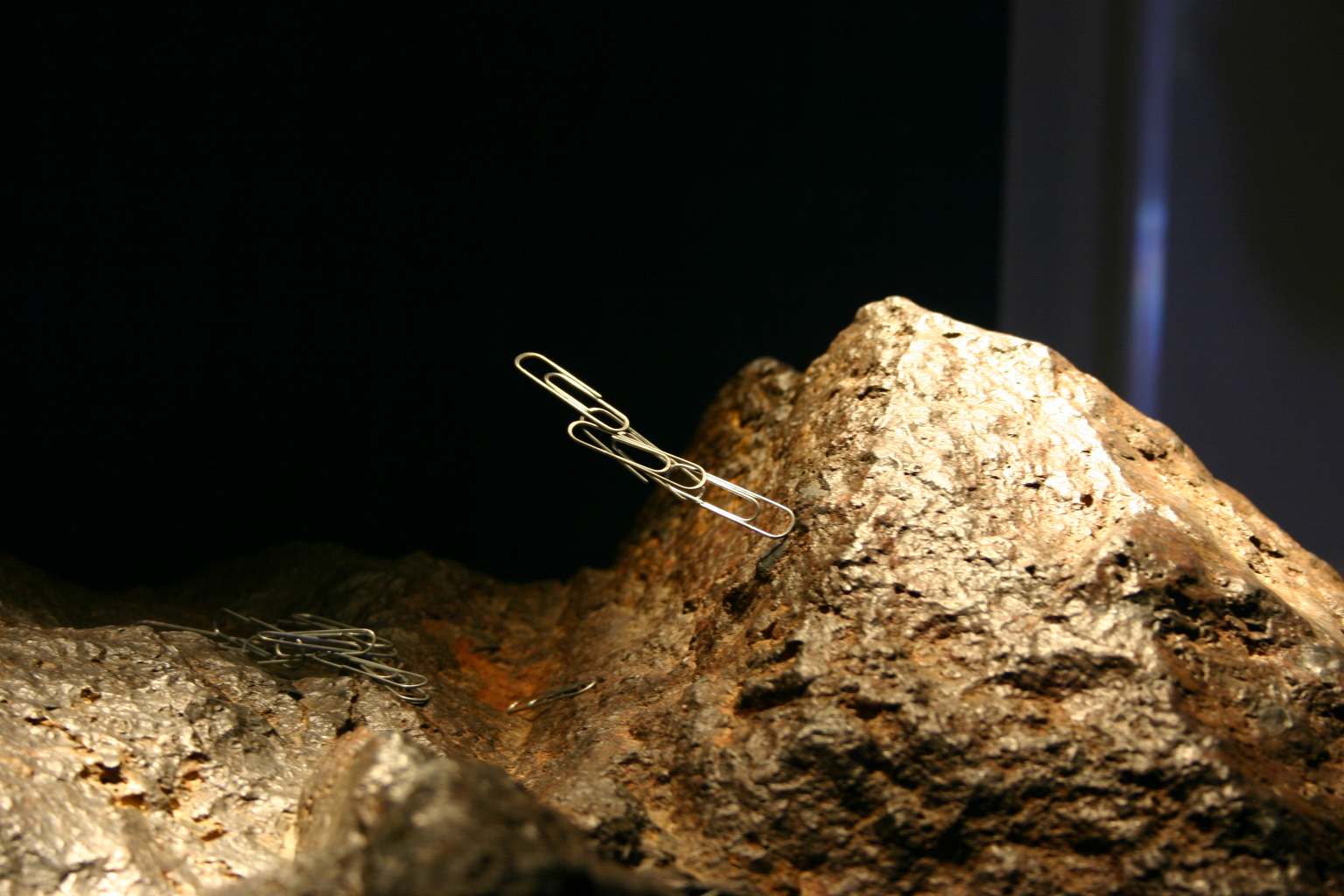
No magnetism (usually). Despite being an iron mineral, ordinary hematite is not magnetic — its iron atoms’ magnetism cancels out in the crystal. Some specimens show a weak pull, usually from magnetite impurities.
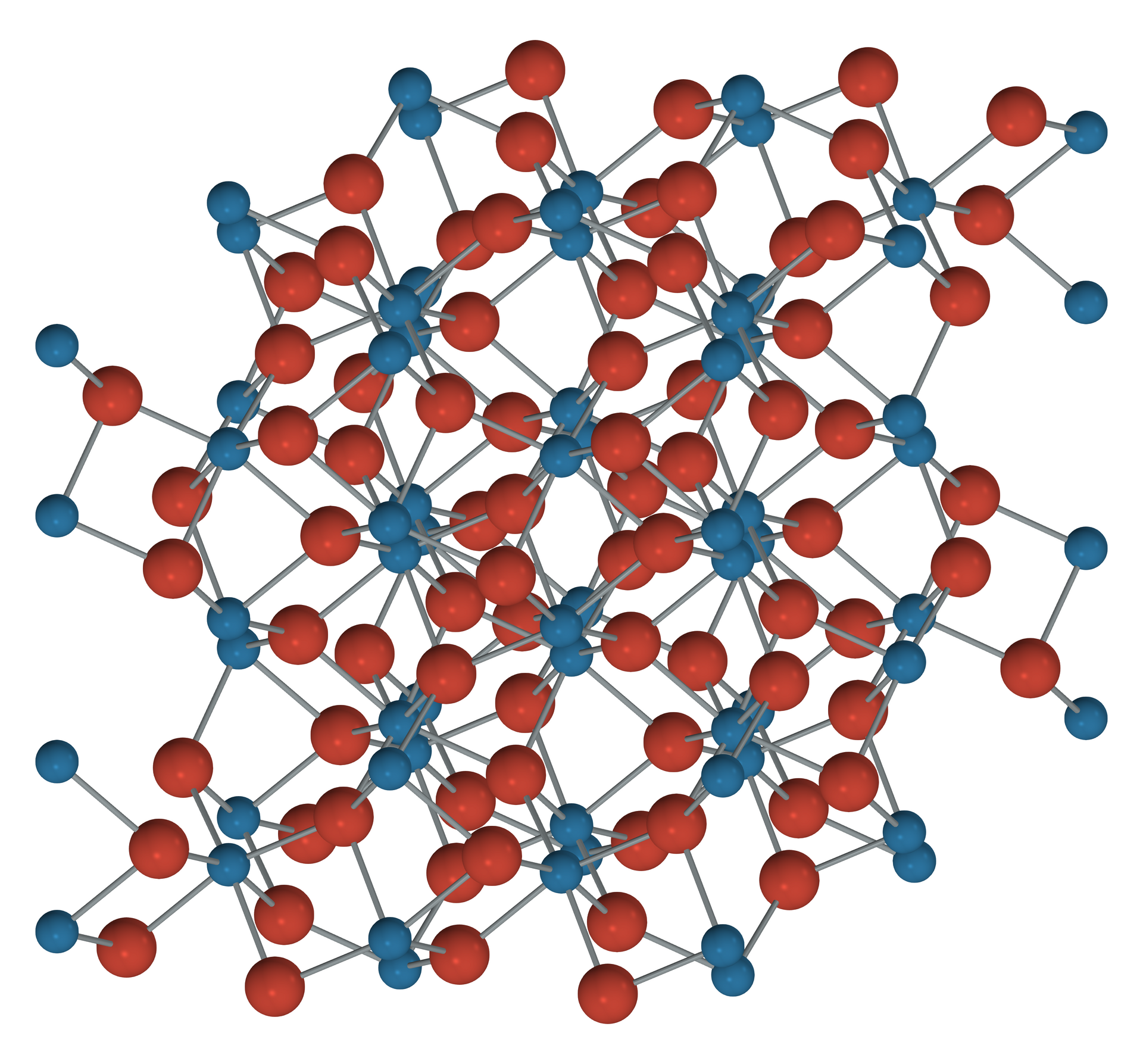
Cleavage and form. Hematite has no true cleavage; repeated twinning can give crystals a flaky parting that splits it into micaceous plates. Its crystals — thin hexagonal-looking tablets, rosettes called ‘iron roses’, and rhombohedra — belong to the corundum family.
How & Where It Forms
Hematite forms wherever iron meets oxygen. The planet’s greatest deposits are banded iron formations — vast chemical sediments laid down over two billion years ago, when photosynthesis first oxygenated the oceans and dissolved iron literally fell out of seawater as iron oxide.
It also grows in hydrothermal veins, in metamorphic rocks recrystallized by heat, and — most commonly of all — at the surface, as the weathering product of pyrite, siderite and other iron minerals. Wherever you see red-brown rock, you’re usually looking at hematite’s work.
Often grows alongside:
What It’s Used For
How to Identify It
Do the streak test: hematite always leaves a cherry-red to reddish-brown streak — even on a jet-black metallic specimen. It is not magnetic (separating it from magnetite), heavy (~5.3), and moderately hard. Goethite streaks yellow-brown; magnetite streaks black and sticks to a magnet.
| Looks like… | But differs because… | Quick test |
|---|---|---|
| Magnetite | Streaks black (not red) and is strongly magnetic | Streak + magnet |
| Goethite | Streaks yellowish-brown rather than red, and is usually fibrous or earthy, never truly metallic | Streak color |
| Ilmenite | Streaks black to brownish and is weakly magnetic; crystals look different too | Streak + weak magnetism |
| Maghemite | Magnetic, and its streak is brown rather than cherry-red | Magnet + streak |
Where It’s Found
Notable localities for fine specimens:
Gallery
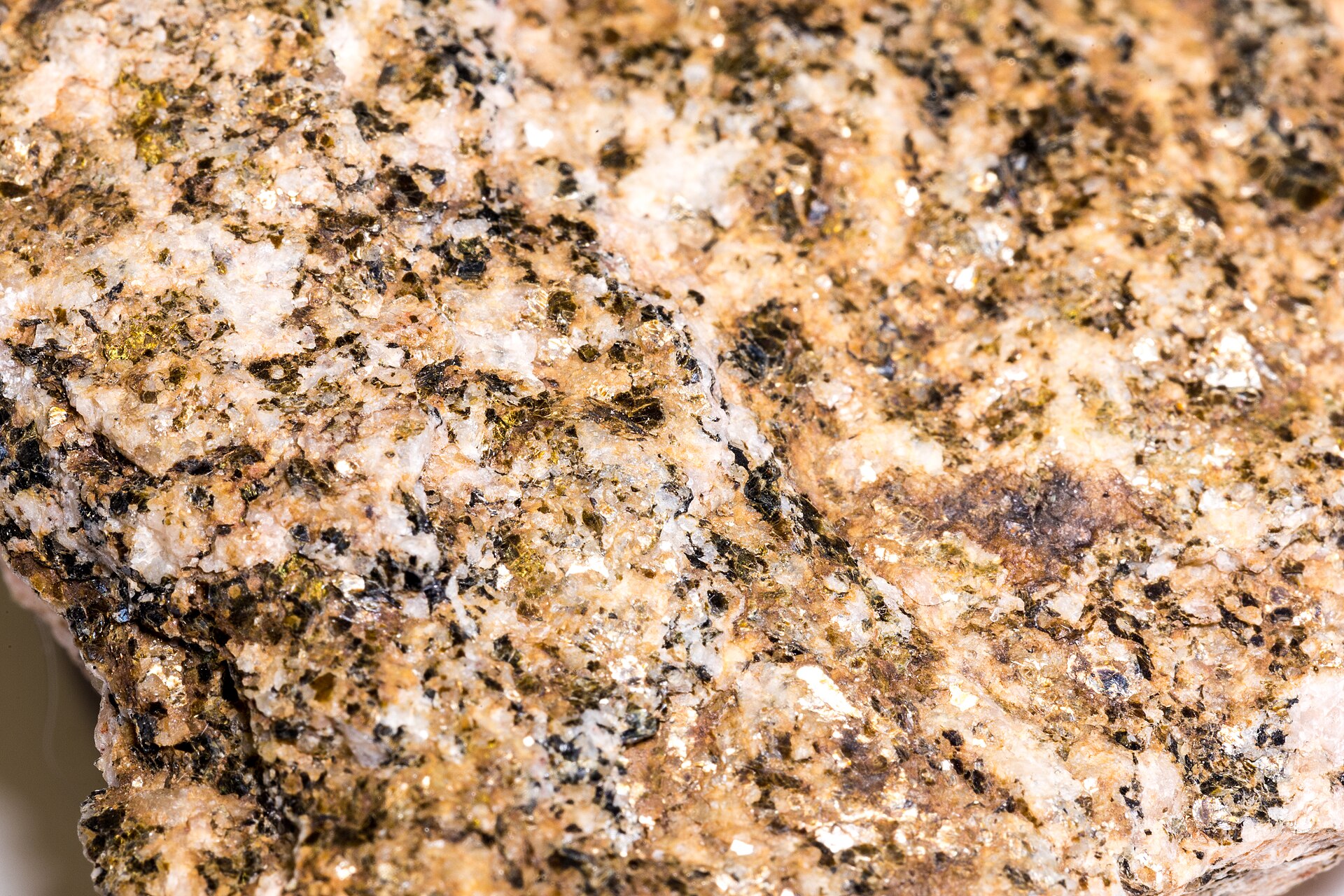
Photographs from Wikimedia Commons contributors — click a credit on the main image for the source and license.
Related Minerals
Others in the same family and minerals it commonly grows alongside.
References & Further Reading
- Dana’s New Mineralogy, 8th ed. Oxides — corundum group.
- Mindat.org — Hematite mineral data and locality records.
- Wikipedia — Hematite.
Last reviewed 2026-09-14 · How to cite this page.