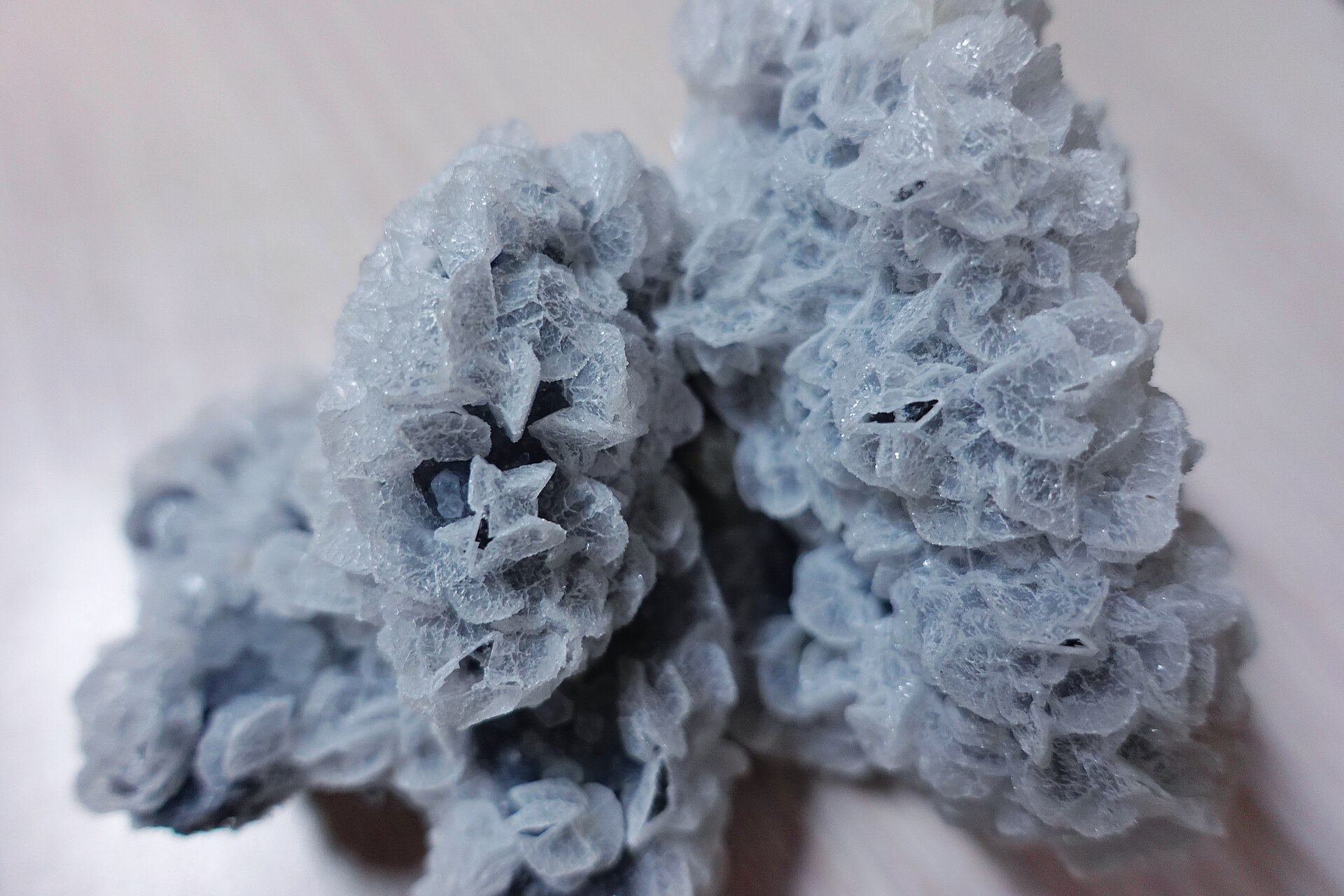
Clear rock crystal — the pure, colorless form of quartz — Photo: Reimu Hakurei from Beijing, PRC · CC BY-SA 2.0
What is Quartz?
Quartz is a mineral made of silicon and oxygen — just one silicon atom for every two oxygen atoms, written SiO₂. That simple recipe builds one of the most common and versatile minerals on the planet: quartz makes up roughly 12% of Earth’s continental crust, second only to the feldspar family.
You’ve almost certainly held it. Clear quartz is the ‘rock crystal’ of gift-shop points; purple quartz is amethyst; the banded stone in a lot of jewelry is agate, another face of quartz. Because it’s hard, chemically stable, and forms nearly everywhere, quartz turns up in mountains, beaches, deserts, and deep inside volcanic geodes alike.
What makes quartz special isn’t just how common it is — it’s what it does. Squeeze a quartz crystal and it produces a tiny electrical voltage; run electricity through it and it vibrates at an incredibly steady rate. That property, called piezoelectricity, is why a sliver of quartz keeps time in nearly every watch and phone.
Physical Properties
The full data table is in the panel alongside. Here’s what those numbers actually mean.
Hardness. Quartz sits at 7 on the 10-point Mohs scale — the reference point mineralogists use for ‘scratches glass, isn’t scratched by a knife.’ It’s the reason quartz sand is such an effective abrasive and why quartz survives being tumbled down rivers into rounded grains.
Fracture, not cleavage. Many minerals split along flat internal planes (cleavage). Quartz doesn’t — its atoms are bonded equally strongly in all directions, so it breaks along smooth, curved conchoidal surfaces, like the inside of a shell or a chip in glass. That single trait separates quartz from lookalikes such as calcite and feldspar.
Luster and clarity. Fresh quartz has a glassy (vitreous) shine and ranges from perfectly transparent to milky and translucent, depending on tiny bubbles and inclusions trapped as it grew.
Varieties
Same chemistry, different faces — trace impurities and how finely it crystallizes give a whole family of familiar stones.
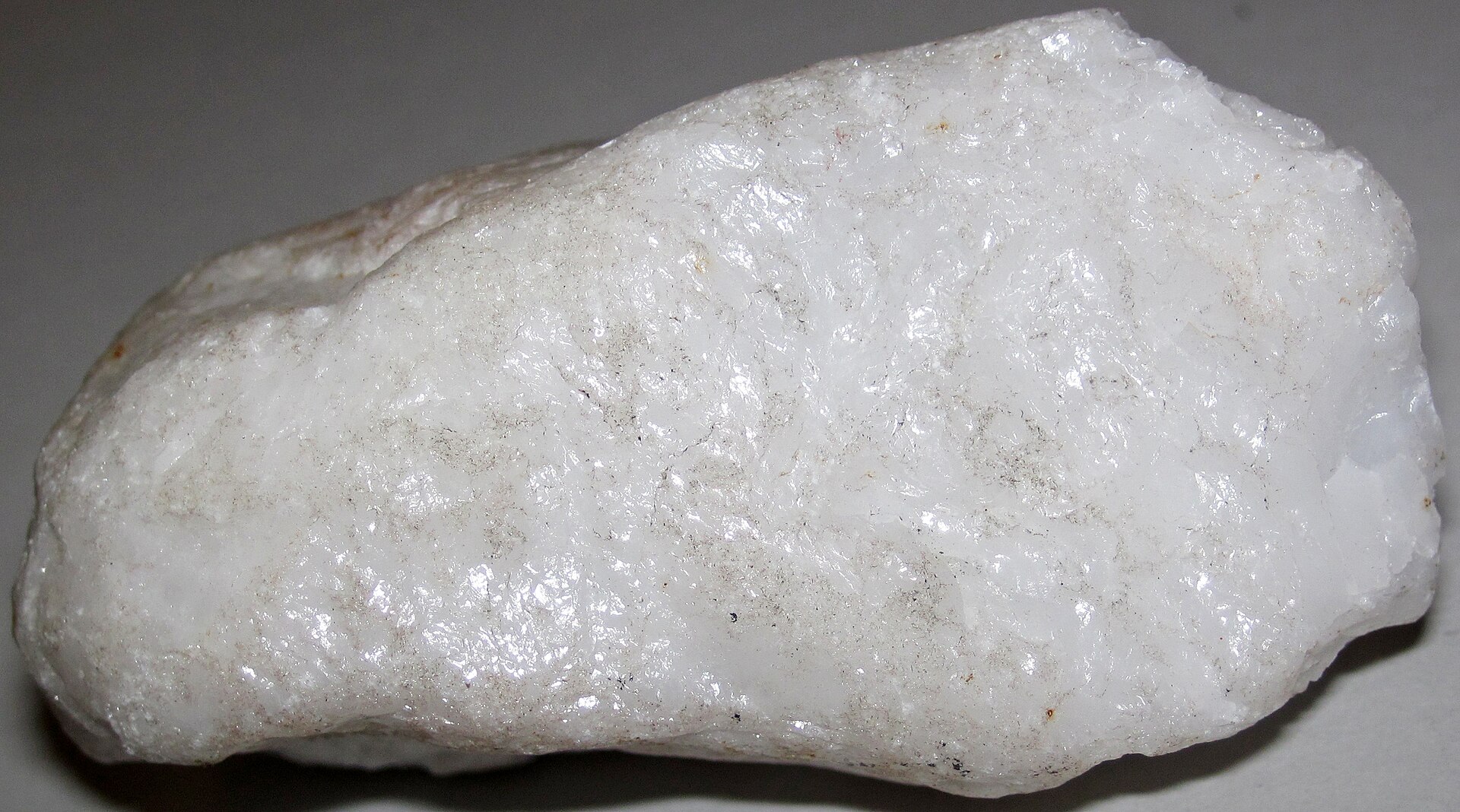
How & Where It Forms
Quartz crystallizes wherever silica-rich water or magma cools slowly enough for atoms to line up. It grows from hot fluids in cracks and veins, lines the hollow interiors of volcanic geodes, and forms the last mineral to solidify in cooling granite. Because it resists weathering, quartz also survives the breakdown of older rocks to become the main ingredient of sand.
Well-formed crystals need open space and time — which is why the finest specimens come from cavities, pegmatites, and hydrothermal veins where crystals could grow undisturbed for thousands of years.
Often grows alongside:
What It’s Used For
How to Identify It
In the field, quartz is a process of elimination. It’s hard (won’t scratch with a steel knife), has no cleavage (breaks in curved chips, never flat flakes), shows a glassy shine, and leaves no streak on a porcelain plate.
| Looks like… | But differs because… | Quick test |
|---|---|---|
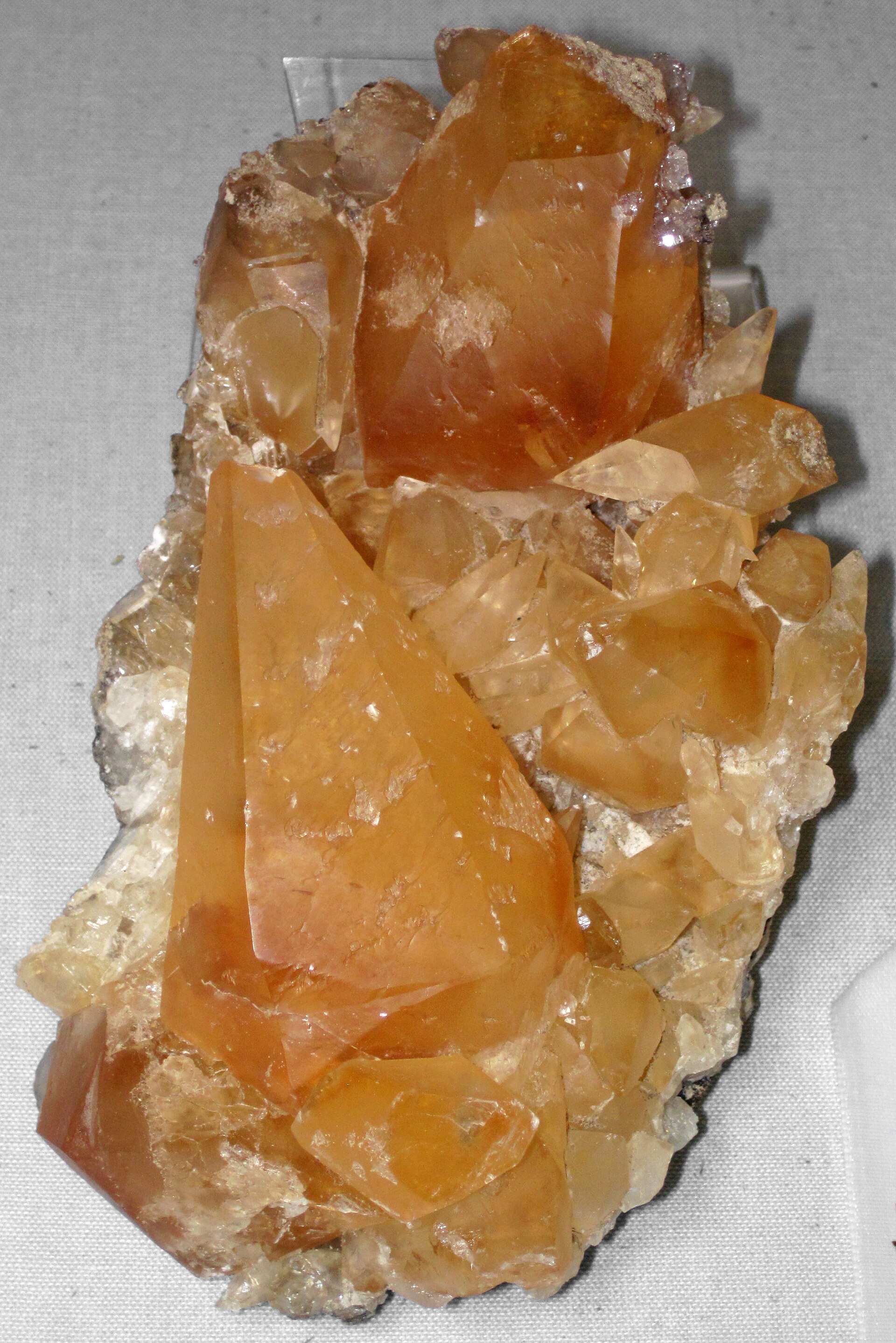
| Calcite | Much softer, splits into flat rhombs, and fizzes in dilute acid | Scratch & vinegar |
| Topaz | Harder (8) and has one direction of clean cleavage | Cleavage check |
| Feldspar | Slightly softer, shows two cleavage planes at about 90° | Look for flat faces |
| Glass | Man-made; often shows trapped bubbles and mold seams | Context & hardness |
Where It’s Found
Notable localities for fine specimens:
Gallery
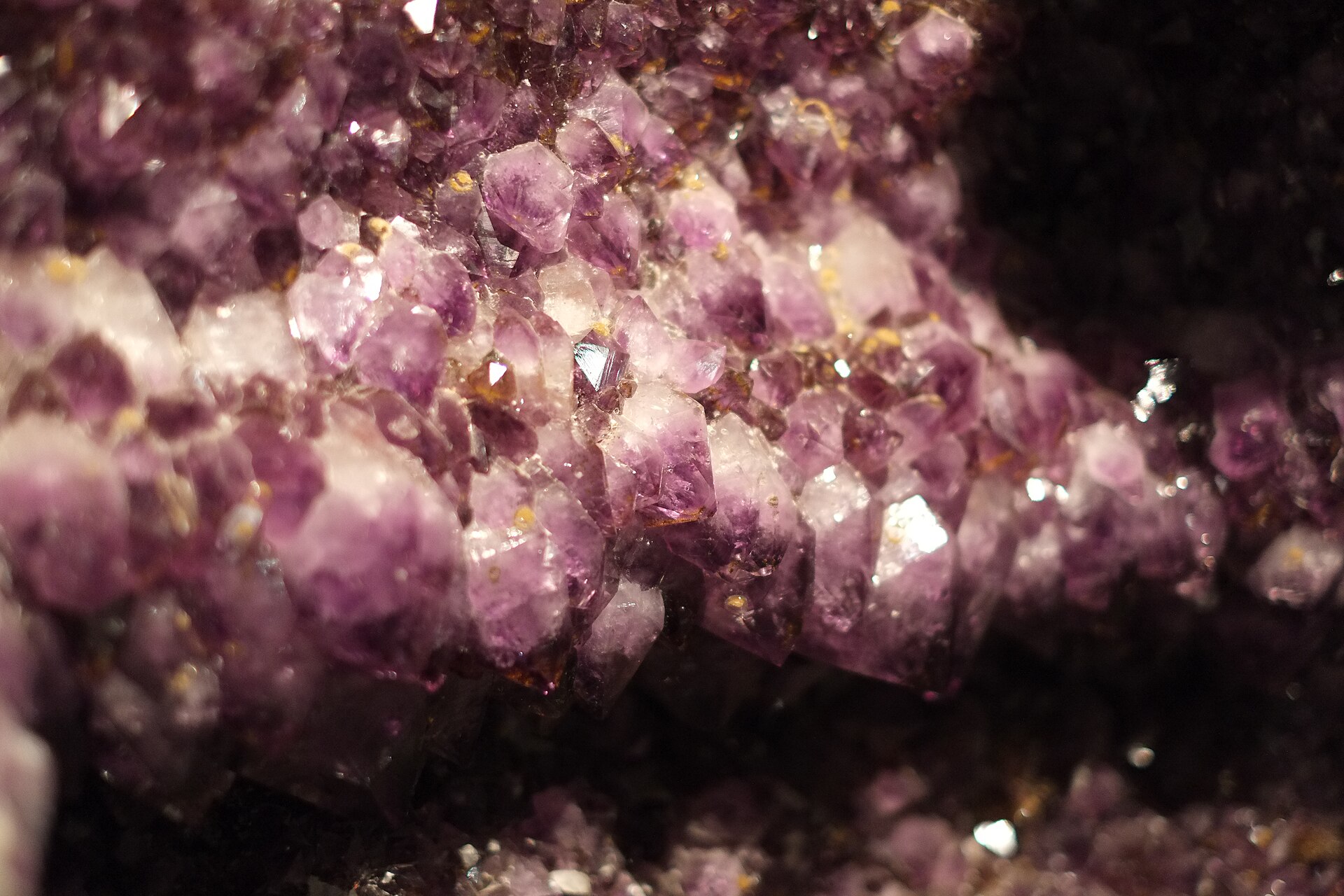
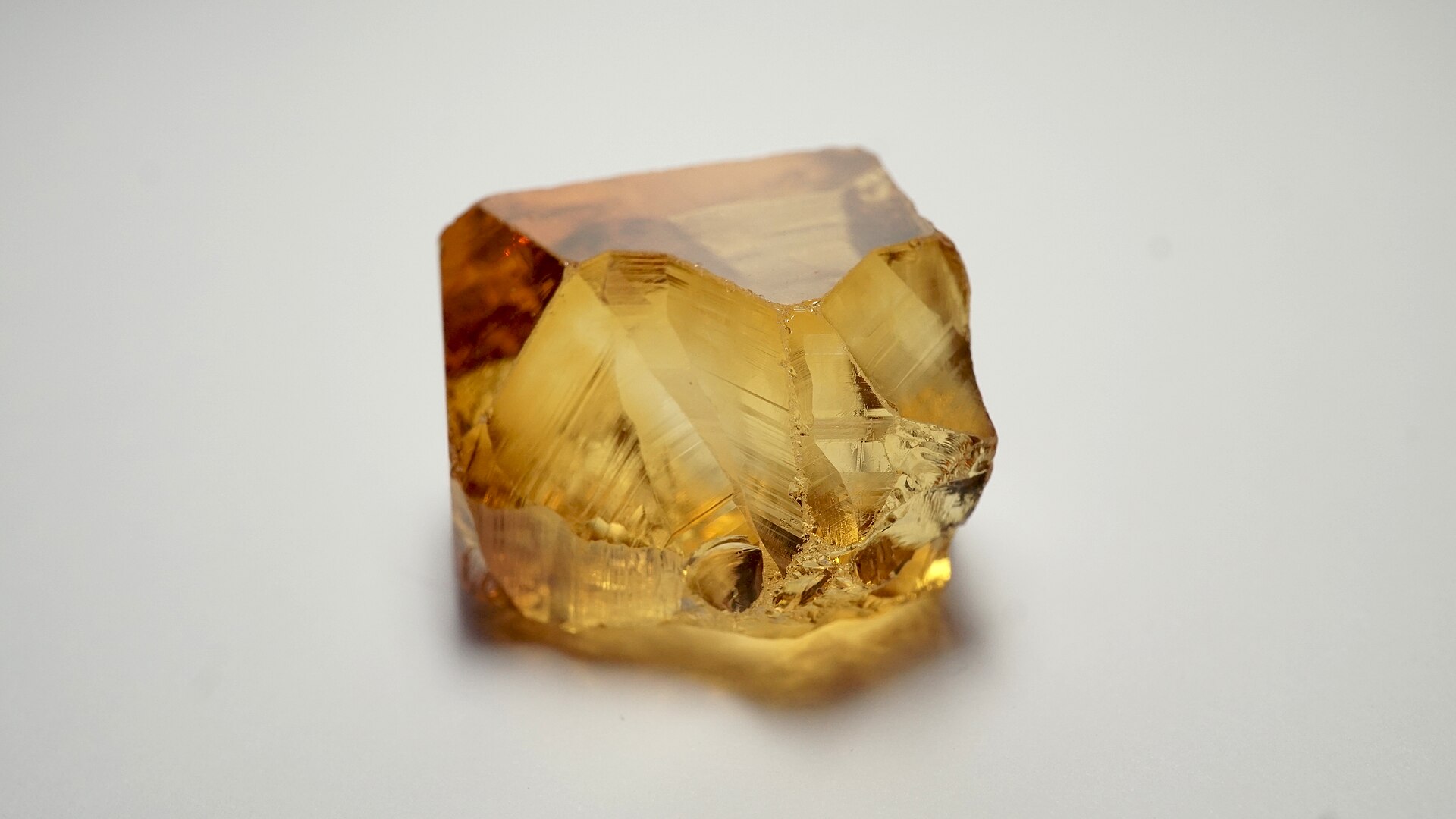
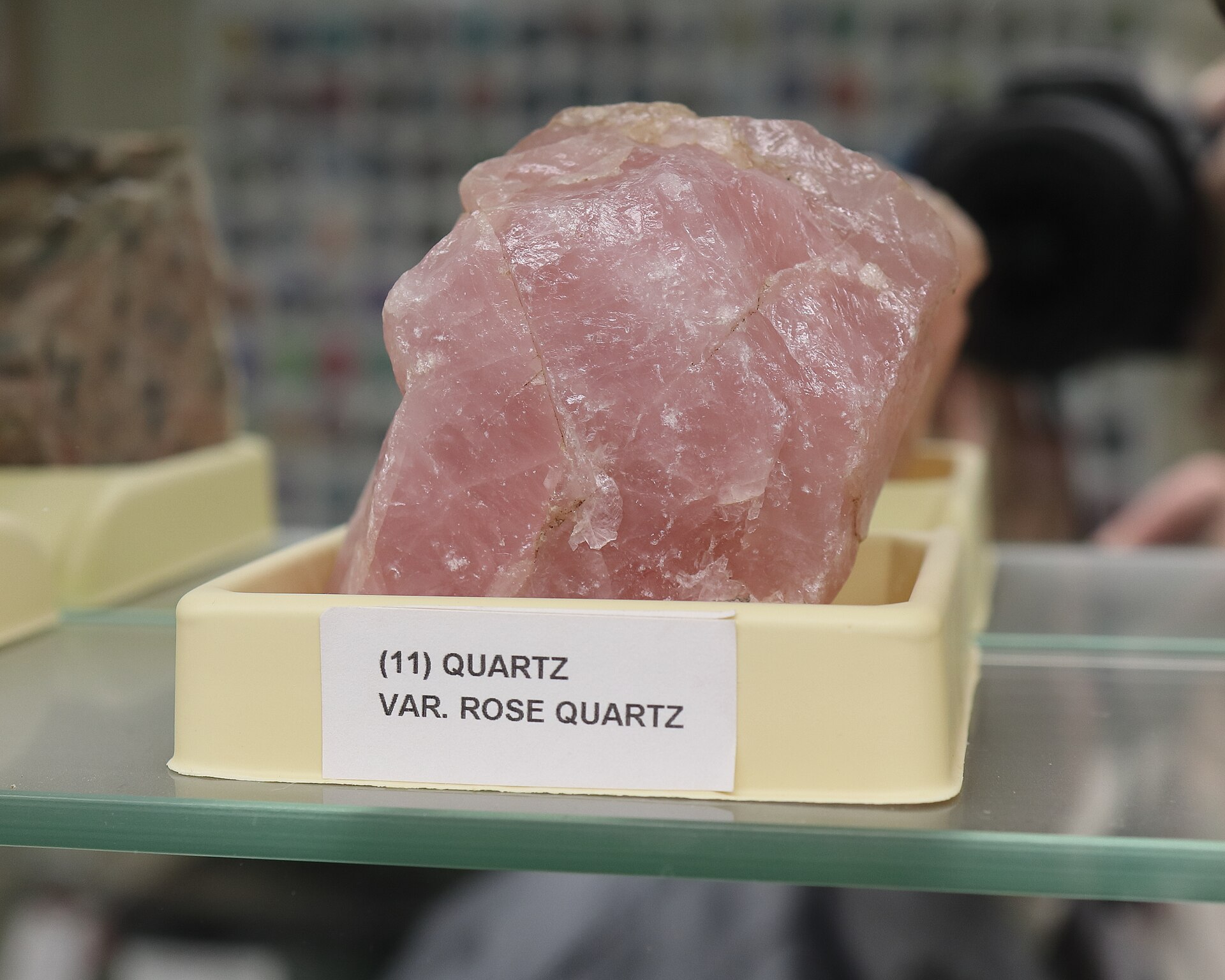
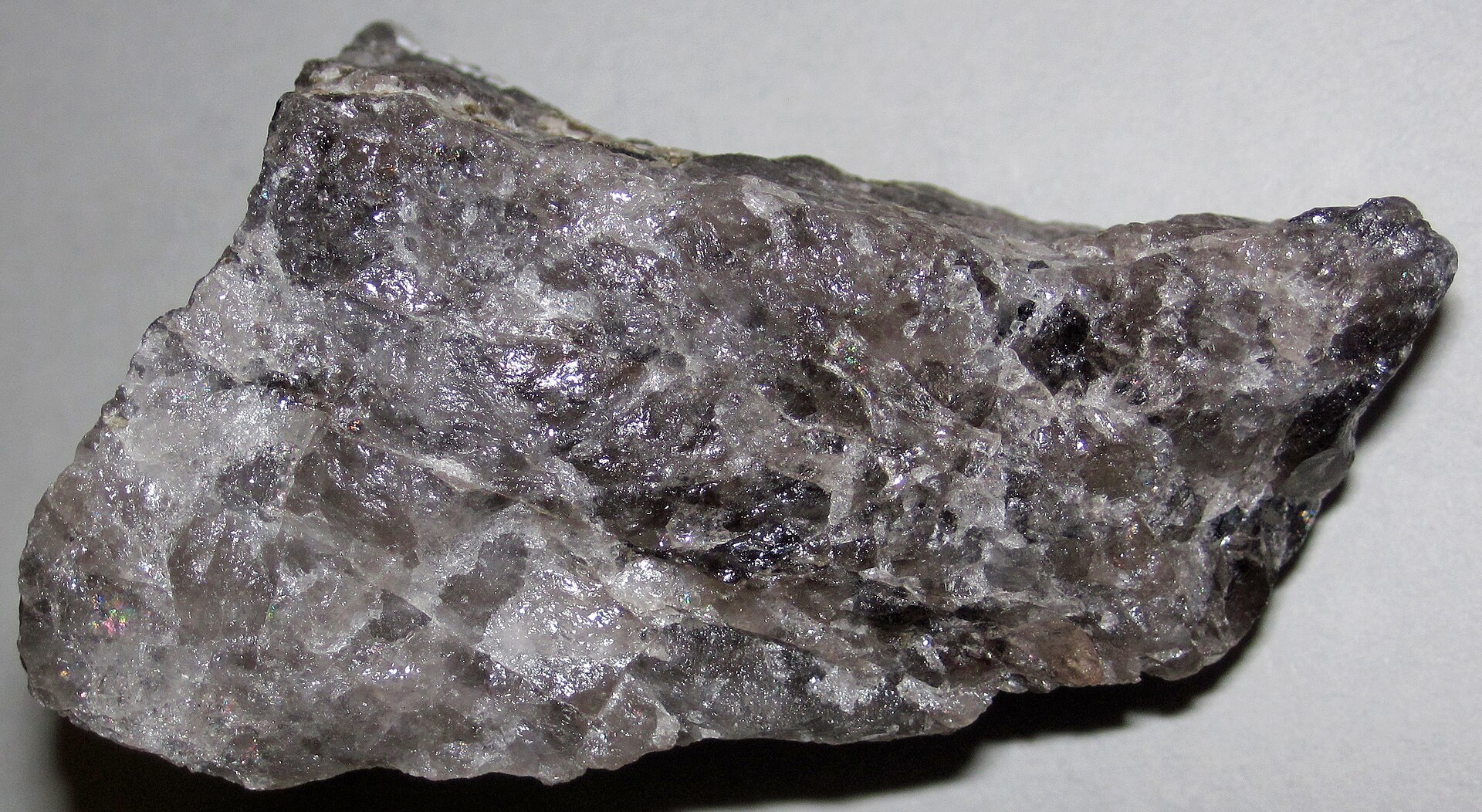
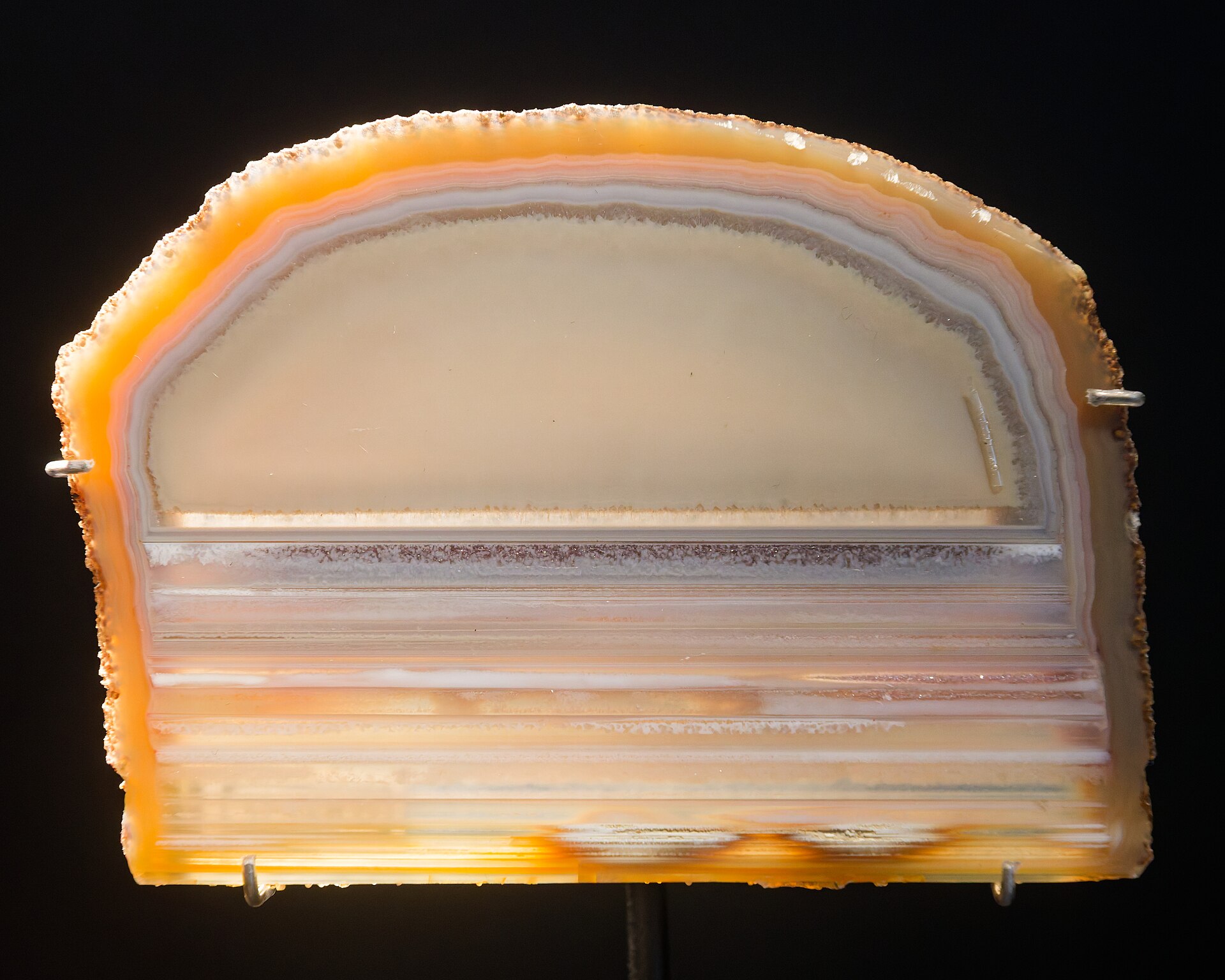
Photographs from Wikimedia Commons contributors — click a credit on the main image for the source and license.
Related Minerals
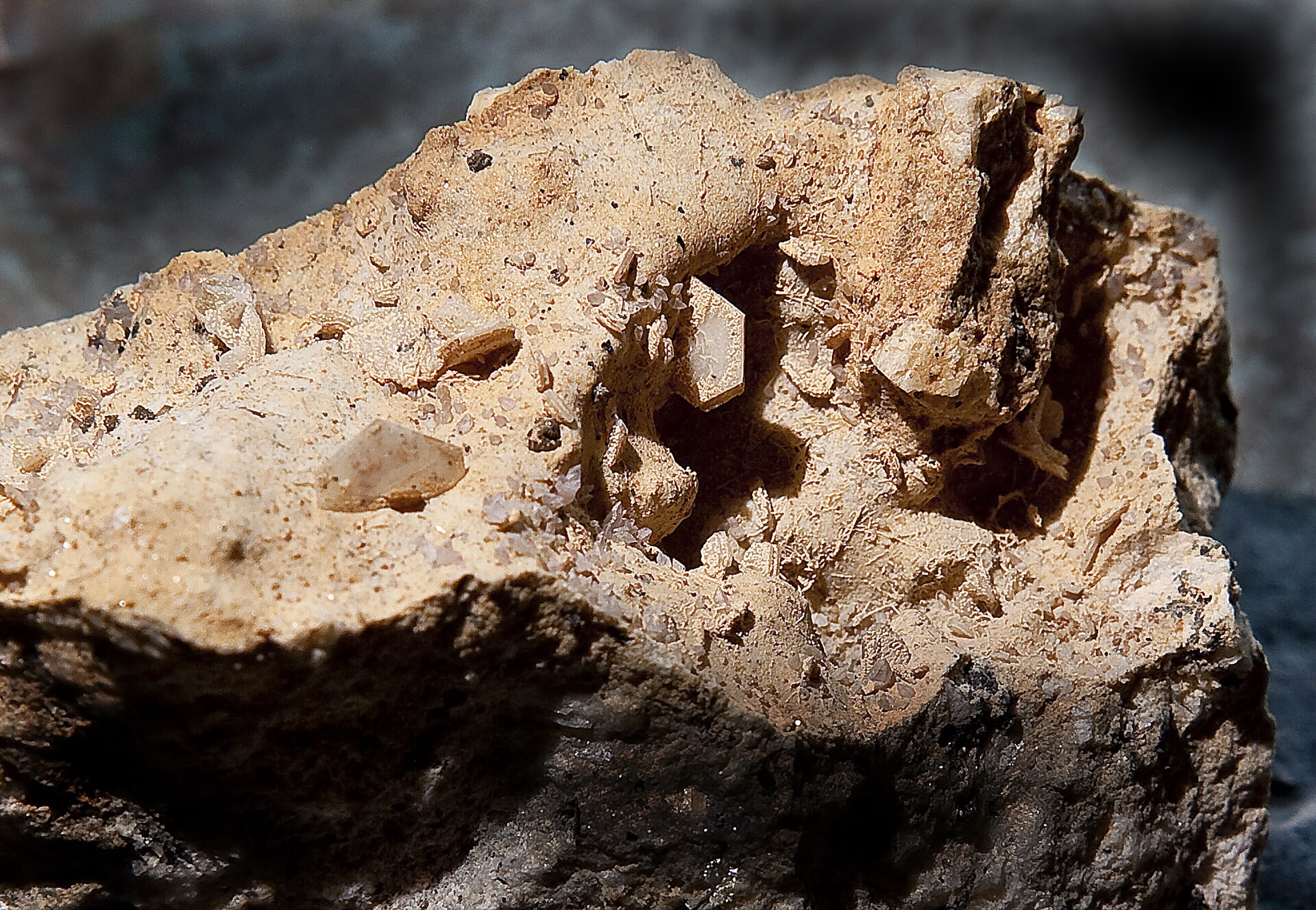
Others in the same family and minerals it commonly grows alongside.
References & Further Reading
- Dana’s New Mineralogy, 8th ed. Silica group, tectosilicates.
- Deer, Howie & Zussman. An Introduction to the Rock-Forming Minerals.
- Mindat.org — Quartz mineral data and locality records.
Last reviewed 2026-09-14 · How to cite this page.