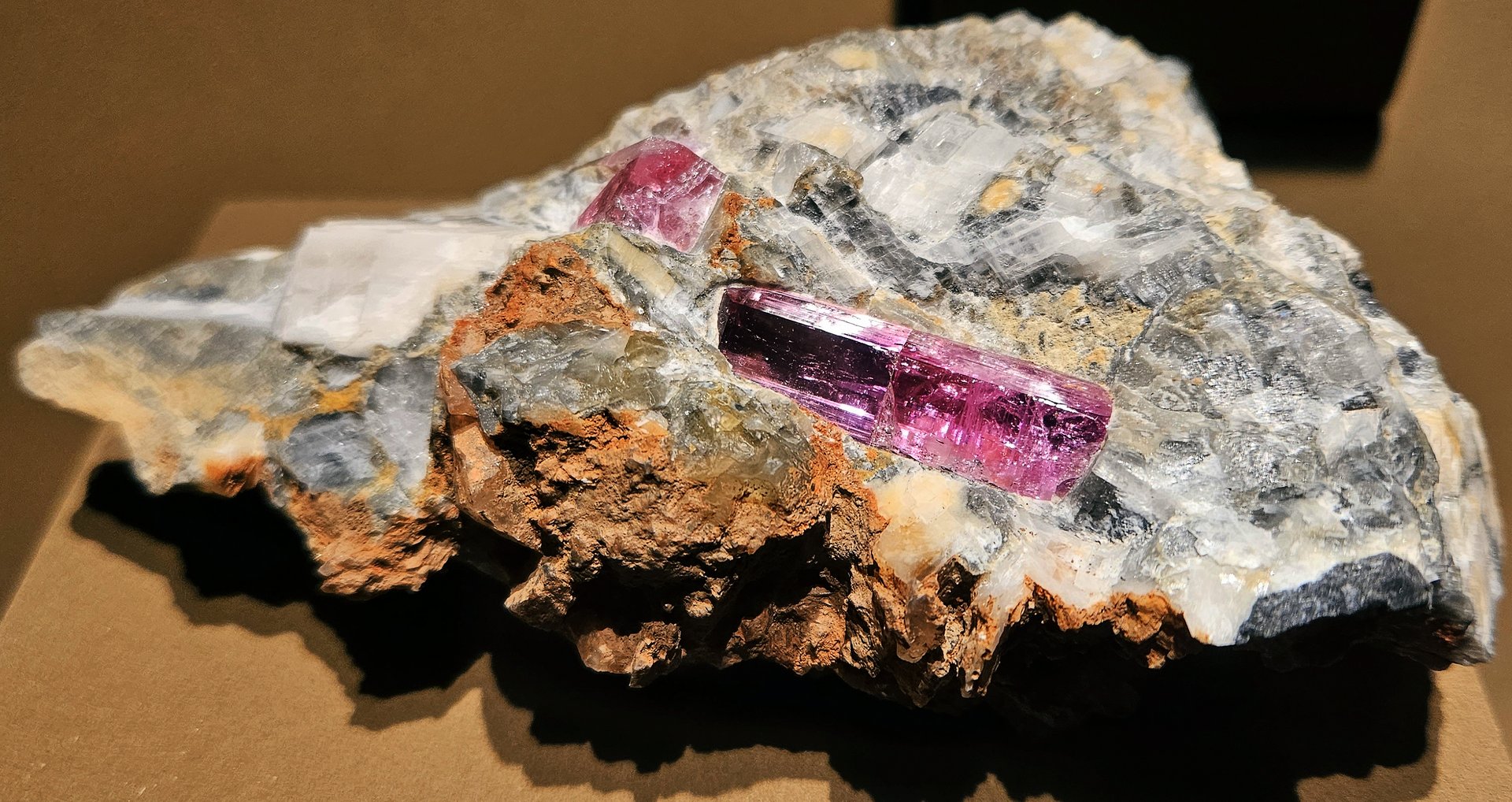
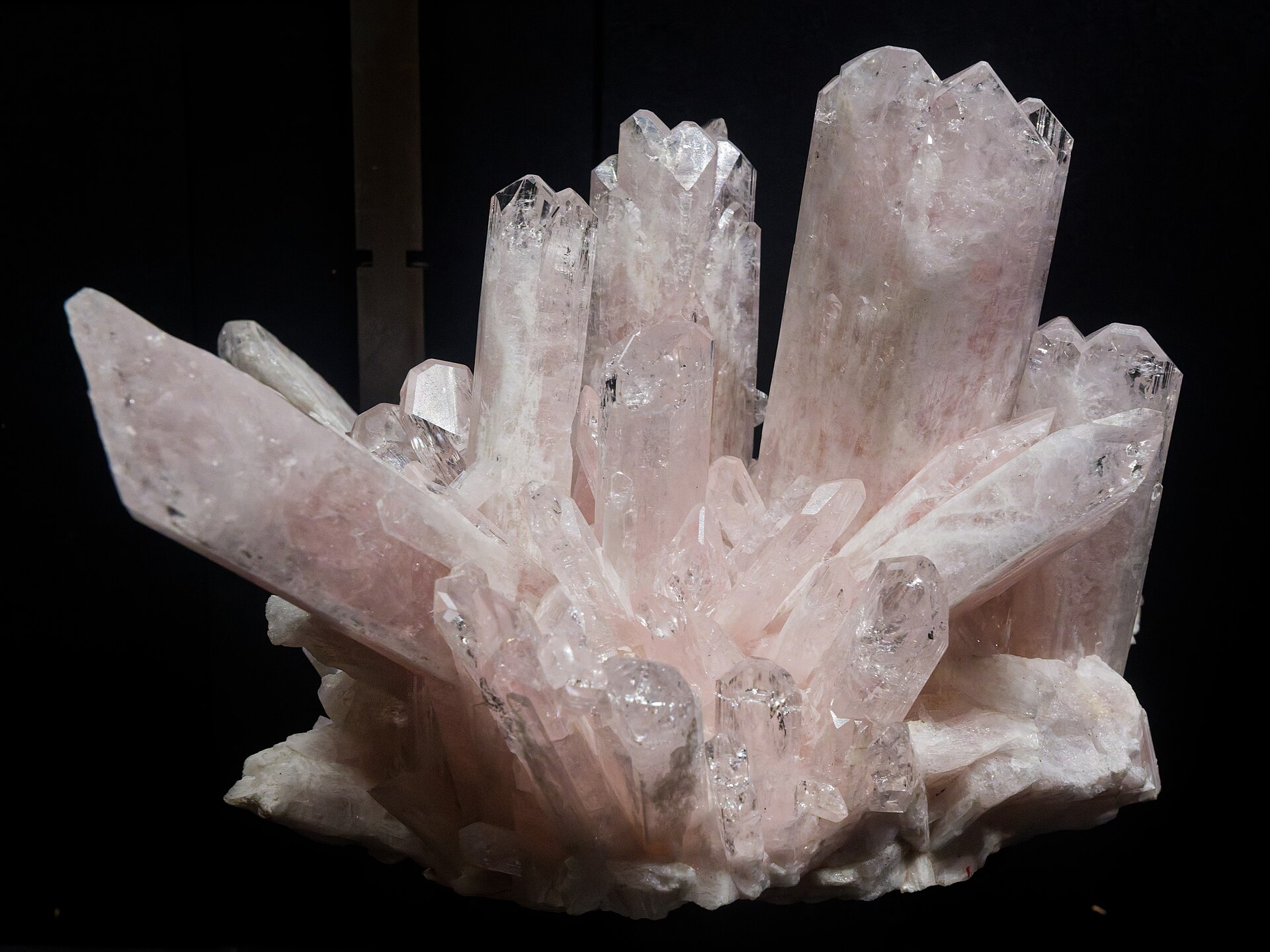
Topaz — glassy prismatic crystals, the defining mineral of Mohs 8 — Photo: Eric Polk · CC BY-SA 4.0
What is Topaz?
Topaz is an aluminium fluorosilicate — Al₂SiO₄(F,OH)₂ — that forms where fluorine-rich fluids linger in cooling granites and rhyolites. It's the hardest of the common silicate gems: at Mohs 8 it sits exactly halfway between quartz and corundum on the hardness scale, and it defines that step.
Most people meet topaz as an icy blue gemstone. Here's the twist: almost all blue topaz starts life colorless and gets its color from irradiation treatment — natural blue topaz exists, but it's usually pale. The genuinely precious natural colors are the orange-to-pink stones from Ouro Preto, Brazil, sold as imperial topaz.
Fun name quirk: topaz is named for Topazios (Zabargad) Island in the Red Sea — but the gem ancient miners dug there was actually peridot, not topaz at all.
Physical Properties
The full data table is in the panel alongside. Here’s what those numbers actually mean.
Hardness. Topaz is the standard for 8 on the Mohs scale — it scratches quartz easily and is in turn scratched by corundum. That hardness, plus good transparency, is why it survives daily wear as a ring stone.
Cleavage. Despite its hardness, topaz has one perfect basal cleavage — a clean internal plane across the base of the prism. Cutters must orient gems so the cleavage never meets a girdle edge, and a hard knock can still split a stone.
Color sources. Colorless is default. Blue comes from radiation-induced color centers (natural or lab); orange, pink and red tones come from chromium; brown 'smoky' topaz holds unstable color centers that can fade in sunlight.
How & Where It Forms
Topaz crystallizes late in the life of fluorine-rich magmas — in the pockets of granitic pegmatites, in greisen (quartz–mica rock altered by hot fluorine vapors), and in gas cavities inside rhyolite lava flows, where it grows directly from mineralizing vapor. Weathering frees the durable crystals into river gravels, where much gem topaz is actually found.
Often grows alongside:
What It’s Used For
How to Identify It
Field-checks: harder than quartz (scratches it), one direction of perfect flat cleavage at the prism base, glassy luster, and a heft that surprises for a pale transparent stone. Orthorhombic prisms are typically striated along their length.
| Looks like… | But differs because… | Quick test |
|---|---|---|
| Quartz | Softer (7), lighter (SG 2.65), no cleavage, and forms six-sided prisms | Cleavage & heft |
| Beryl | Six-sided prisms without topaz's perfect basal cleavage; lighter (SG ~2.7) | Cleavage & density |
| Danburite | Softer (7–7.5), lighter (SG ~3.0), lacks the clean basal split | Hardness & cleavage |
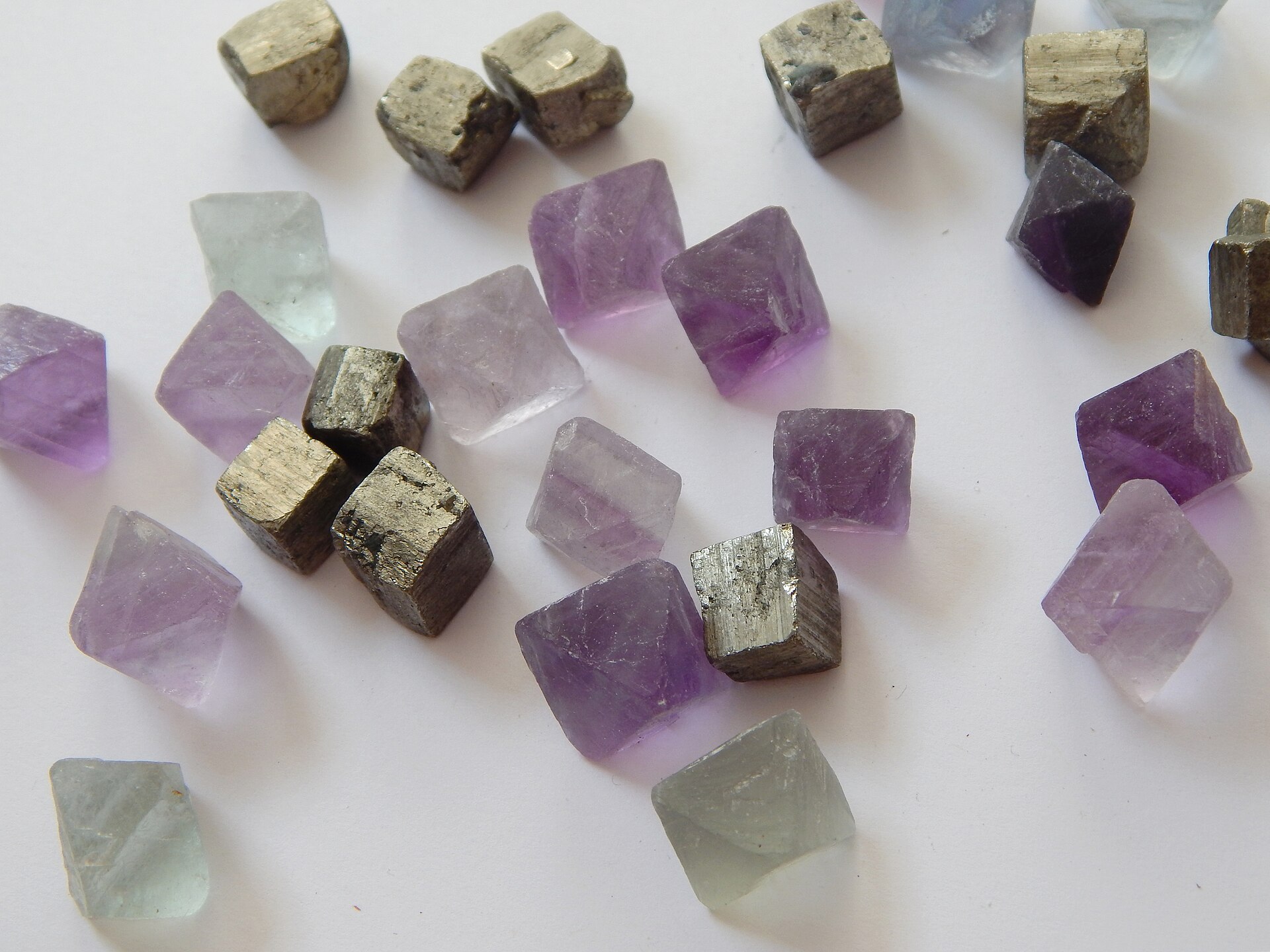
| Fluorite | Much softer (4) and cleaves in four directions into octahedra | Scratch & cleavage count |
Where It’s Found
Notable localities for fine specimens:
Gallery
Photographs from Wikimedia Commons contributors — click a credit on the main image for the source and license.
Related Minerals
Others in the same family and minerals it commonly grows alongside.
References & Further Reading
- Dana's New Mineralogy, 8th ed. Topaz group, nesosilicates.
- Mindat.org — Topaz mineral data and locality records.
- Wikipedia — Topaz.
Last reviewed 2026-09-14 · How to cite this page.