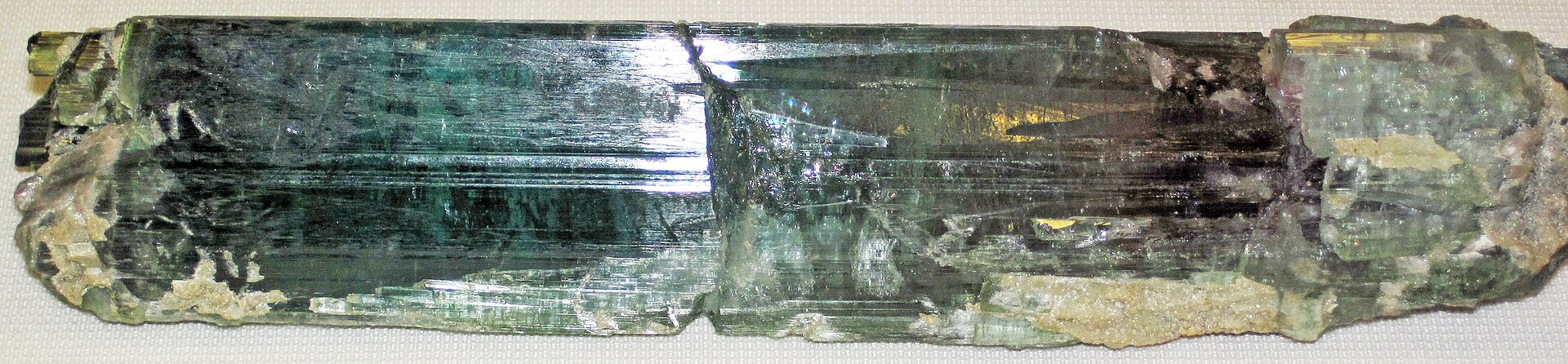
Tourmaline — the boron cyclosilicate supergroup behind dozens of species — Photo: James St. John · CC BY 2.0
What is Tourmaline?
Tourmaline isn't a single mineral — it's a supergroup of closely related boron-bearing cyclosilicates sharing one crystal structure. The general formula is written XY₃Z₆(T₆O₁₈)(BO₃)₃V₃W: the letters are crystallographic sites, and whichever elements dominate those sites decides the species. The International Mineralogical Association recognizes roughly forty tourmaline species.
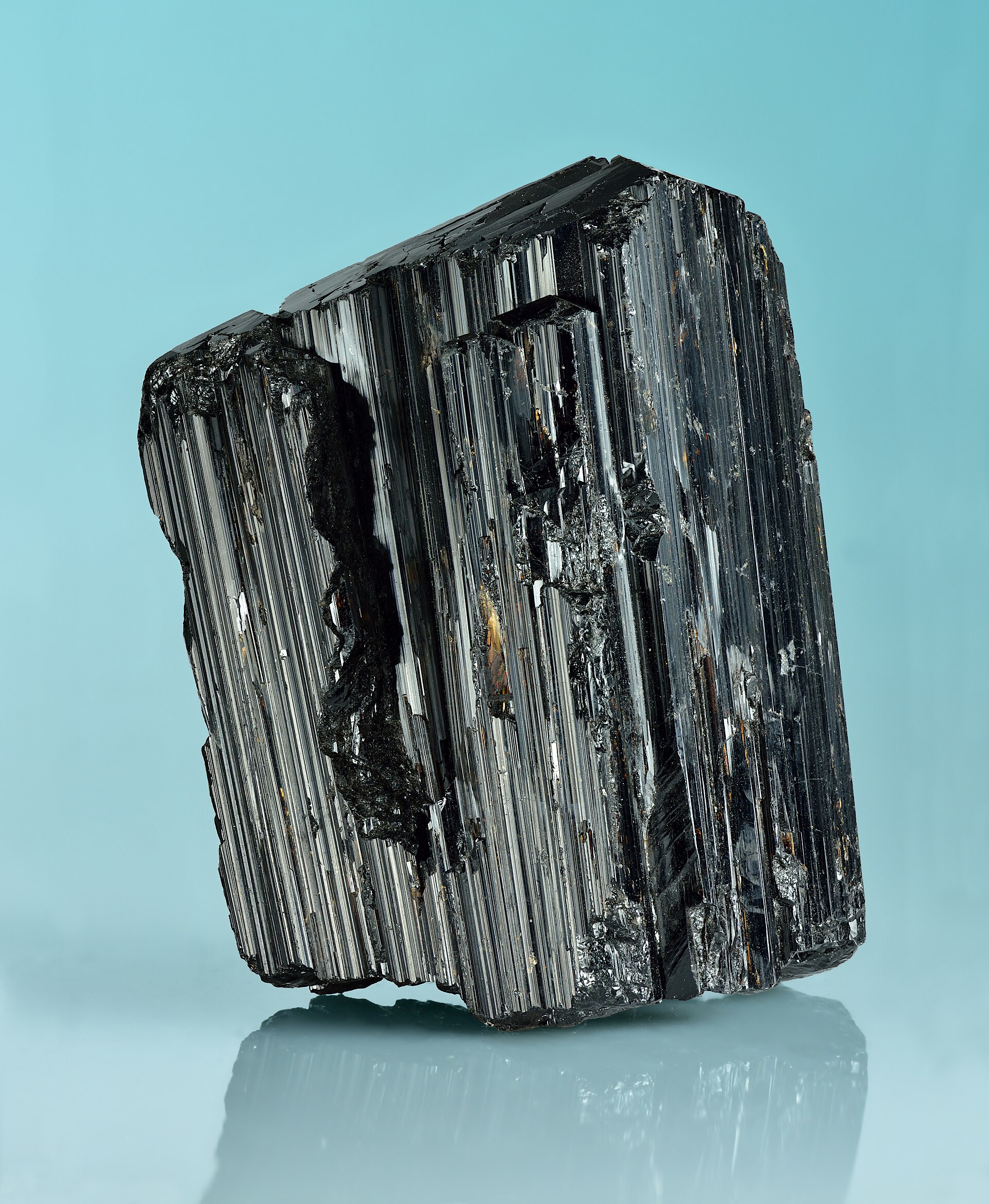
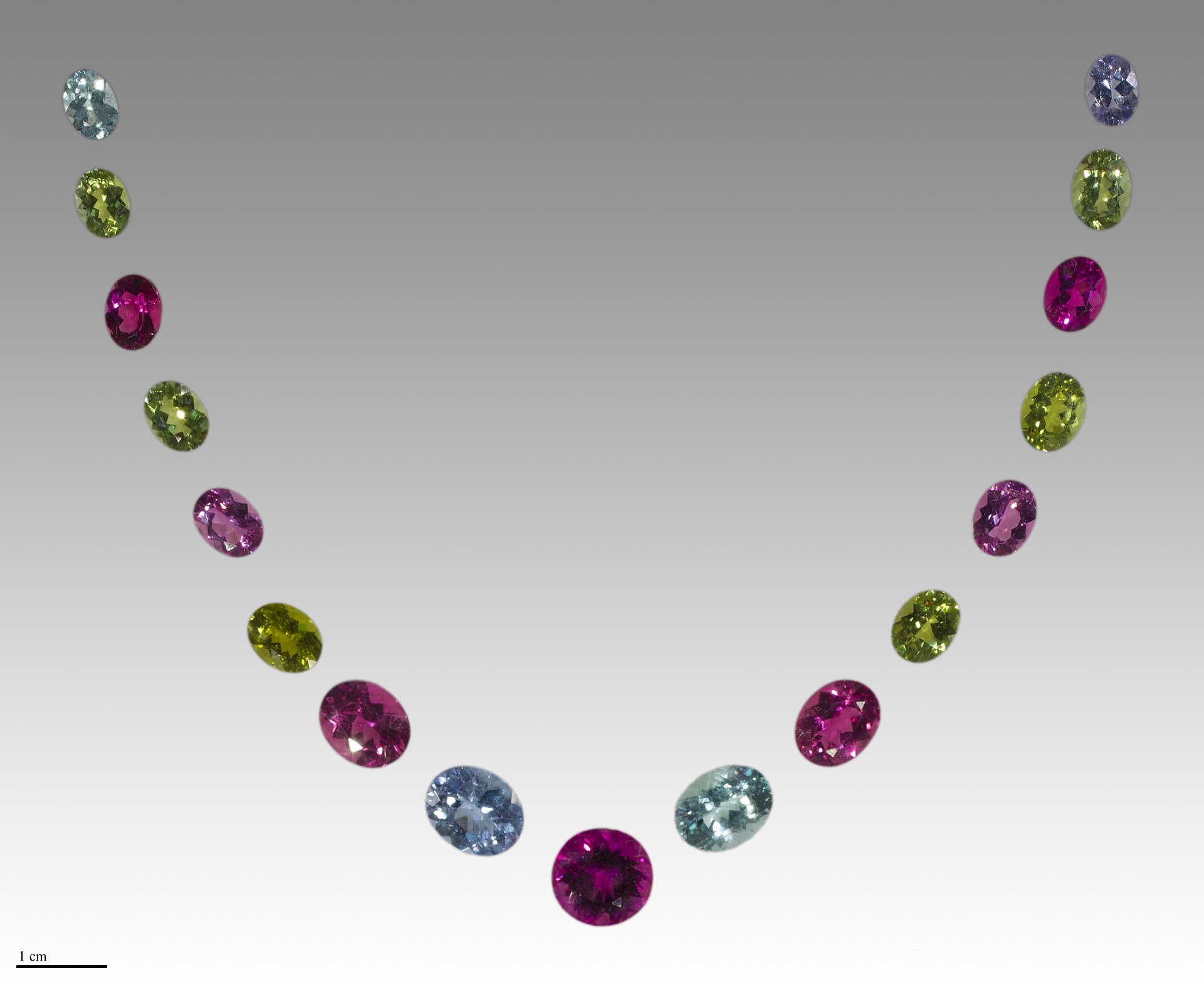
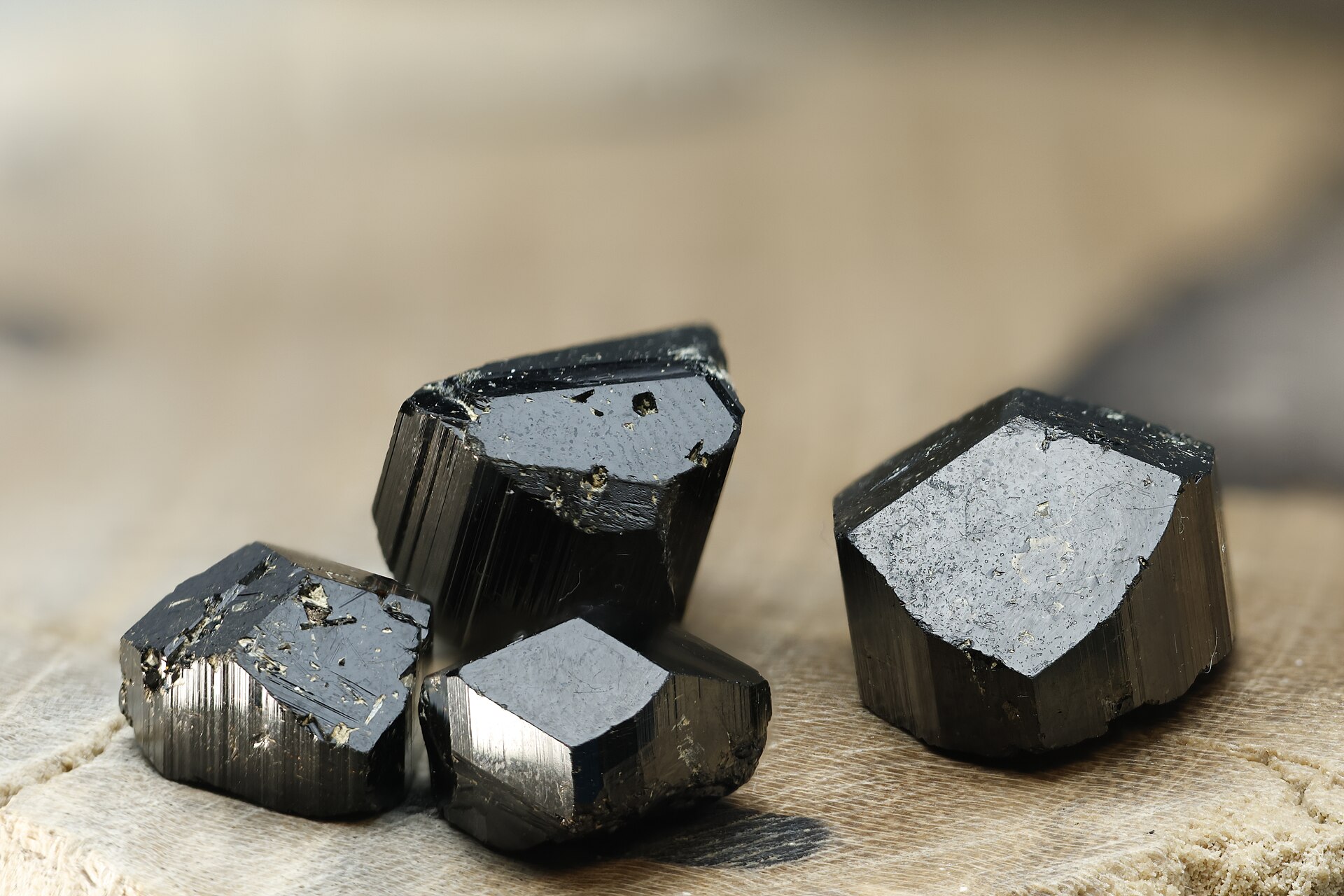
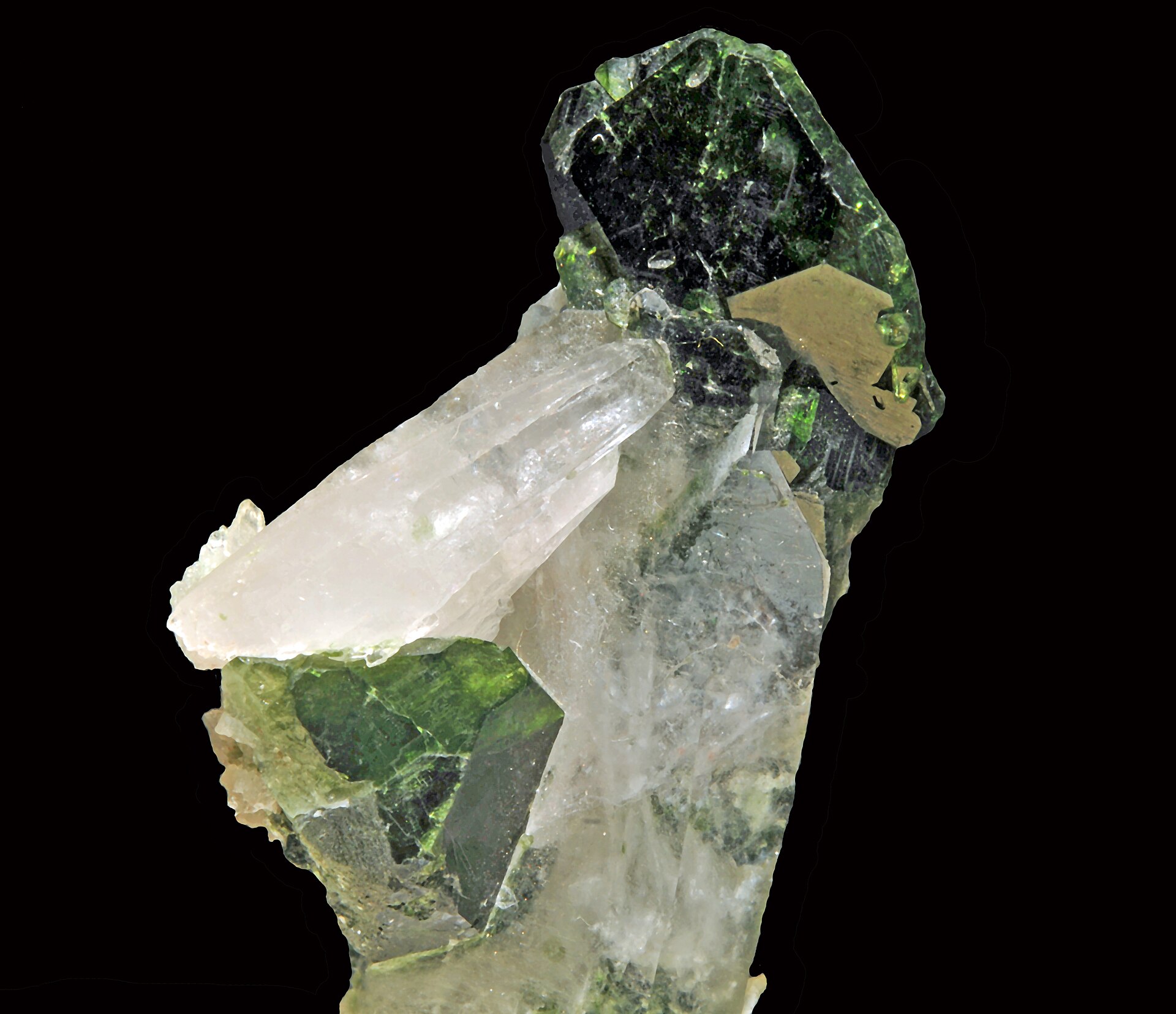
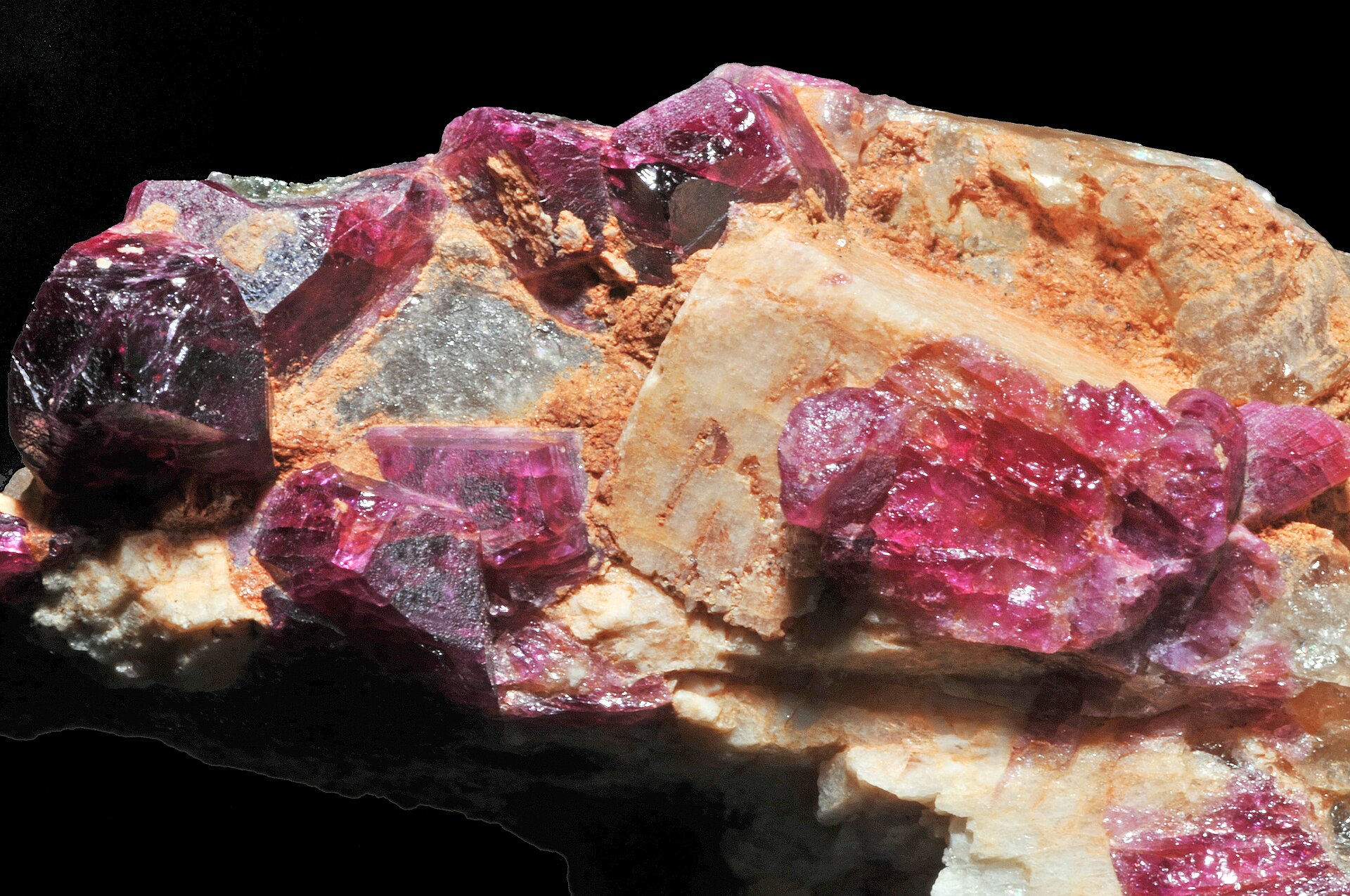
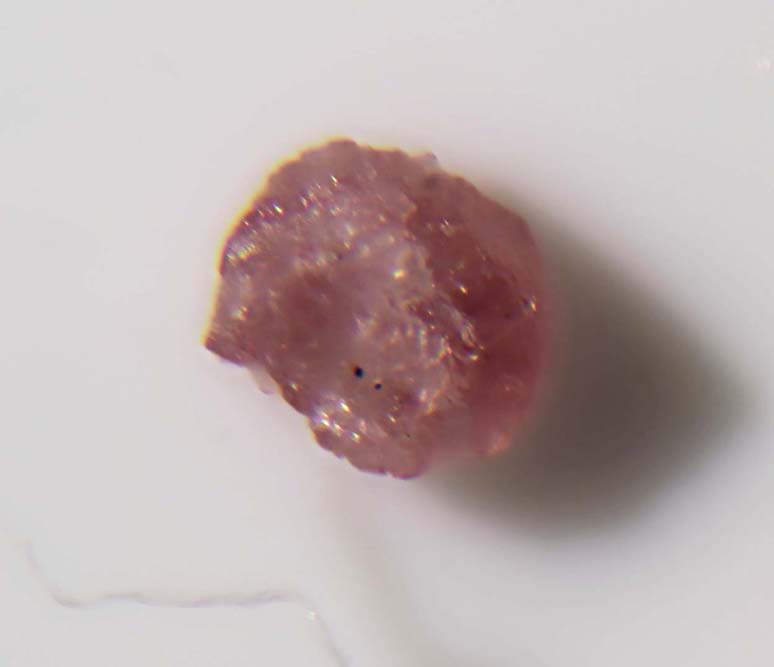
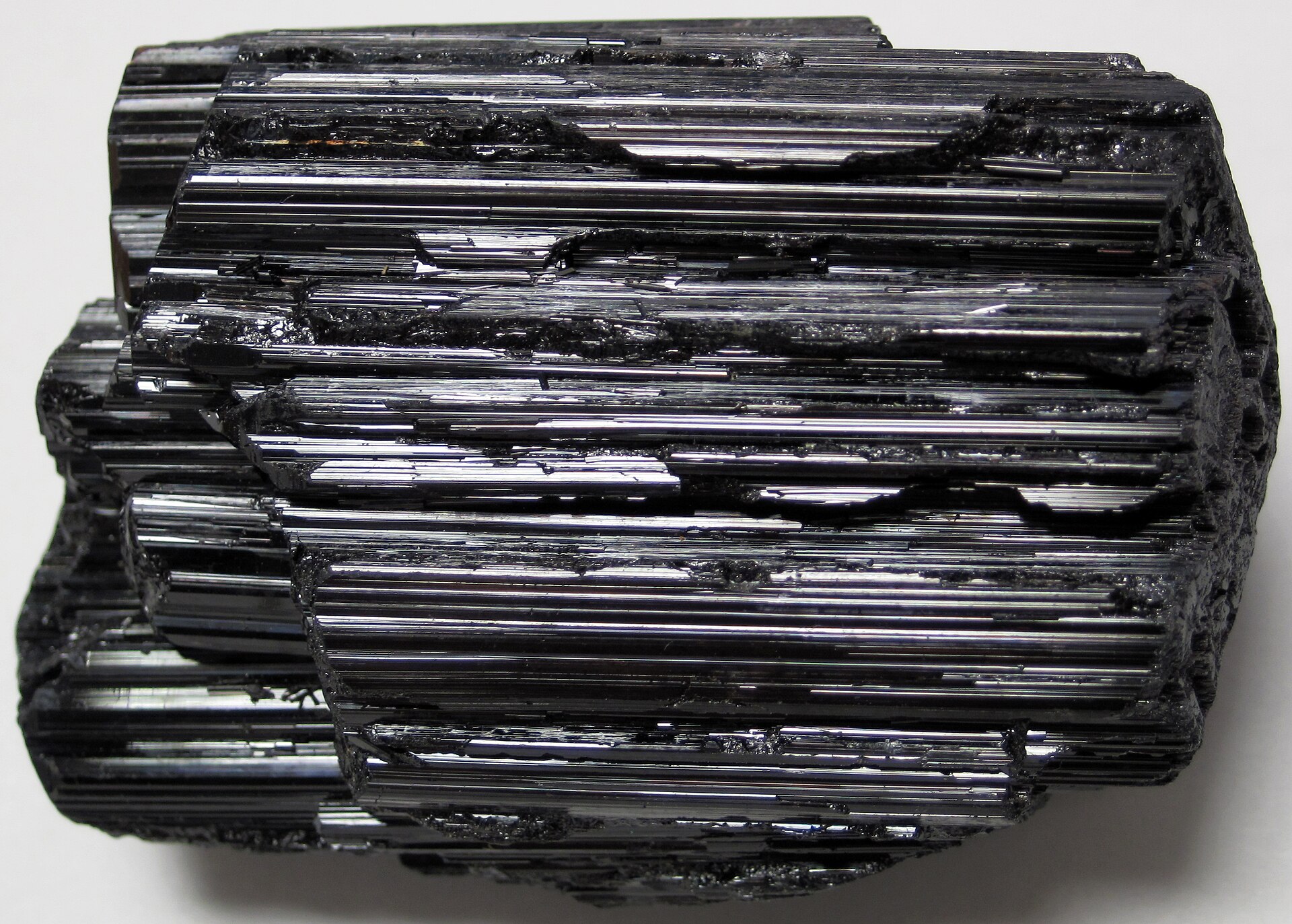
The members you'll actually meet are few. Schorl — black, iron-rich — makes up the vast majority of all tourmaline and bristles through pegmatites and schists worldwide. Elbaite, the lithium-rich member, supplies nearly every gem color: green verdelite, blue indicolite, red-to-pink rubellite, color-zoned 'watermelon', and the copper-charged neon blues of Paraíba. Dravite is the brown magnesium member common in marbles, and uvite and fluor-liddicoatite fill out the calcium branch.
The structure is built from six-membered rings of SiO₄ tetrahedra with triangular BO₃ groups — the boron is the fingerprint: if a hard, striated, triangular-prism crystal turns up in a pegmatite, tourmaline is the first guess.
Physical Properties
The full data table is in the panel alongside. Here’s what those numbers actually mean.
One structure, many chemistries. All tourmalines share the same trigonal R3m framework. Mineralogists split the supergroup by what occupies the X site: alkali tourmalines carry Na (schorl, elbaite, dravite, olenite, tsilaisite), calcic tourmalines carry Ca (uvite, fluor-liddicoatite), and X-vacant tourmalines leave the site largely empty (foitite, rossmanite, magnesio-foitite).
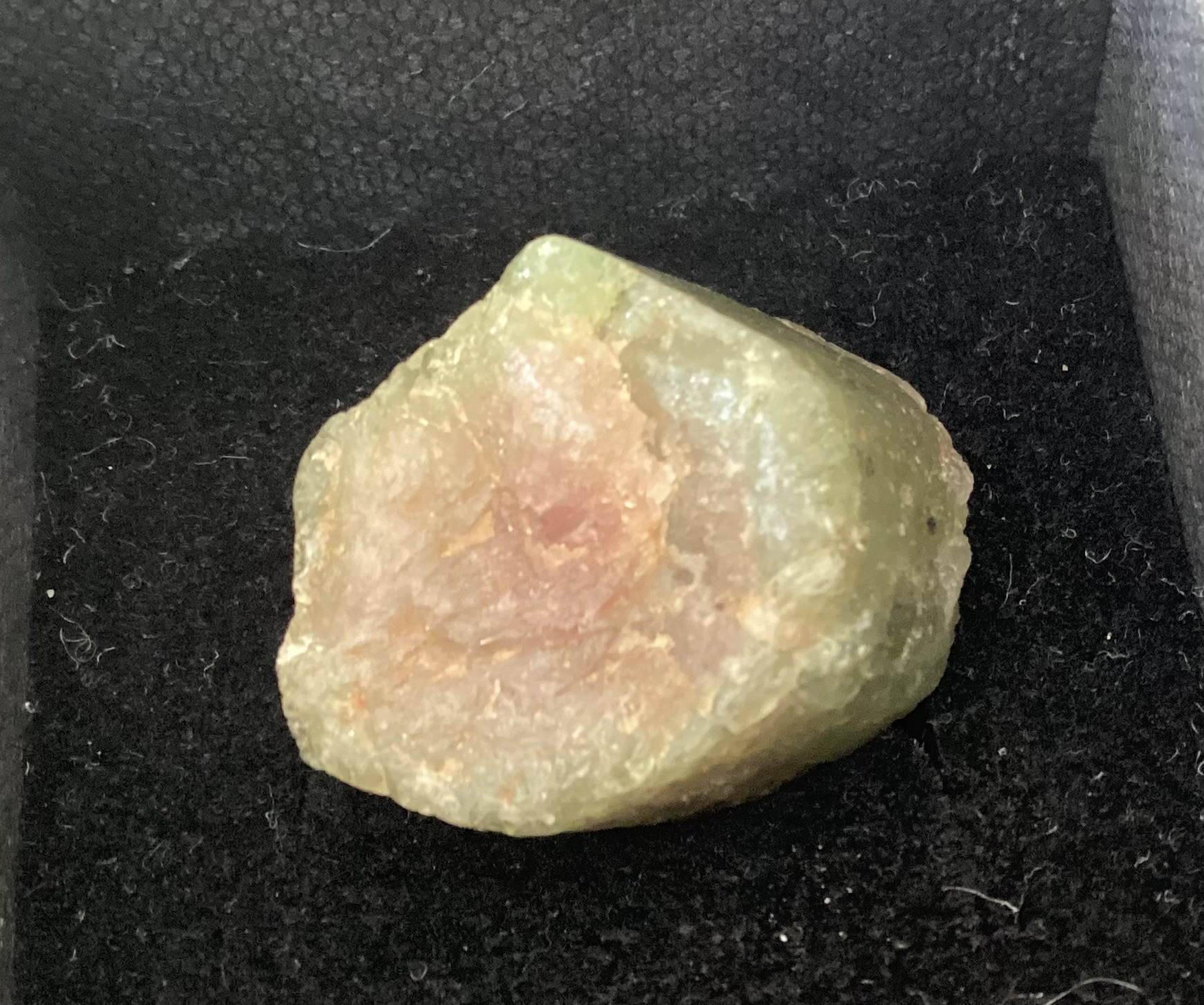
Color and pleochroism. A tourmaline crystal is far darker viewed down its length than across it — cutters orient rough so the richest color faces up. Zoned crystals stack pink cores inside green rinds ('watermelon').
Electric personality. Tourmaline is hemimorphic — the two ends of a crystal develop differently — so heating or squeezing it builds opposite charges at opposite ends. Warmed crystals famously attract ash and dust; Victorian shops sold 'tourmaline tongs' to demonstrate it.
Members
Same chemistry, different faces — trace impurities and how finely it crystallizes give a whole family of familiar stones.

How & Where It Forms
Tourmaline is the signature mineral of boron-rich granitic pegmatites — late-stage melts where boron, lithium and other rare elements concentrate and crystallize into giant pockets. Dravite and uvite favor metamorphosed dolomitic marbles; schorl is widespread in schists and gneisses. Because it resists weathering, gem tourmaline also accumulates in river gravels.
Often grows alongside:
What It’s Used For
How to Identify It
Look for long prisms with a triangular, 'Mercedes-star' cross-section and heavy vertical striations. Hardness 7–7.5 with no real cleavage, strong color shift on rotation, and (for the curious) a warmed crystal that picks up dust clinch it.
| Looks like… | But differs because… | Quick test |
|---|---|---|
| Beryl | Six-sided prisms, weaker pleochroism, lighter (SG ~2.7) — tourmaline is triangular in cross-section | Cross-section shape |
| Quartz | Quartz prisms are six-sided and uniaxial (+); tourmaline is darker down the c-axis and often has a green or black core | Pleochroism & habit |
| Apatite | Much softer (5) and hexagonal — a knife scratches apatite, not tourmaline | Hardness |
| Amphibole | Black hornblende has two strong cleavages at ~120°; schorl lacks them and shows a triangular section | Cleavage check |
Where It’s Found
Notable localities for fine specimens:
Gallery
Photographs from Wikimedia Commons contributors — click a credit on the main image for the source and license.
Related Minerals
Others in the same family and minerals it commonly grows alongside.
References & Further Reading
- Henry, D.J., et al. (2011) Nomenclature of the tourmaline-supergroup minerals. American Mineralogist 96, 895–913.
- Dana's New Mineralogy, 8th ed. Tourmaline group, cyclosilicates.
- Mindat.org — Tourmaline supergroup mineral data and locality records.
- Wikipedia — Tourmaline.
Last reviewed 2026-09-14 · How to cite this page.