Salmon-pink feldspar blocks in granite, beside glassy gray quartz — Photo: Robert M. Lavinsky · CC BY-SA 3.0
What is Feldspar?
Feldspar is not one mineral but a family — and the most successful one on Earth. Together, feldspars make up roughly 60% of Earth’s crust: the pink blocks in granite, the white laths in basalt, the sand between your toes, even the bright highlands of the Moon. If a rock exists, feldspar is probably in it.
All feldspars share one recipe: a 3-D framework of aluminium and silicon tetrahedra with room for a large cation — potassium, sodium or calcium. That single letter makes the family: KAlSi₃O₈ is the potassium branch (orthoclase, microcline, sanidine), NaAlSi₃O₈ is albite, and CaAl₂Si₂O₈ is anorthite — with sodium and calcium mixing freely in between to give the plagioclase series.
The name is practical rather than poetic: German miners called it Feldspat, the ‘field spar’ — the cleavable mineral weathering out of rocks into tilled fields.
Physical Properties
The full data table is in the panel alongside. Here’s what those numbers actually mean.
Cleavage at right angles. Every feldspar breaks along two flat planes — {001} and {010} — that meet at or very near 90°. It is the family signature and the fastest field test: quartz chips, feldspar splits.
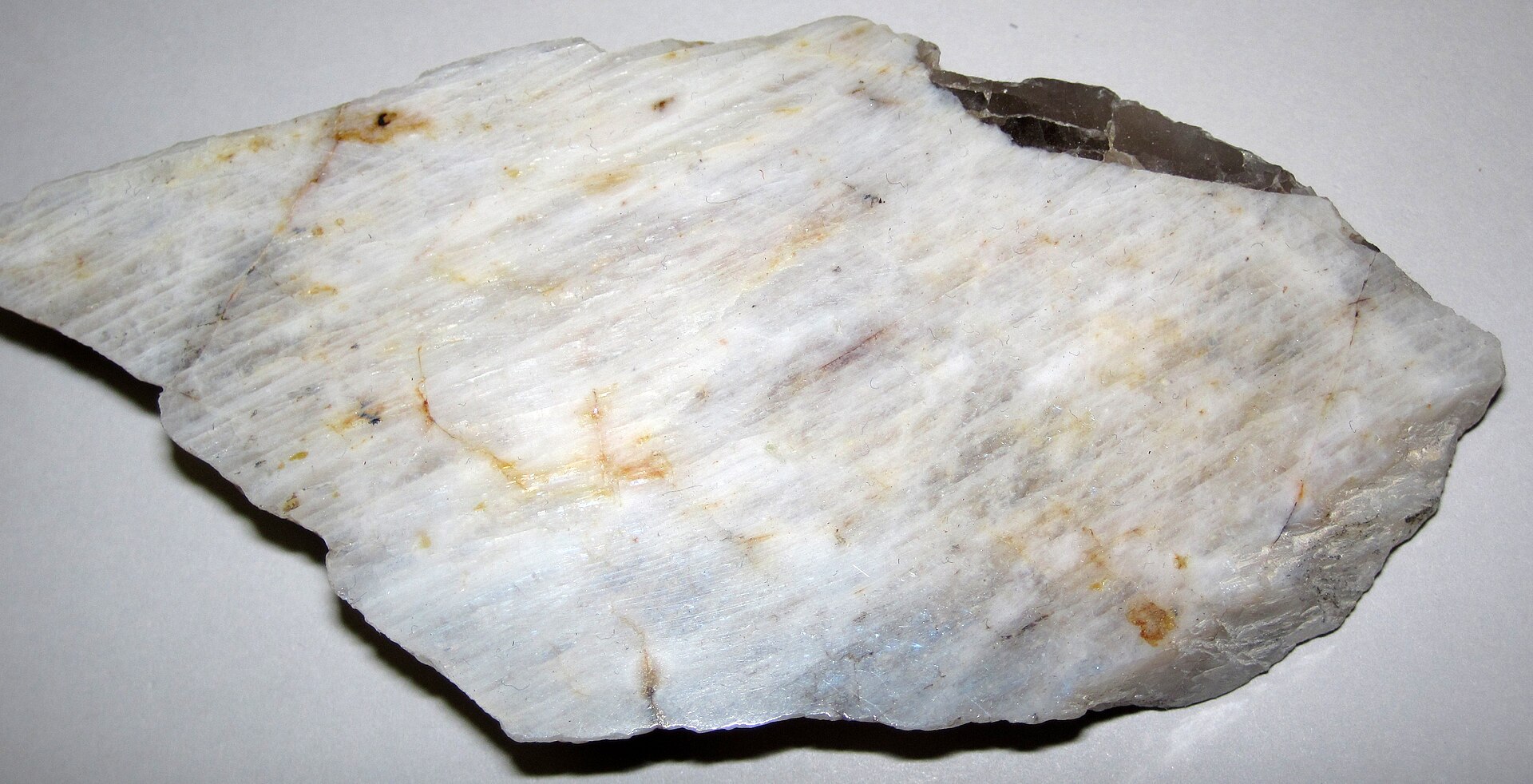
Two branches, one name. Alkali feldspar (K + Na) stays monoclinic or relaxes to triclinic on cooling; plagioclase (Na + Ca) is always triclinic and twins repeatedly, leaving fine parallel striations on its cleavage faces — the easiest way to tell the two branches apart by eye.
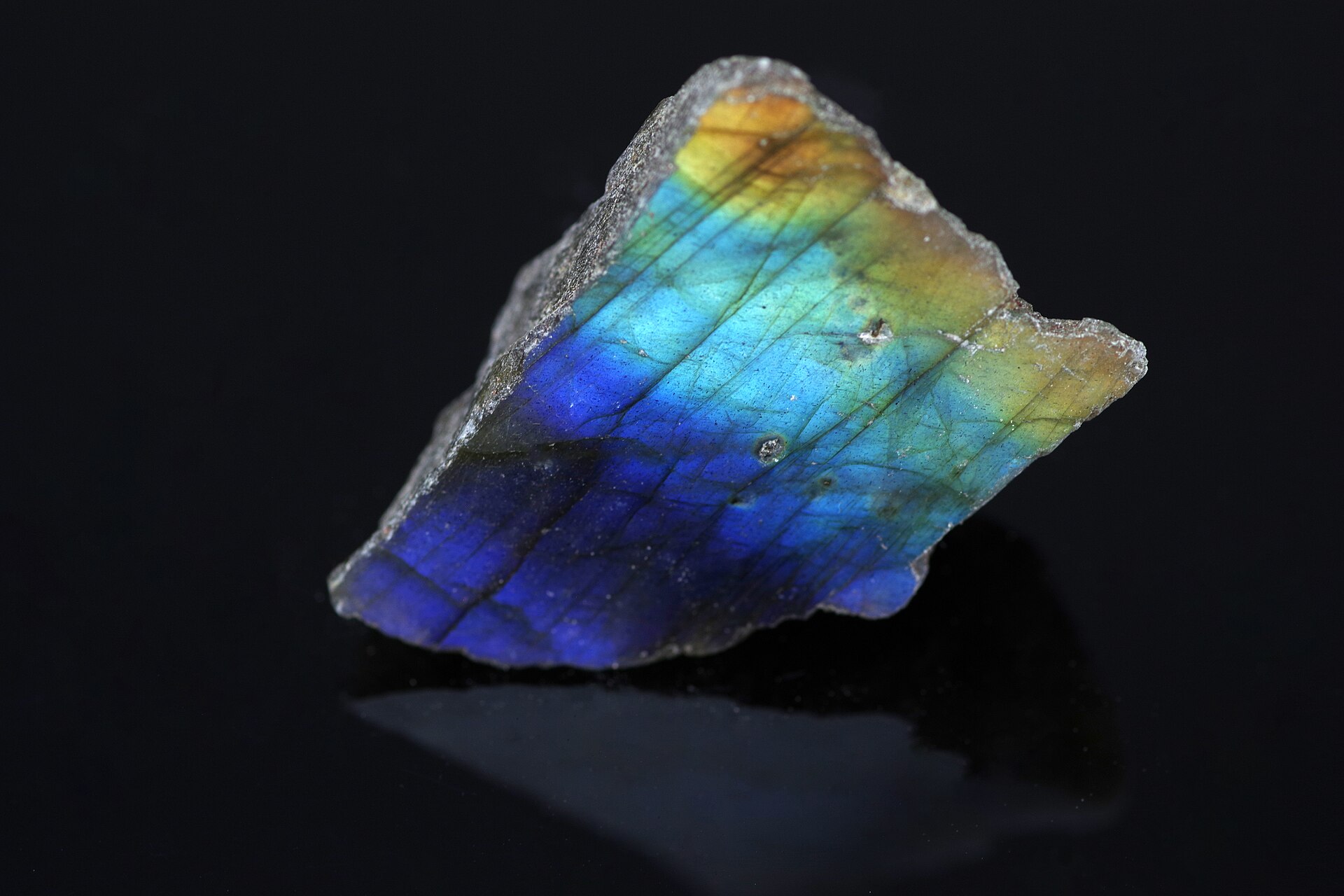
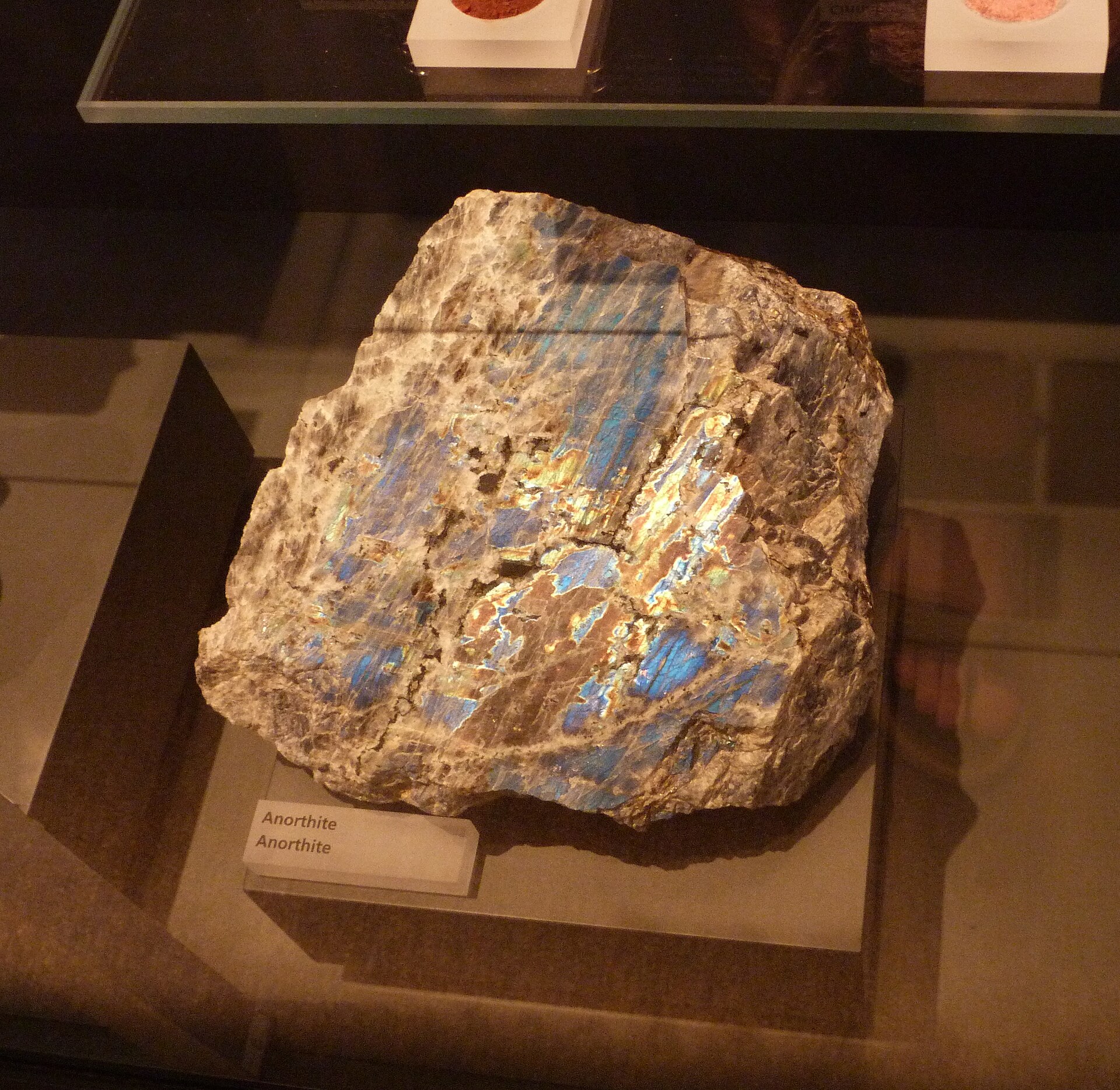
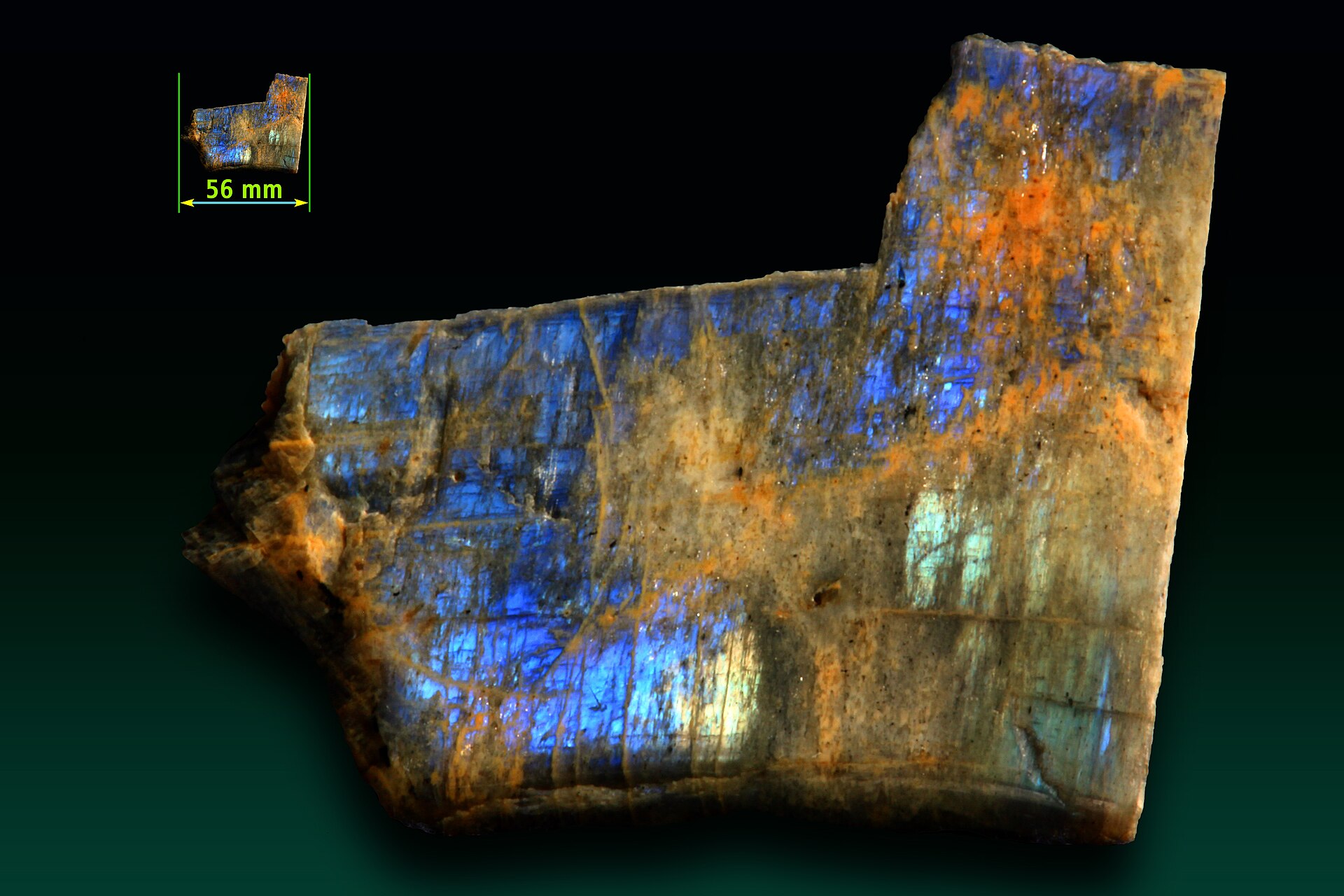
Light effects. When a cooling feldspar unmixes into microscopic layers, the layers scatter light: a soft floating glow gives moonstone (adularescence), a broad peacock flash gives labradorite (labradorescence), and included metal platelets make sunstone glitter (aventurescence).
Hardness and heft. All feldspars sit near 6 on the Mohs scale and 2.55–2.76 g/cm³ — hard enough to survive as sand, soft enough to weather into clay.
Members
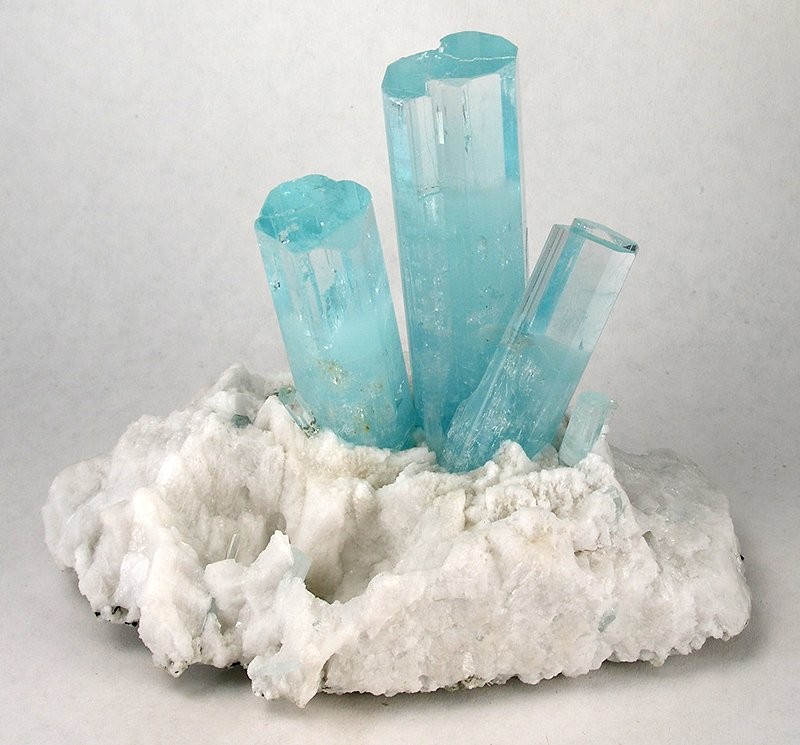
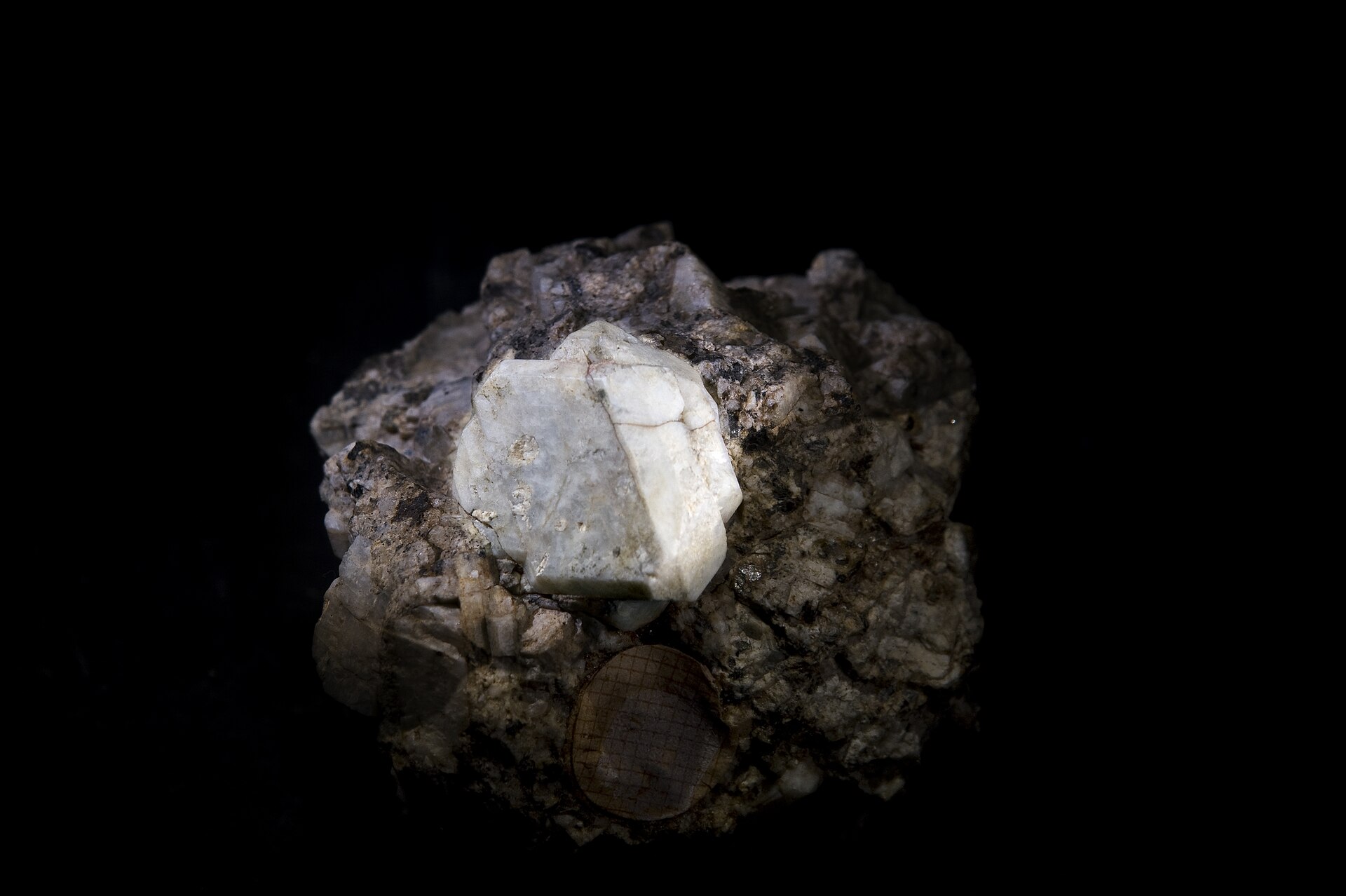
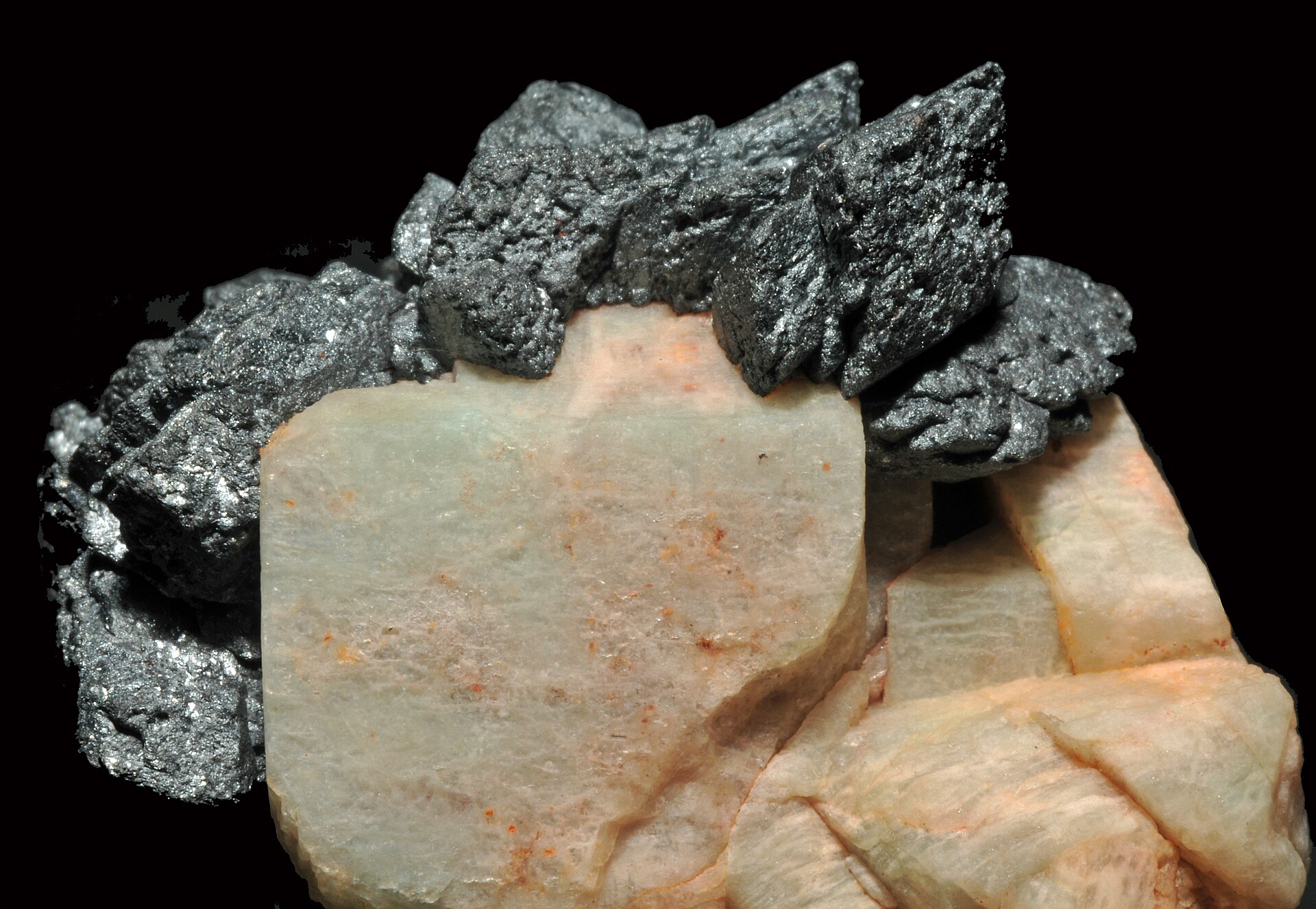
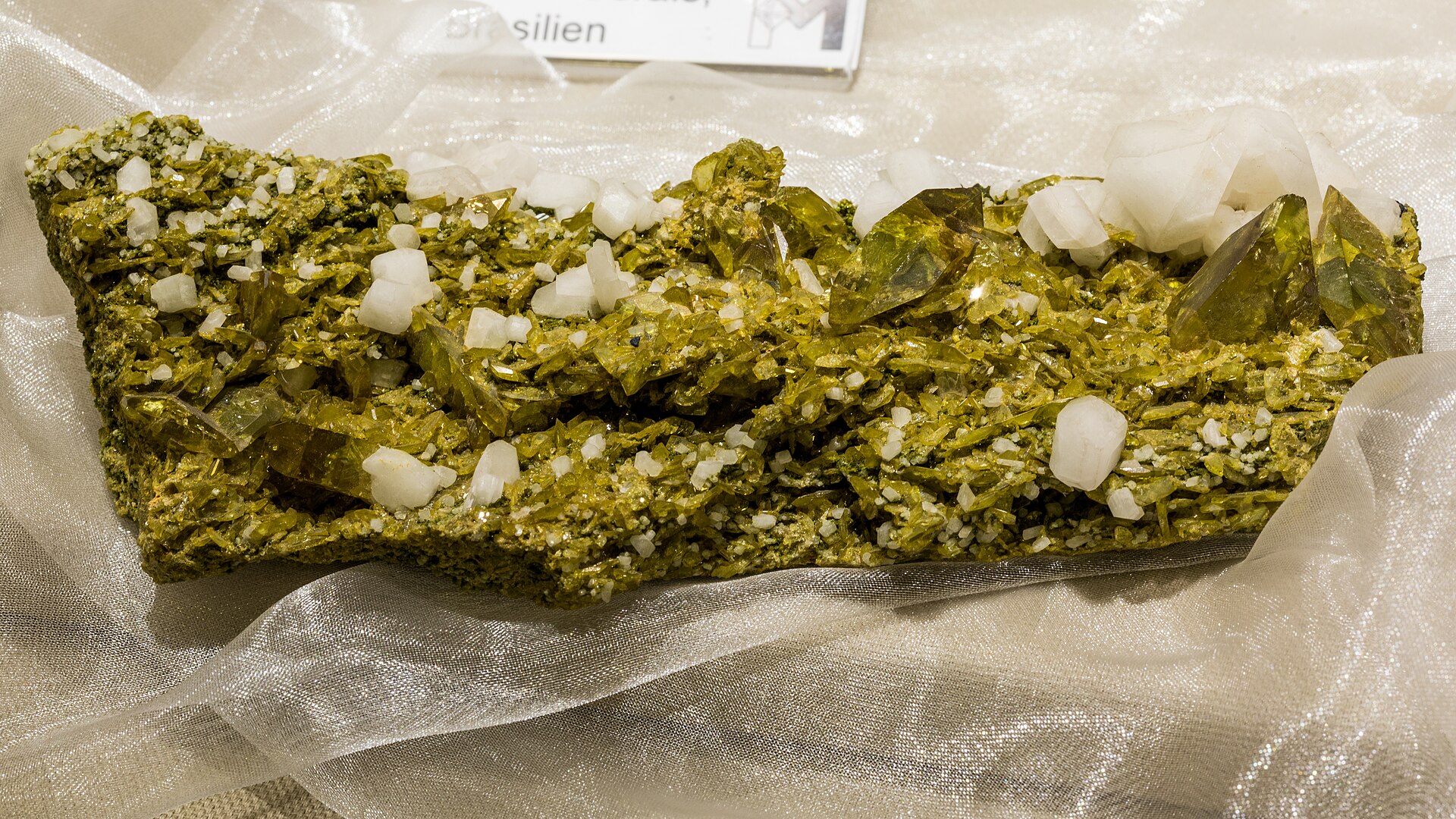
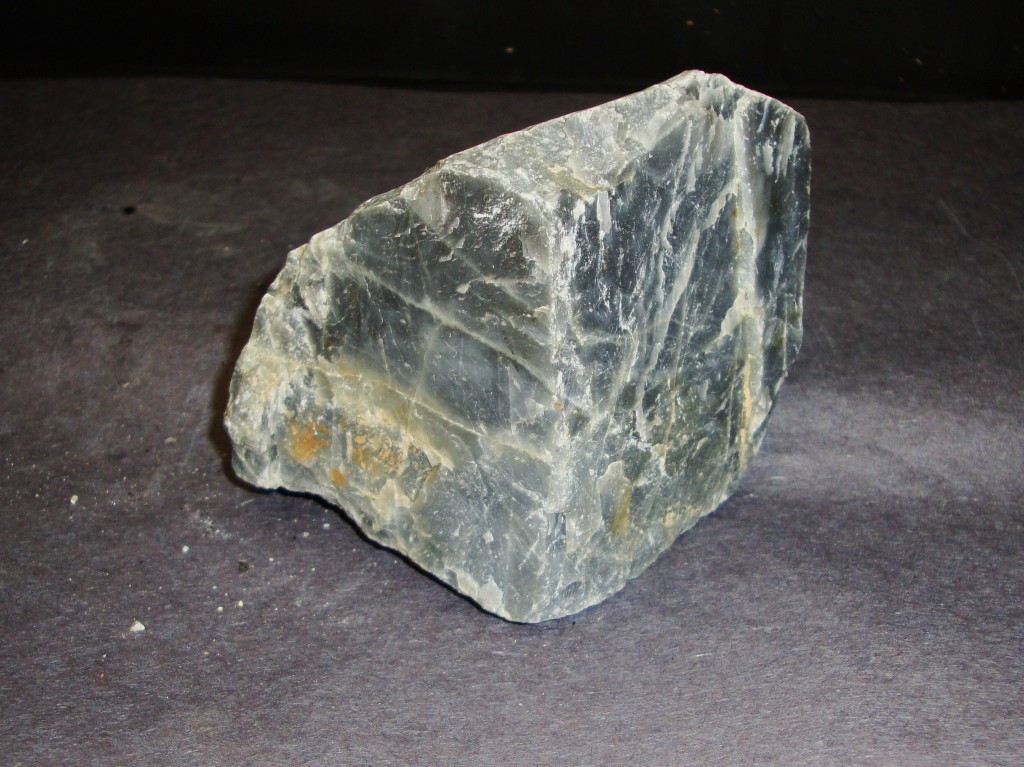
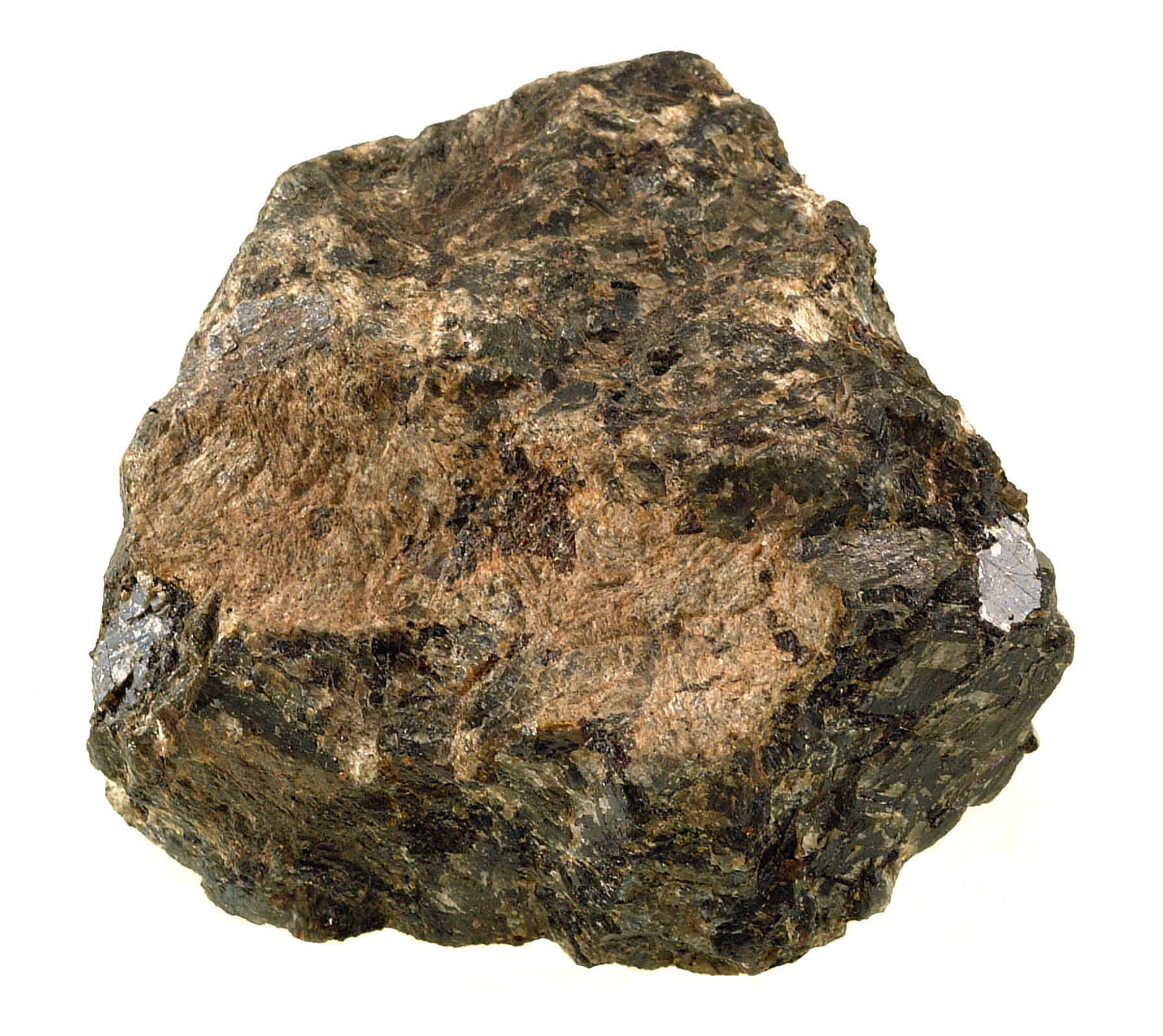
Same chemistry, different faces — trace impurities and how finely it crystallizes give a whole family of familiar stones.
How & Where It Forms
Feldspars crystallize first or second from almost every cooling magma. Calcium-rich plagioclase leads in basalt and gabbro; potassium feldspar arrives later in granite and syenite; pegmatites grow crystals metres long. The exact member records the magma’s chemistry — a dark basalt carries anorthite-rich plagioclase, while a granite brims with orthoclase and albite.
They persist through metamorphism in gneisses, then break down at the surface: feldspar weathering is the planet’s main factory for clay minerals such as kaolinite, which is why soils and sediments are full of it even after the crystals are gone.
Often grows alongside:
What It’s Used For
How to Identify It
Scratch and split. Feldspar barely scratches glass, leaves a white streak, and breaks along two flat faces at ~90° — never the curved chips of quartz. Smooth cleavage faces with Carlsbad twins point to K-feldspar; fine parallel striations point to plagioclase; a flash of blue-green, floating sheen or golden glitter points to the gem varieties.
| Looks like… | But differs because… | Quick test |
|---|---|---|
| Quartz | Harder (7), no cleavage, breaks conchoidally into curved chips | Cleavage & scratch |
| Calcite | Much softer (3), rhombohedral cleavage, and effervesces in dilute acid | Vinegar drop |
| Topaz | Harder (8) with a single perfect basal cleavage, not two at 90° | Cleavage count |
| Apatite | Softer (5), hexagonal prisms, no twin striations | Hardness & shape |
Where It’s Found
Notable localities for fine specimens:
Gallery
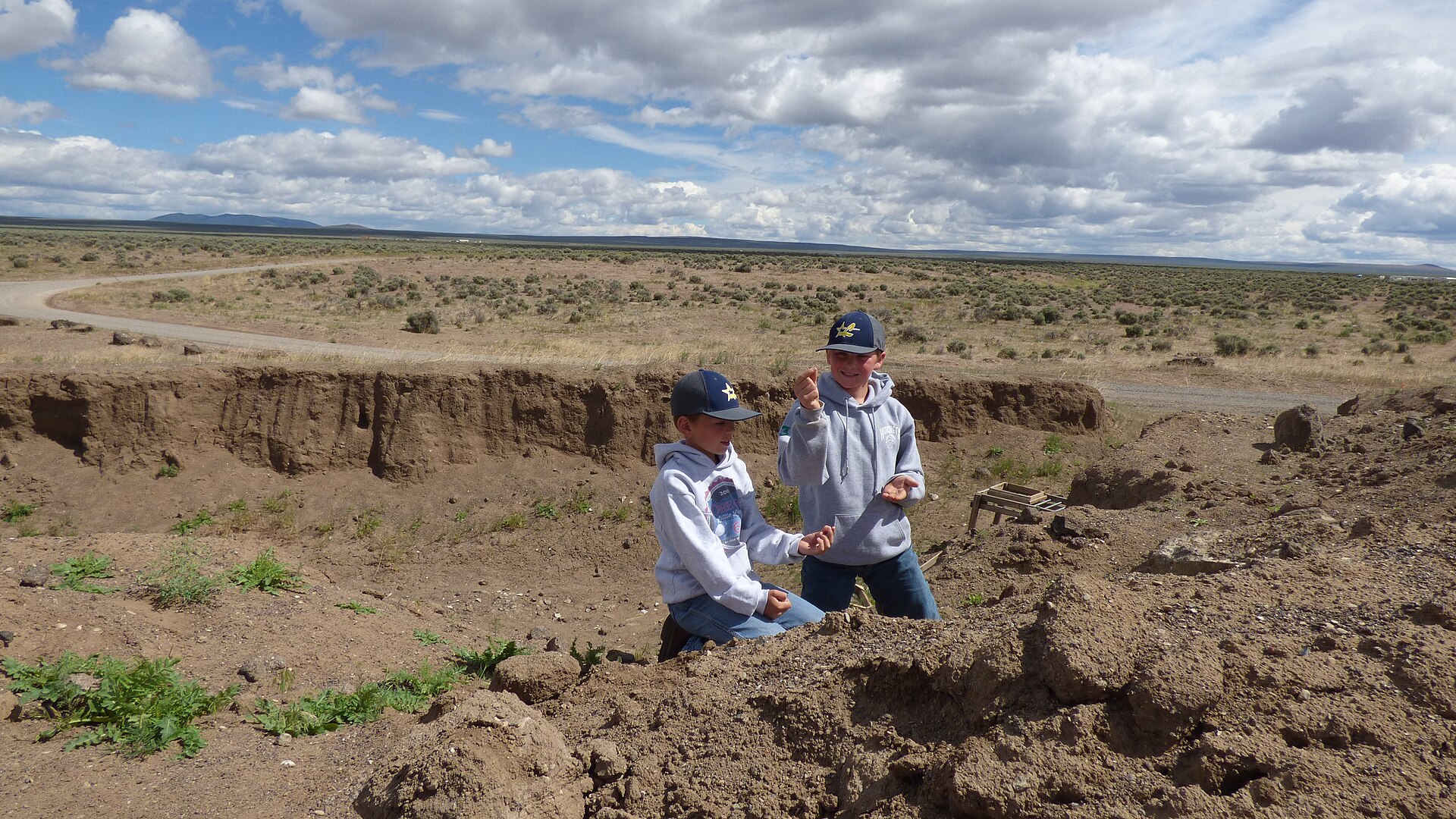
Photographs from Wikimedia Commons contributors — click a credit on the main image for the source and license.
Related Minerals
Others in the same family and minerals it commonly grows alongside.
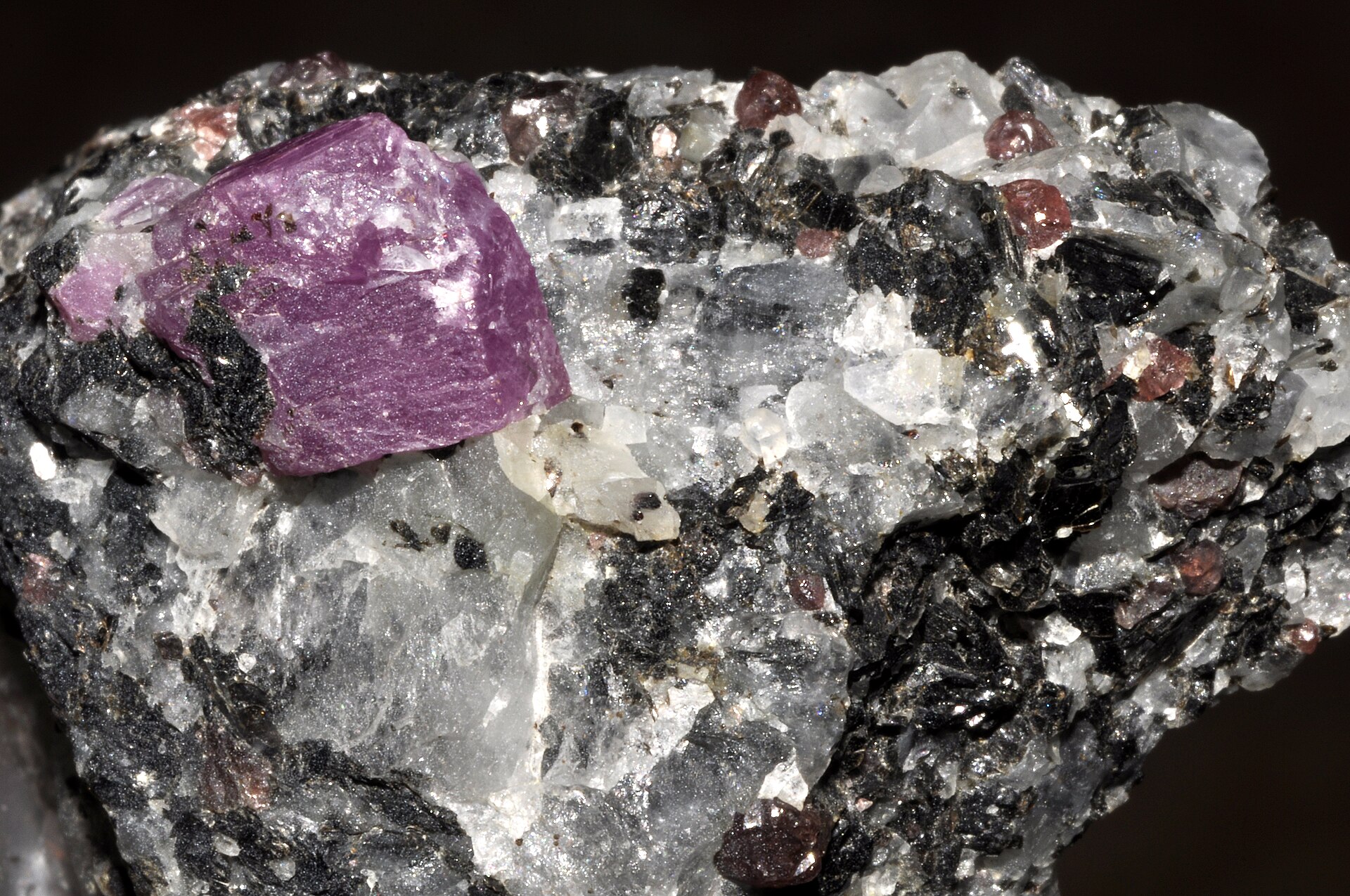
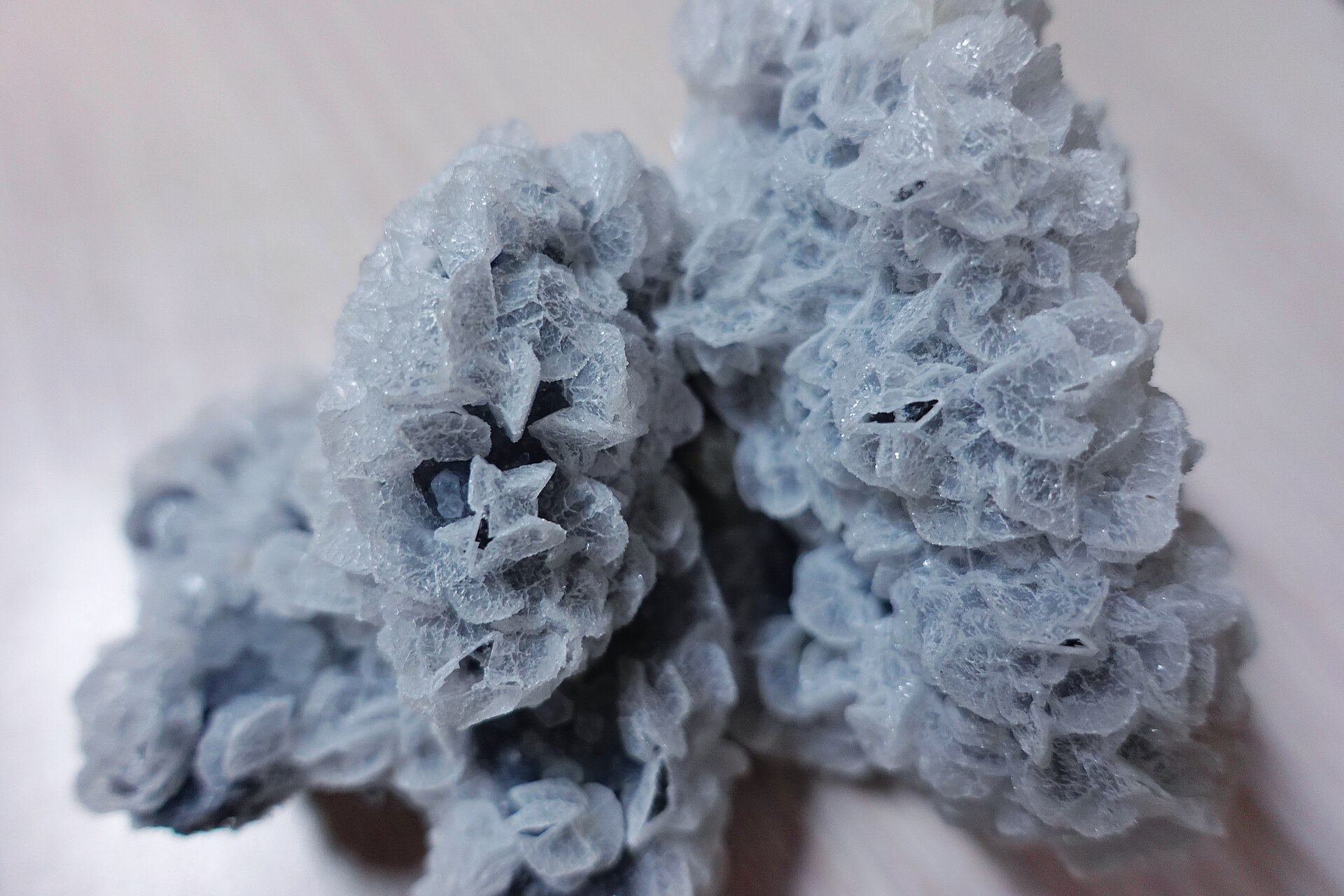
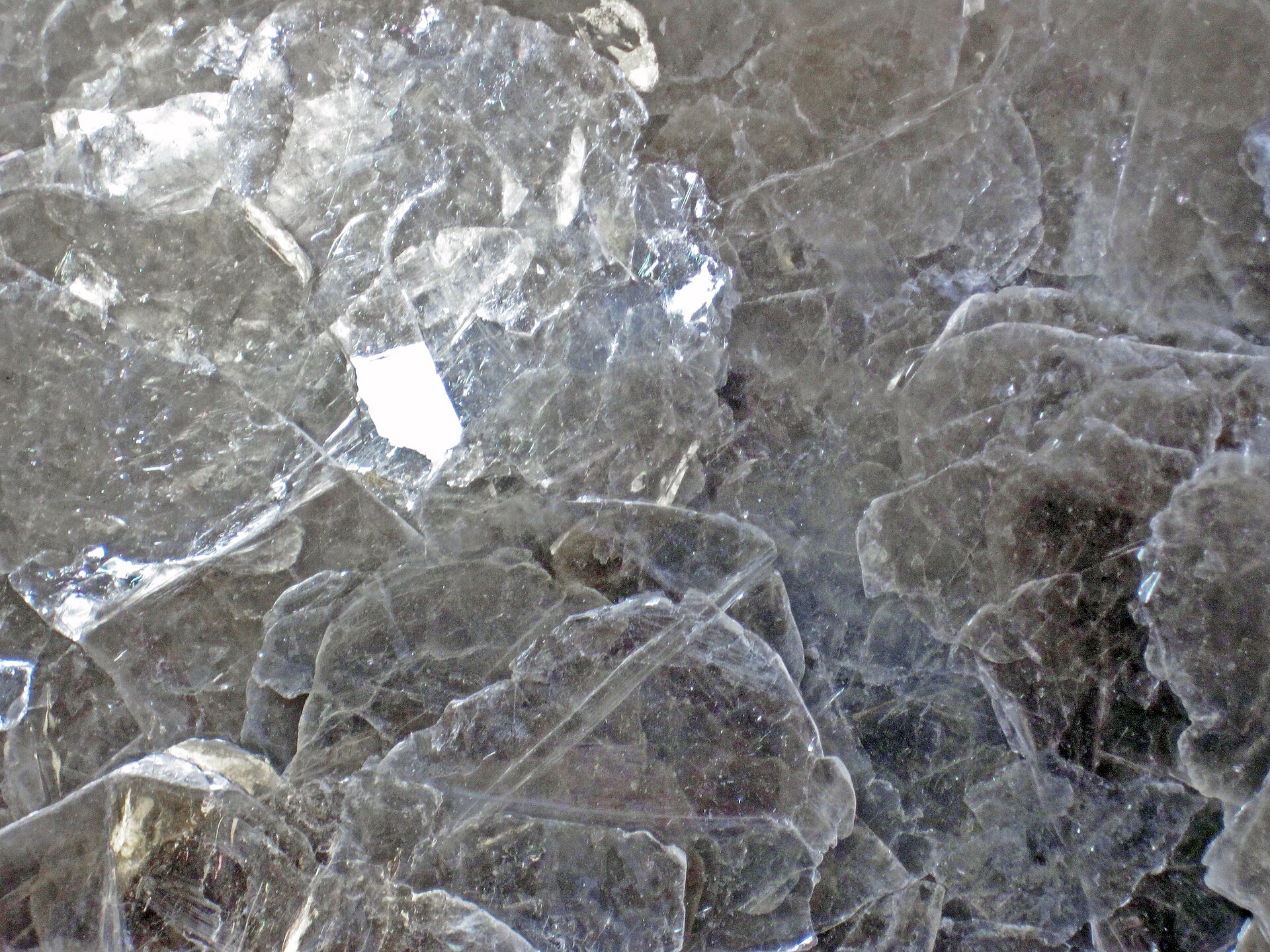
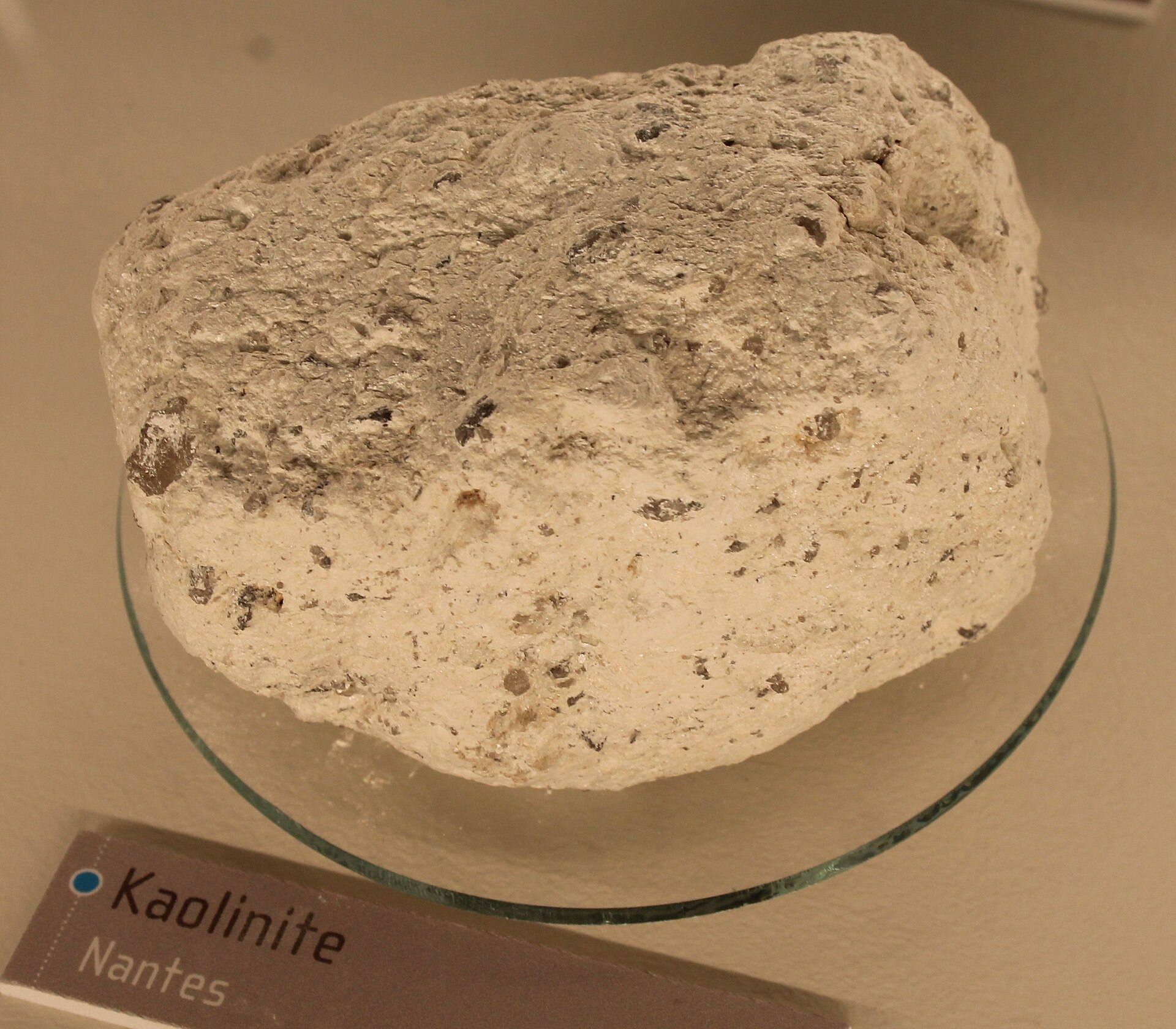
References & Further Reading
- Dana’s New Mineralogy, 8th ed. Feldspar group, tectosilicates.
- Mindat.org — Feldspar group mineral data and locality records.
- Wikipedia — Feldspar.
Last reviewed 2026-09-14 · How to cite this page.