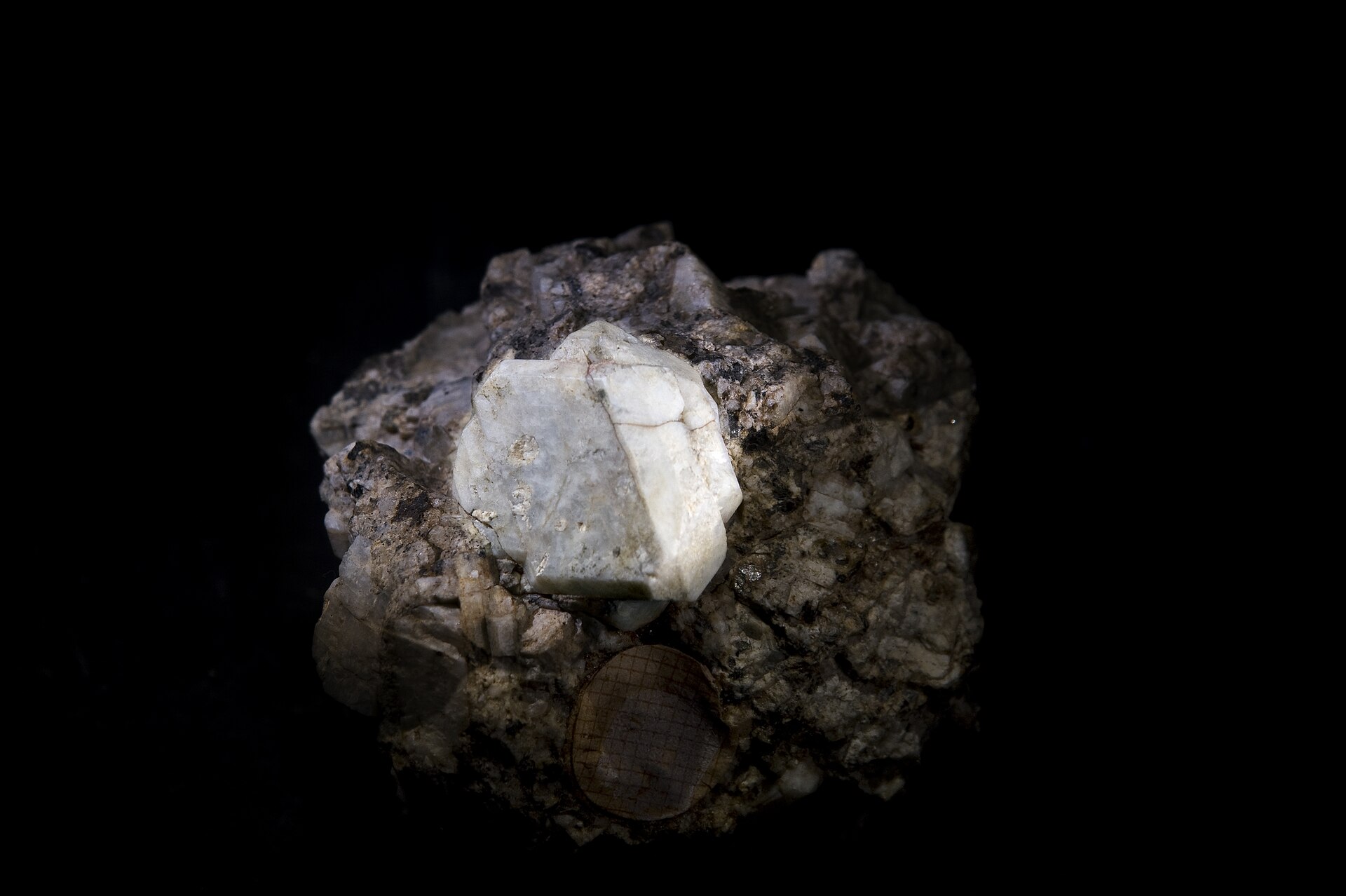
Salmon-pink orthoclase showing right-angle cleavage — Photo: Didier Descouens · CC BY-SA 4.0
What is Orthoclase?
Orthoclase is the potassium member of the feldspar family — one atom of potassium, one of aluminium and three of silicon built into a framework of oxygen, written KAlSi₃O₈. It is the ‘K-spar’ that geologists talk about: the soft pink or cream blocks that give granite its color and account for a big share of the continents’ rocky mass.
Its name is a description. Orthos means ‘straight’ and klasis ‘to break’ — orthoclase splits along two flat cleavage planes that meet almost exactly at a right angle, so broken pieces come out as tidy rectangles rather than the splinters of quartz.
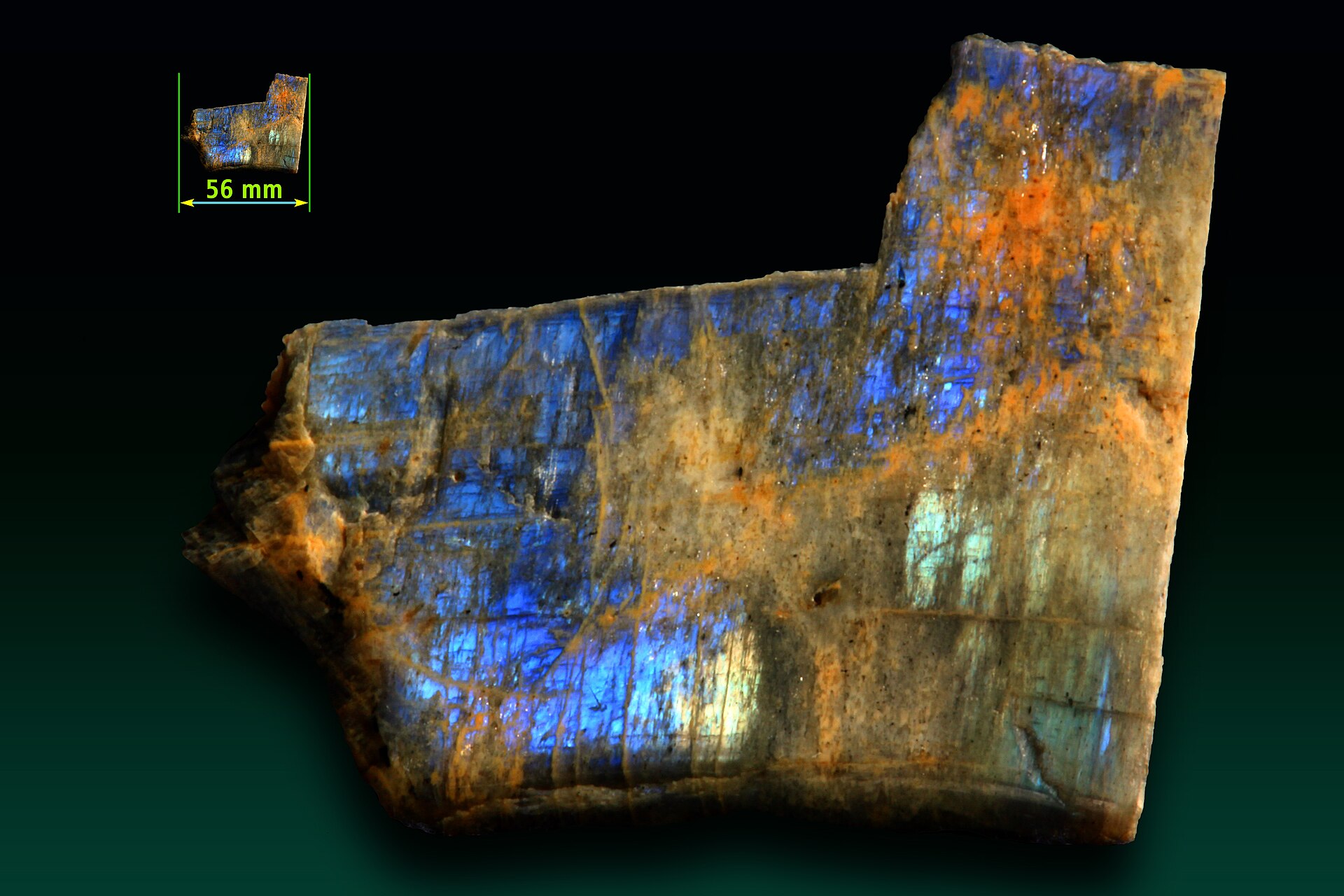
Orthoclase has a glamorous alter ego. In the cold, open fissures of the Alps it crystallizes as colorless, glassy adularia — named for the Adula massif — and when adularia carries microscopic intergrowths of albite it scatters a floating blue-white light sold as moonstone.
Physical Properties
The full data table is in the panel alongside. Here’s what those numbers actually mean.
Cleavage. The right-angle split is orthoclase’s calling card and its name. One direction ({001}) is perfect, the other ({010}) very good — together they pop the crystal into small blocks with flat, flashing faces.
Twins. Orthoclase loves to twin. The most famous is the Carlsbad twin — two crystals joined along their length into a single square-shouldered block, named for the type locality at Carlsbad (modern Karlovy Vary). Baveno and Manebach twins make flattened, wedge-shaped doubles.
Hardness and weight. At 6–6.5 on the Mohs scale it just scratches glass; at about 2.6 g/cm³ it feels no heavier than quartz. It is slightly softer than quartz and weathers faster, which is why pink feldspar gives way to clay while quartz sand survives.
Varieties
Same chemistry, different faces — trace impurities and how finely it crystallizes give a whole family of familiar stones.
How & Where It Forms
Orthoclase crystallizes as silica-rich magma cools — it is one of the main minerals of granite, syenite and their pegmatite veins, where crystals can reach enormous size. It also grows in slowly cooled volcanic rocks and recrystallizes in gneisses deep in mountain roots.
A separate, purer kind of orthoclase — adularia — grows at lower temperatures from hot water circulating through Alpine cracks. Which feldspar you get depends on temperature: the same KAlSi₃O₈ recipe crystallizes as disordered sanidine in hot volcanic rocks, orthoclase in plutons, and ordered triclinic microcline in the coolest pegmatites.
Often grows alongside:
What It’s Used For
How to Identify It
In the field, think ‘pink quartz with right angles’. Orthoclase is hard (barely scratched by steel), cleaves flat at 90° (quartz never does), shows a white streak, and in granite forms blocky pink or cream grains. Smooth, mirror-flat cleavage faces — without the fine parallel striations of plagioclase — point to the potassium side of the feldspar family.
| Looks like… | But differs because… | Quick test |
|---|---|---|
| Microcline | Identical chemistry but triclinic — shows fine cross-hatched 'tartan' twinning in thin section | Polarizing microscope |
| Sanidine | Glassier, forms as clear phenocrysts in young volcanic rocks rather than granites | Occurrence & habit |
| Albite | Plagioclase side of the family — cleavage faces carry fine parallel striations from albite twinning | Look for striations |
| Quartz | Harder (7), no cleavage at all — breaks in curved conchoidal chips | Cleavage check |
Where It’s Found
Notable localities for fine specimens:
Gallery
Photographs from Wikimedia Commons contributors — click a credit on the main image for the source and license.
Related Minerals
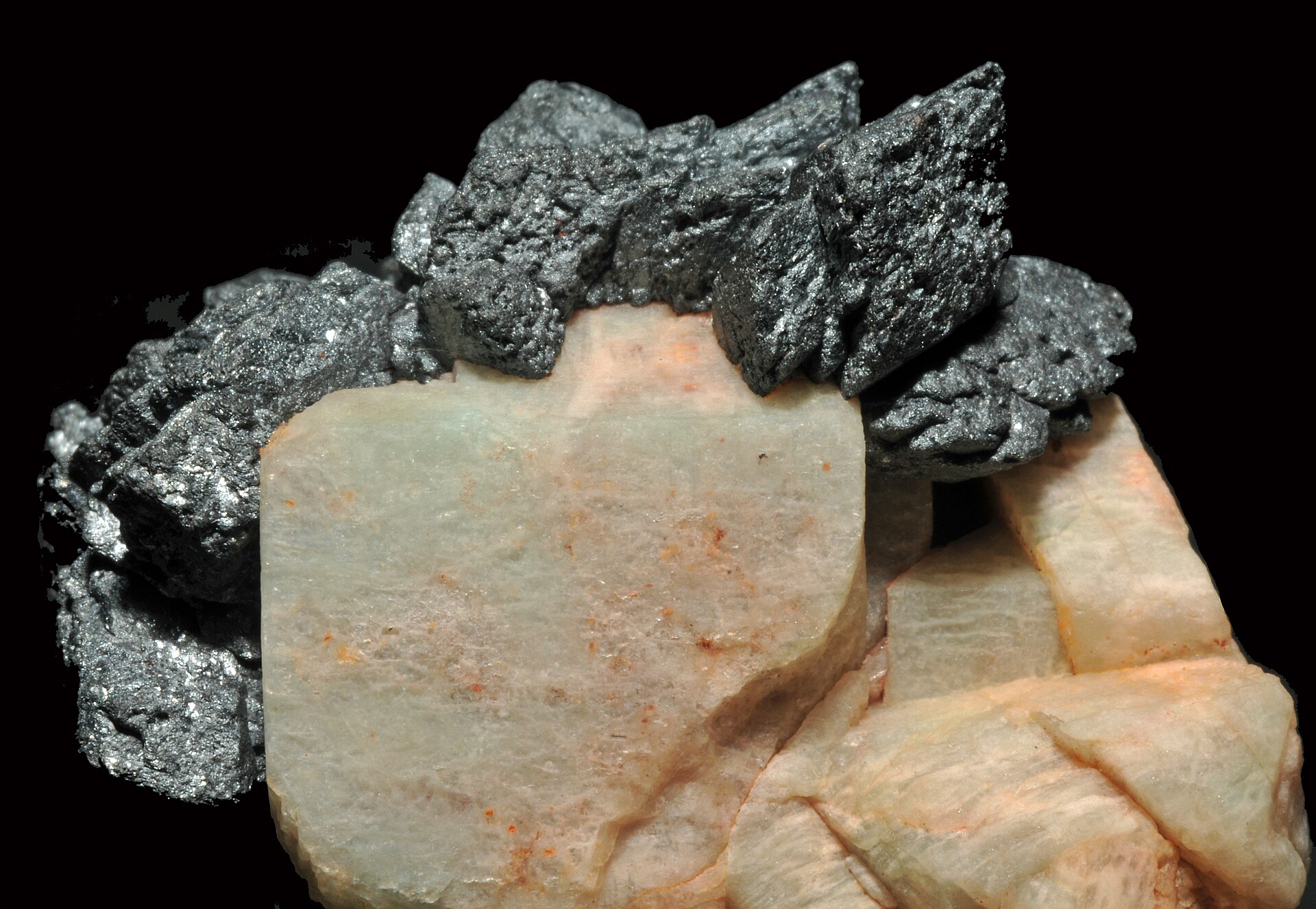
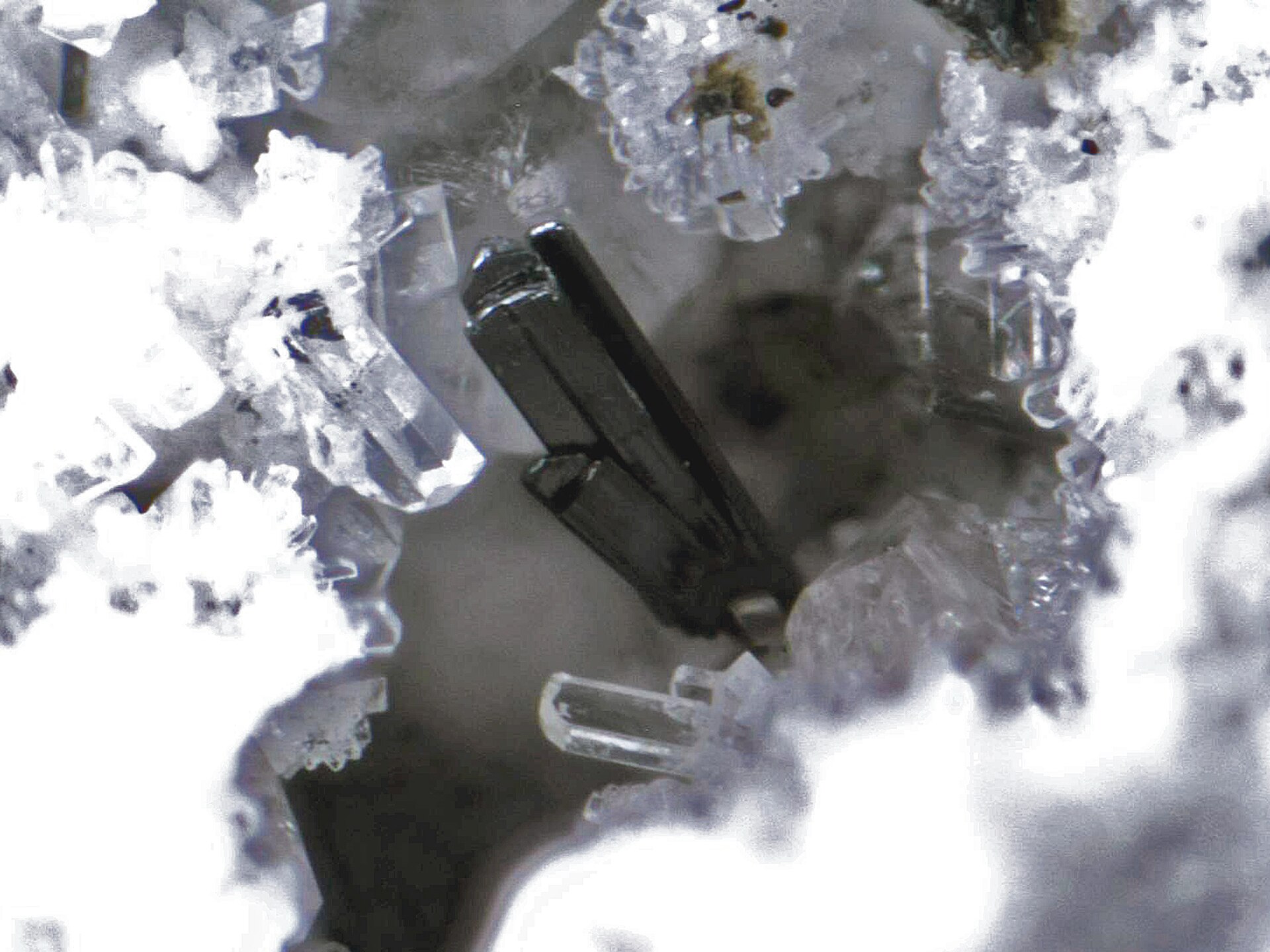
Others in the same family and minerals it commonly grows alongside.
References & Further Reading
- Dana’s New Mineralogy, 8th ed. Feldspar group, tectosilicates.
- Mindat.org — Orthoclase mineral data and locality records.
- Wikipedia — Orthoclase.
Last reviewed 2026-09-14 · How to cite this page.