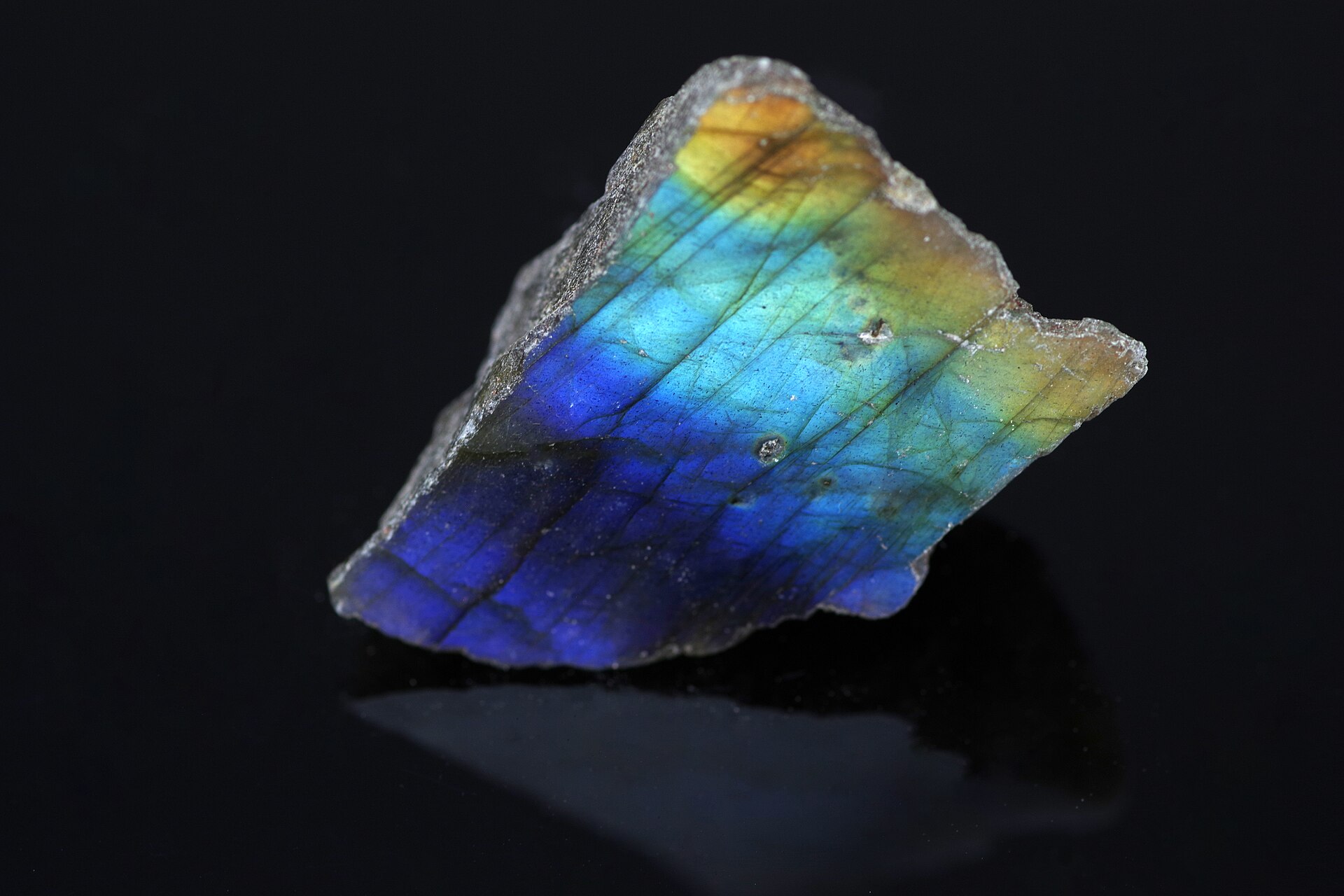
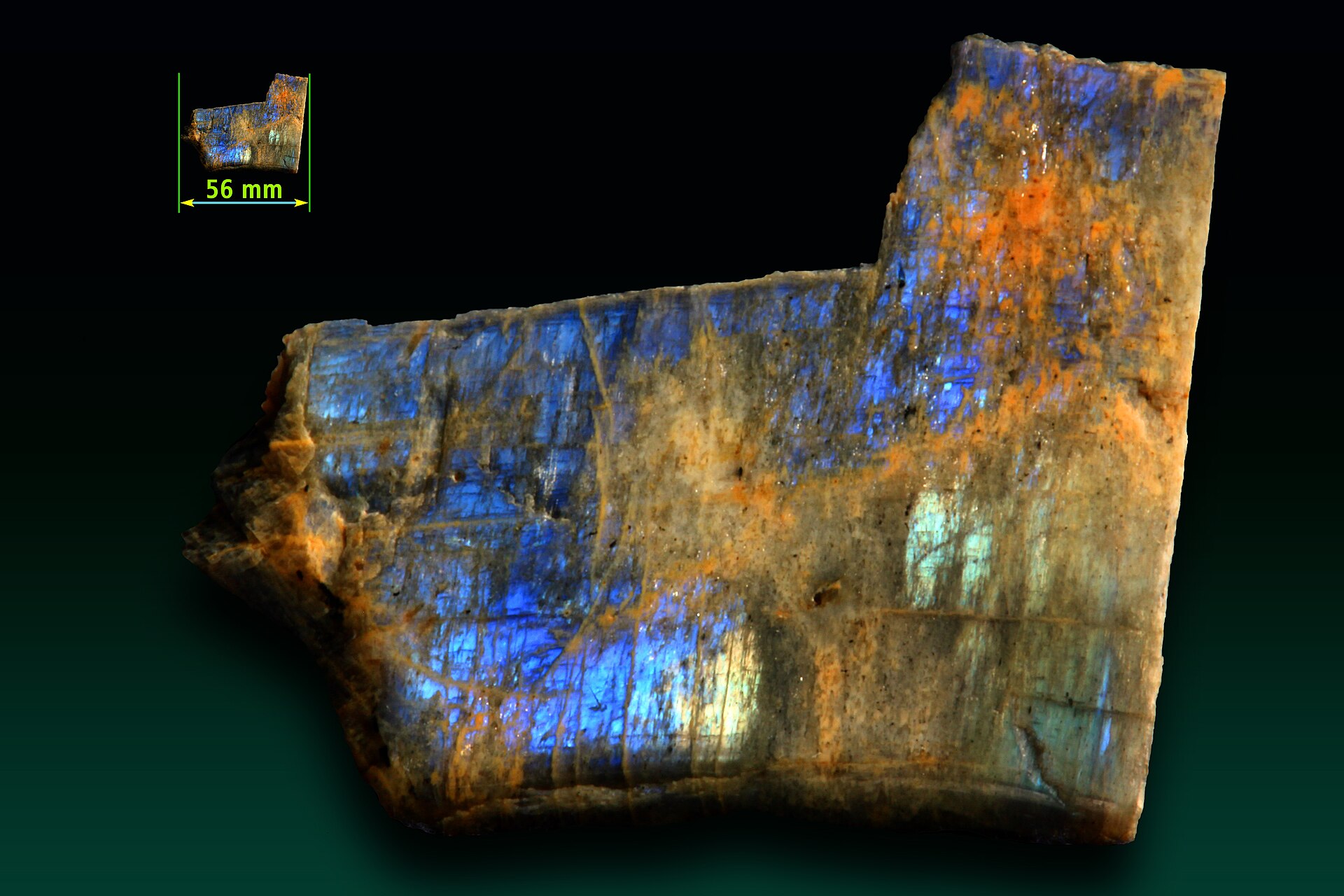
Labradorite flashing blue and green — the schiller called labradorescence — Photo: Linas Juozėnas · CC BY-SA 4.0
What is Labradorite?
Labradorite is the show-off of the feldspar family. On the surface it is a modest gray-green stone — then you tilt it, and a sheet of peacock blue, green, gold or violet rolls across the face. That flash, called labradorescence, made it a jewelry favorite and the unofficial mascot of Canada’s far northeast.
Chemically it sits in the middle of the plagioclase series — a continuous mix between sodium-rich albite and calcium-rich anorthite. Labradorite covers the calcium-heavy middle, roughly An₅₀ to An₇₀, so its formula is written (Ca,Na)(Al,Si)₄O₈.
It is also enormously abundant where most people never see it: labradorite builds gabbro, basalt and anorthosite — the dark rocks of the ocean floor, and much of the bright highlands on the Moon.
Physical Properties
The full data table is in the panel alongside. Here’s what those numbers actually mean.
Labradorescence. As plagioclase in this composition range cooled, it unmixed into alternating microscopic layers of two slightly different compositions — the Bøggild intergrowth. Light reflecting off the stacked layers interferes like oil on water, returning a single saturated color that shifts as the viewing angle changes. Thinner layers flash blue; thicker ones run to gold and red.
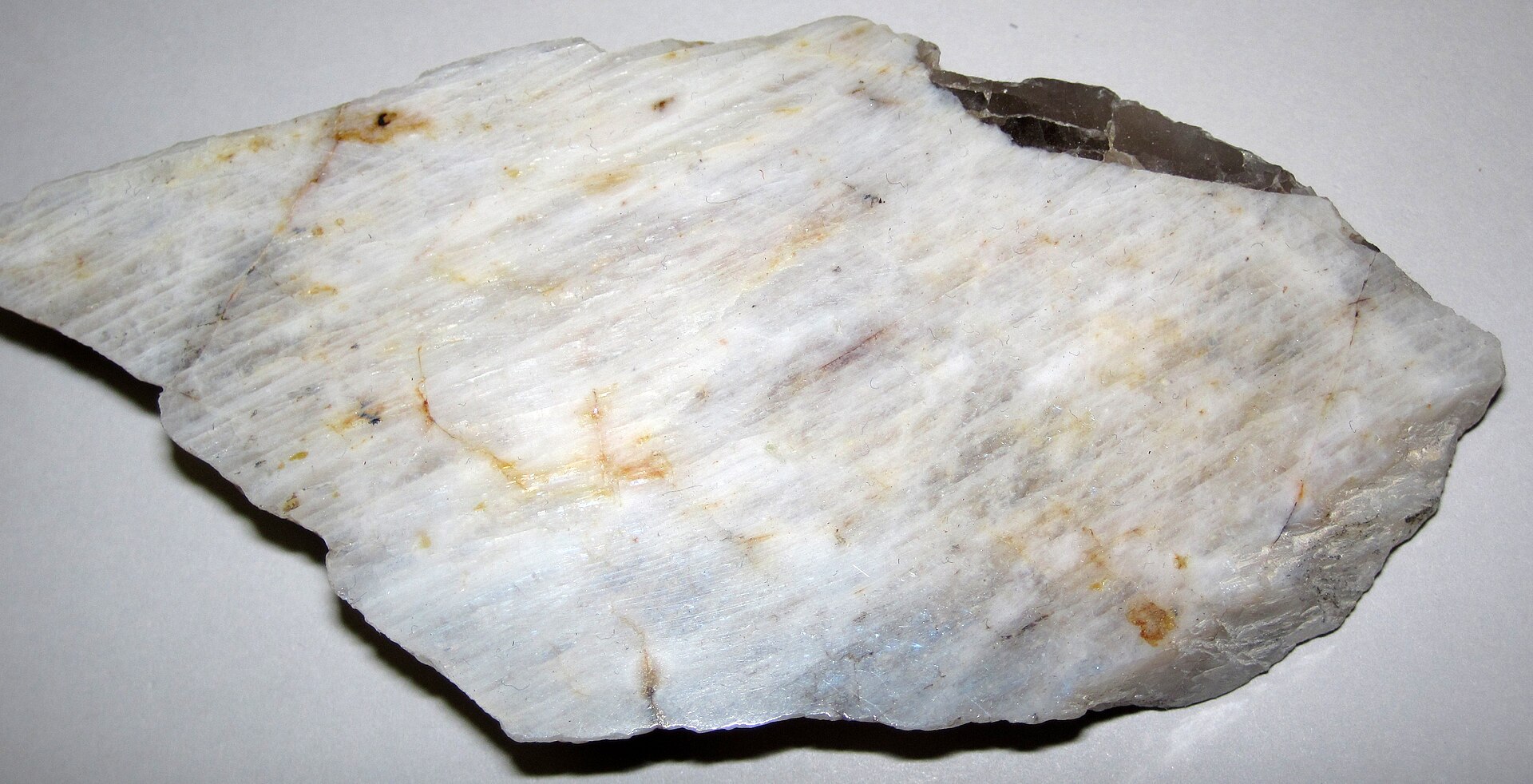
Cleavage and striations. Like all plagioclase it has two cleavages meeting just shy of 90°, and its cleavage faces usually carry fine parallel striations — the traces of repeated albite-law twinning. That combination of striations plus schiller is nearly diagnostic.
Hardness. A true feldspar 6–6.5 — hard enough for everyday jewelry with a little care, heavy enough (SG ≈ 2.7) to feel solid in the hand.
How & Where It Forms
Labradorite crystallizes from calcium-rich magma in gabbros, norites and basalt lavas, and reaches its showiest quality in anorthosites — vast, slow-cooled intrusions made almost entirely of plagioclase, like the Nain complex in Labrador where the mineral was first collected.
The schiller needs a delicate balance: the rock must cool slowly enough for the internal layers to grow, but not so slowly that they coarsen. That is why brilliant labradorite is prized even though the mineral itself is common.
Often grows alongside:
What It’s Used For
How to Identify It
Hold a gray piece of rough to the light and rock it slowly. A broad, moving flash of blue or green across a cleavage face is labradorescence — no other common mineral does it quite the same way. Confirm with the feldspar checklist: two right-angle cleavages, striated faces, hardness 6–6.5, white streak.
| Looks like… | But differs because… | Quick test |
|---|---|---|
| Moonstone | Potassium feldspar with a soft blue-white floating glow (adularescence); labradorite is triclinic plagioclase with multi-color surface flashes and striations | Look for striations |
| Oligoclase | More sodium-rich plagioclase; paler and usually lacking the strong schiller | Composition needs analysis; schiller strength helps |
| Sunstone | Its sparkle is aventurescence — glitter from hematite or copper platelets — rather than interference color | Glitter vs. broad color flash |
| Quartz | Harder (7), no cleavage, conchoidal fracture and no schiller | Cleavage check |
Where It’s Found
Notable localities for fine specimens:
Gallery
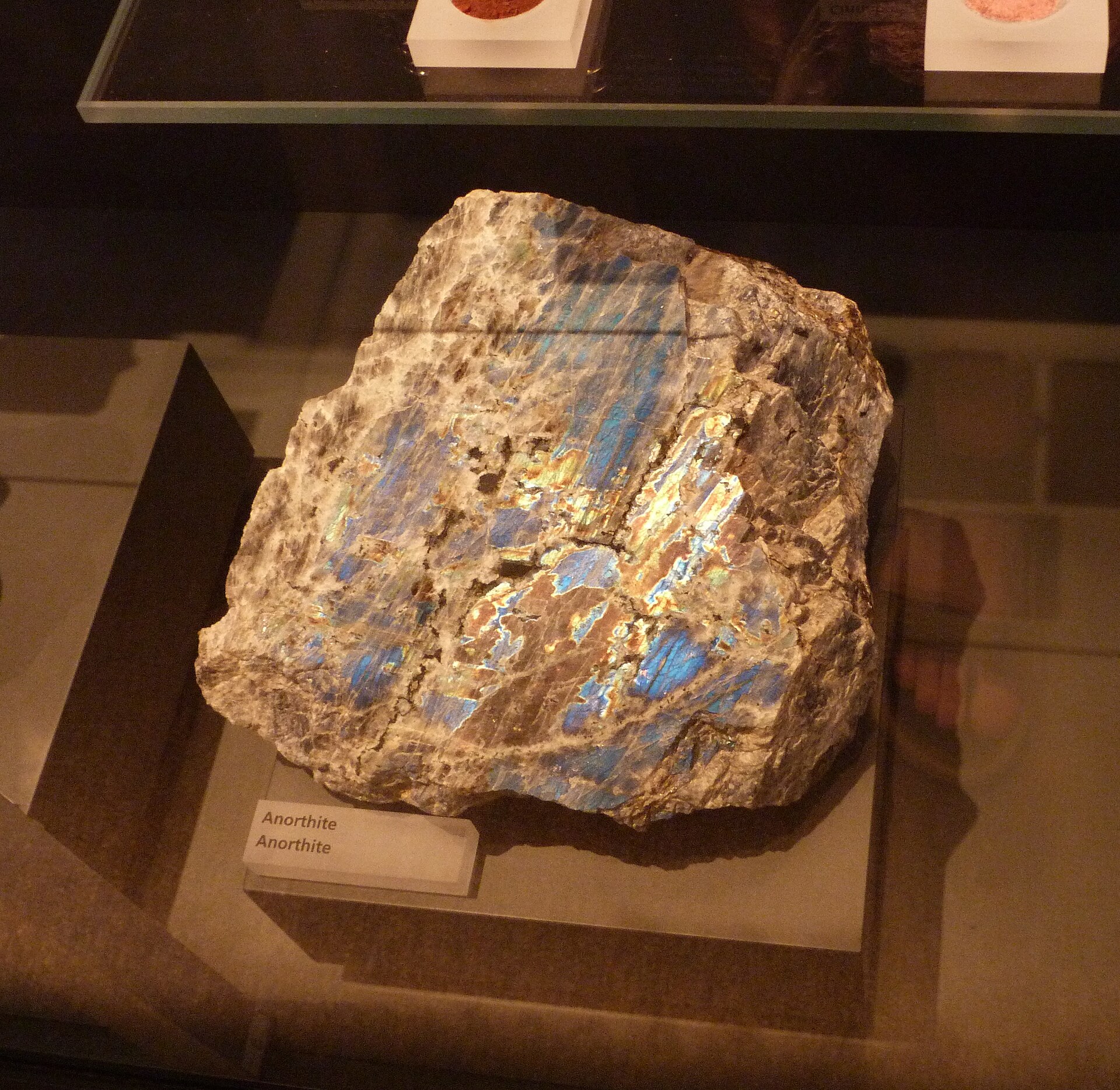
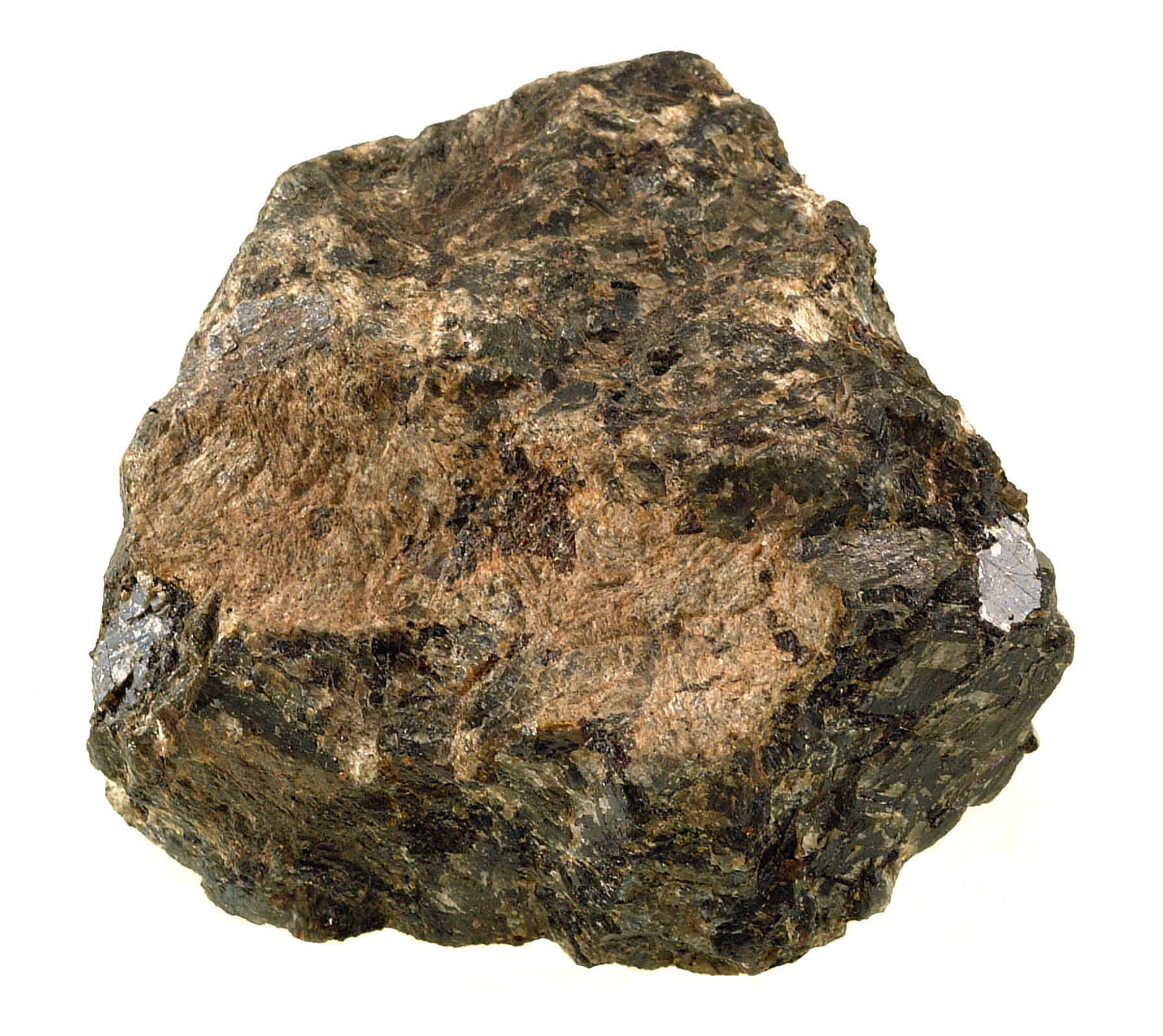
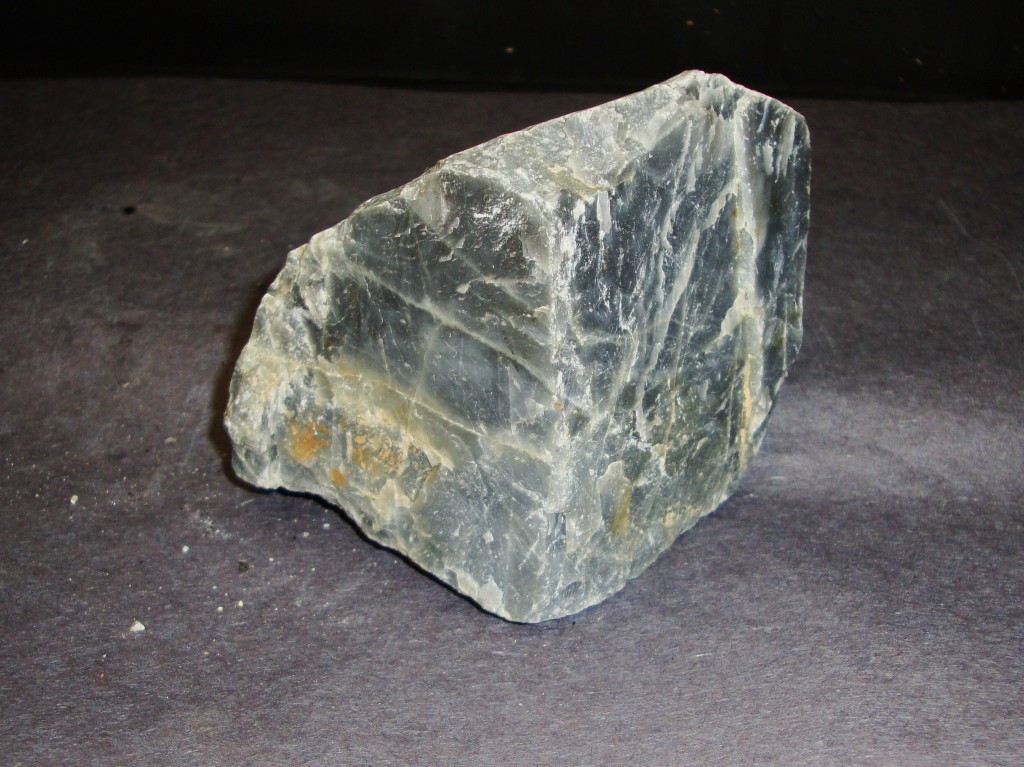
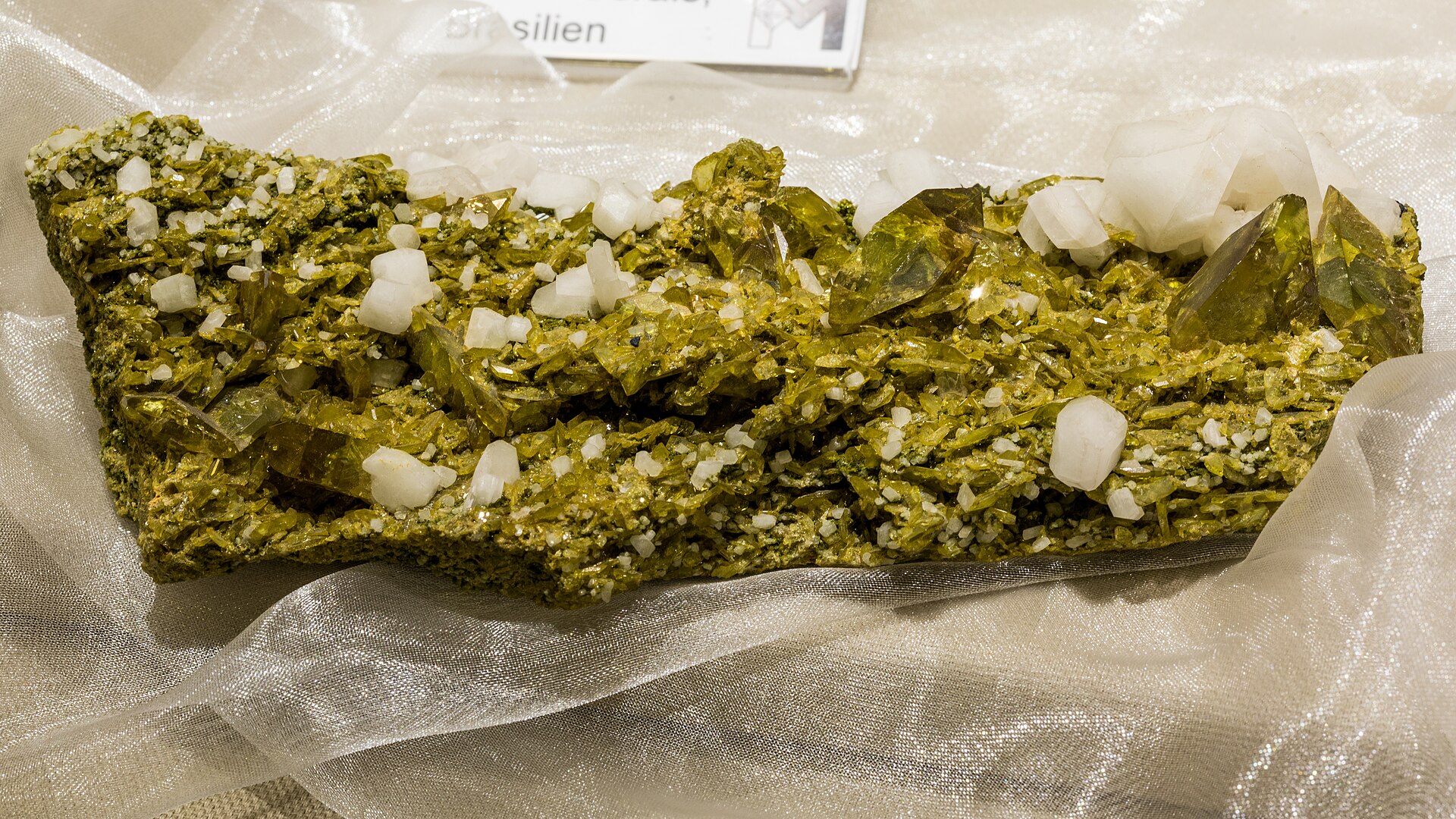
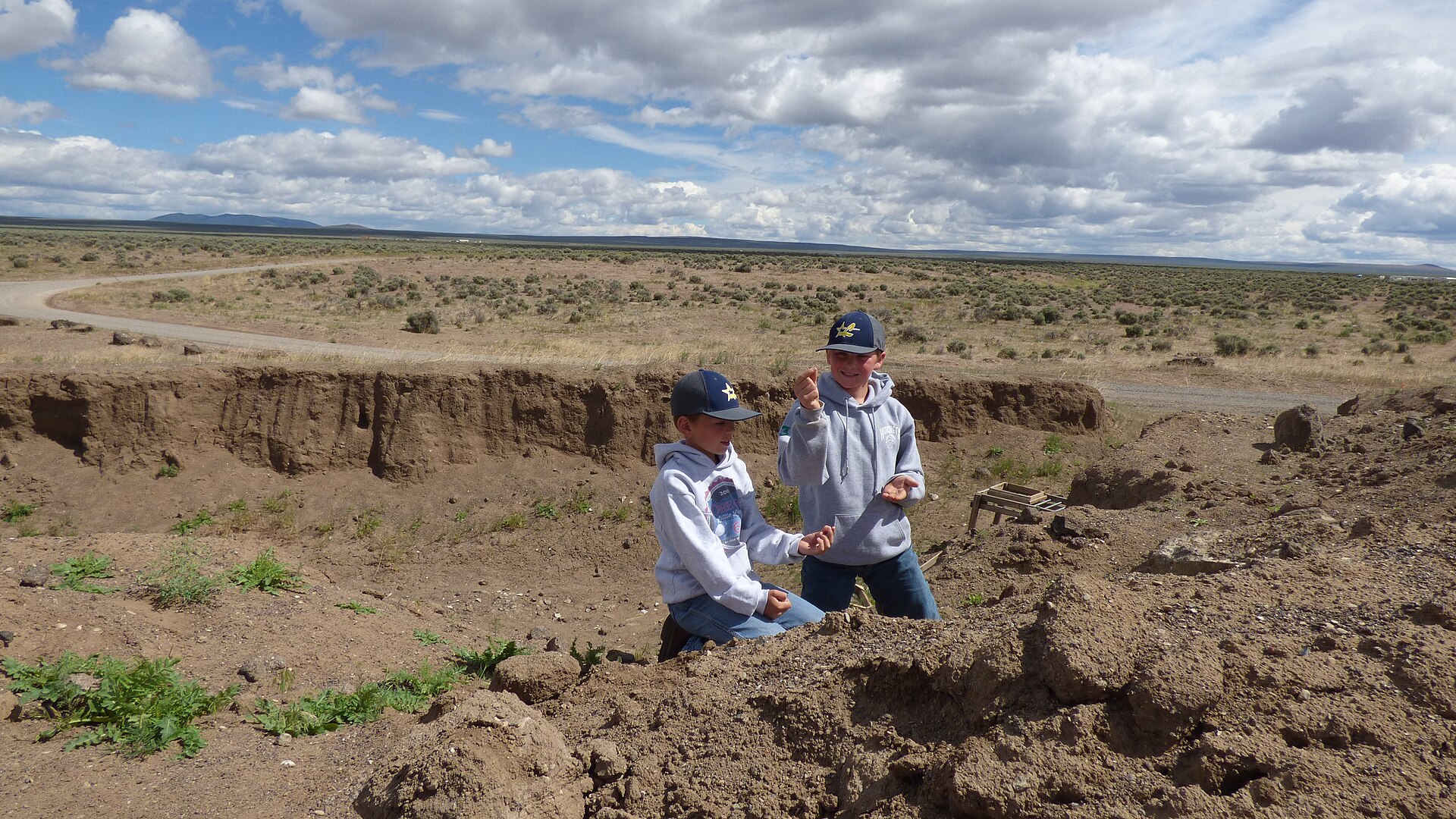
Photographs from Wikimedia Commons contributors — click a credit on the main image for the source and license.
Related Minerals
Others in the same family and minerals it commonly grows alongside.
References & Further Reading
- Dana’s New Mineralogy, 8th ed. Feldspar group, plagioclase.
- Mindat.org — Labradorite mineral data and locality records.
- Wikipedia — Labradorite.
Last reviewed 2026-09-14 · How to cite this page.