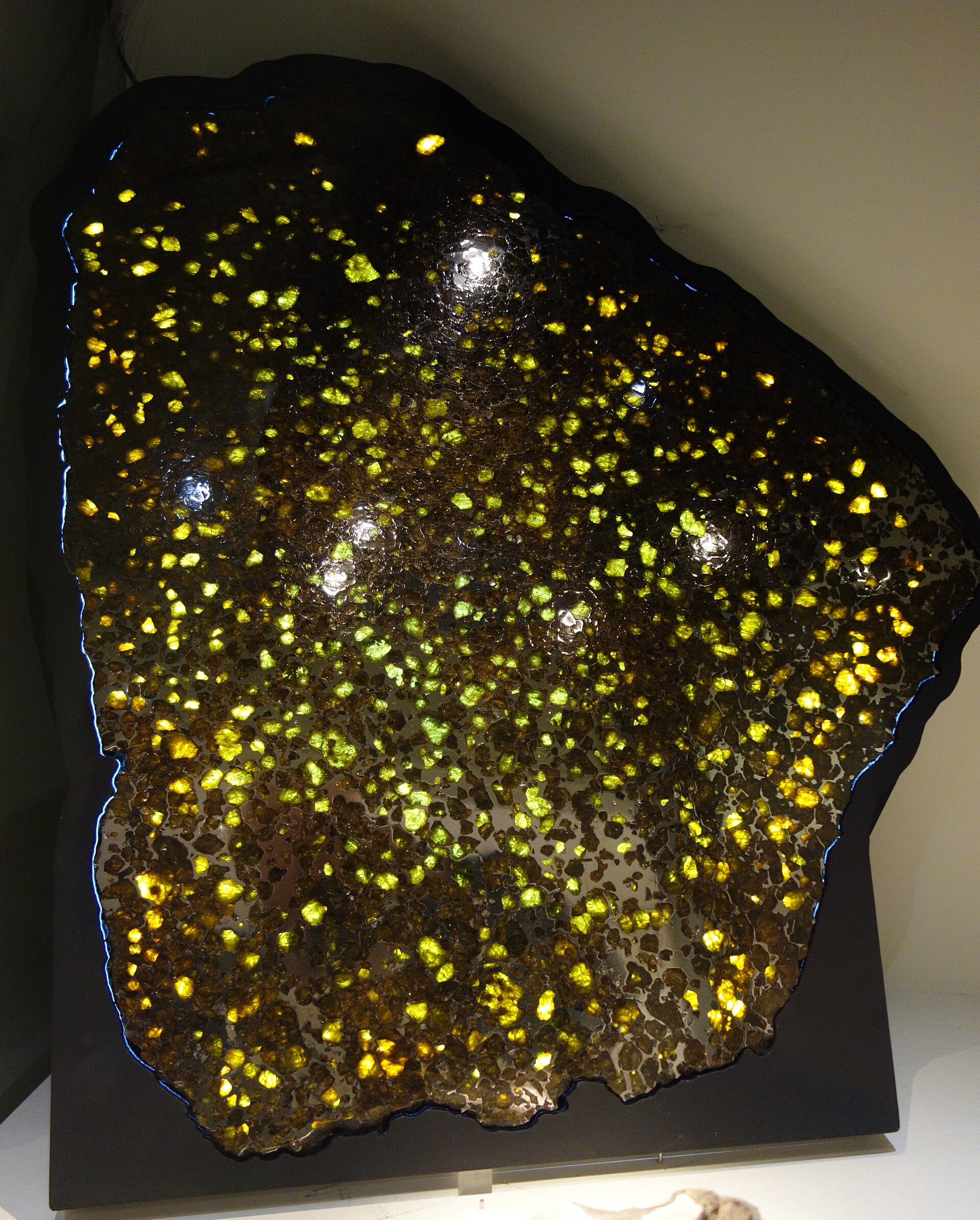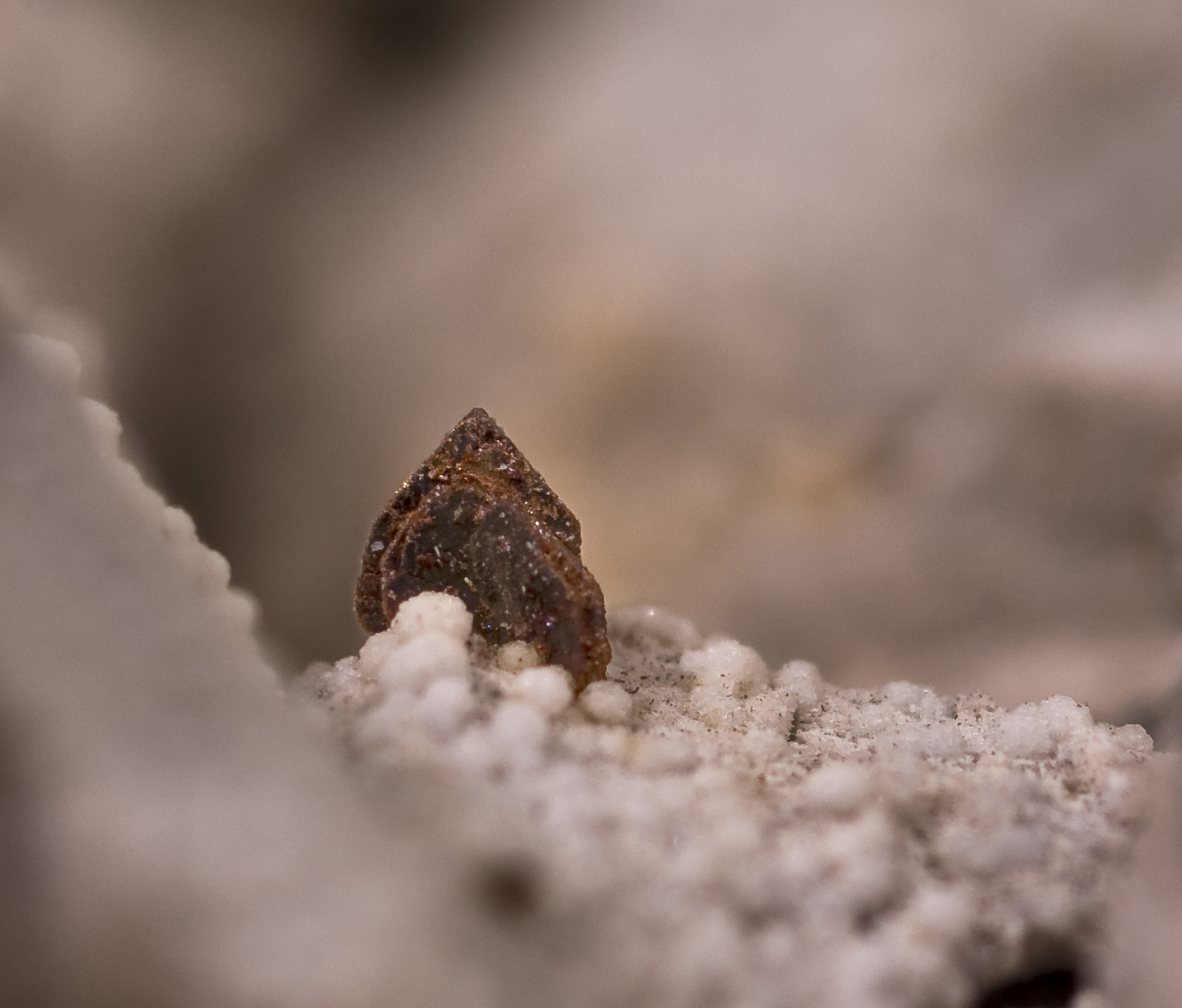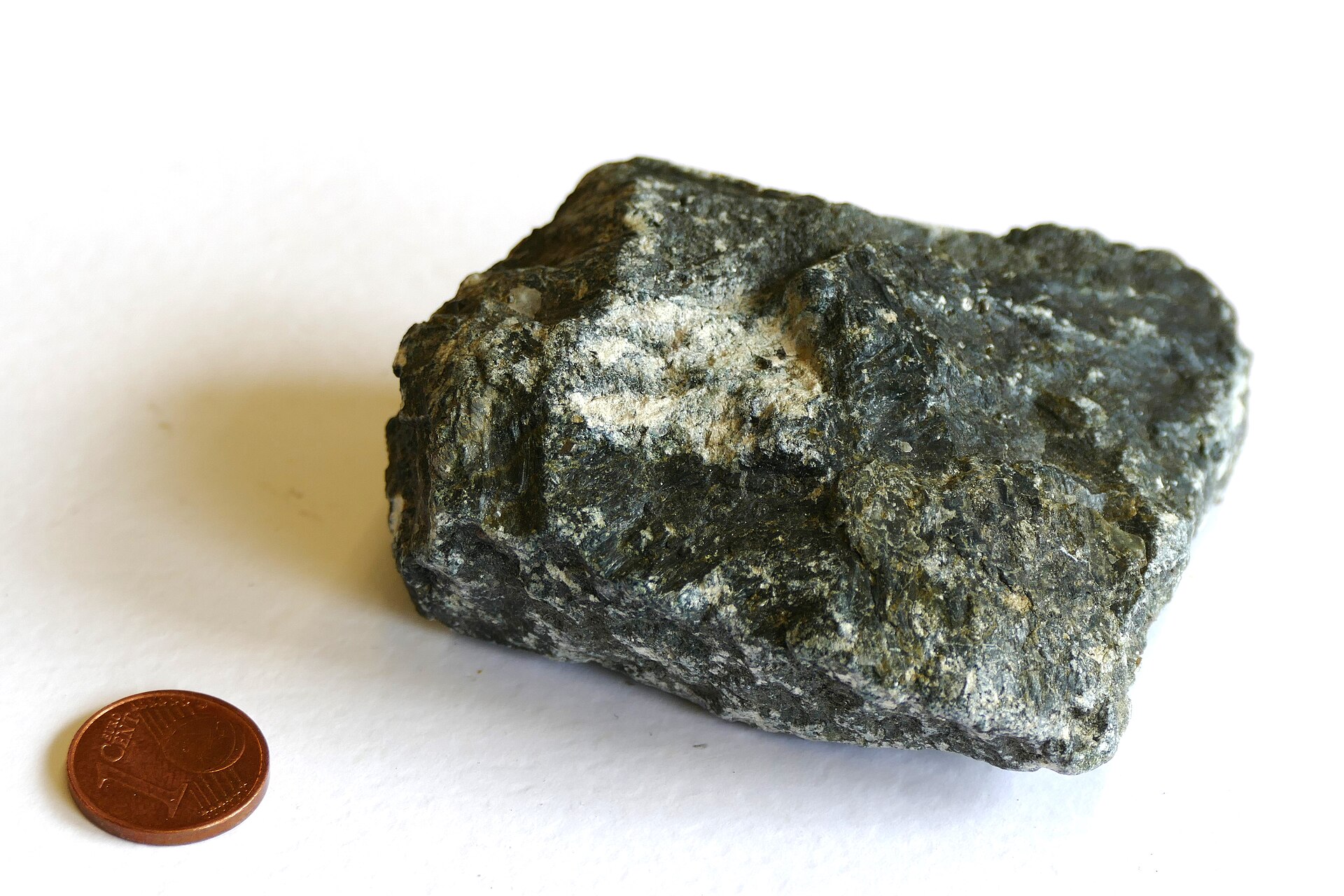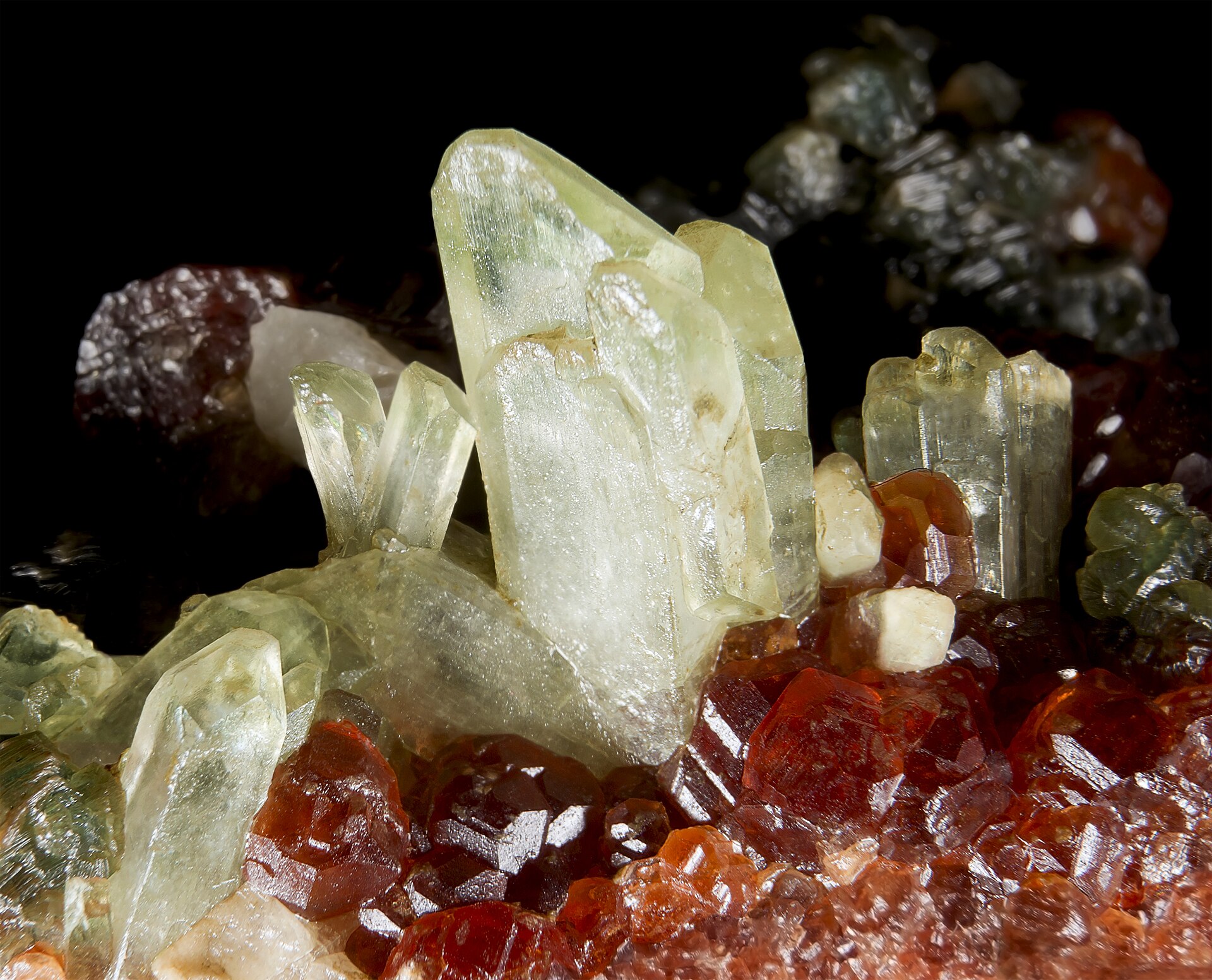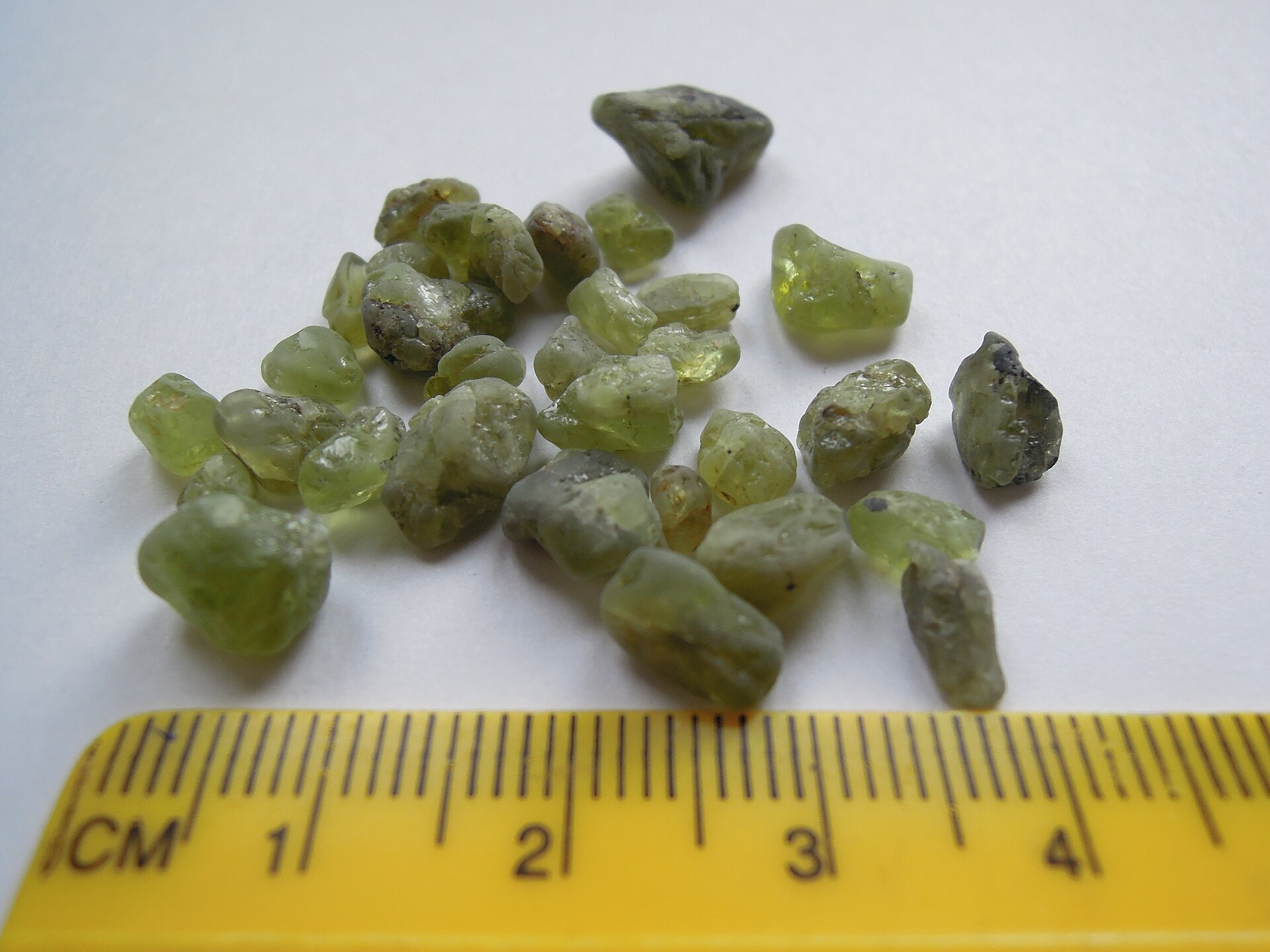
Olivine — Photo: Jan Helebrant (Juhele_CZ on Flickr) https://www.flickr.com/people/96541566@N06/ · CC BY-SA 2.0
What is Olivine?
Olivine is the magnesium-iron silicate series — (Mg,Fe)₂SiO₄ — from forsterite (Mg) to fayalite (Fe). It is the most abundant mineral in Earth's upper mantle and one of the first to crystallize from basaltic magma.
Hawaii's green-sand beaches are olivine concentrated by wave sorting; pallasite meteorites are metal lattices filled with olivine gems — peridot that literally fell from space.
Physical Properties
The full data table is in the panel alongside. Here’s what those numbers actually mean.
The series. Forsterite → fayalite; Fe content controls color and density.
Weathering. Olivine alters to serpentine and iddingsite quickly — its presence marks fresh mafic rock.
Mantle samples. Xenoliths in basalt and kimberlite carry pieces of mantle olivine to the surface.
What It’s Used For
How to Identify It
| Looks like… | But differs because… | Quick test |
|---|---|---|
| Epidote | Pistachio-green, prismatic crystals, metamorphic | Habit |
| Diopside | Pyroxene cleavage, different habit | Cleavage |
Where It’s Found
Notable localities for fine specimens:
Gallery
Photographs from Wikimedia Commons contributors — click a credit on the main image for the source and license.
Related Minerals
Others in the same family and minerals it commonly grows alongside.