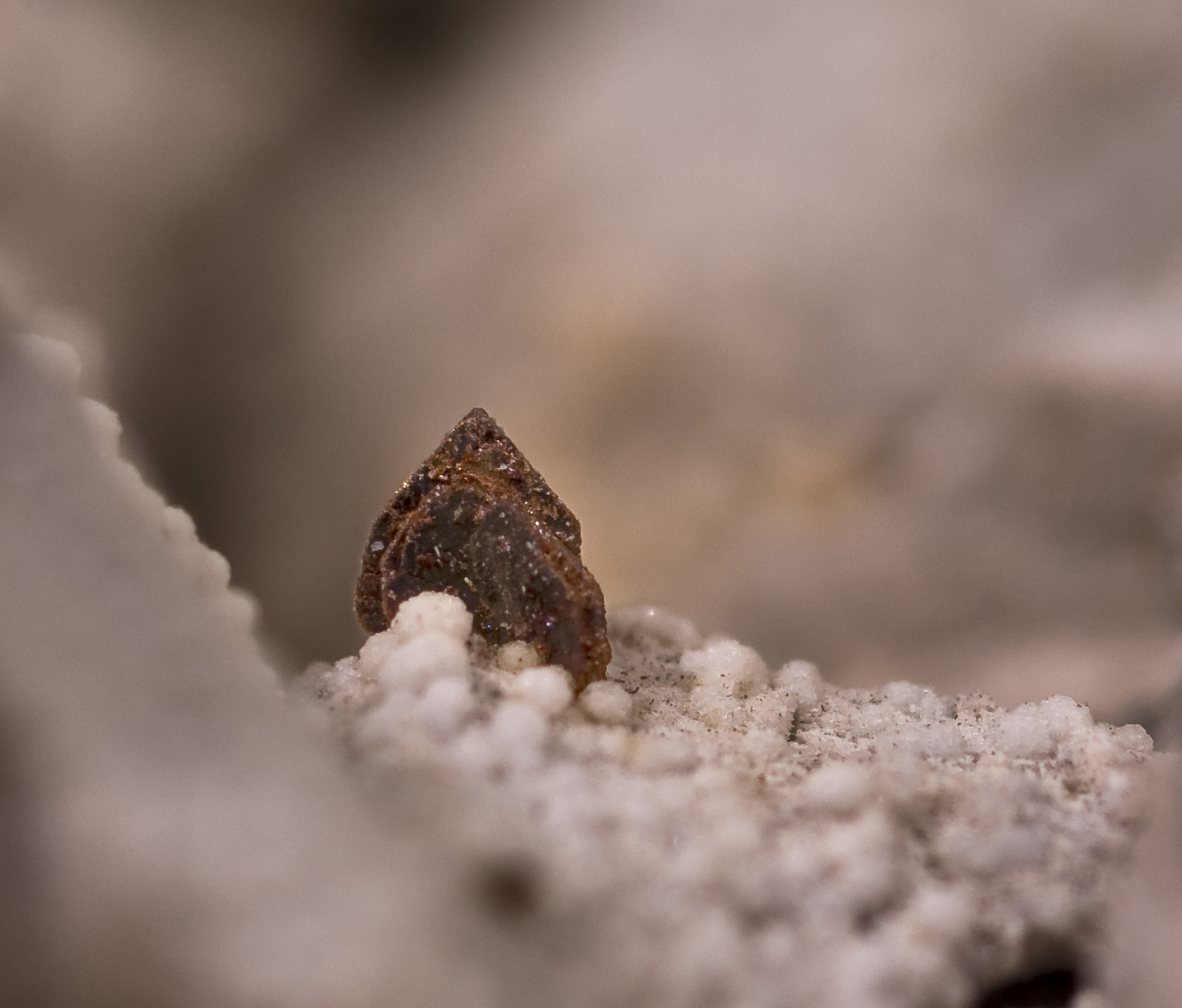
Peridot — Photo: Daderot · CC0
What is Peridot?
Peridot is gem-quality olivine — one of the only gemstones that occurs in a single color, the olive-green its iron content guarantees. Ancient Egyptians mined it on the Red Sea island of Zabargad for 3,500 years, calling it the 'gem of the sun'.
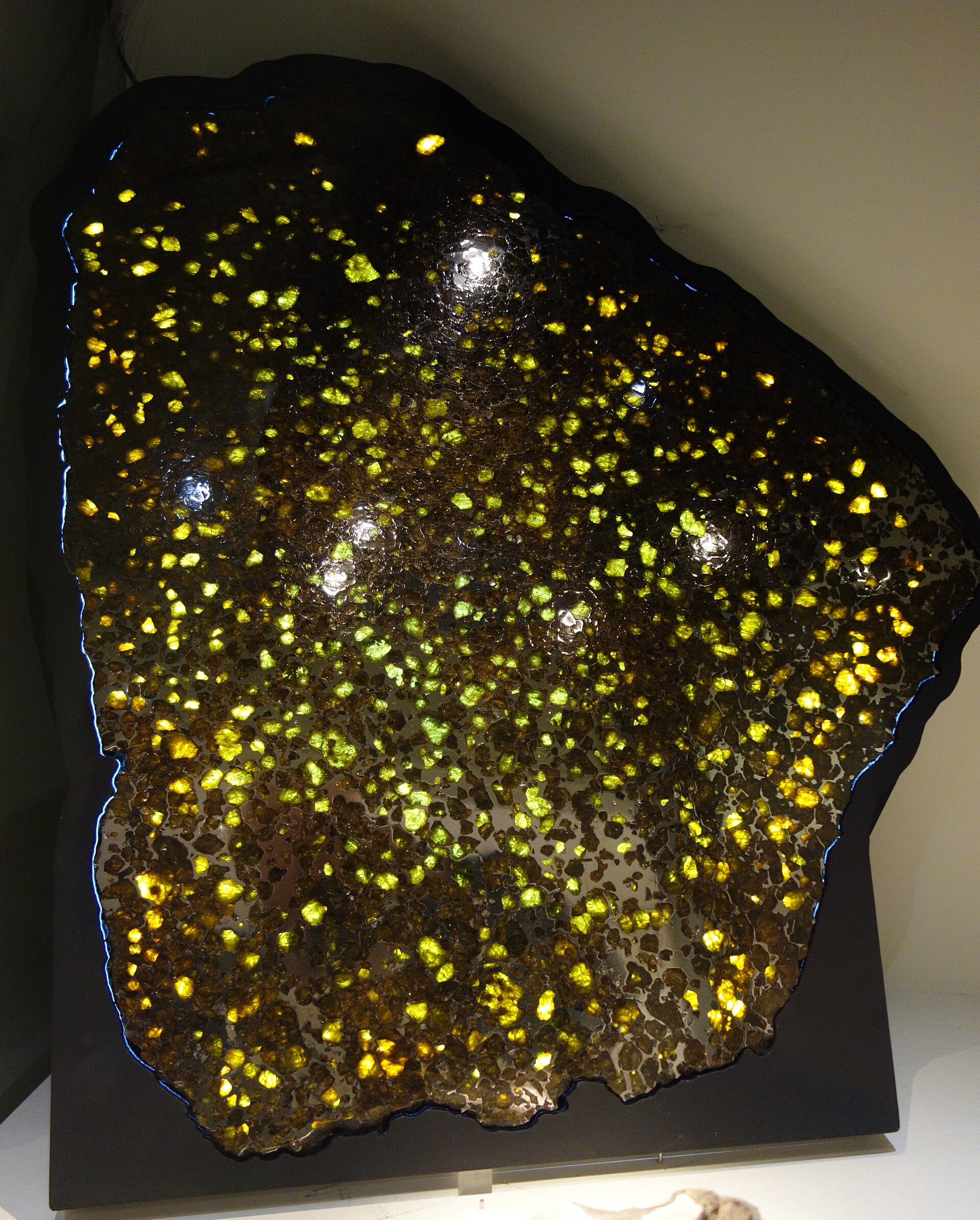
Peridot is idiochromatic — its green comes from iron essential to its structure, not a trace impurity, so it can't be any other color. Some peridot isn't even terrestrial: pallasite meteorites are iron lattices studded with olivine gems.
Physical Properties
The full data table is in the panel alongside. Here’s what those numbers actually mean.
One color. Fe²⁺ is structural — peridot can only be green.
Double refraction. High birefringence — doubling of back facets is visible in a loupe.
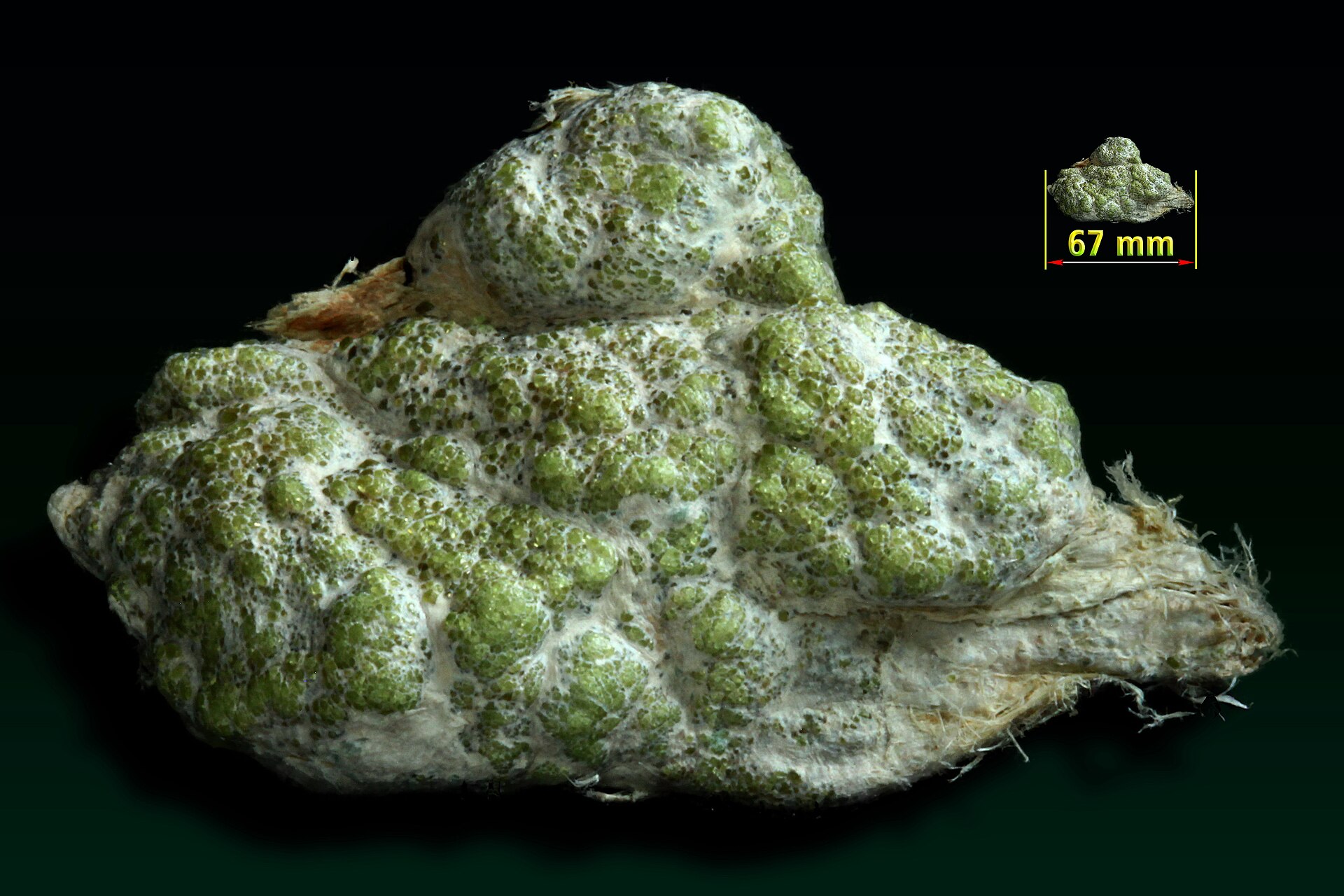
Sources. Basalt xenoliths (Arizona), island veins (Zabargad), and pallasite meteorites.
What It’s Used For
How to Identify It
| Looks like… | But differs because… | Quick test |
|---|---|---|
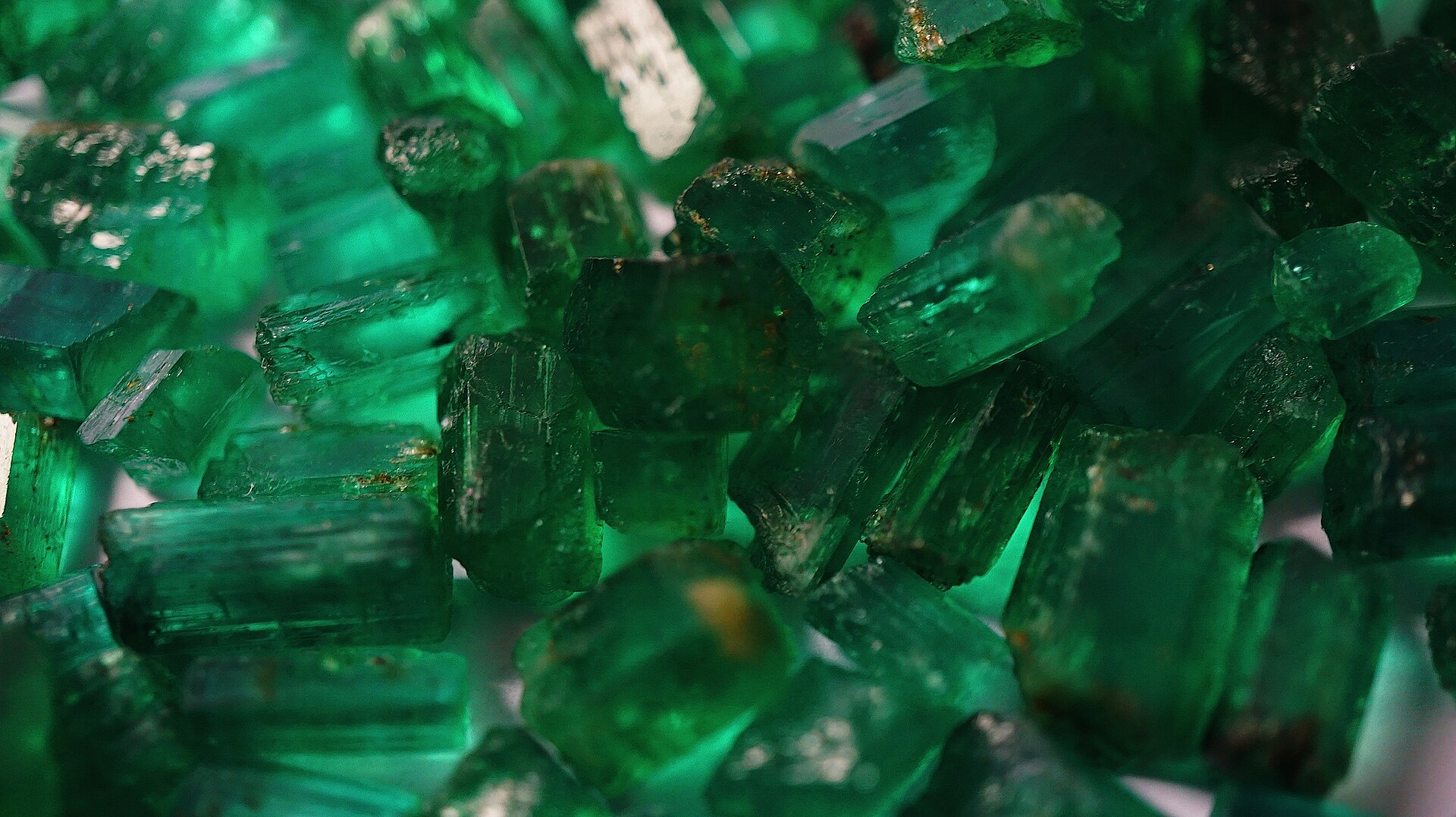
| Emerald | Emerald is hexagonal, brighter green, Cr-colored | Crystal form |
| Demantoid | Garnet dispersion fire, isometric | Optics |
Where It’s Found
Notable localities for fine specimens:
Gallery
Photographs from Wikimedia Commons contributors — click a credit on the main image for the source and license.
Related Minerals
Others in the same family and minerals it commonly grows alongside.