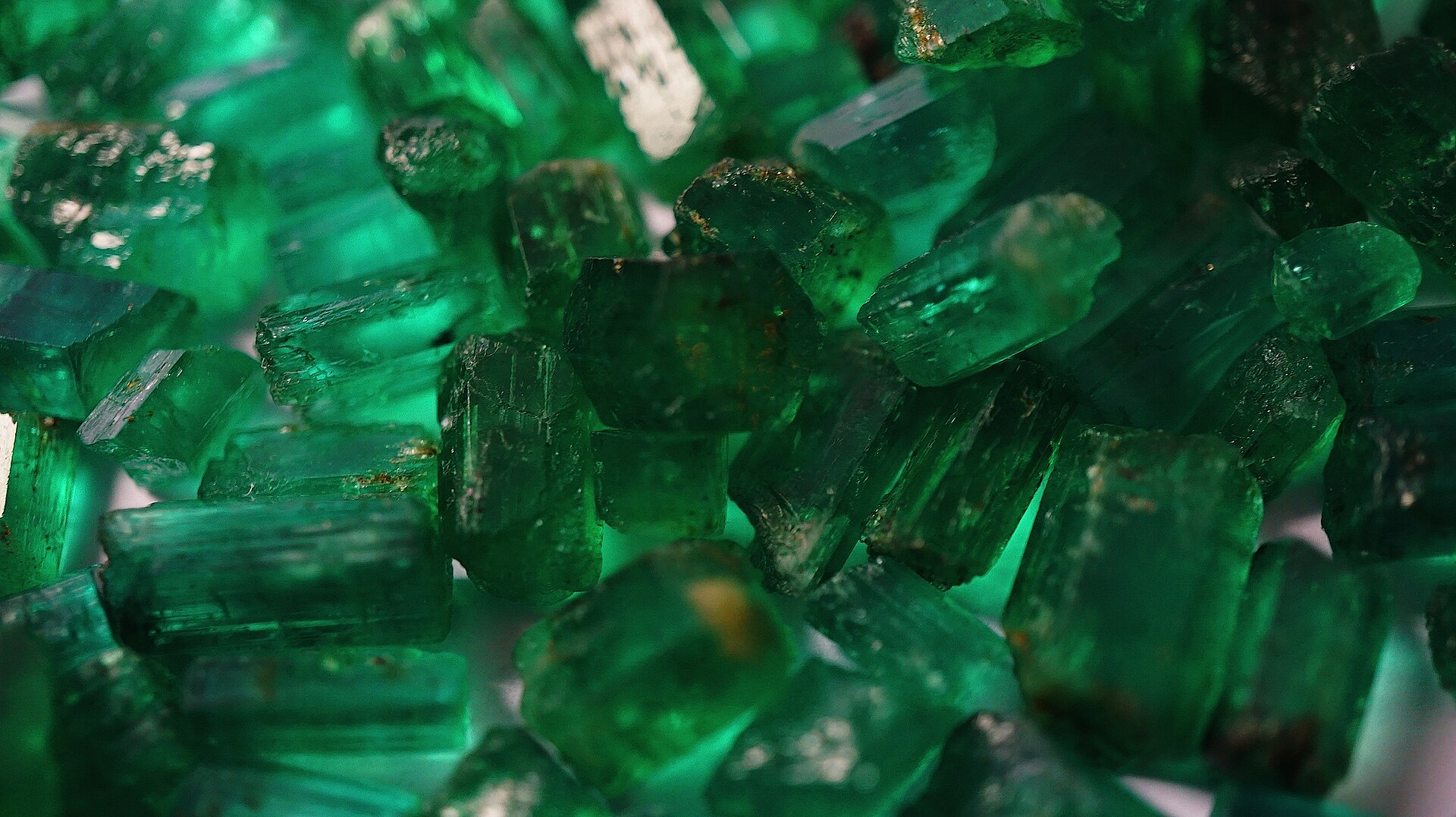
Emerald crystal in calcite-veined black shale — the classic Colombian habit — Photo: Paweł Maliszczak [hardleo.com] · CC BY-SA 4.0
What is Emerald?
Emerald is the green variety of beryl, a beryllium aluminium silicate with the formula Be₃Al₂Si₆O₁₈. Pure beryl is colorless — it takes a trace of chromium (and often vanadium) swapping in for aluminium to produce the deep green that has captivated people for more than 4,000 years.
Emerald is one of the ‘big four’ precious gems alongside diamond, ruby and sapphire, and the birthstone for May. Fine stones are genuinely rare: most emeralds grow full of tiny fractures and inclusions, so a clean, saturated stone over a carat can outprice diamond.
The name reaches English from the Greek smaragdos — ‘green gem’ — by way of Latin and Old French. The oldest known mines, in Egypt’s Eastern Desert, were worked centuries before Cleopatra made emerald her signature stone.
Physical Properties
The full data table is in the panel alongside. Here’s what those numbers actually mean.
Color. Cr³⁺ (sometimes helped by vanadium) replaces aluminium in the crystal structure and produces the green. The most prized color is a vivid bluish-green; too much iron pushes a stone toward a duller, yellowish ‘commercial’ green.
Hardness vs. toughness. At 7.5–8 emerald is hard, but not tough — its internal fractures make it brittle enough that cutters invented the stepped ‘emerald cut’ specifically to protect its corners.
Inclusions (the jardin). Nearly every emerald contains a jardin — French for ‘garden’ — of fluid bubbles, trapped crystals and growth tubes. Far from a flaw, a natural jardin proves the stone grew in the Earth and helps gem labs trace its origin.
Optics. Emerald is uniaxial negative with a refractive index around 1.57–1.60 and shows clear pleochroism: turn a crystal and it shifts between bluish-green and yellowish-green.
How & Where It Forms
Emerald needs a geological coincidence: beryllium — a rare element concentrated in granitic rocks — must meet chromium, an element of dark mafic rocks. In Colombia, hot salty fluids dissolved both ingredients from black shales and deposited emerald in calcite veins; in Zambia and Pakistan, the meeting happens where pegmatites intrude chromium-rich schists.
Either way the crystals grow slowly inside veins and fractures — which is why they are so often cracked and included. Emeralds picked up their scars while growing.
Often grows alongside:
What It’s Used For
How to Identify It
Hardness 7.5–8, a hexagonal prism habit and that grassy chromium green are the first clues. Green garnet and tourmaline look similar but behave differently: garnet is singly refractive, tourmaline doubly refractive with a different absorption spectrum. Under a loupe, the tell-tale jardin — including three-phase inclusions of liquid, bubble and salt crystal, classic for Colombian stones — clinches it.
| Looks like… | But differs because… | Quick test |
|---|---|---|
| Peridot | Softer (6.5–7) and olive-green rather than chrome-green; no chromium spectrum | Hardness & spectrum |
| Tourmaline | Stronger pleochroism and a different refractive index; lacks the emerald jardin | Refractometer |
| Demantoid | Cubic and singly refractive — no dichroism; shows diamond-like ‘fire’ | Polariscope |
| Diopside | Softer (5.5–6.5) with two good cleavages at nearly 90° | Cleavage check |
Where It’s Found
Notable localities for fine specimens:
Gallery
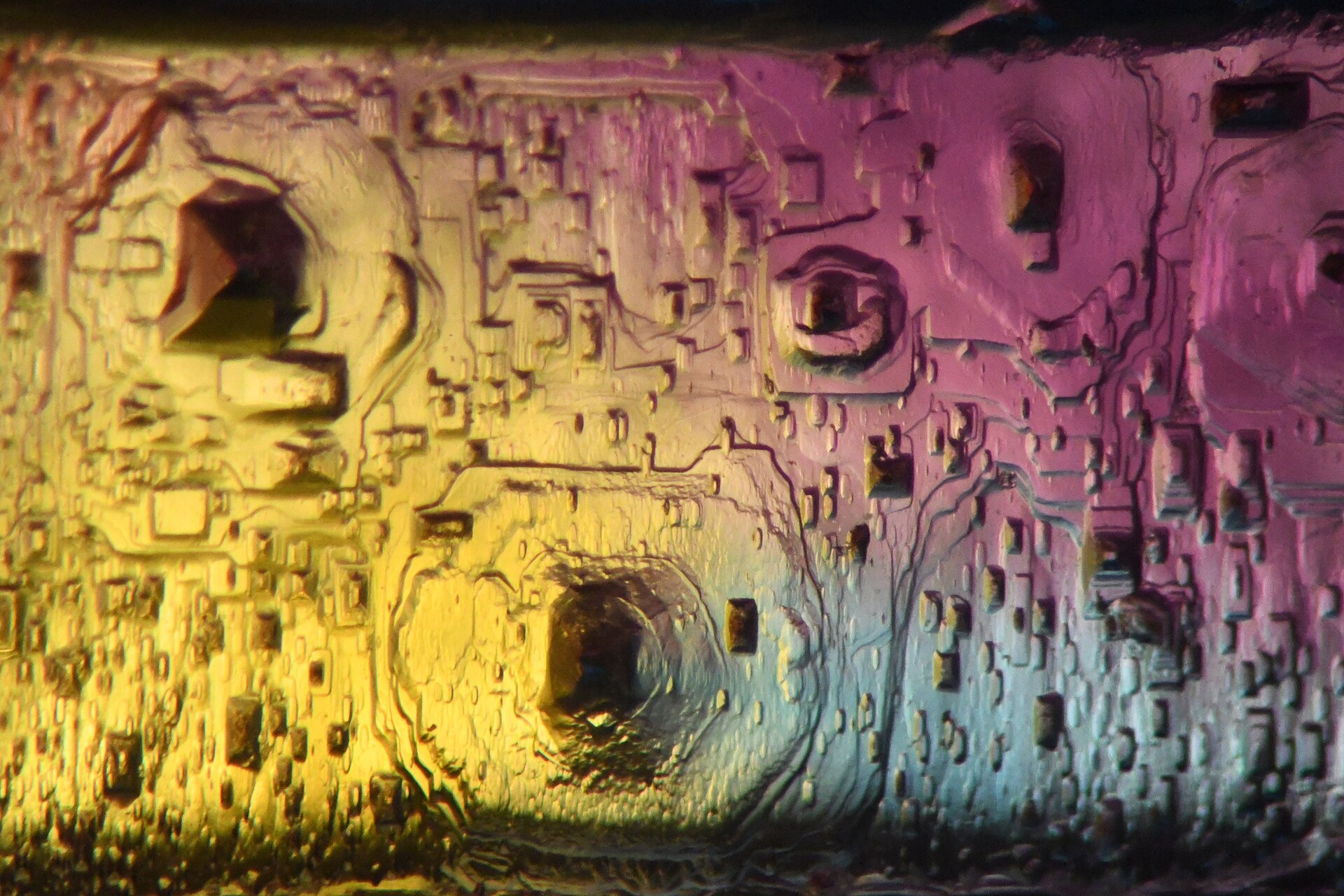
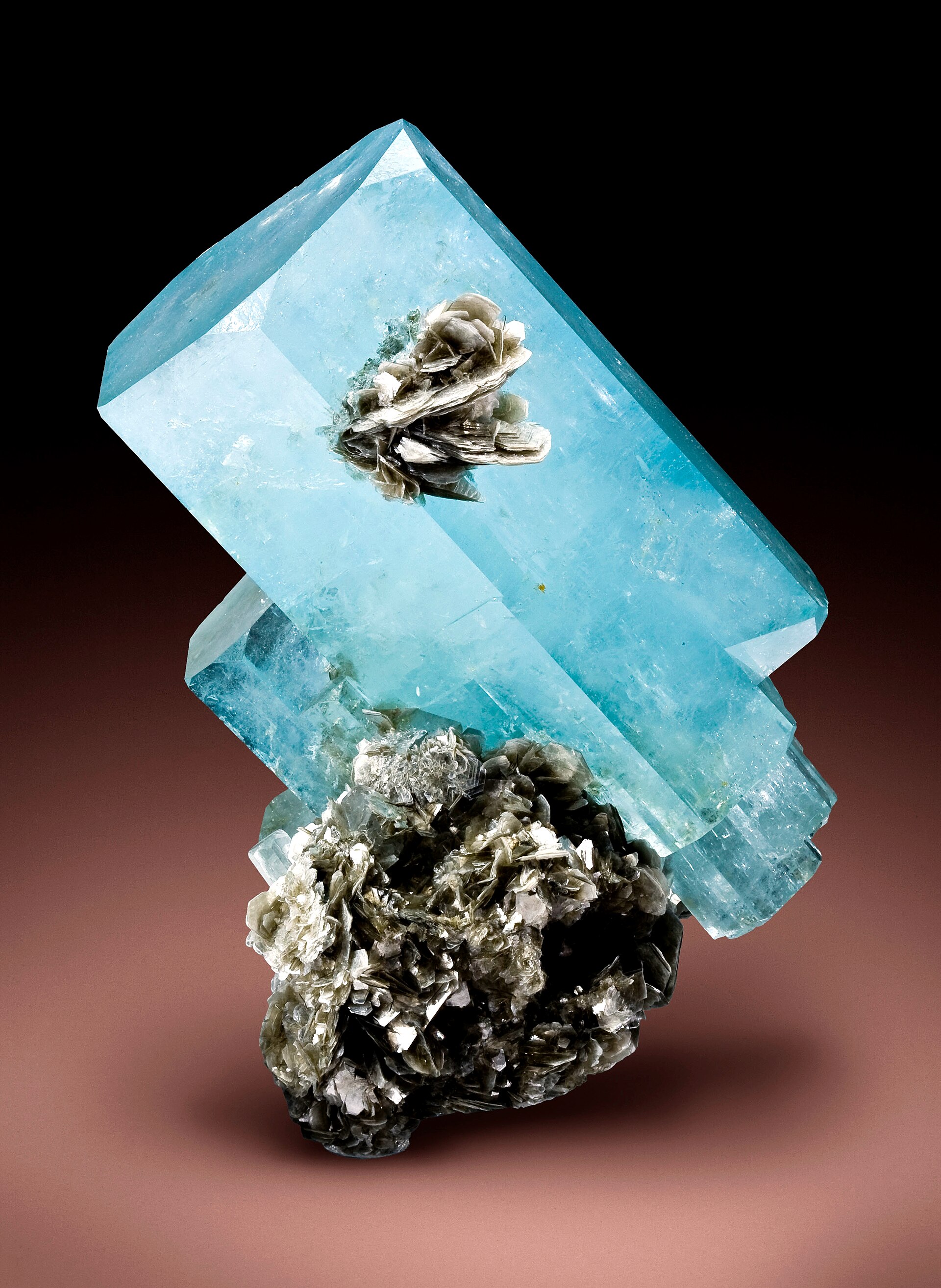
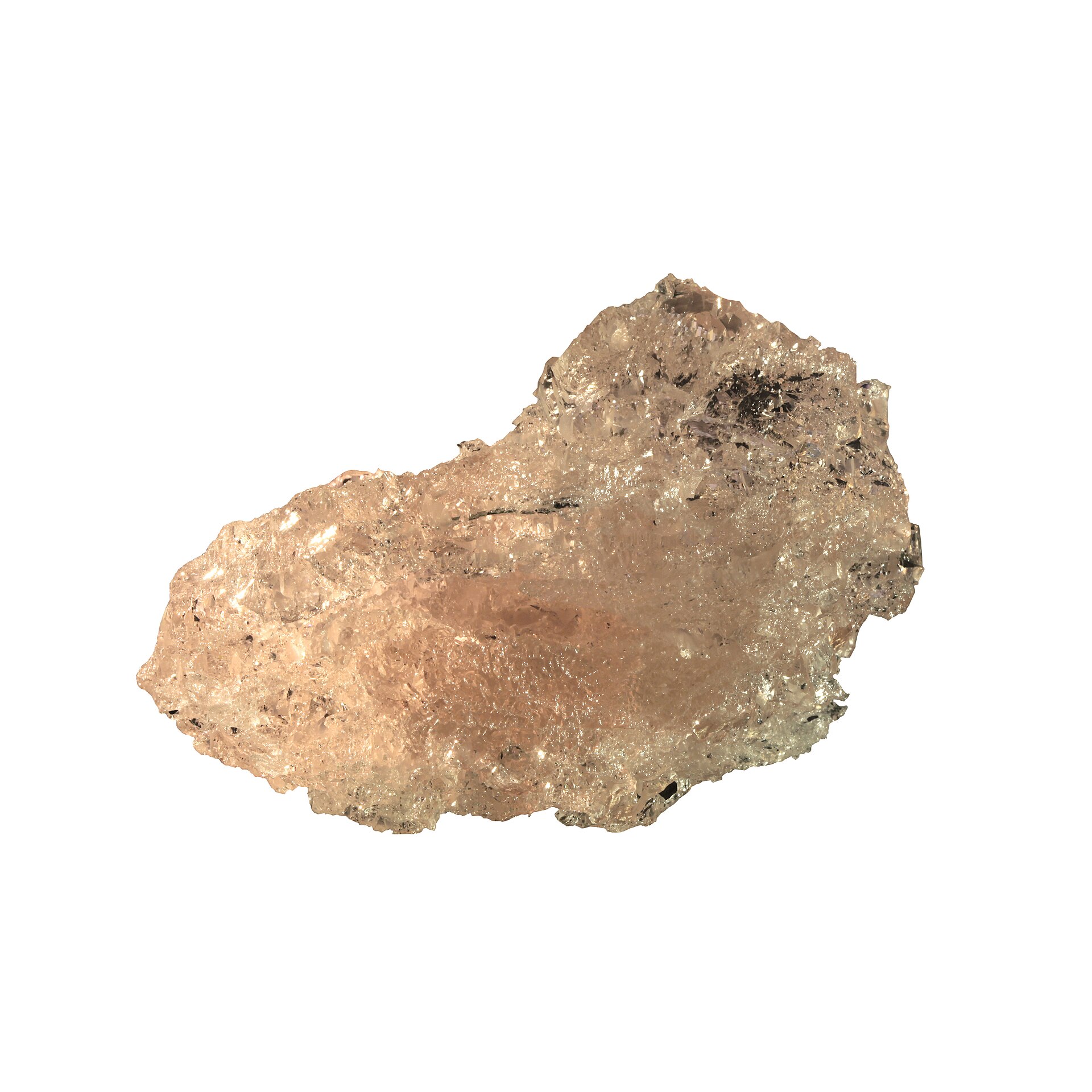
Photographs from Wikimedia Commons contributors — click a credit on the main image for the source and license.
Related Minerals
Others in the same family and minerals it commonly grows alongside.
References & Further Reading
- Dana’s New Mineralogy, 8th ed. Beryl group, cyclosilicates.
- Mindat.org — Emerald variety data and locality records.
- Wikipedia — Emerald.
Last reviewed 2026-09-14 · How to cite this page.