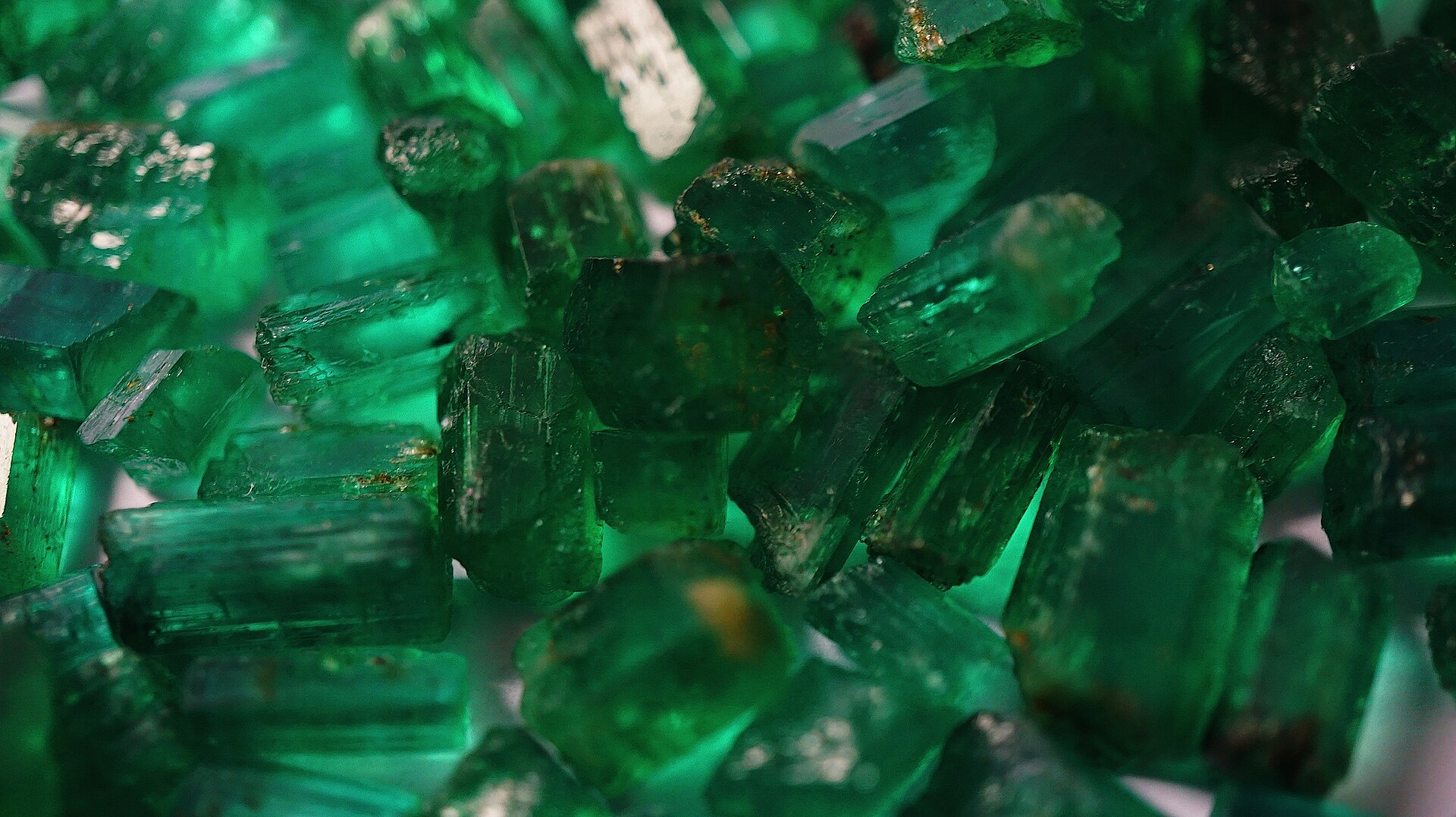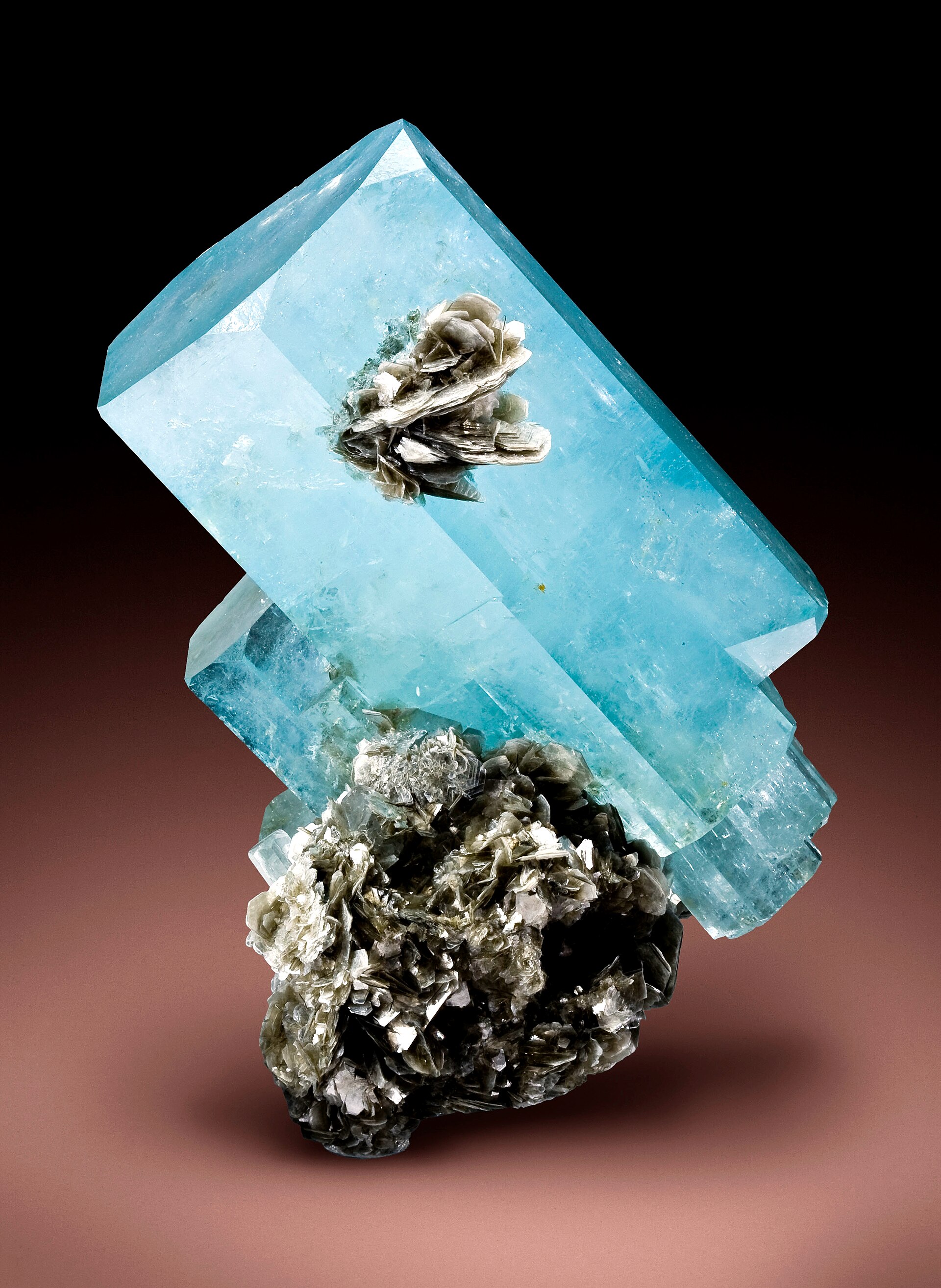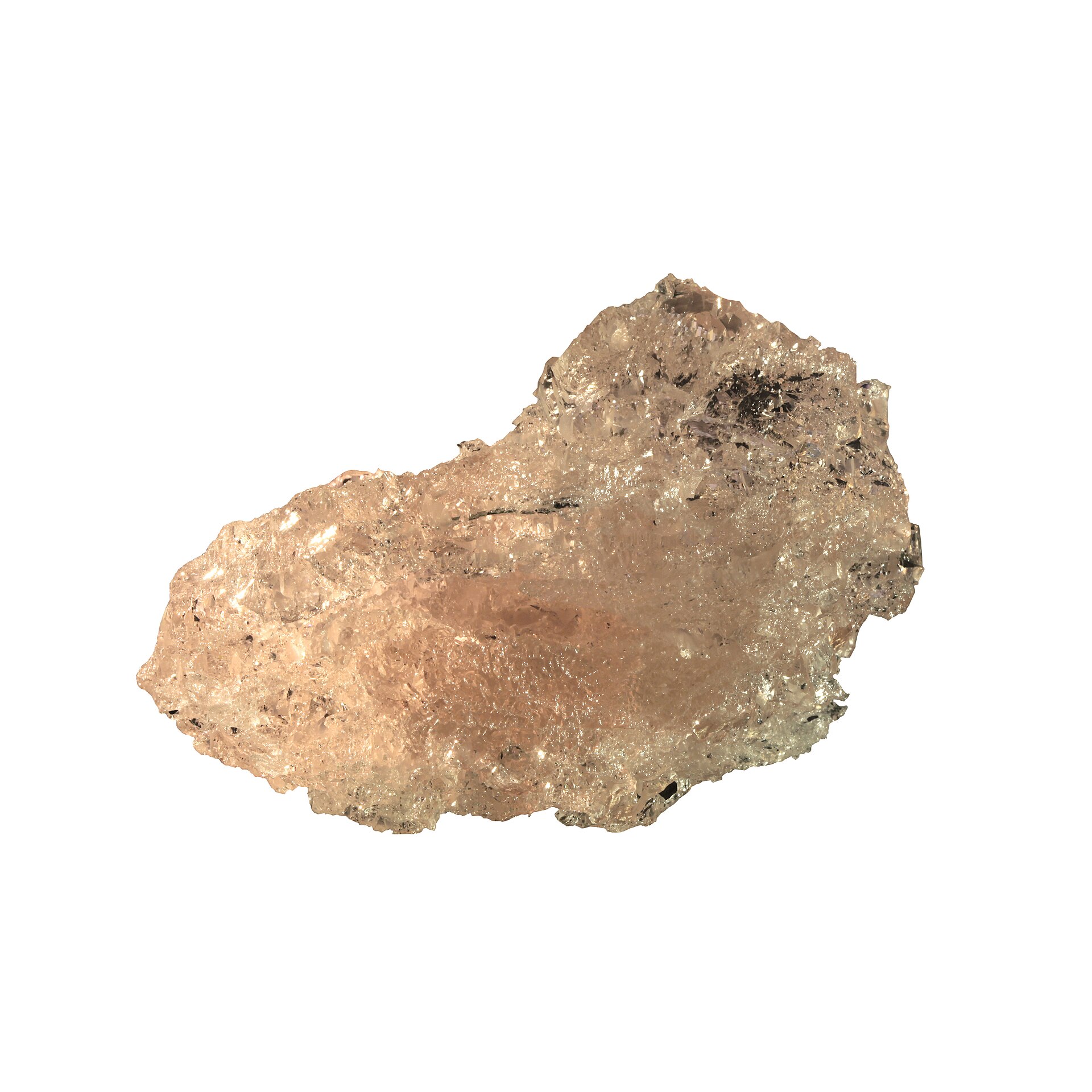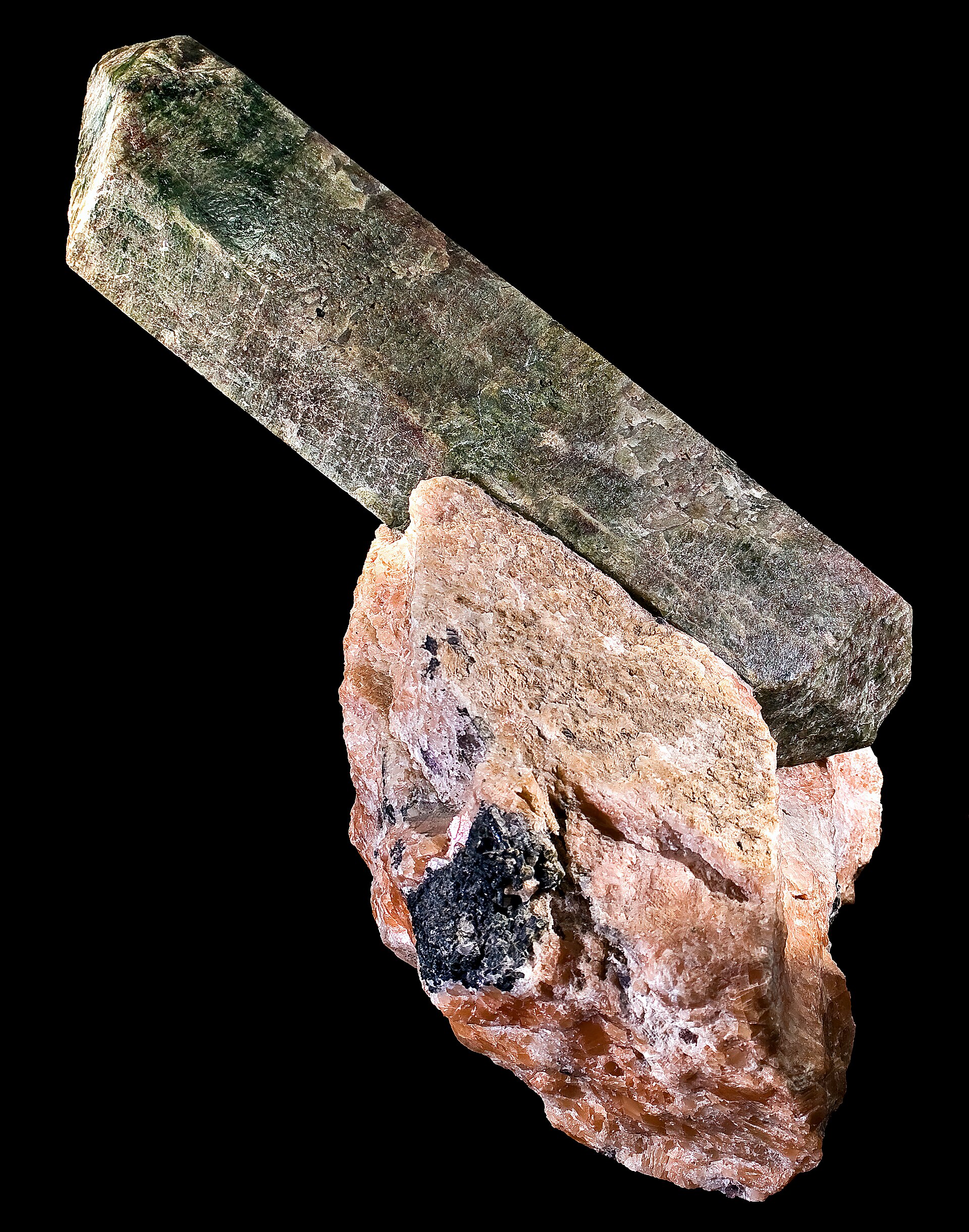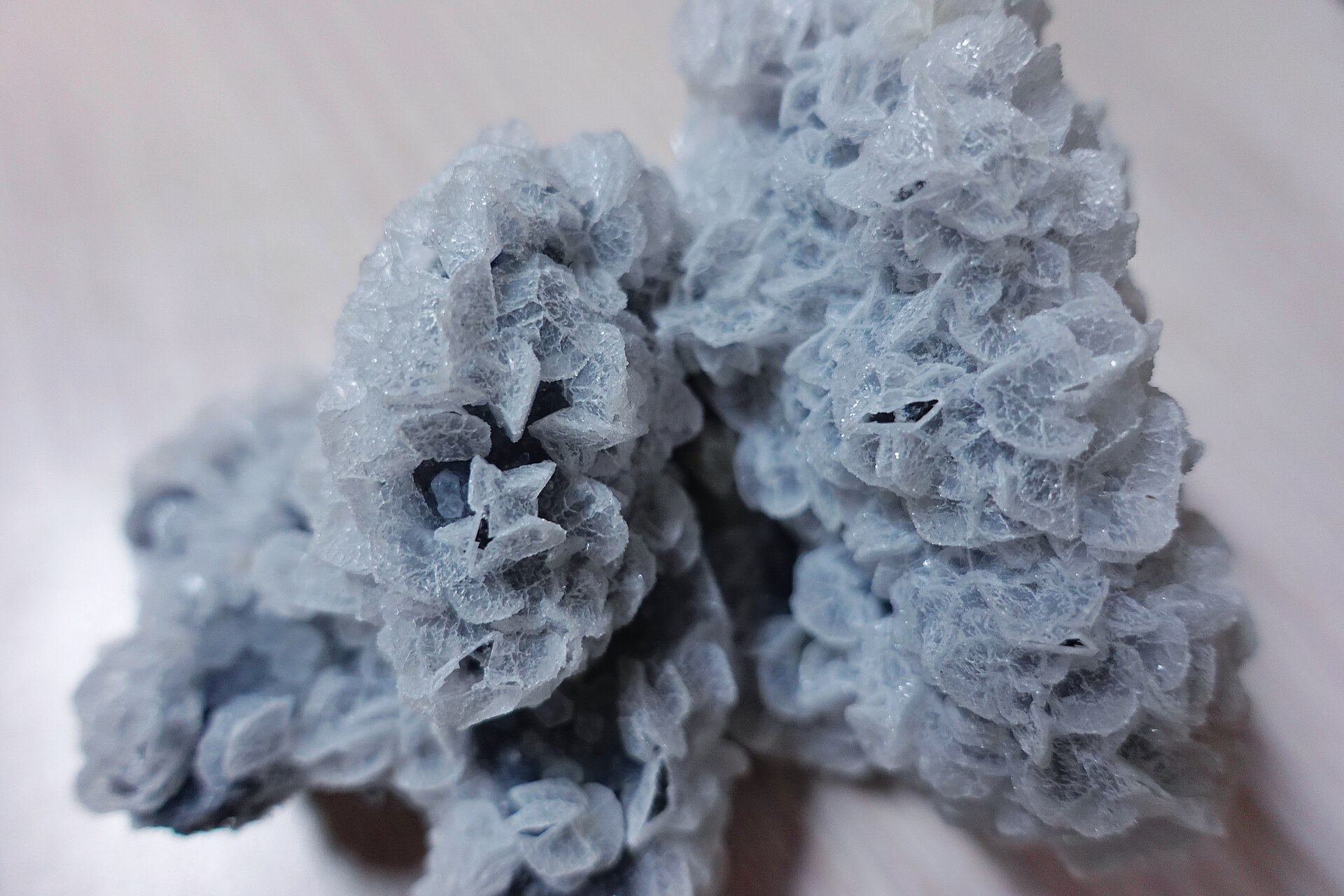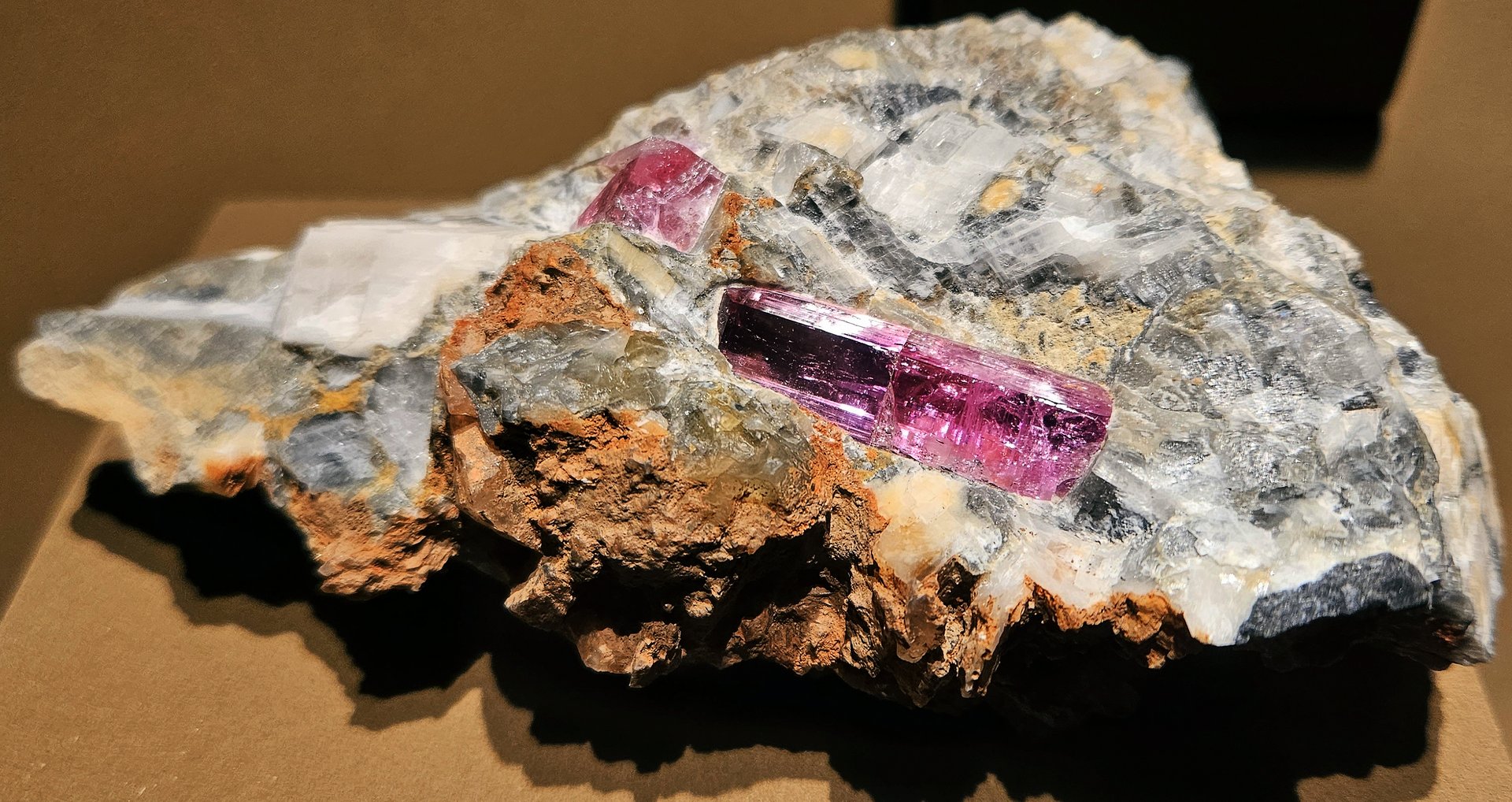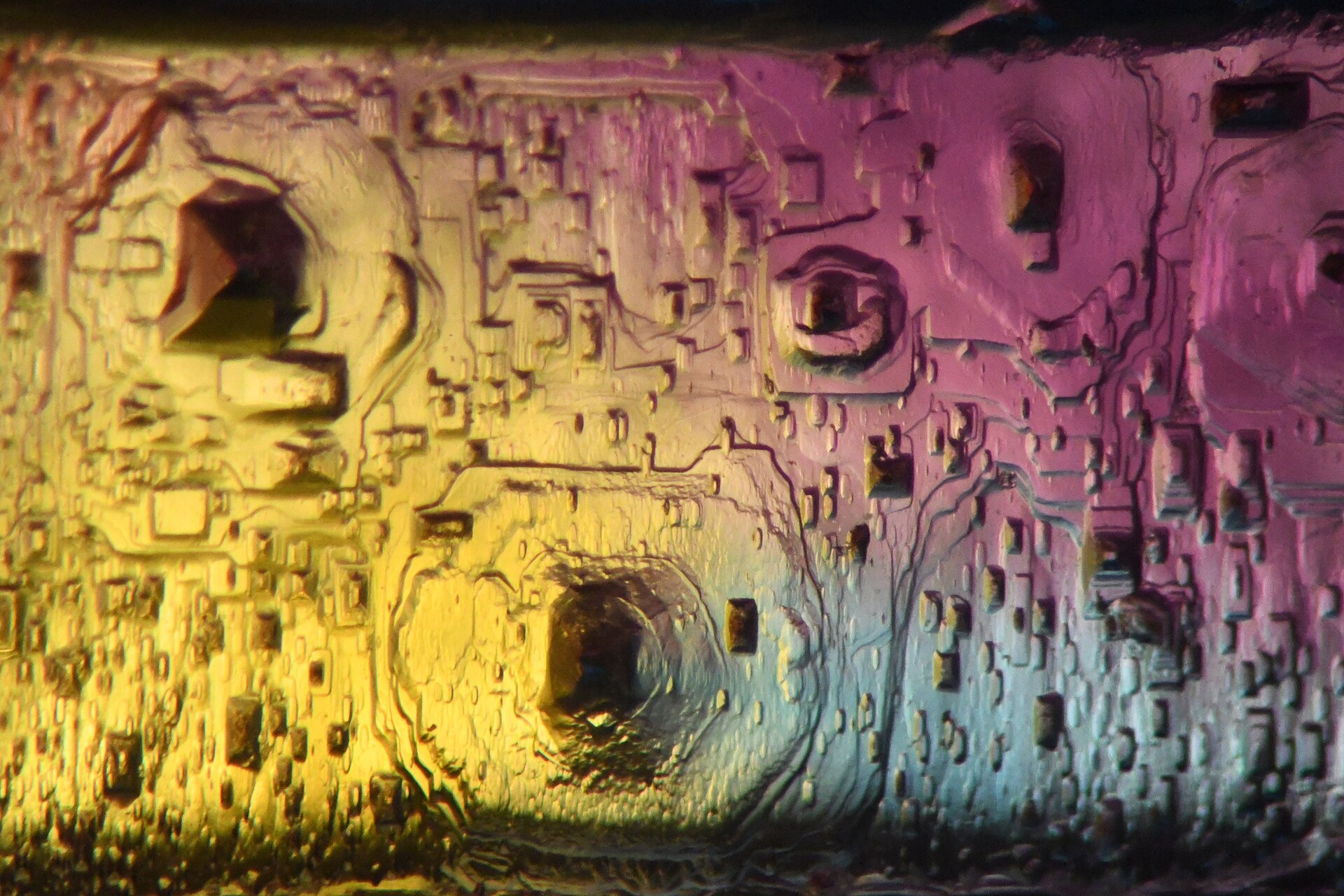
Beryl — Photo: Sepelinmurskaaja · CC BY-SA 4.0
What is Beryl?
Beryl is beryllium aluminum silicate — Be₃Al₂Si₆O₁₈ — crystallizing as six-sided prisms in granitic pegmatites. Trace impurities turn the same crystal frame into the entire jewel box: chromium makes emerald, iron makes aquamarine, manganese makes morganite.
Pure beryl (goshenite) is colorless — all its drama is chemistry. Crystals can grow enormous: pegmatite beryls of several tons are recorded.
Physical Properties
The full data table is in the panel alongside. Here’s what those numbers actually mean.
Color. Pure beryl is colorless; Cr³⁺/V → emerald, Fe²⁺/Fe³⁺ → aquamarine, Mn → morganite.
Habit. Long hexagonal prisms, often with flat basal terminations.
Rarity. Red beryl occurs in quantity at one place on Earth — Utah's Wah Wah Mountains.
Varieties
Same chemistry, different faces — trace impurities and how finely it crystallizes give a whole family of familiar stones.
What It’s Used For
How to Identify It
| Looks like… | But differs because… | Quick test |
|---|---|---|
| Apatite | Softer (H 5), different habit, often stubbier | Hardness |
| Quartz | Conchoidal fracture, no basal cleavage; beryl prisms are typically longer | Habit & cleavage |
Where It’s Found
Notable localities for fine specimens:
Gallery
Photographs from Wikimedia Commons contributors — click a credit on the main image for the source and license.
Related Minerals
Others in the same family and minerals it commonly grows alongside.