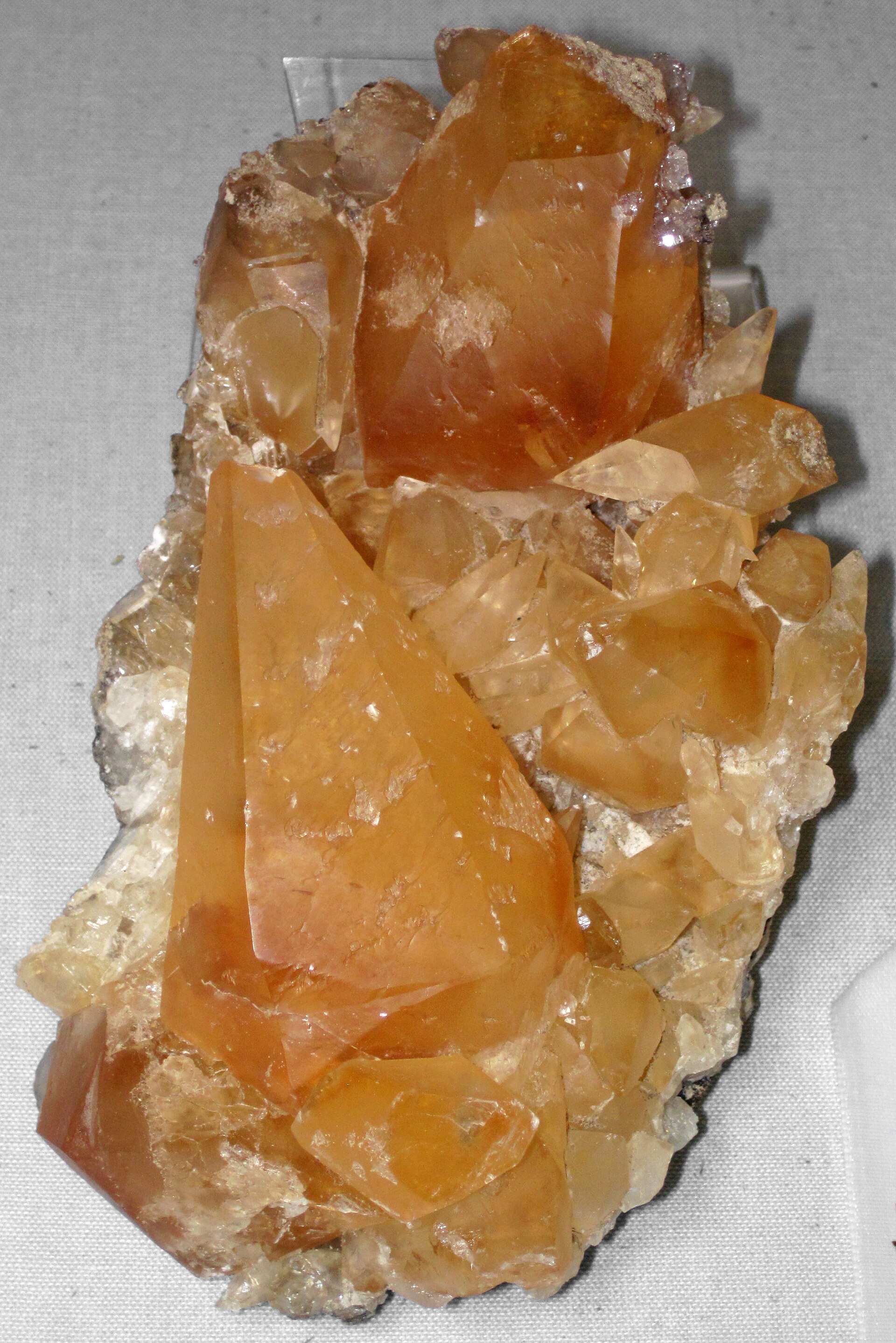
A calcite rhomb showing the doubled image caused by double refraction — Photo: James St. John · CC BY 2.0
What is Calcite?
Calcite is calcium carbonate — CaCO₃ — the mineral that builds limestone, marble, chalk, seashells and cave stalactites. It is one of the most abundant minerals at Earth’s surface and the reference mineral for hardness 3 on the Mohs scale.
Pure calcite is colorless, and its clearest form — Iceland spar — was prized for centuries because it splits light in two: lay a clear rhomb over a line of text and you see the text doubled. That trick, called double refraction, helped scientists work out the polarization of light.
Calcite is also a shape-shifter. It grows in more crystal forms than almost any other mineral — rhombs, prisms and pointed ‘dogtooth’ scalenohedra — and it fizzes energetically in even weak acid, which makes it easy to identify and useful as an antacid.
Physical Properties
The full data table is in the panel alongside. Here’s what those numbers actually mean.
Cleavage. Calcite’s trademark: it splits perfectly in three directions, always producing a rhombohedron — a squashed cube with no right angles. Cleave a crystal to bits and every fragment is still a rhomb.
Double refraction. Clear calcite bends light into two rays traveling at different speeds, so anything viewed through it appears doubled. With a birefringence near 0.17 — among the highest of any common mineral — even a small rhomb shows the effect plainly.
The acid test. As a carbonate, calcite reacts with dilute hydrochloric acid (or vinegar, more slowly), releasing carbon dioxide bubbles. Freshly scratched or powdered surfaces fizz hardest.
Softness. Hardness 3 means a copper coin (about 3.5) marks it while a fingernail (2.5) does not.
How & Where It Forms
Most calcite is born in water. Marine organisms pull dissolved calcium and carbonate from the sea to build shells and skeletons; over time those remains compact into limestone. Calcite also precipitates straight from mineral-laden water: in caves it builds stalactites and stalagmites, and at hot springs it lays down spongy travertine terraces.
Heat and pressure recrystallize limestone into marble, while hot hydrothermal fluids grow well-formed crystals in veins and ore deposits. The famous water-clear Iceland spar came from gas cavities in Icelandic basalt.
Often grows alongside:
What It’s Used For
How to Identify It
In the field it is a three-part check: soft (a copper coin scratches it, a fingernail can’t), rhombohedral cleavage (it breaks into squashed cubes, never flat flakes), and fizzes in dilute acid. Clear fragments show a doubled image underneath. Dolomite looks similar but only fizzes weakly when powdered; aragonite shares the formula but forms orthorhombic needles without rhomb cleavage.
| Looks like… | But differs because… | Quick test |
|---|---|---|
| Quartz | Much harder (7), has no cleavage and never fizzes | Knife & acid |
| Dolomite | Harder (3.5–4) and fizzes only weakly when powdered; faces often curve into saddles | Powder a scratch, then acid |
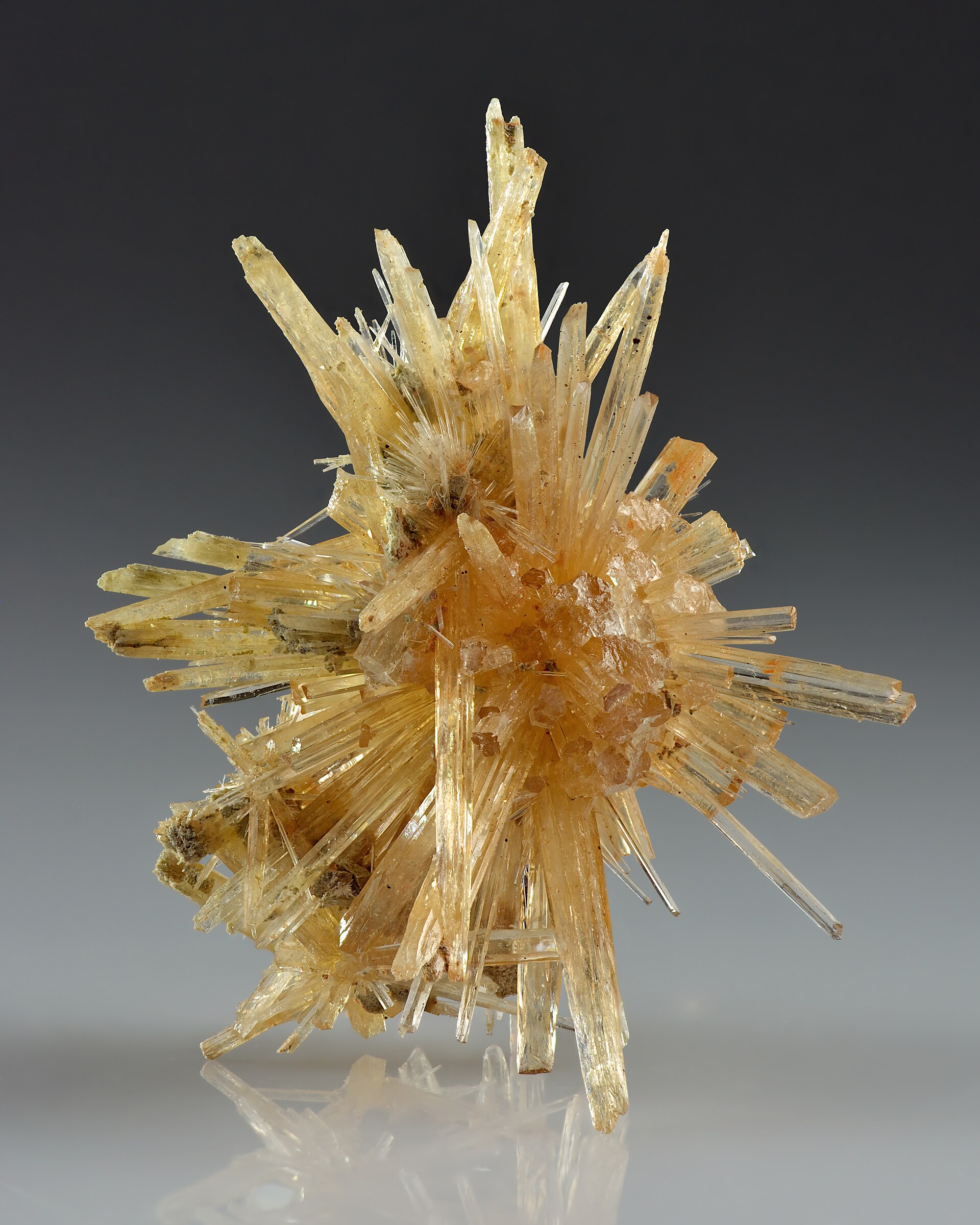
| Aragonite | Same formula, but orthorhombic needles, denser (≈2.94), and no rhomb cleavage | Habit & cleavage |
| Fluorite | Harder (4), cleaves into octahedra rather than rhombs, and does not fizz | Cleavage shape & acid |
| Baryte | Far denser (≈4.5) with right-angle cleavage and no fizz | Heft it |
Where It’s Found
Notable localities for fine specimens:
Gallery
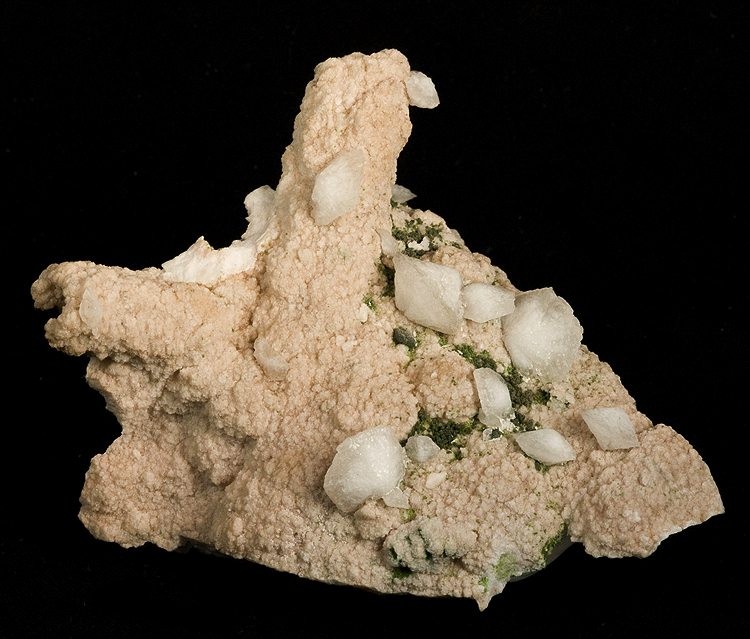
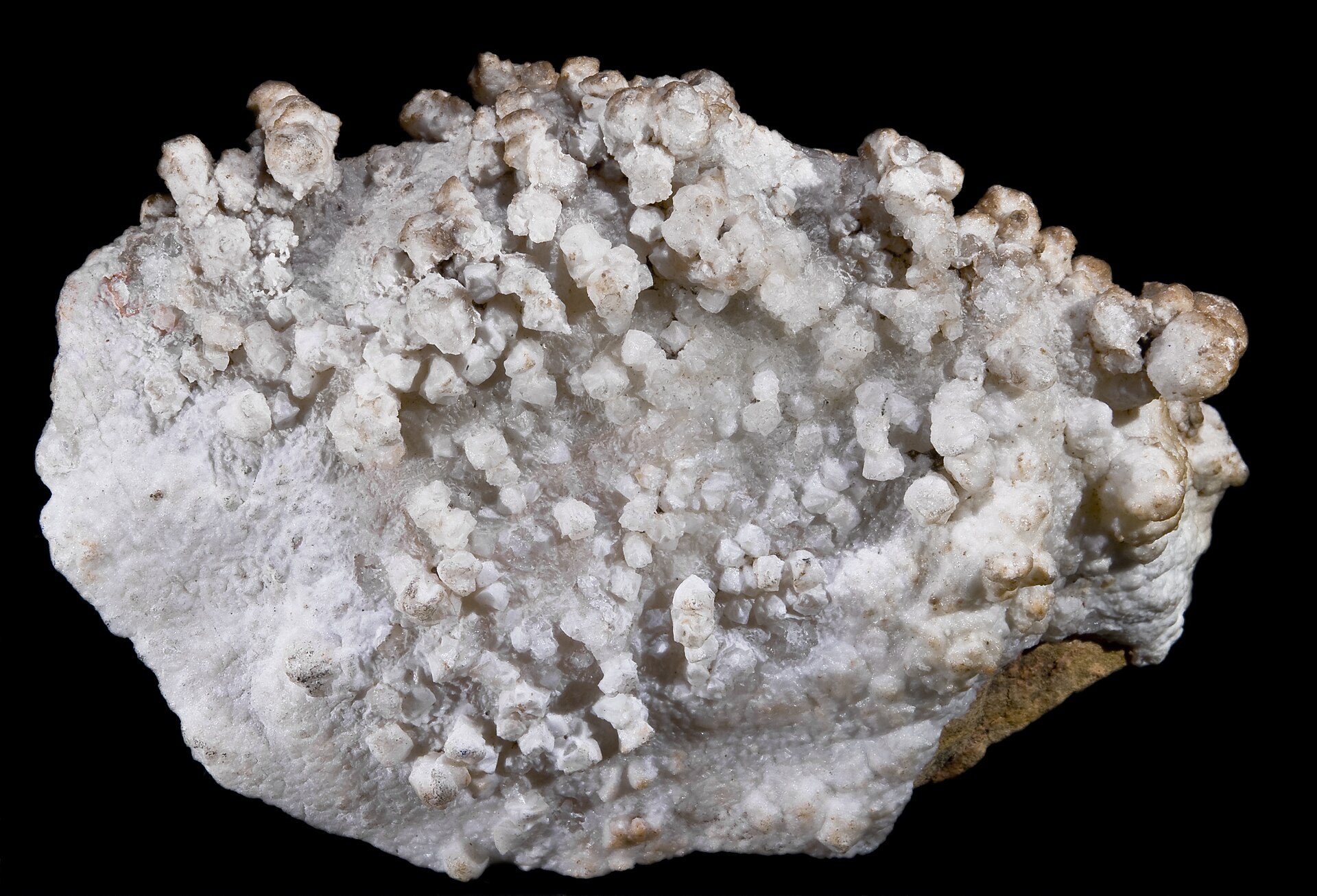
Photographs from Wikimedia Commons contributors — click a credit on the main image for the source and license.
Related Minerals
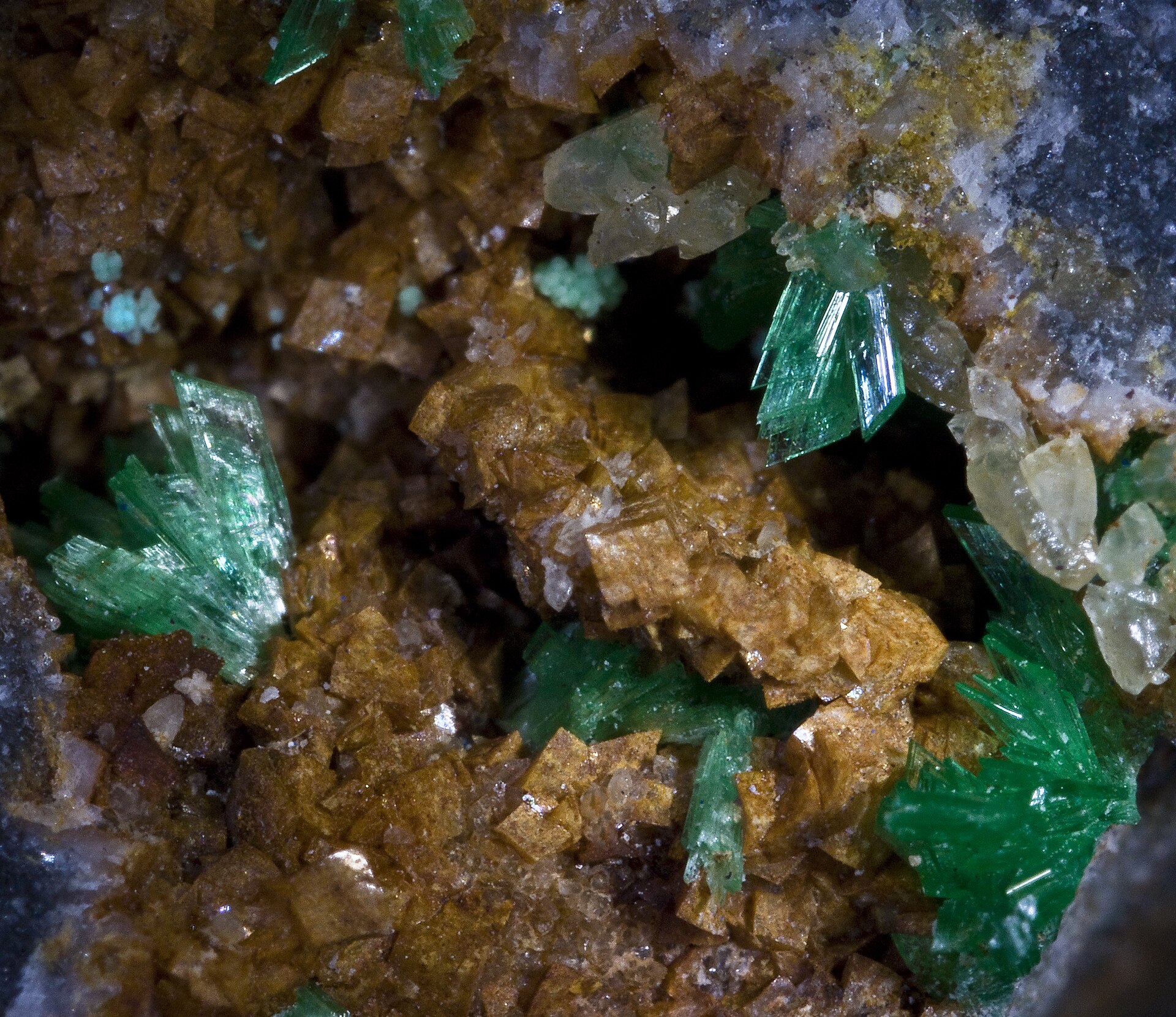
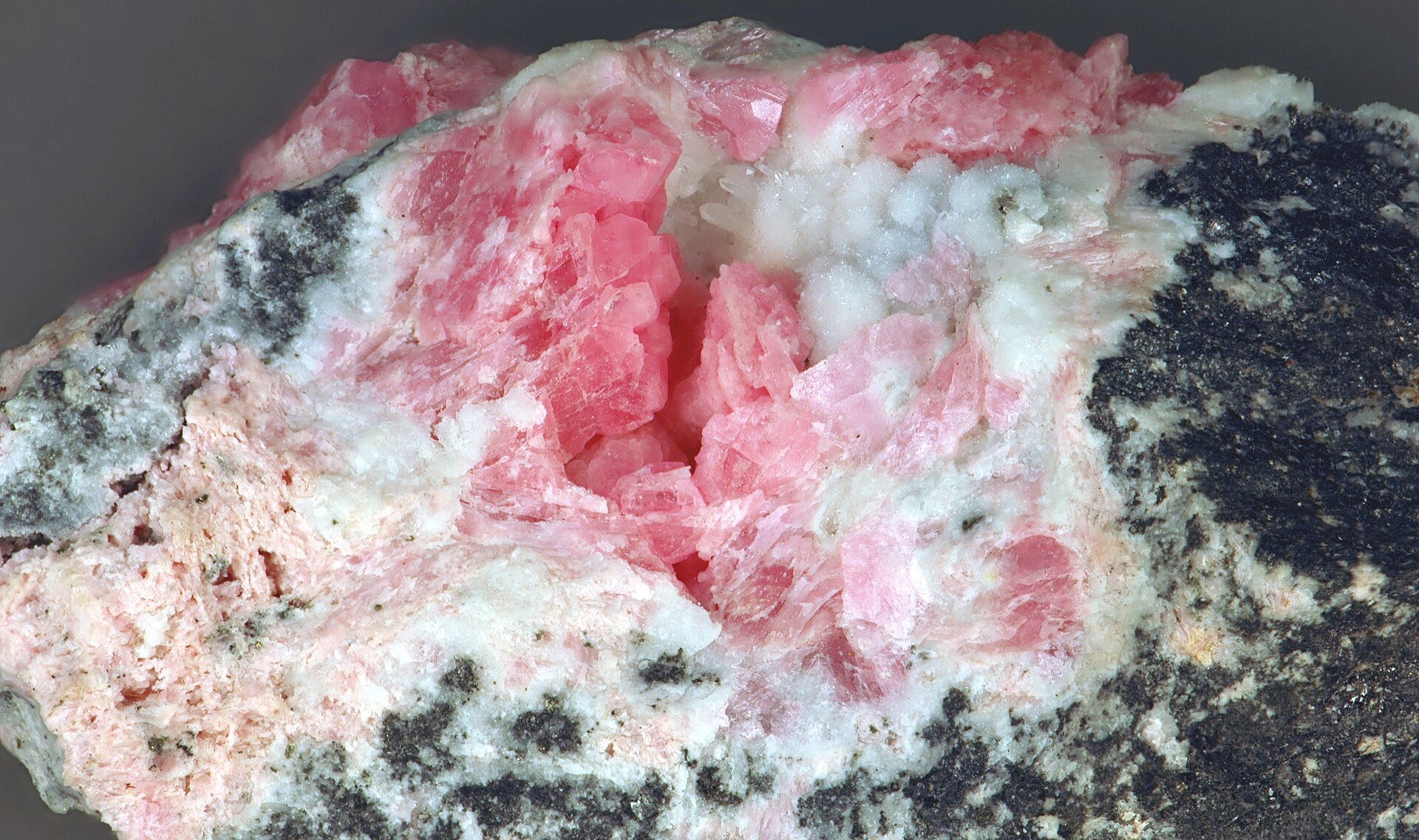
Others in the same family and minerals it commonly grows alongside.

References & Further Reading
- Dana’s New Mineralogy, 8th ed. Anhydrous carbonates, calcite group.
- Mindat.org — Calcite mineral data and locality records.
- Wikipedia — Calcite.
Last reviewed 2026-09-14 · How to cite this page.