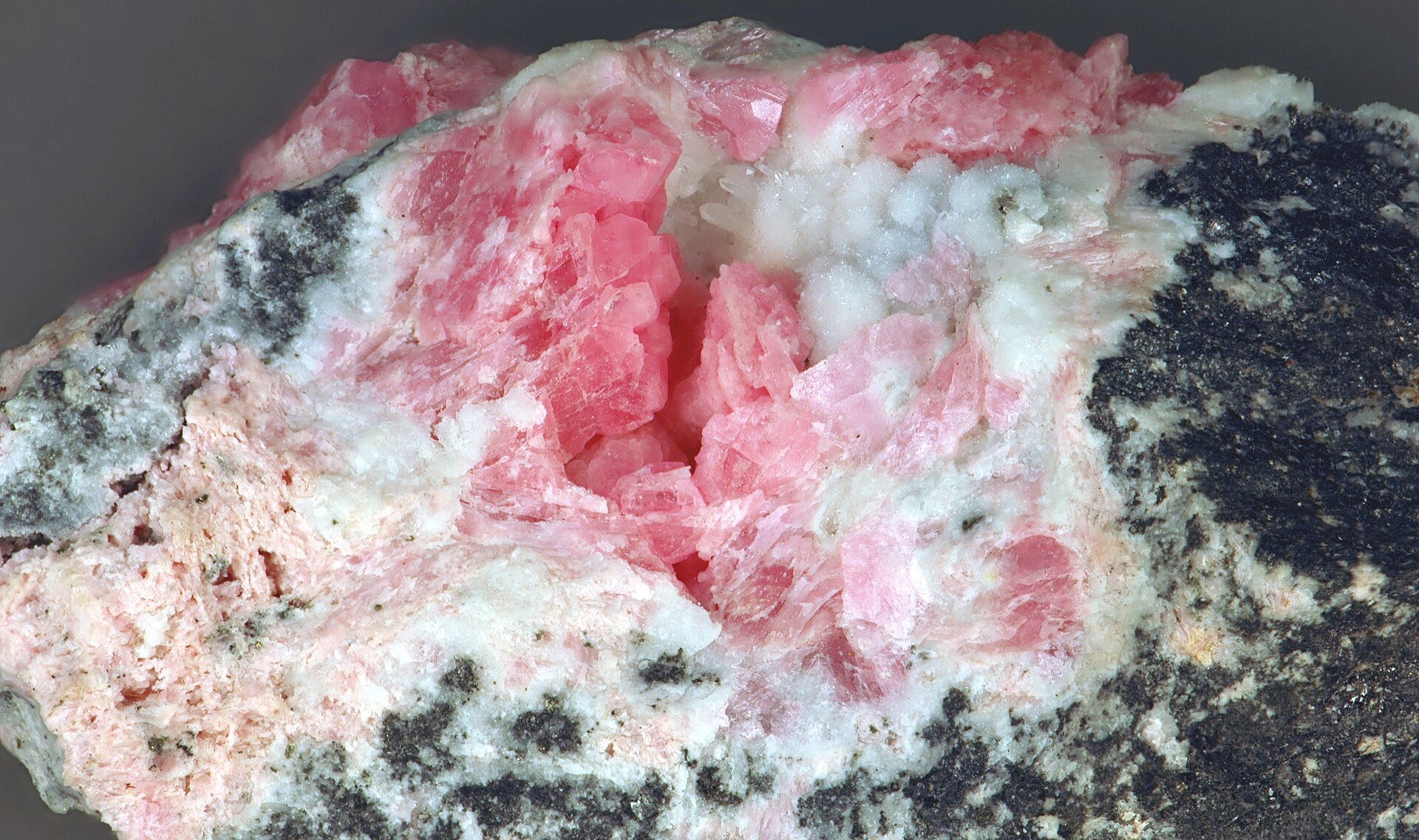
Rhodochrosite — Photo: James St. John · CC BY 2.0
What is Rhodochrosite?
Rhodochrosite is manganese carbonate — MnCO₃ — and almost everything about it is pink. Massive banded material is cut into 'Inca rose' cabochons, but the collector's prize is the gemmy watermelon-red rhombohedron, best known from Colorado's Sweet Home mine.
It is soft, perfectly cleaved, and chemistry does the coloring — pure MnCO₃ is rose; calcium dilutes it toward white. Argentina's Capillitas mine produces stalactites sliced into concentric pink bands.
Physical Properties
The full data table is in the panel alongside. Here’s what those numbers actually mean.
Cleavage. Perfect rhombohedral, like calcite — but SG ~3.6 vs 2.71 gives it away.
Acid. Effervesces, but weakly in cold dilute acid compared to calcite.
Color. Mn²⁺ is the chromophore; iron and calcium mute it toward brown or white.
What It’s Used For
How to Identify It
| Looks like… | But differs because… | Quick test |
|---|---|---|
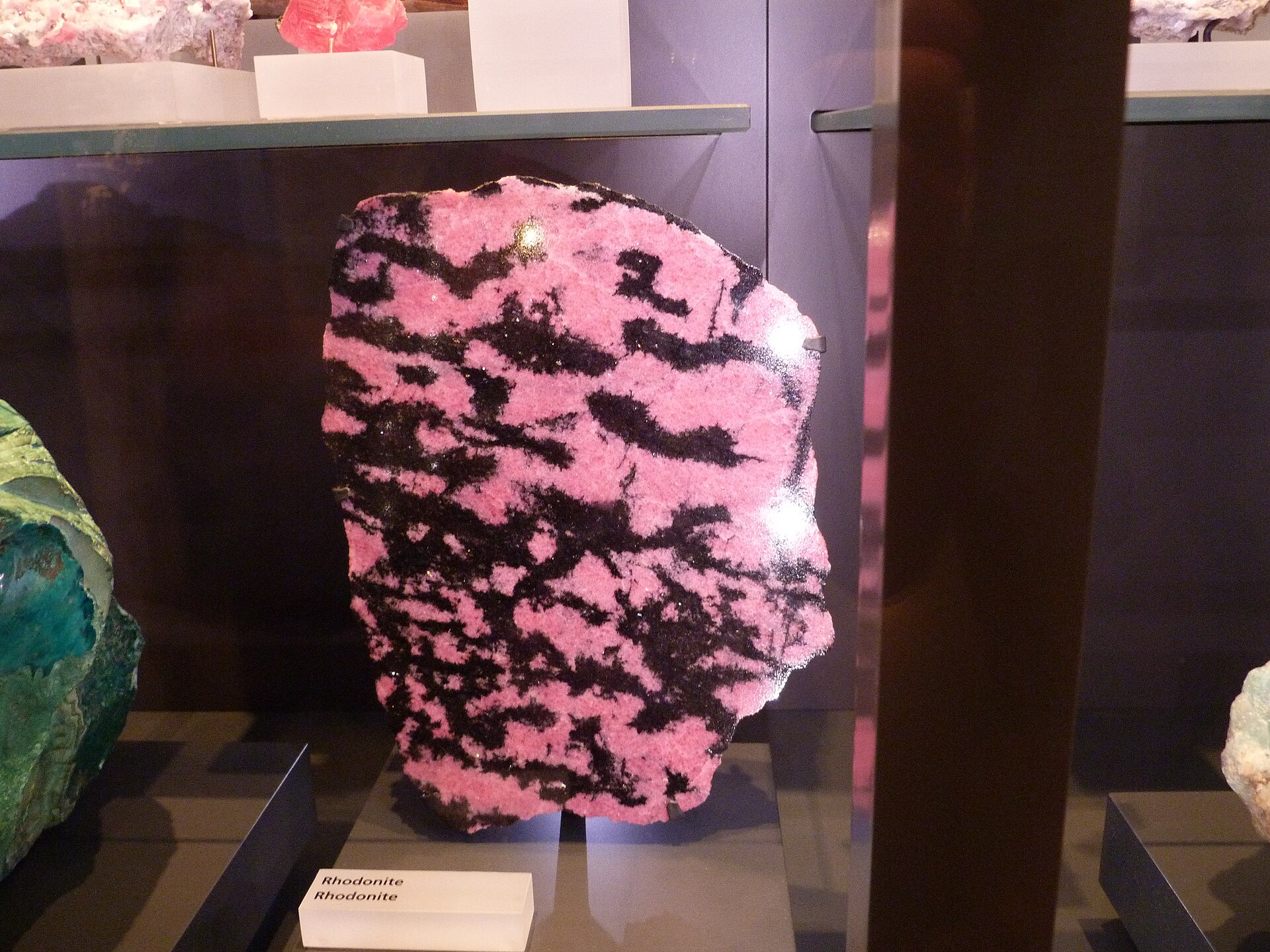
| Rhodonite | A silicate — harder (5.5–6.5), black Mn-oxide veins, no fizz | Acid & hardness |
| Cobaltocalcite | Cobalt-pink calcite — fizzes vigorously, SG ~2.7 | Acid rate |
Where It’s Found
Notable localities for fine specimens:
Gallery
Photographs from Wikimedia Commons contributors — click a credit on the main image for the source and license.
Related Minerals
Others in the same family and minerals it commonly grows alongside.