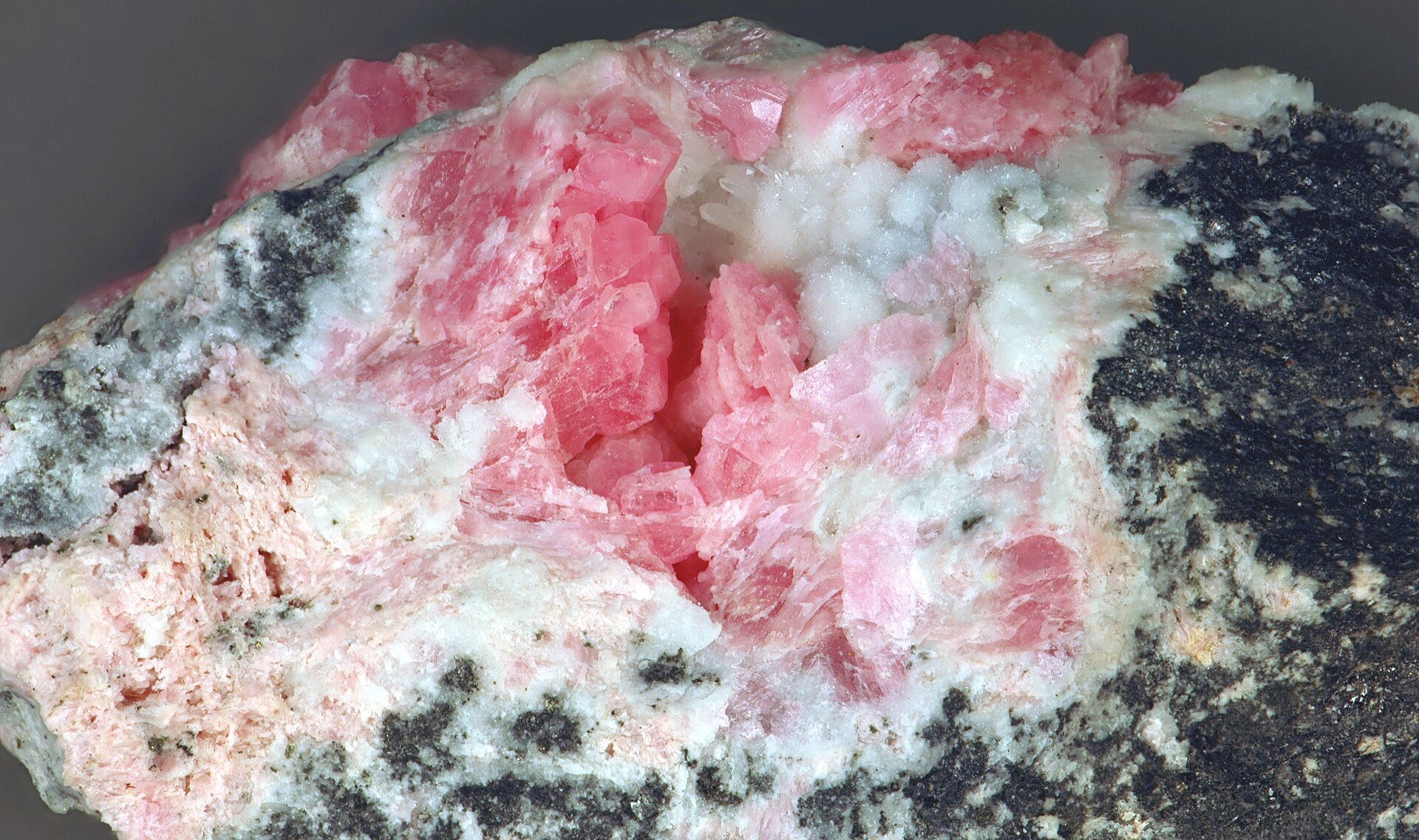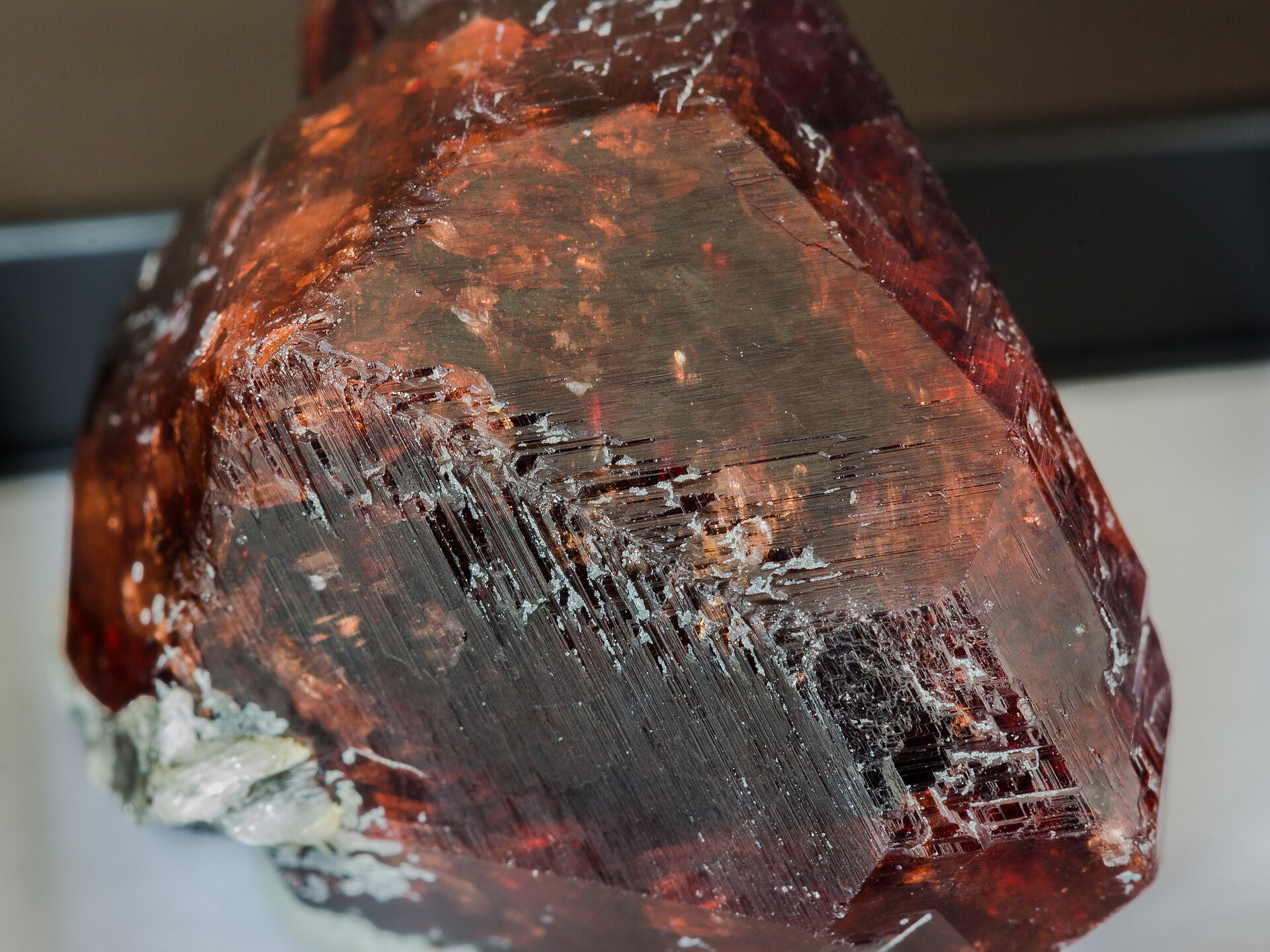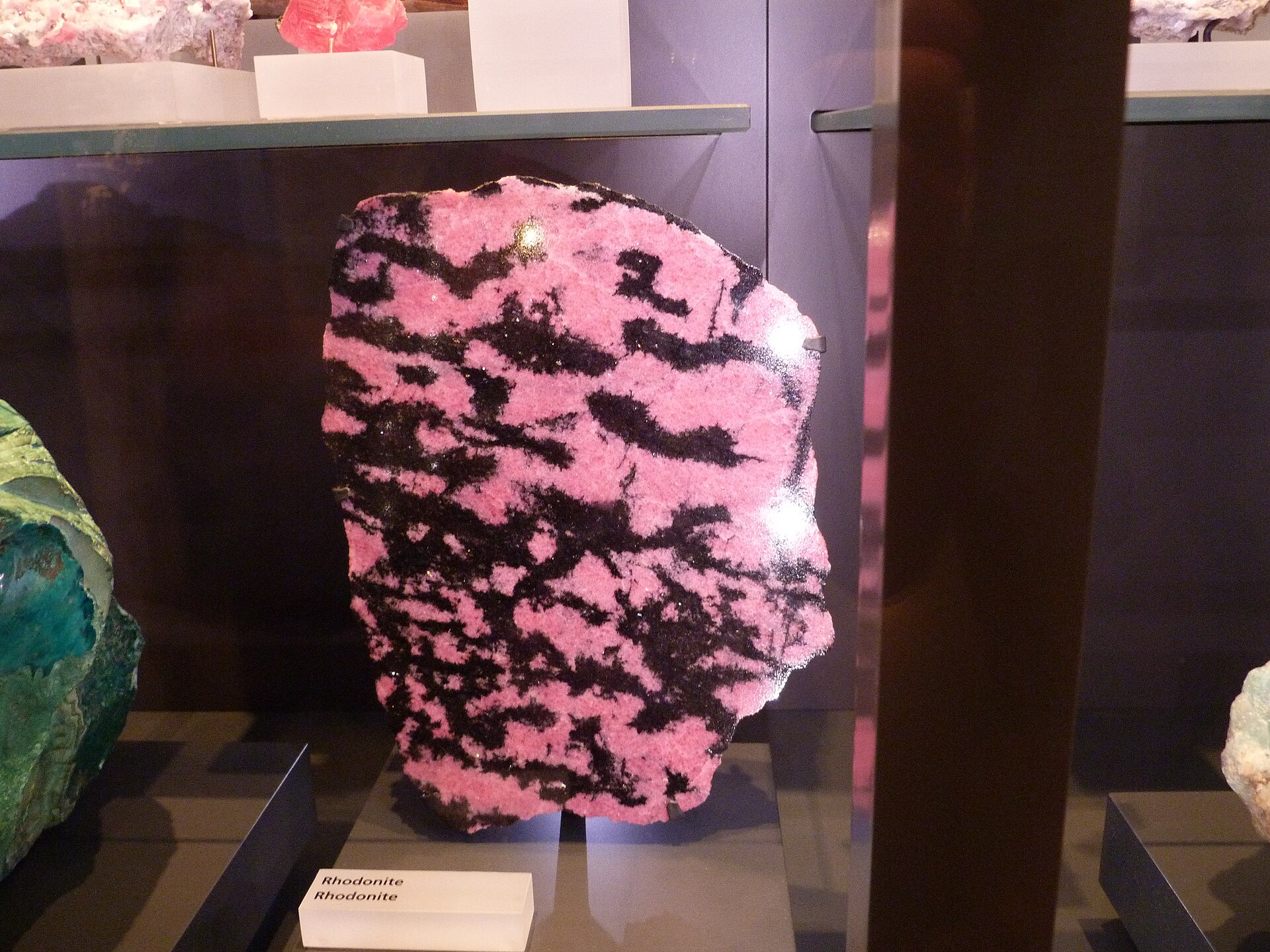
Rhodonite — Photo: S. Rae from Scotland, UK · CC BY 2.0
What is Rhodonite?
Rhodonite is manganese silicate — (Mn,Ca)SiO₃ — named from the Greek rhodon, rose. Fresh surfaces are rose-pink; the classic look is pink shot through with black manganese-oxide veins along cracks.
Russia's Ural deposits produced blocks so large that entire tabletops and sarcophagi were carved — the stone of the tsars. Fine transparent red crystals from Broken Hill are among the most prized of all display minerals.
Physical Properties
The full data table is in the panel alongside. Here’s what those numbers actually mean.
Color. Mn²⁺ gives the pink; surface oxidation blackens to Mn-oxide veins.
vs Rhodochrosite. Silicate vs carbonate — no fizz, H ~6 vs ~3.5.
Cleavage. Two perfect directions near 90° — a pyroxenoid, not a true pyroxene.
What It’s Used For
How to Identify It
| Looks like… | But differs because… | Quick test |
|---|---|---|
| Rhodochrosite | A carbonate — fizzes, softer (3.5–4), banded not veined | Acid & hardness |
| Thulite | Zoisite's pink variety — different structure, brighter rose | Optics |
Where It’s Found
Notable localities for fine specimens:
Gallery
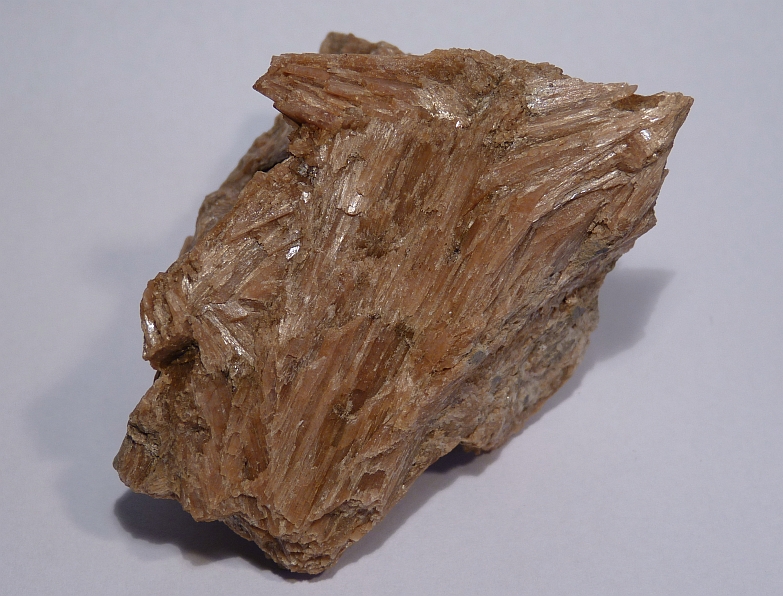
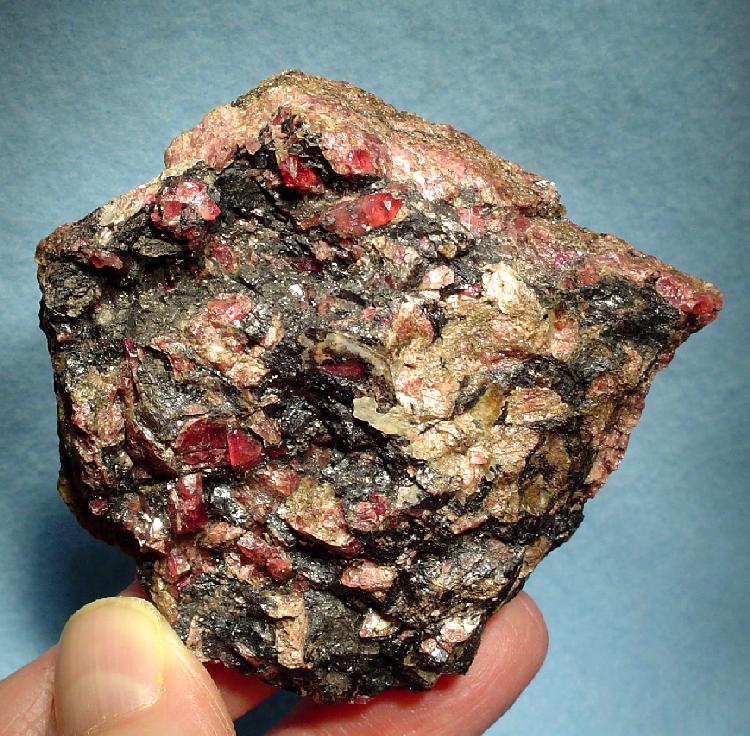
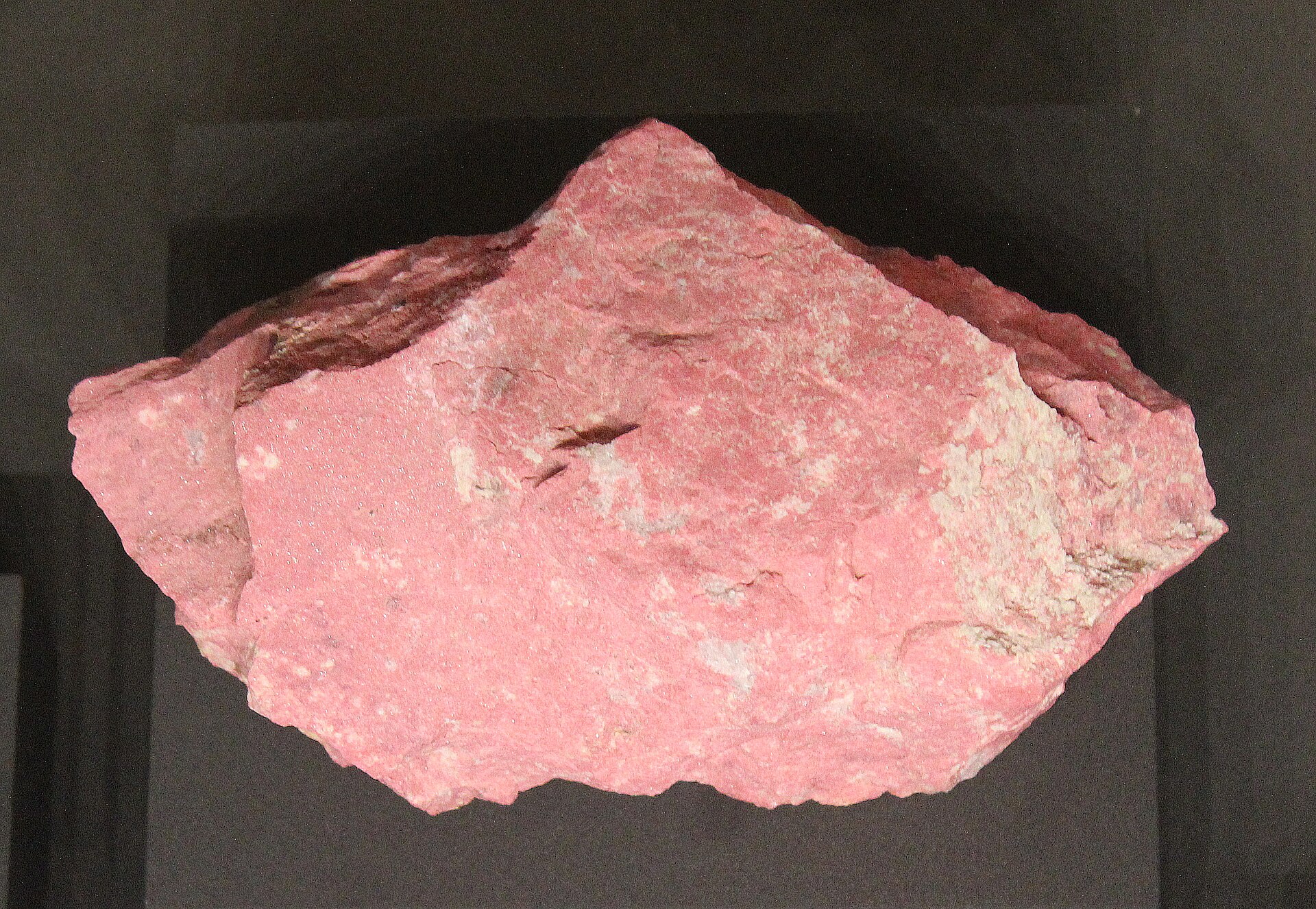
Photographs from Wikimedia Commons contributors — click a credit on the main image for the source and license.
Related Minerals
Others in the same family and minerals it commonly grows alongside.