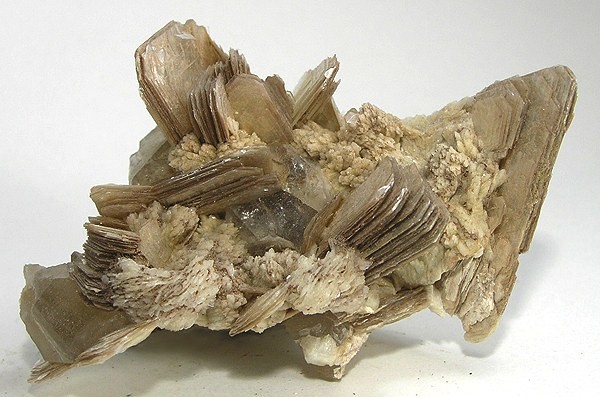
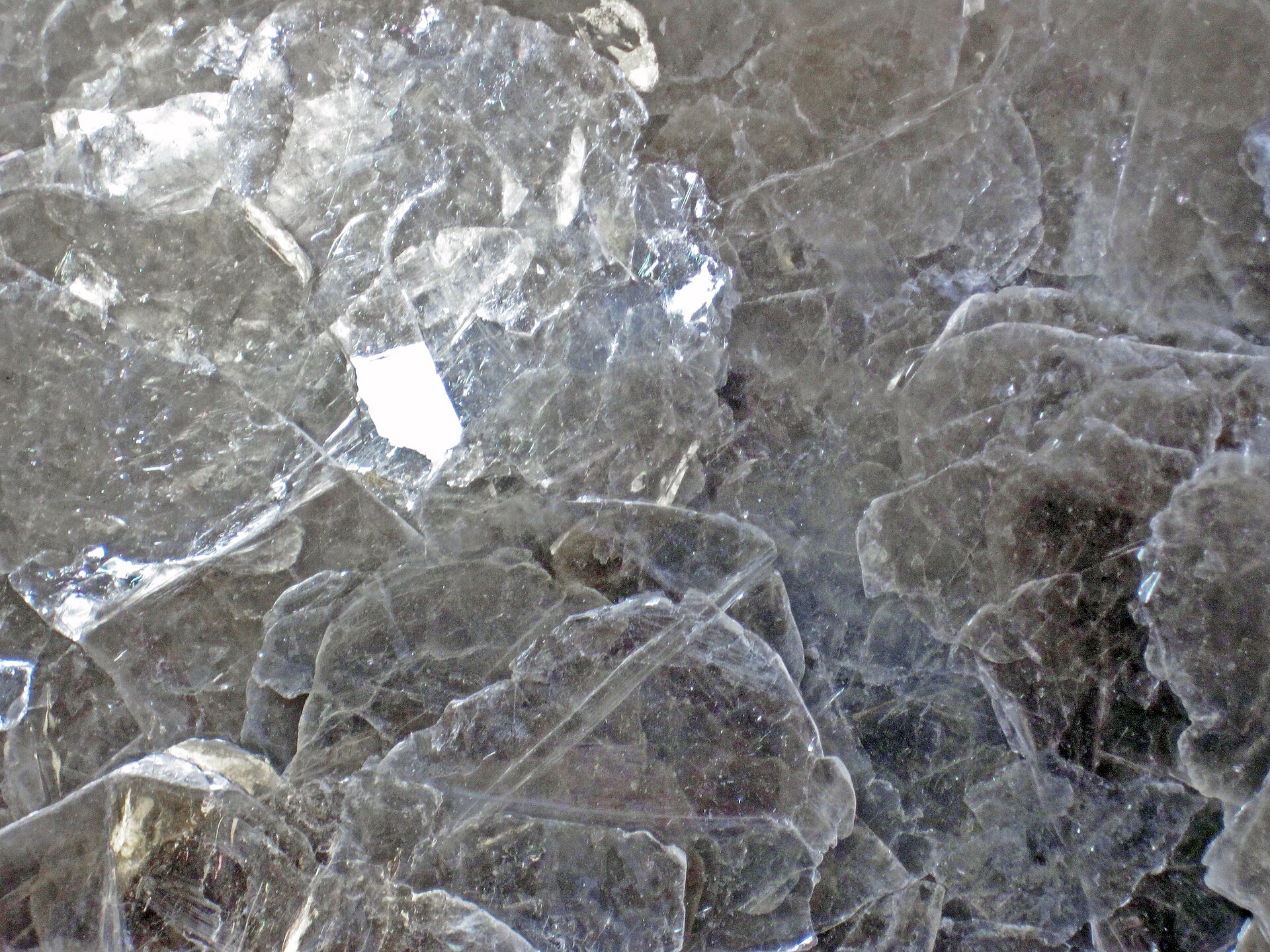
A silvery book of muscovite cleaving into transparent sheets — Photo: Robert M. Lavinsky · CC BY-SA 3.0
What is Muscovite?
Muscovite is the silvery ‘common mica’ — the mineral that peels into transparent, paper-thin sheets that bend and spring back like plastic film. Its formula, KAl₂(Si₃Al)O₁₀(OH)₂, describes a layered sandwich: sheets of silicon and aluminium tetrahedra locked onto aluminium-oxygen layers, with potassium ions holding the stack loosely together.
That loose potassium layer is the whole story of muscovite. It is why a fist-sized ‘book’ of mica splits with a fingernail into leaves thinner than a hair, why each leaf is flexible yet elastic, and why the mineral was once so valuable: before cheap glass, big clear sheets of muscovite shipped from Russia — ‘Muscovy glass’ — glazed windows, lanterns and oven doors.
Today you meet it everywhere in miniature: the glinting flakes in granite and sandstone, the sparkle in eyeshadow, and the invisible insulator inside heating elements.
Physical Properties
The full data table is in the panel alongside. Here’s what those numbers actually mean.
The perfect cleavage. Muscovite has one direction of perfect cleavage — the basal plane {001}. The bond between stacked sheets is so weak that a crystal separates into flakes thinner than paper; a thick ‘book’ can yield thousands of leaves.
Elasticity. Mica flakes don’t just bend — they spring back flat. That elastic snap separates true mica from look-alike sheets of chlorite or talc, which crease and stay bent.
Softness and shine. Only 2–2.5 on the Mohs scale — about fingernail hardness — with a pearly to silvery luster on fresh splits. Fine-grained silky masses of it are called sericite, a common alteration product that gives weathered feldspar its soft sheen.
Heat and electricity. Sheets shrug off high temperatures and conduct almost no electricity — the combination that made mica indispensable in early electronics.
How & Where It Forms
Muscovite grows wherever aluminium-rich rocks are squeezed or soaked: it is a standard mineral of granite pegmatites, where crystals can grow into books metres across, and of mica schists, where its flakes align like pages to give the rock its foliation.
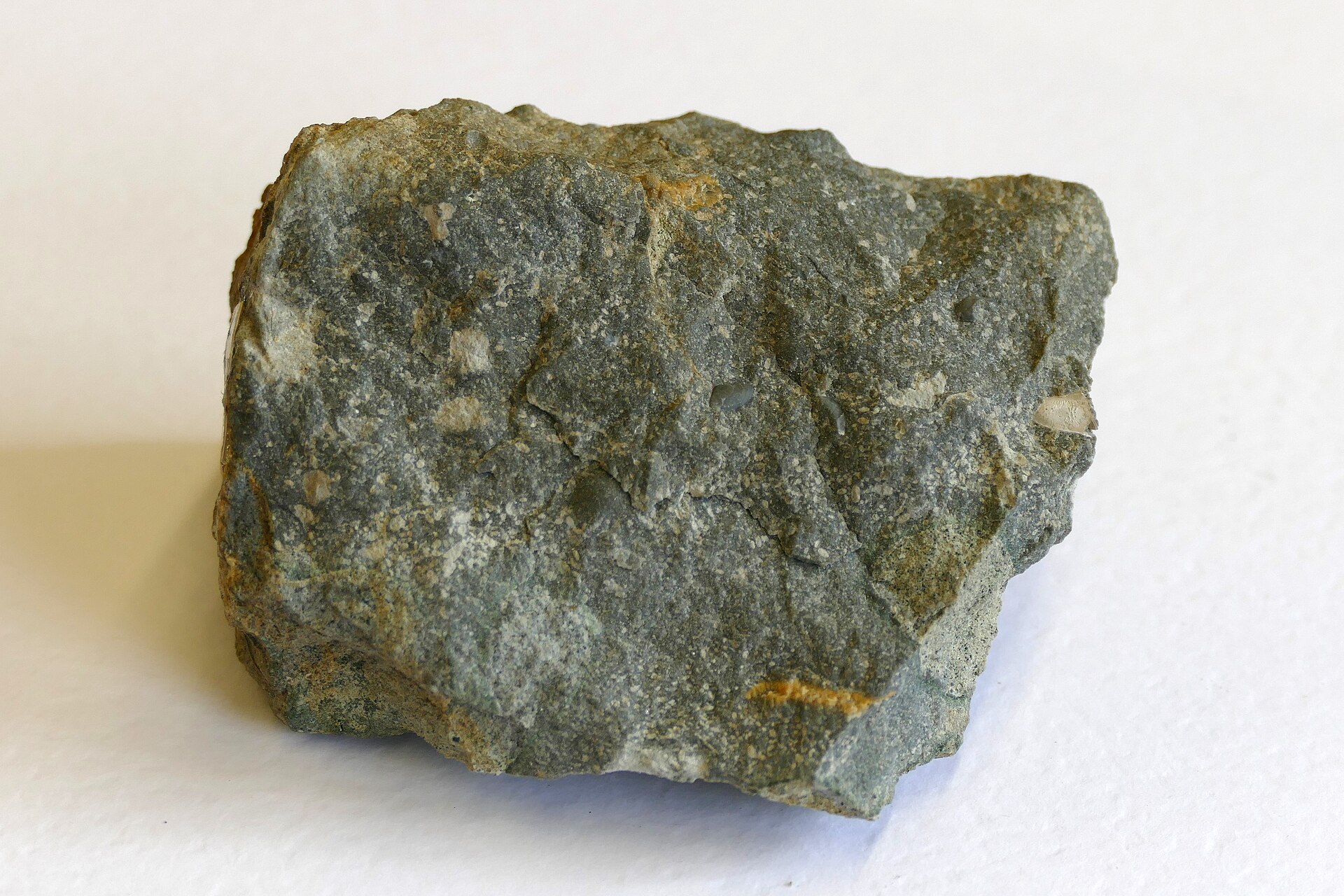
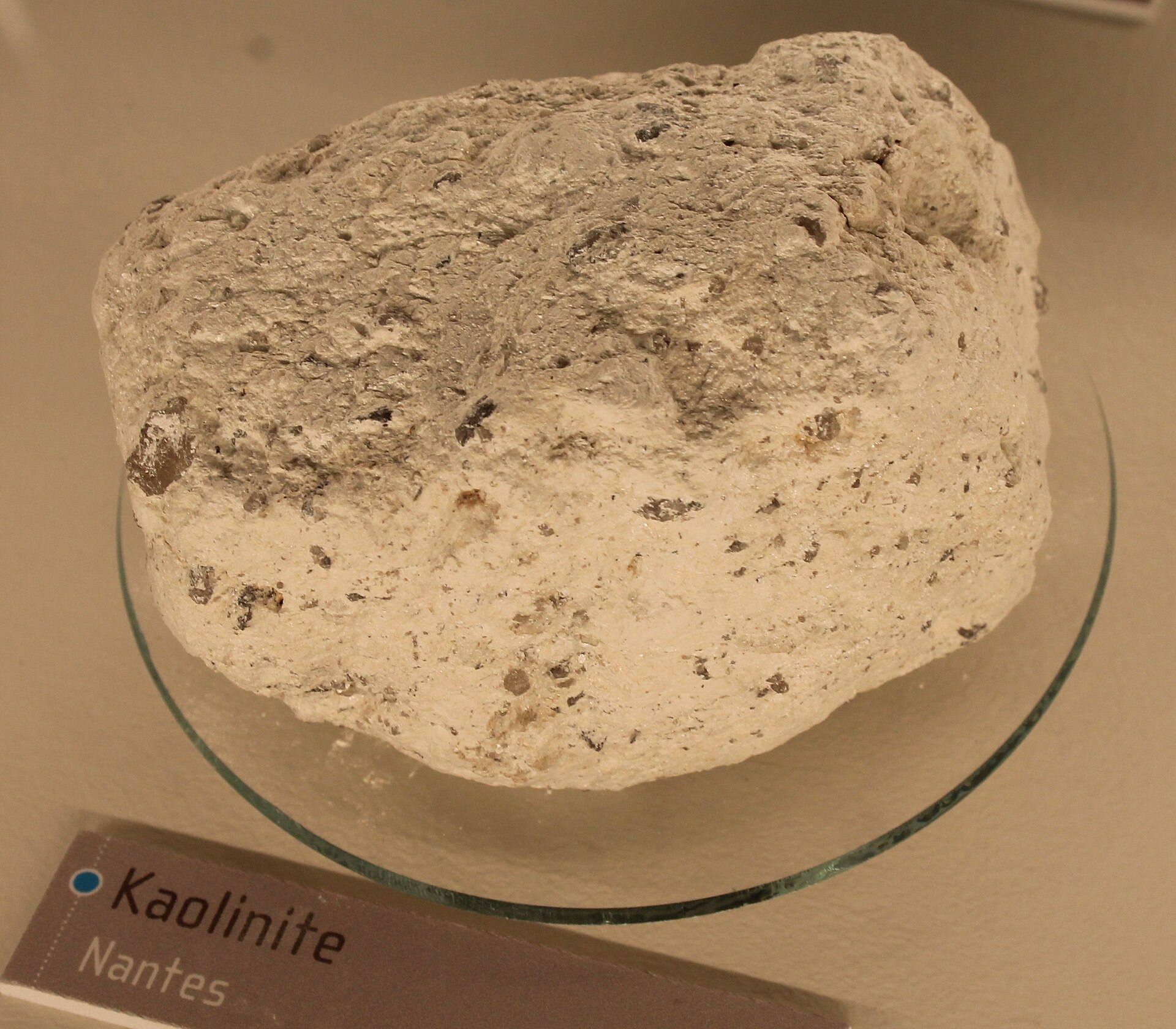
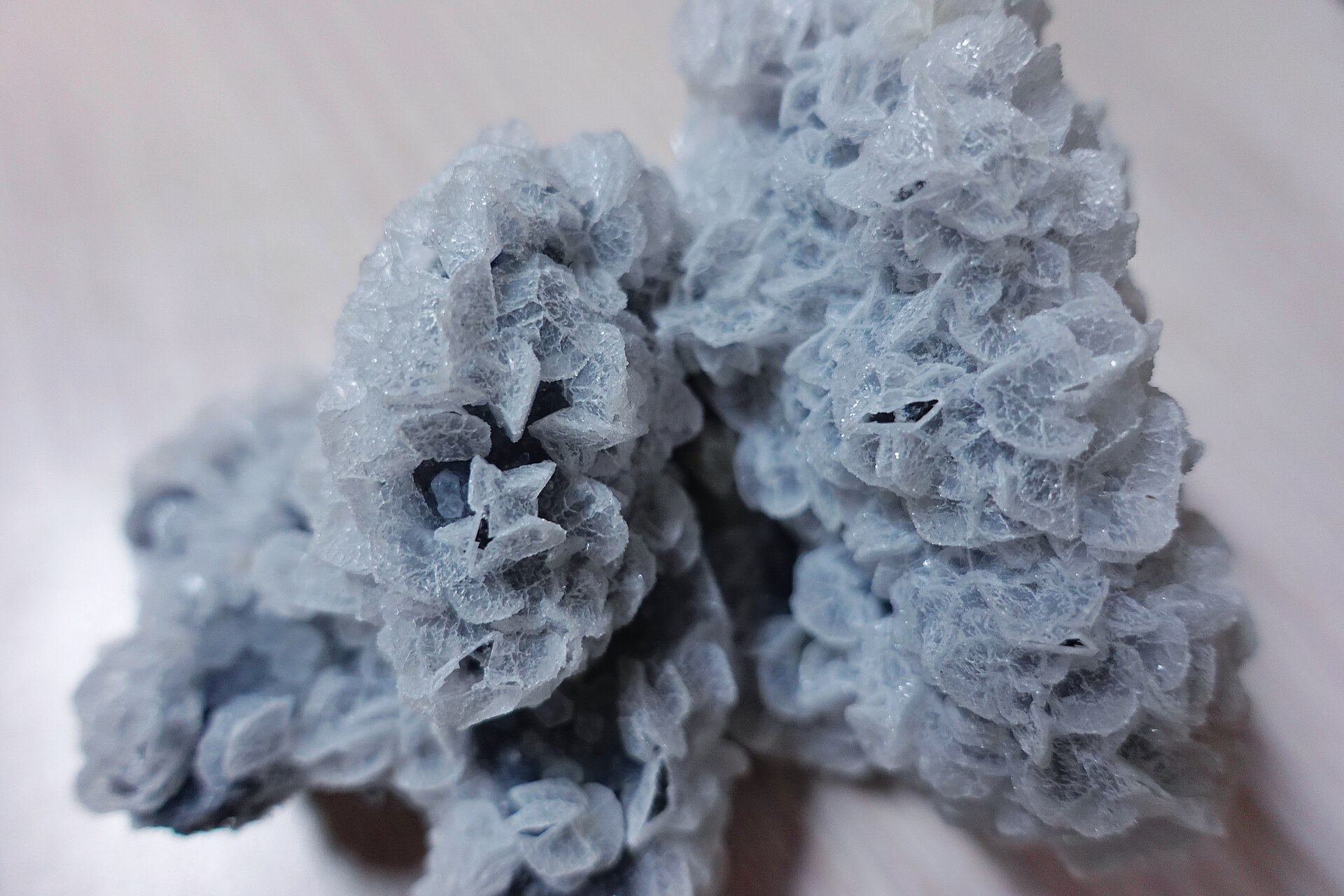
It also forms at lower temperatures as sericite, when hot fluids convert feldspar and other minerals into fine mica — the glittering dust around many ore veins — and it weathers slowly at the surface, shedding flakes that eventually decay into clay minerals such as illite.
Often grows alongside:
What It’s Used For
How to Identify It
Split it. No common mineral rivals muscovite’s party trick: a flake you can peel into transparent, flexible sheets that snap back flat. Silvery color, pearly shine, softness, and that perfect one-way cleavage separate it from everything else. Dark sheets are biotite; amber ones phlogopite; lilac ones lepidolite.
| Looks like… | But differs because… | Quick test |
|---|---|---|
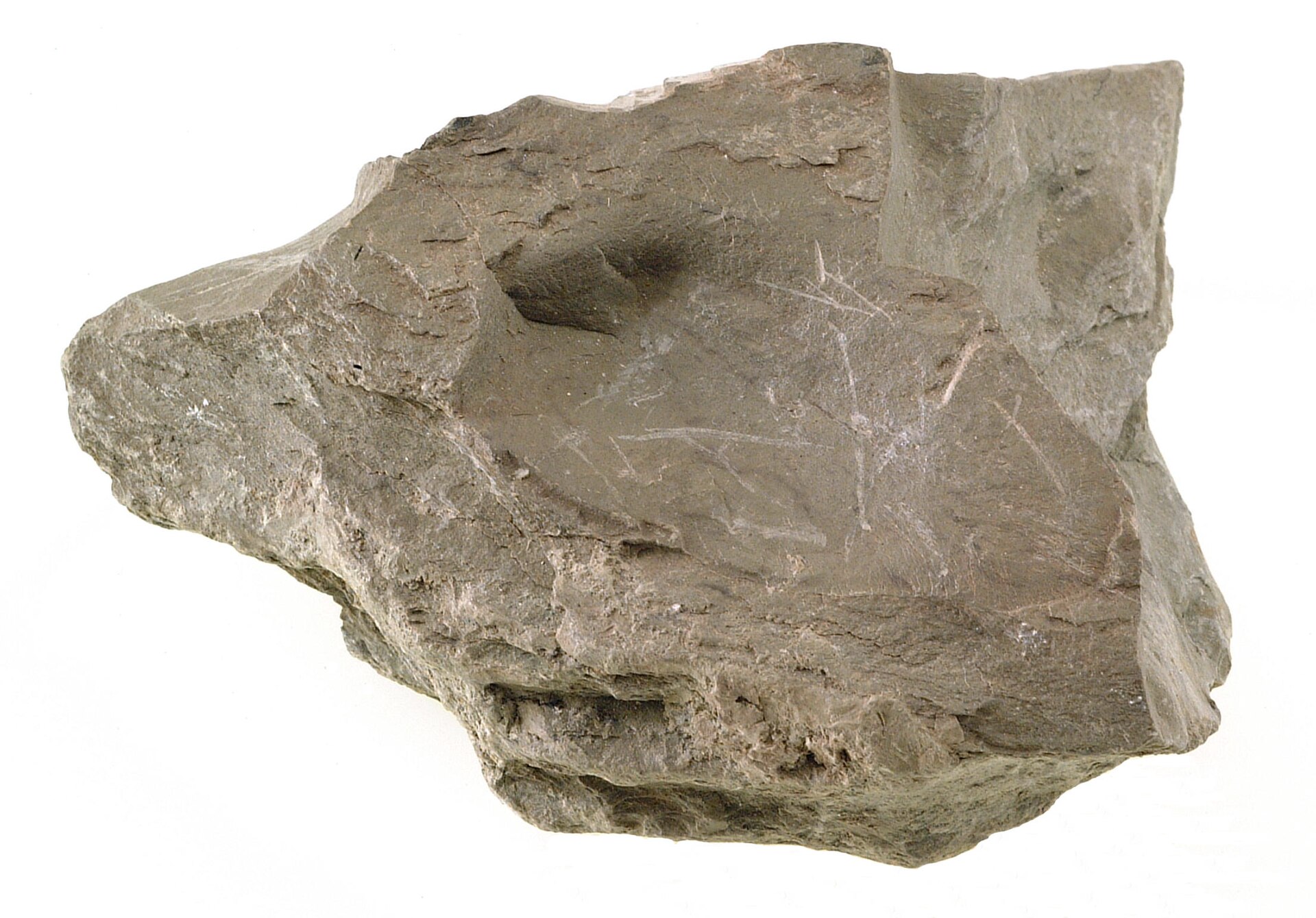
| Paragonite | The sodium mica — looks identical to muscovite by eye | Thin-section optics or chemical analysis |
| Phlogopite | Same sheet habit but amber-brown; magnesium instead of aluminium | Color |
| Biotite | Dark iron-rich mica — black or deep brown books rather than silvery | Color |
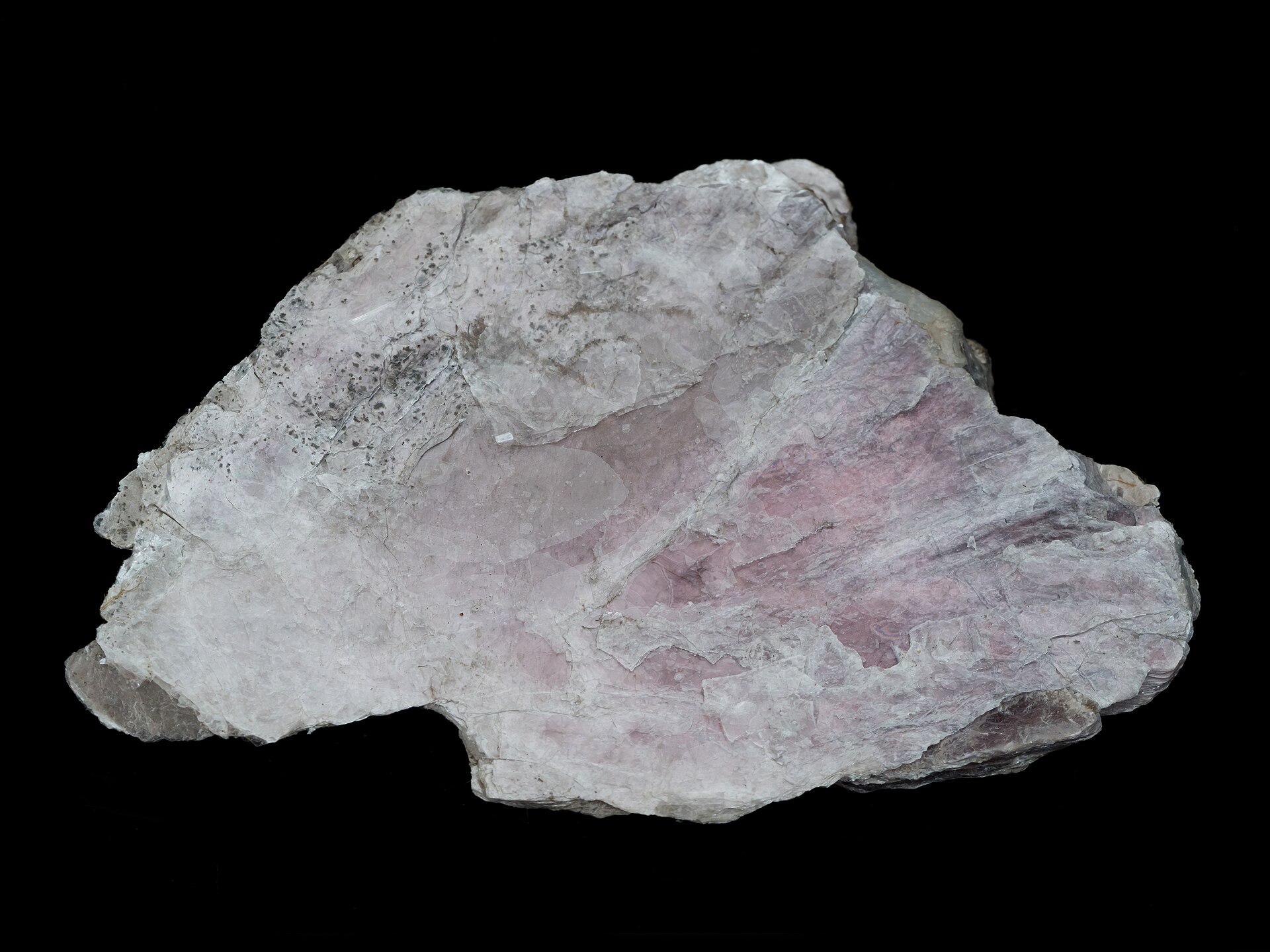
| Lepidolite | Lilac-to-pink lithium mica, usually in fine scaly aggregates in lithium pegmatites | Color & occurrence |
Where It’s Found
Notable localities for fine specimens:
Gallery
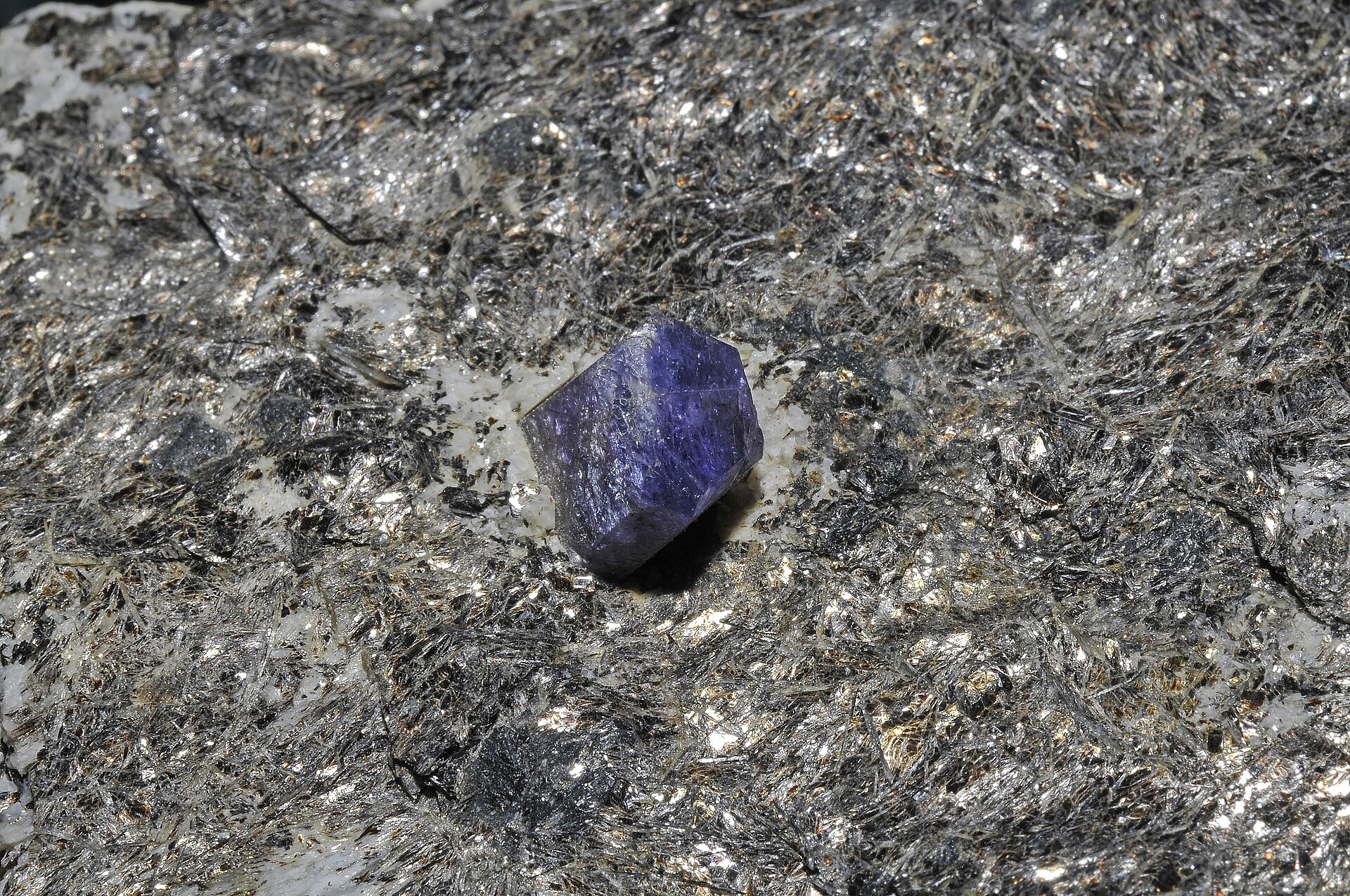
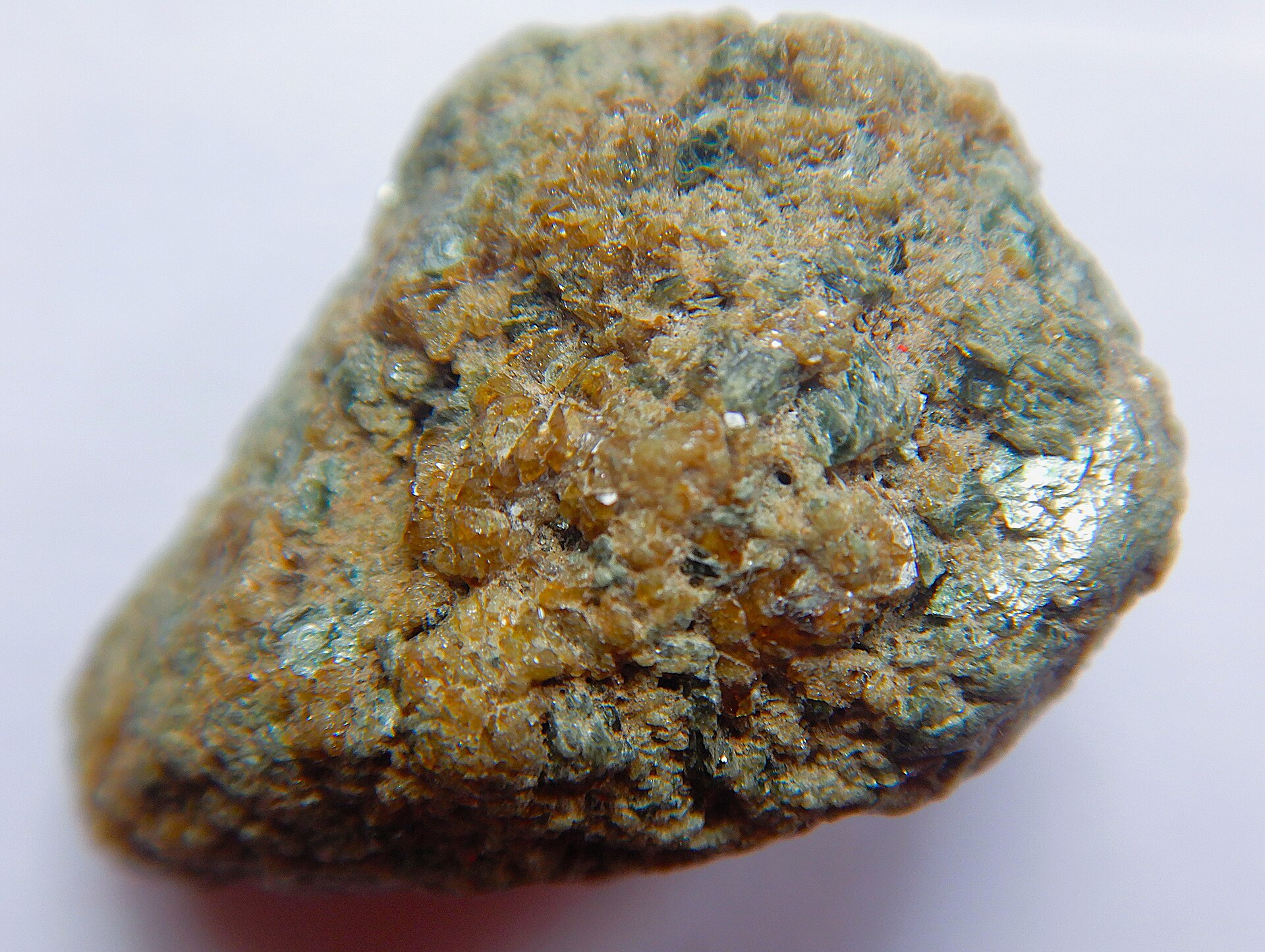
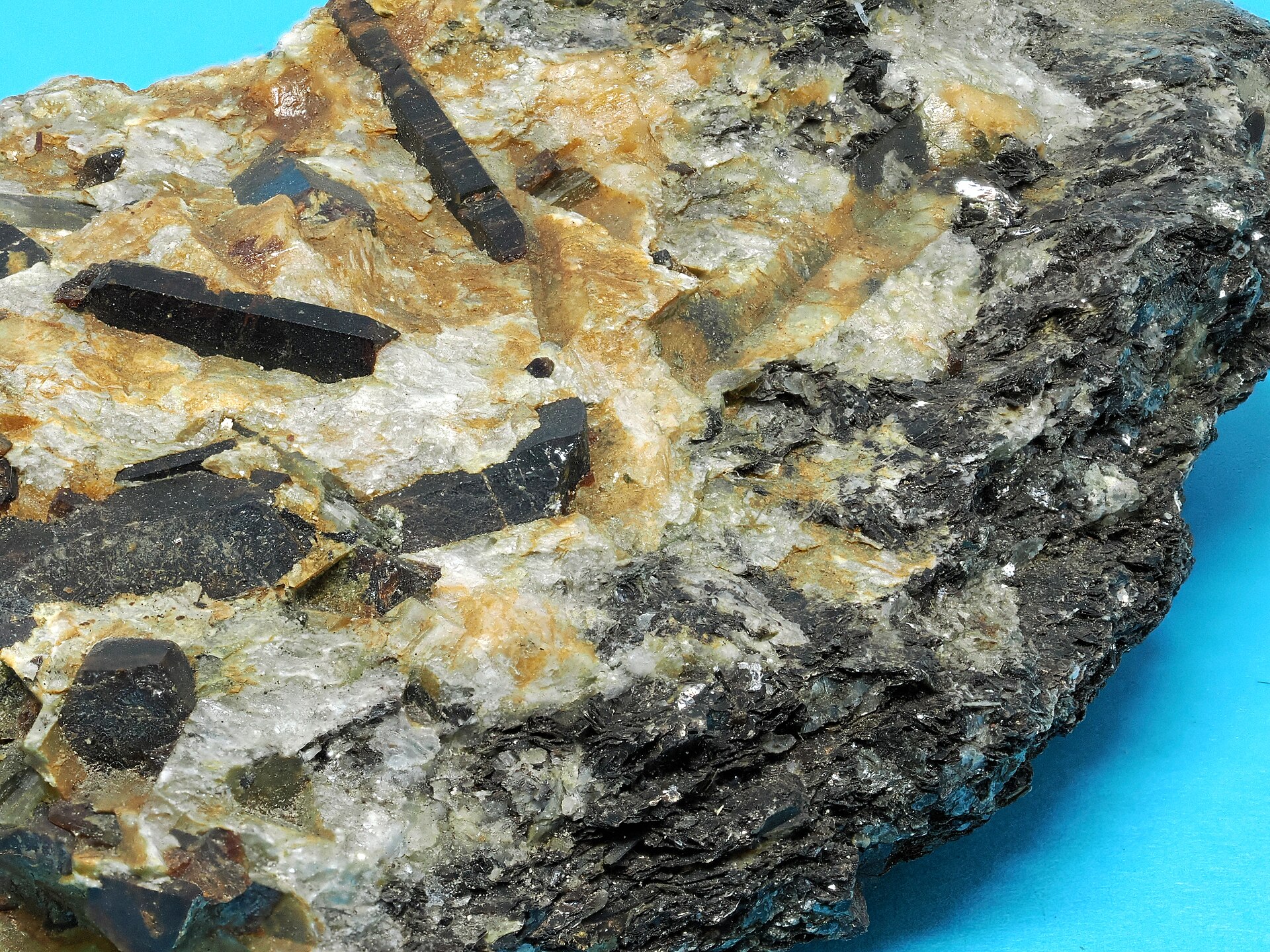
Photographs from Wikimedia Commons contributors — click a credit on the main image for the source and license.
Related Minerals
Others in the same family and minerals it commonly grows alongside.
References & Further Reading
- Dana’s New Mineralogy, 8th ed. Mica group, phyllosilicates.
- Mindat.org — Muscovite mineral data and locality records.
- Wikipedia — Muscovite.
Last reviewed 2026-09-14 · How to cite this page.