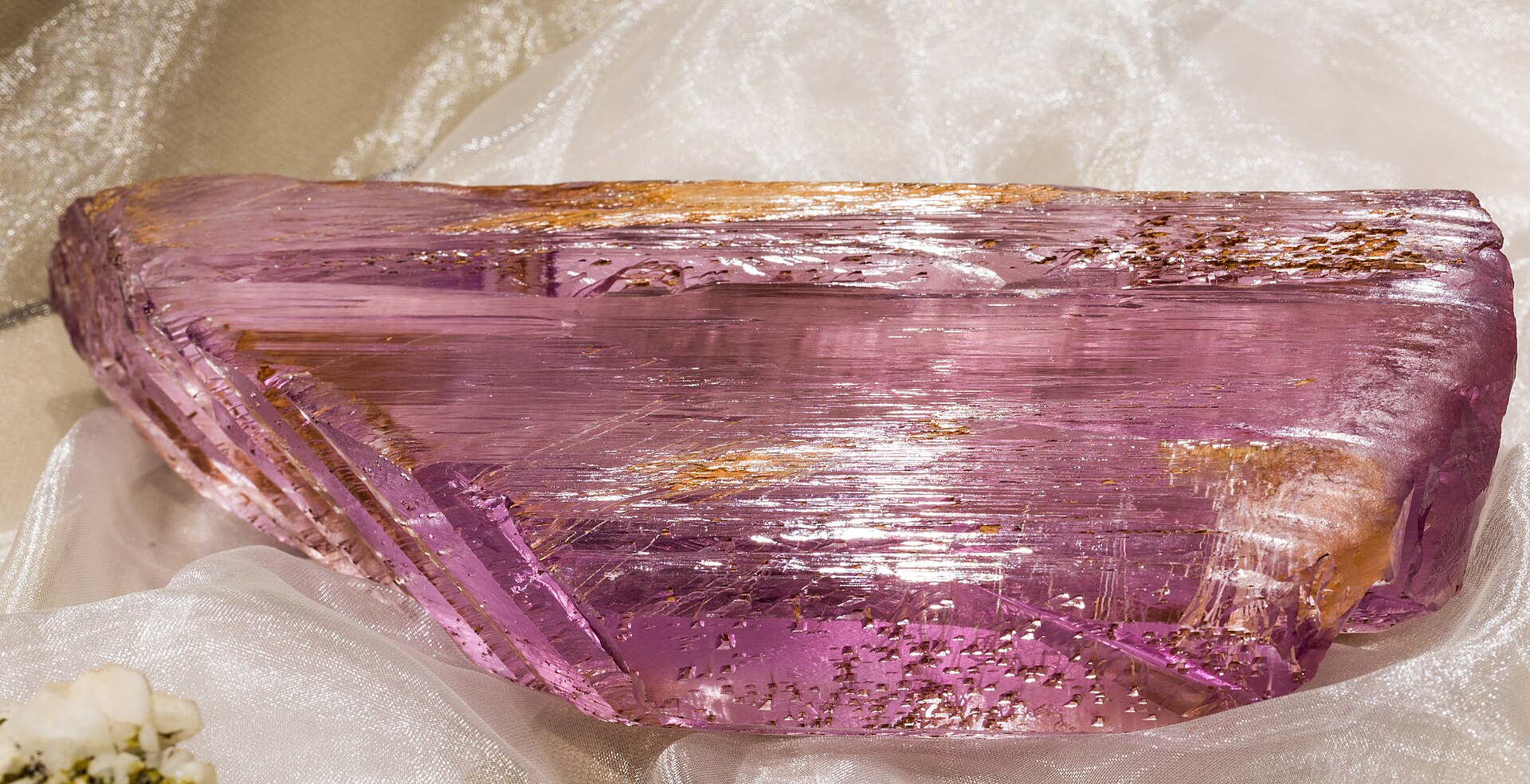
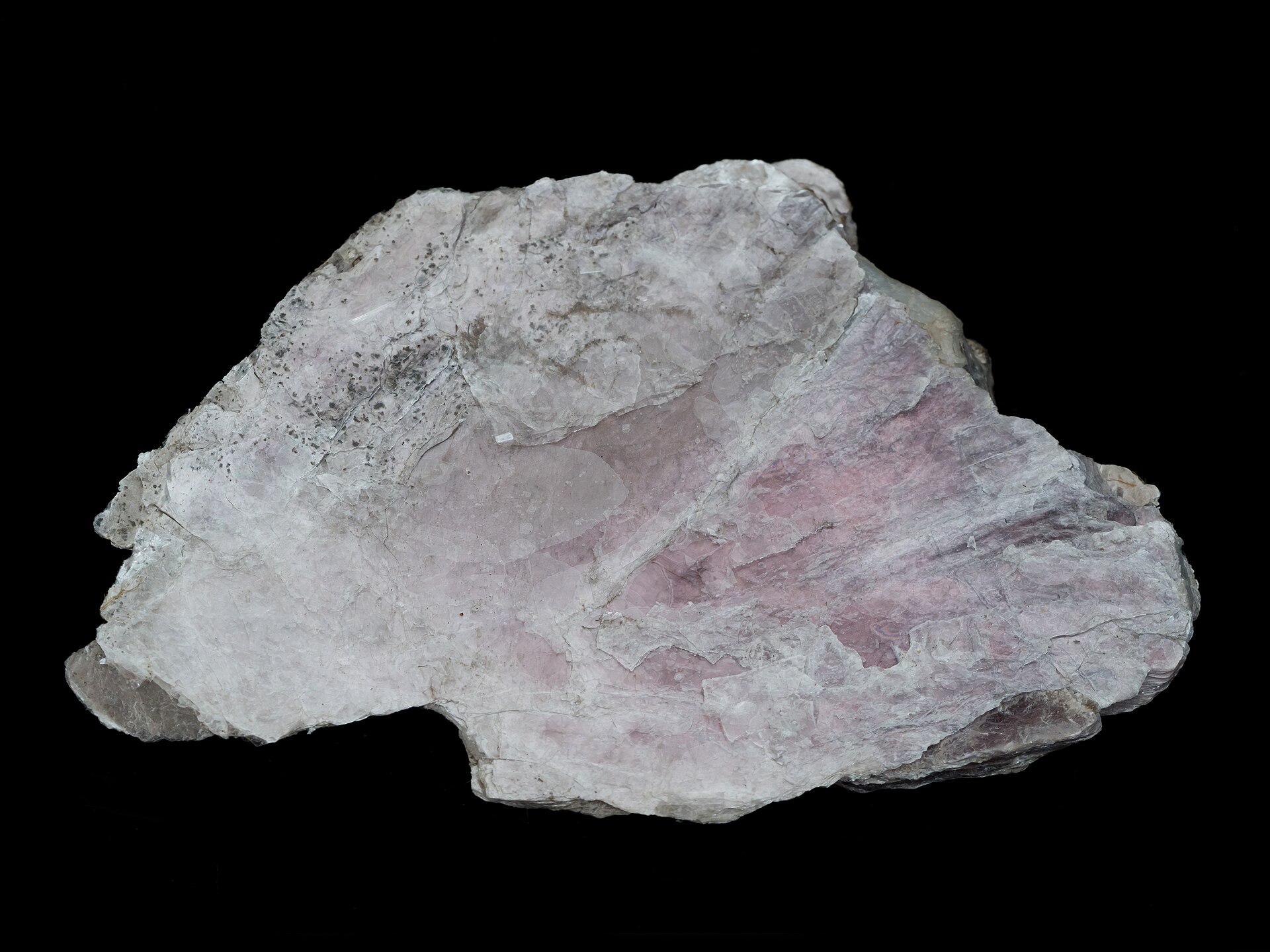
Spodumene — striated prismatic crystals from a lithium pegmatite; pink gem material is kunzite — Photo: Raimond Spekking · CC BY-SA 4.0
What is Spodumene?
Spodumene is lithium aluminium silicate — LiAlSi₂O₆ — a member of the pyroxene family and the mineral that built the lithium industry. The battery in your phone most likely began as a gray-green spodumene crystal in a pegmatite.
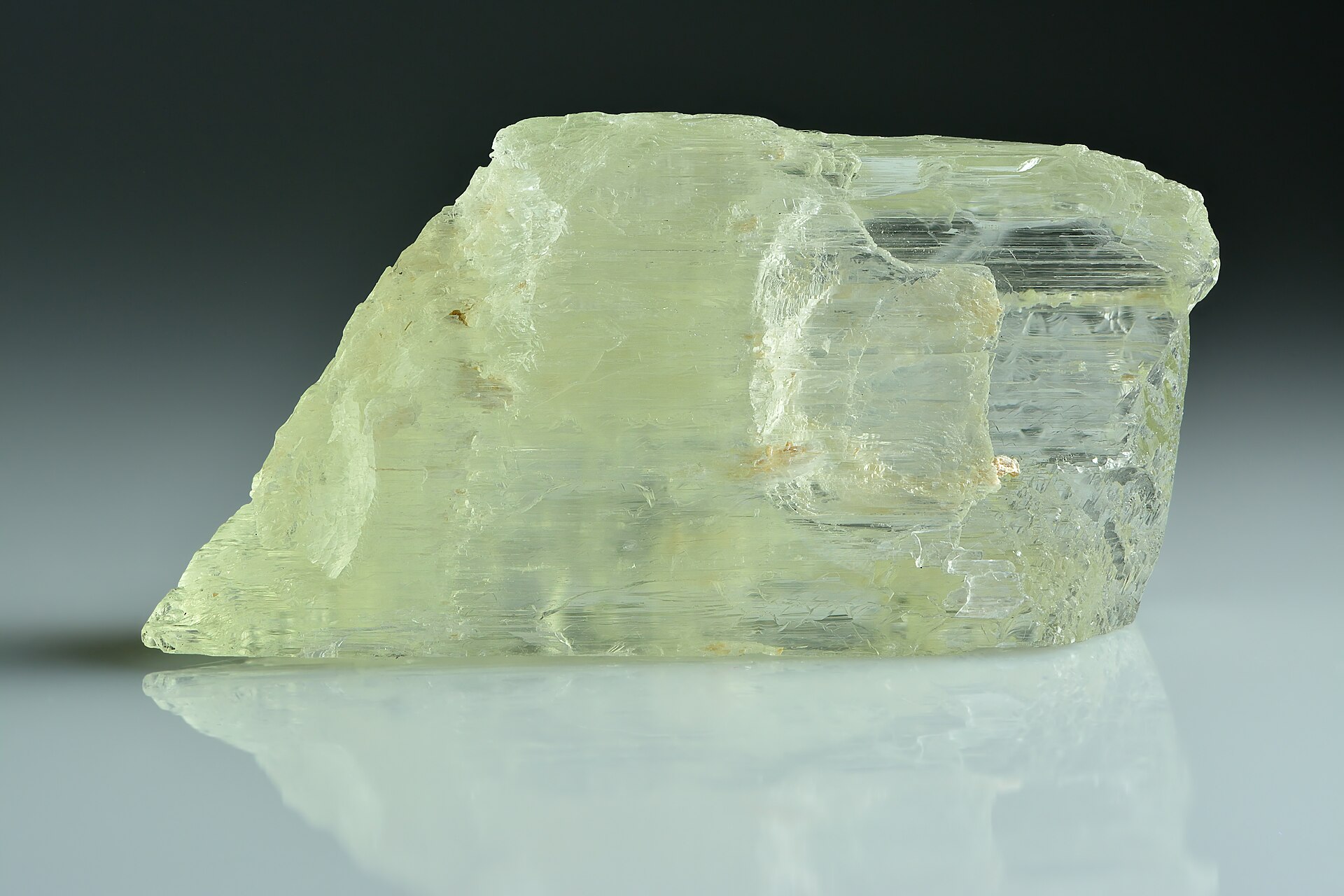
To a collector it looks unremarkable — striated, flattened prisms in off-white and gray — until it isn't: the same species produces kunzite (lilac-pink, colored by manganese, discovered in California and named for Tiffany's George Frederick Kunz) and hiddenite (emerald-green, colored by chromium, named for mineral dealer William Hidden). Yellow stones go by the old name triphane.
Spodumene grows big: pegmatite crystals measured in meters are on record, including ~14-meter giants from the Etta mine in South Dakota — among the largest mineral crystals ever found.
Physical Properties
The full data table is in the panel alongside. Here’s what those numbers actually mean.
Hardness and cleavage. Mohs 6.5–7 — hard enough to scratch glass — but with two perfect prismatic cleavages meeting near 87°/93° plus extra partings, it splits into splintery laths. Gem cutters fight this cleavage; the trade-off is high brilliance.
Pyroxene structure. Single chains of SiO₄ tetrahedra running the length of the crystal explain both the elongated habit and the easy splitting along the chains.
Color and light. Common spodumene is white-to-gray. Manganese makes kunzite's pink (with strong pleochroism — deeper pink seen down the crystal's length) but the color fades in sunlight; chromium makes hiddenite's rare green. Kunzite fluoresces pink-orange under UV.
Density. SG ~3.0–3.2 — lighter than its lookalike beryl, and far lighter than the lead minerals it sometimes shares a display shelf with.
Varieties
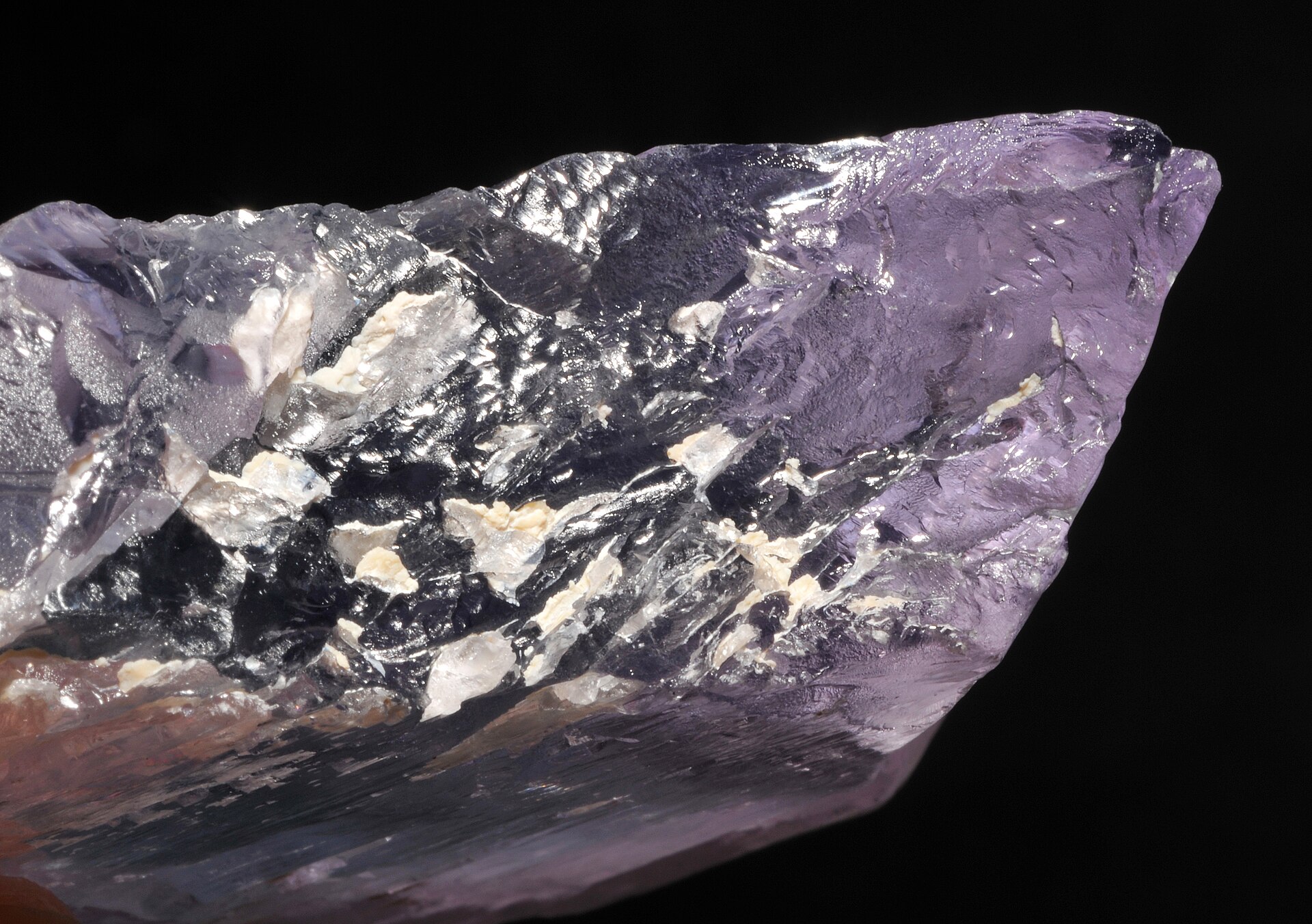
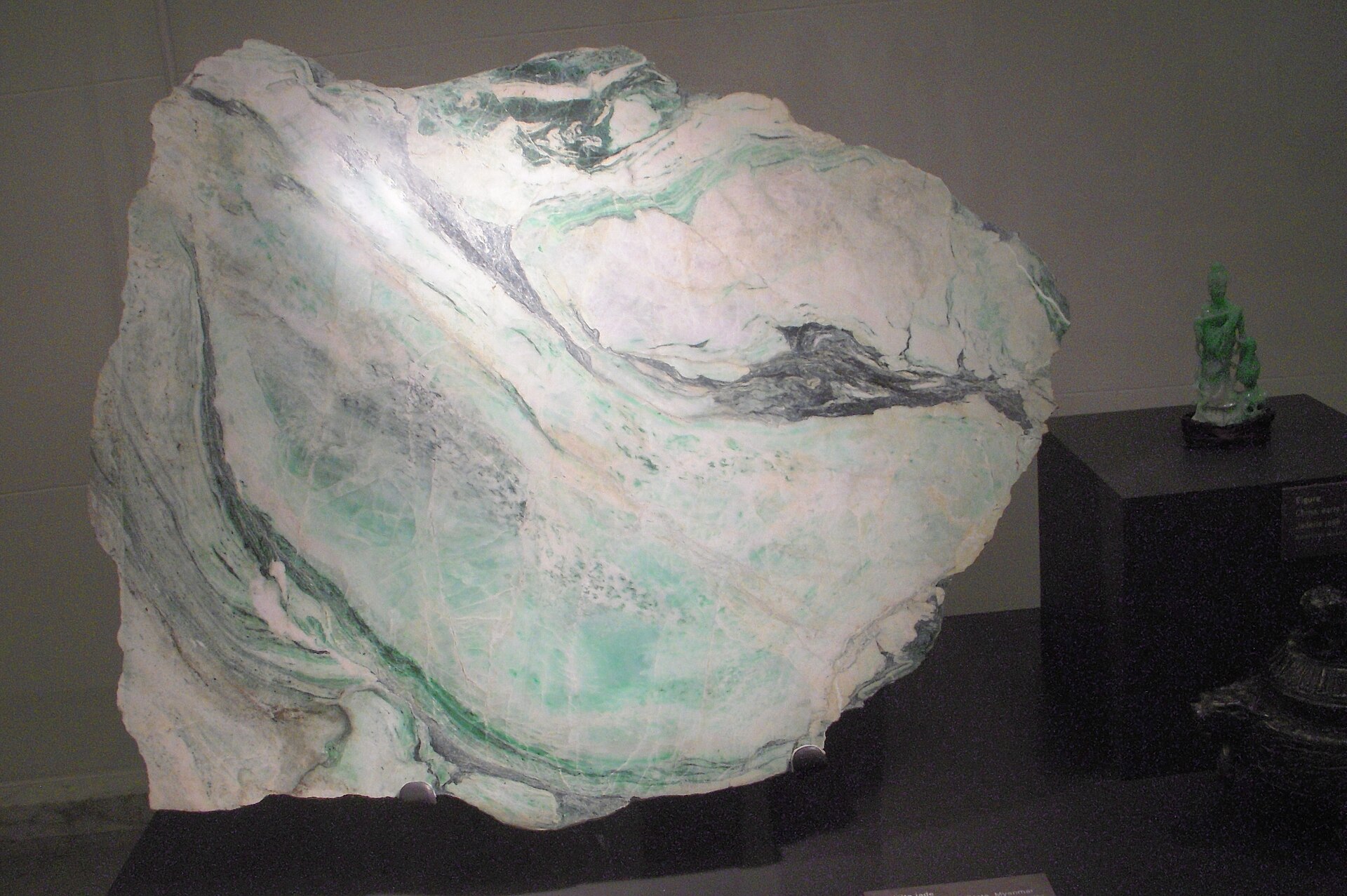
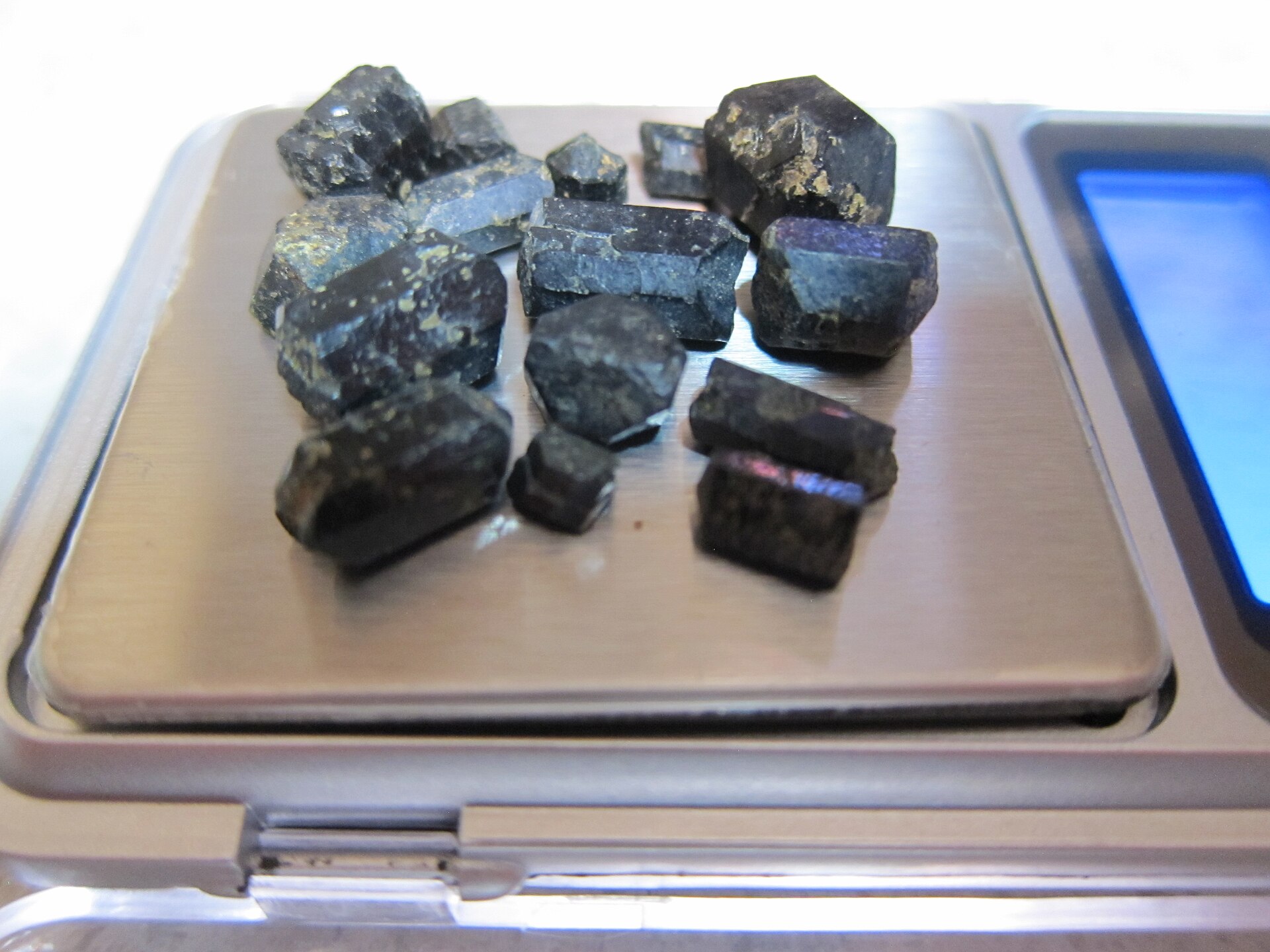
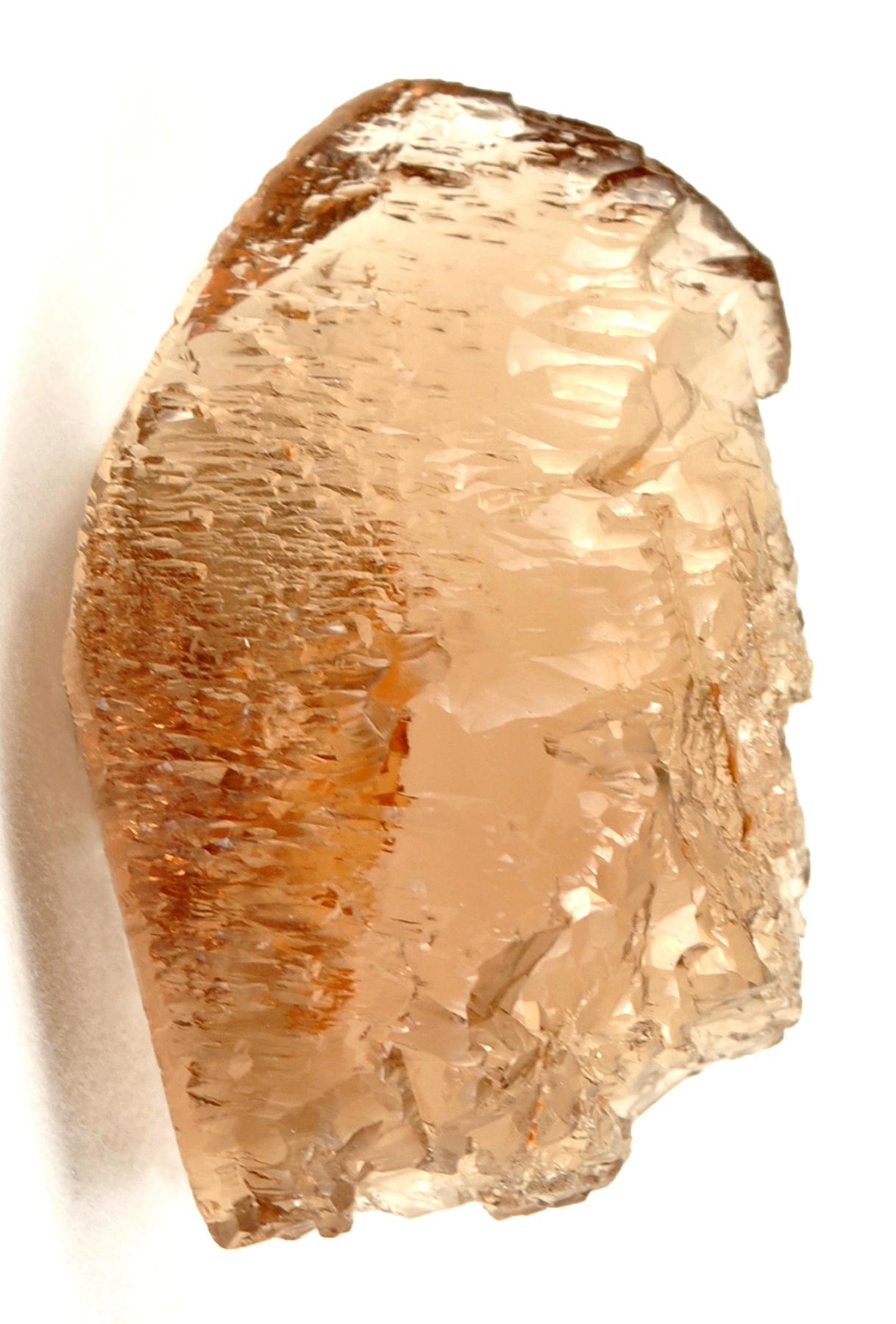
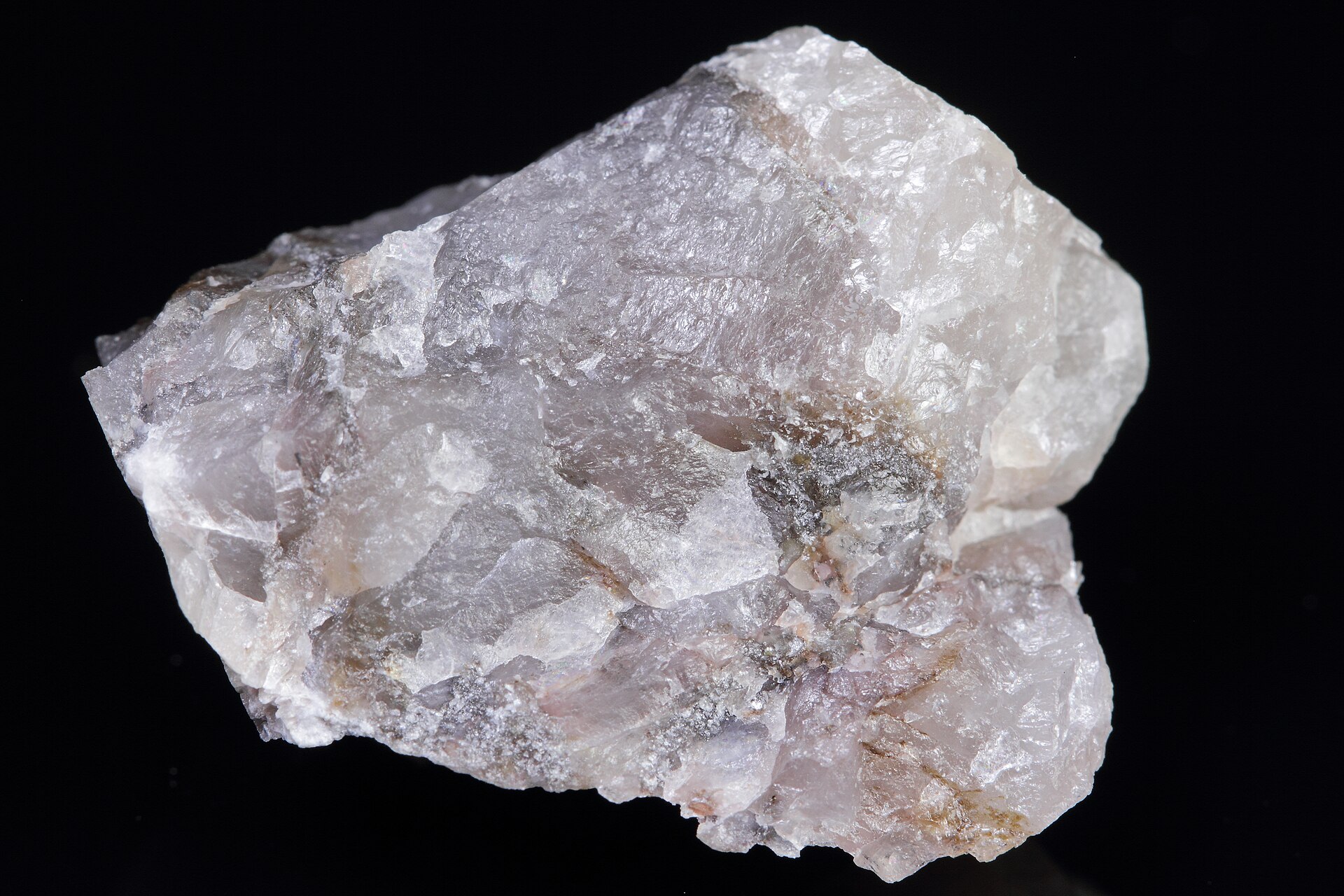
Same chemistry, different faces — trace impurities and how finely it crystallizes give a whole family of familiar stones.
How & Where It Forms
Spodumene crystallizes in lithium-rich granitic pegmatites — the LCT type — where the last, most exotic fraction of a granite melt concentrates lithium, beryllium and other rare elements. It typically forms early, in the pegmatite's core zones, alongside quartz, feldspar, lepidolite, beryl and tourmaline.
Near the surface it is unstable: weathering turns it to clay and eucryptite, which is why pristine crystals come from fresh pegmatite rock.
Often grows alongside:
What It’s Used For
How to Identify It
In a pegmatite, look for striated flattened prisms that split into splintery laths along near-right-angle cleavage — quartz shows conchoidal fracture instead, and feldspar's cleavages meet at 90° without the splintering. A crimson flame on a splinter confirms lithium. Pink + pleochroism = kunzite; chromium-green = hiddenite.
| Looks like… | But differs because… | Quick test |
|---|---|---|
| Quartz | No cleavage and a glassy conchoidal break; spodumene splits into flat splintery laths | Cleavage |
| Feldspar | Two cleavages at ~90°, slightly softer, and no splintery parting | Cleavage angle |
| Diopside | A fellow pyroxene, but usually darker green and lacking the lithium flame | Flame test |
| Beryl | Hexagonal prisms, harder (7.5–8), no cleavage | Cleavage & hardness |
| Tremolite | Amphibole cleavage meets at ~56°/124°, not ~87°/93°, and habits are fibrous | Cleavage angle |
| Petalite | Similar pale color and lithium content, but only one perfect cleavage | Cleavage count |
Where It’s Found
Notable localities for fine specimens:
Gallery
Photographs from Wikimedia Commons contributors — click a credit on the main image for the source and license.
Related Minerals
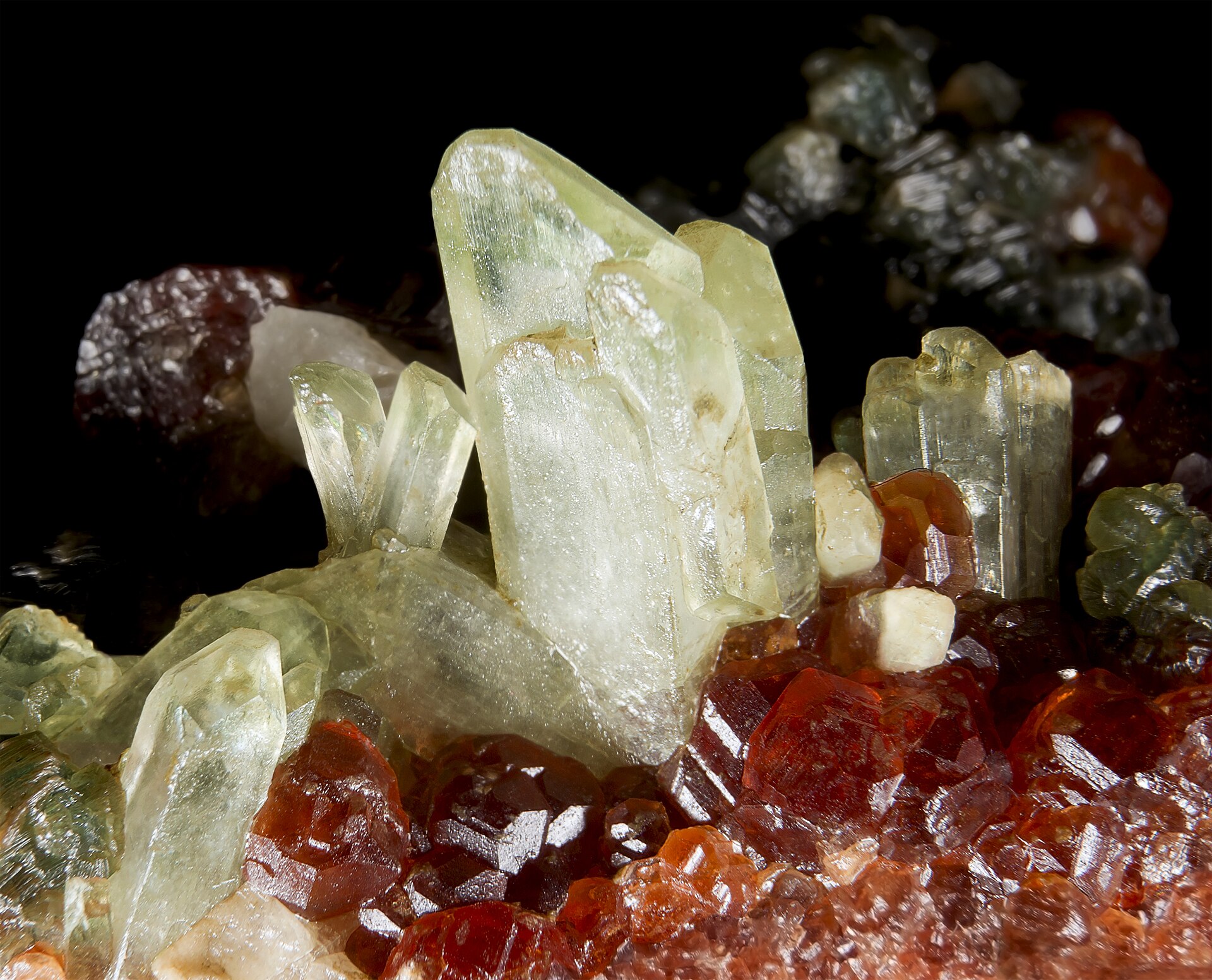
Others in the same family and minerals it commonly grows alongside.
References & Further Reading
- Dana's New Mineralogy, 8th ed. Pyroxene group, clinopyroxenes.
- Mindat.org — Spodumene mineral data and locality records.
- Wikipedia — Spodumene.
Last reviewed 2026-09-14 · How to cite this page.