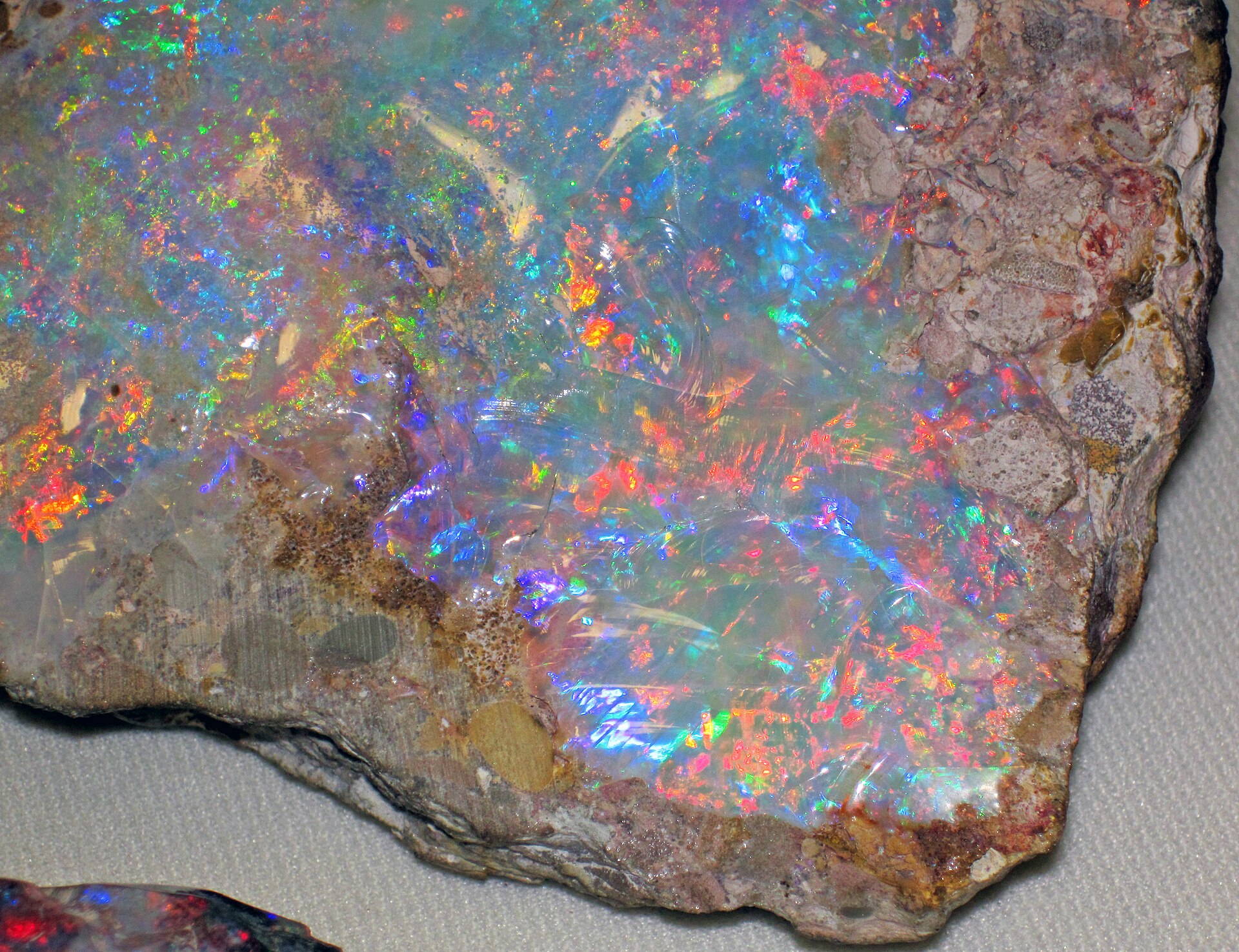
Precious opal — silica spheres ~400 nm across diffract light into play-of-color — Photo: James St. John · CC BY 2.0
What is Opal?
Opal is hydrated silica — SiO₂·nH₂O — that never managed to crystallize. Under the electron microscope it's a stack of silica spheres tens to hundreds of nanometers across, glued together with water making up roughly 3–21% of its weight. Because it has no ordered crystal structure, opal is technically a mineraloid, kept on the mineral books for historical reasons.
Its magic trick is play-of-color. In precious opal the spheres are nearly identical in size and settle into orderly layers — a natural diffraction grating. Light waves bouncing off successive layers interfere, splitting white light into flashes of pure spectral color that roll across the stone as it turns. Random sphere sizes produce common opal — pretty but colorless of fire.
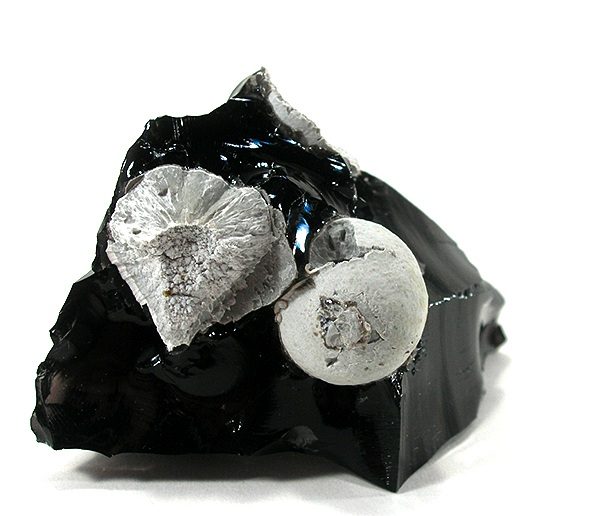
The family is richer than the rainbow suggests: fire opal is transparent orange-to-red body color without play-of-color; black opal puts the fire against a dark body and commands the highest prices; hydrophane opal from Ethiopia is porous enough to soak up water and go transparent; glassy hyalite beads up on rock surfaces like frozen water — which, nearly, it is.
Physical Properties
The full data table is in the panel alongside. Here’s what those numbers actually mean.
Hardness & handling. At Mohs 5.5–6.5 with a brittle conchoidal fracture, opal is a gemstone that demands care. Its water content is the real quirk: sudden drying or heat can trigger crazing — a web of internal cracks — so miners sometimes store rough in water.
Density & optics. Specific gravity runs about 1.9–2.3 — notably light — and refractive index a low 1.37–1.52. As an amorphous solid it's isotropic: no pleochroism, no birefringence, just the play-of-color.
Fluorescence. Common opal often glows greenish-white under UV, and some material phosphoresces after the light goes off — a useful field clue.
How & Where It Forms
Most precious opal is a story of weathering: silica leached from rocks by water percolates down into seams and voids, then dries into gel that hardens over millennia — Australia's opal fields formed this way in an ancient inland sea's sediments. Mexican fire opal instead fills gas cavities in rhyolite lava. Opal also famously replaces buried wood, bone and shell, preserving the original's shape atom-less but form-perfect.
Often grows alongside:
What It’s Used For
How to Identify It
Look for play-of-color that moves — real spectral patches, not surface iridescence. It's lighter and softer than quartz or chalcedony, breaks in smooth curved shells, and warmth on the lip (the old 'lip test') hints at its water content. Beware 'opalite' glass and assembled doublets/triplets where a thin opal slice rides on dark backing.
| Looks like… | But differs because… | Quick test |
|---|---|---|
| Chalcedony | Microcrystalline quartz is harder (~7), denser (SG 2.6) and never shows true play-of-color | Heft & hardness |
| Moonstone | Adularescence is a single billowy sheen from feldspar layers, not shifting spectral patches; moonstone has cleavage | Watch the light move |
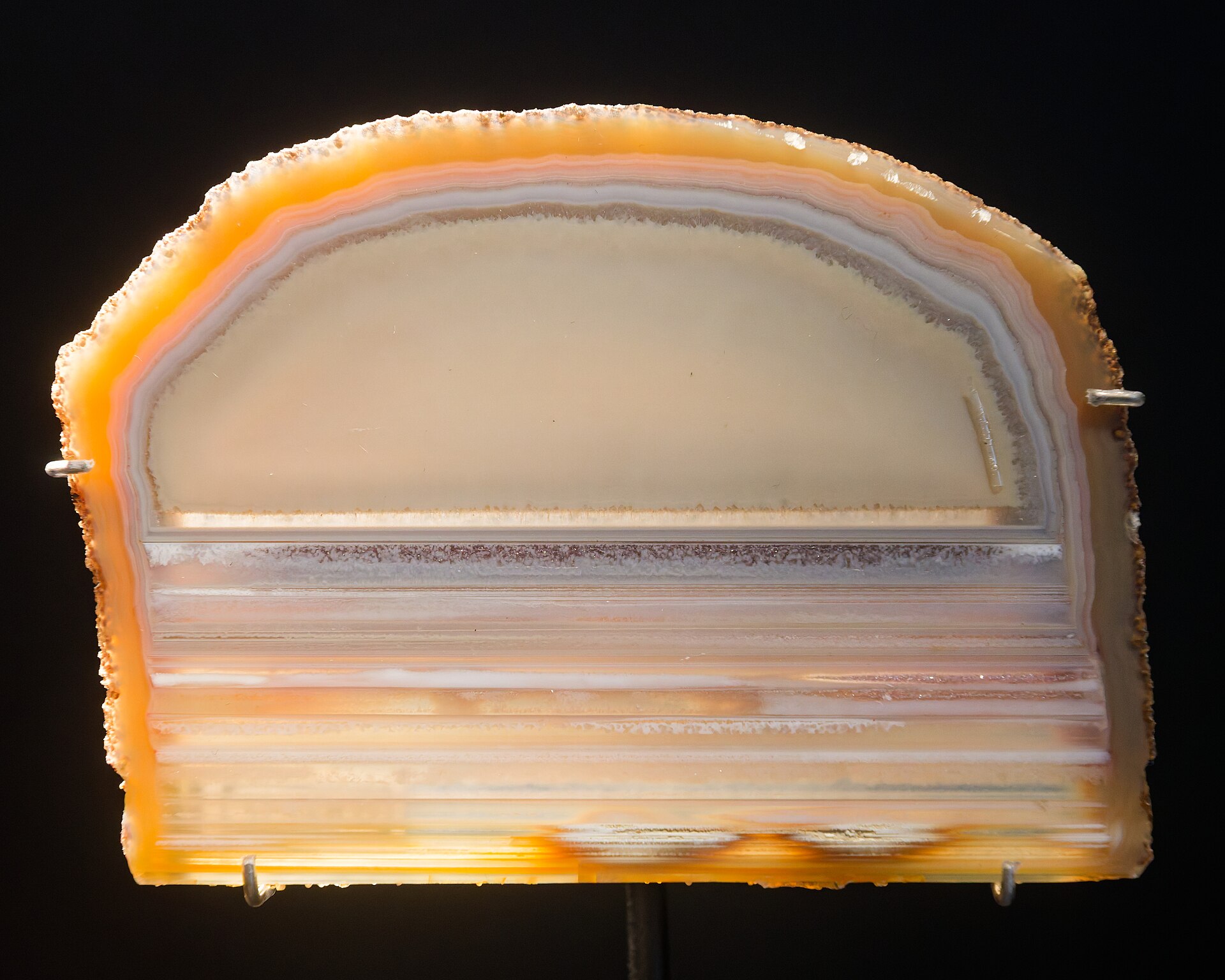
| Labradorite | Labradorescence flashes in broad sheets along cleavage planes; a feldspar with H 6–6.5 and twinning | Cleavage & flash pattern |
| Quartz | Harder (7), denser (2.65), forms crystals — quartz lacks play-of-color and water content | Hardness & SG |
Where It’s Found
Notable localities for fine specimens:
Gallery
Photographs from Wikimedia Commons contributors — click a credit on the main image for the source and license.
Related Minerals
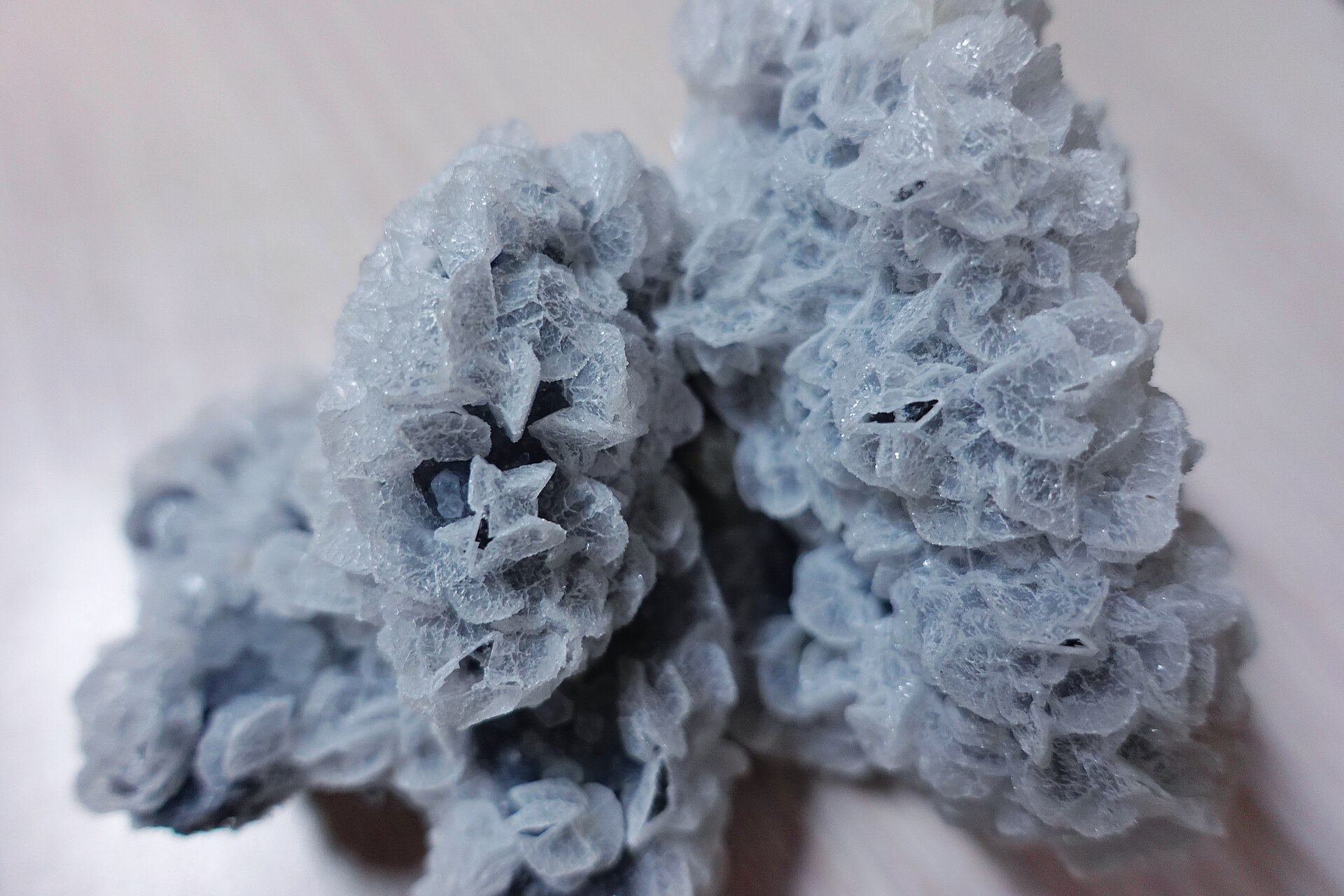
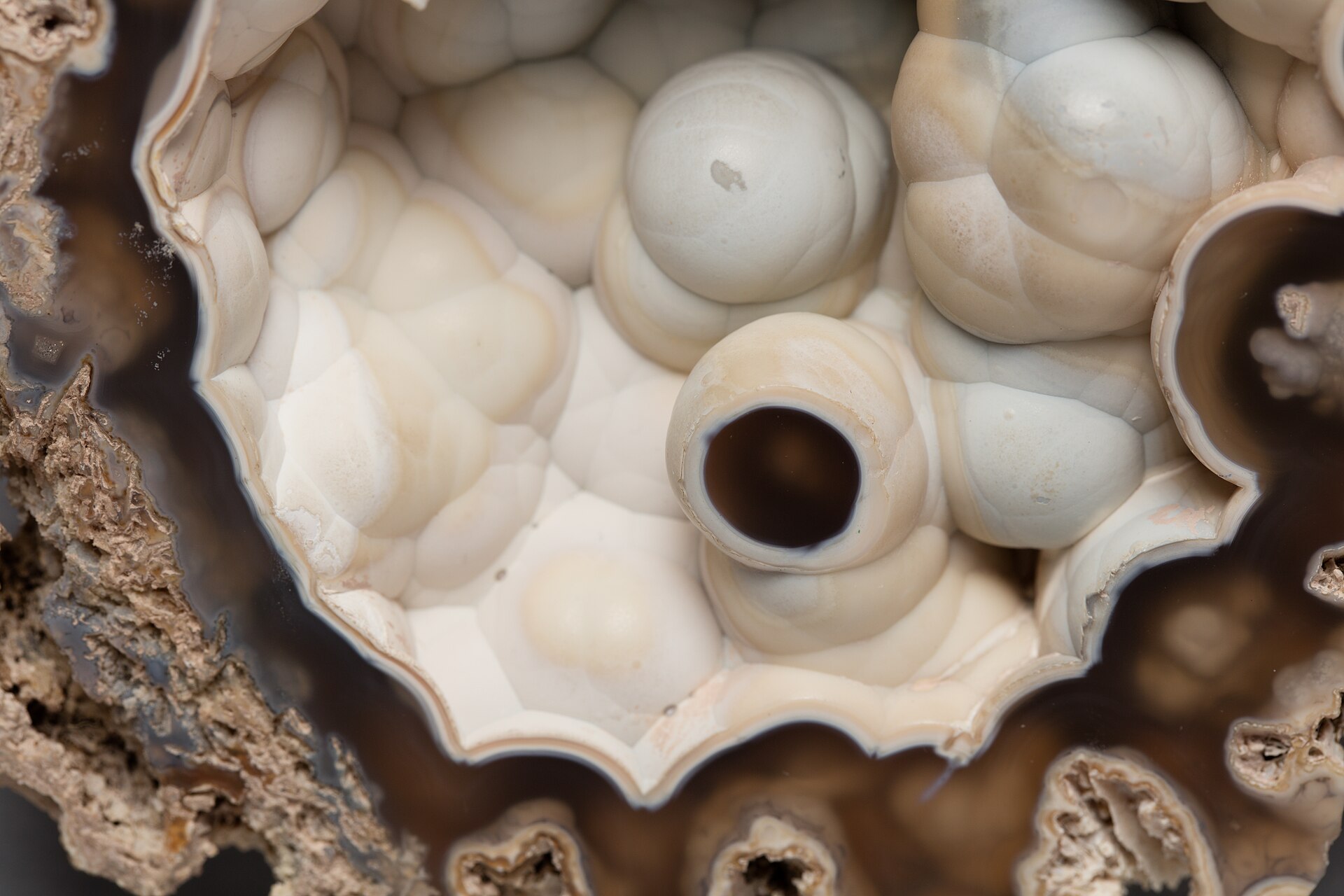
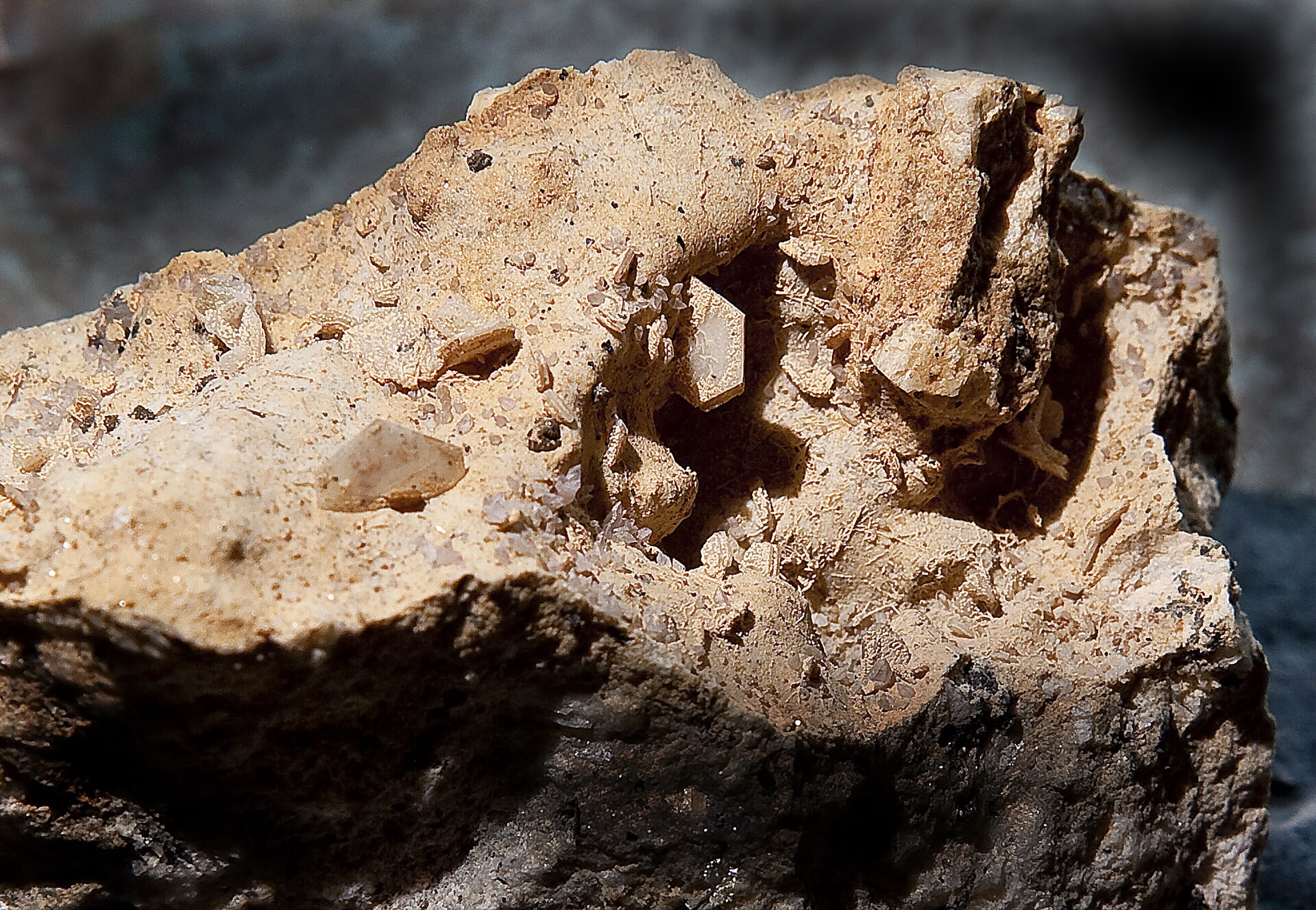
Others in the same family and minerals it commonly grows alongside.
References & Further Reading
- Dana's New Mineralogy, 8th ed. Silica group, tectosilicates.
- Mindat.org — Opal mineral data and locality records.
- Wikipedia — Opal.
Last reviewed 2026-09-14 · How to cite this page.